India Canada Energy Pact Signed at India Energy Week 2026

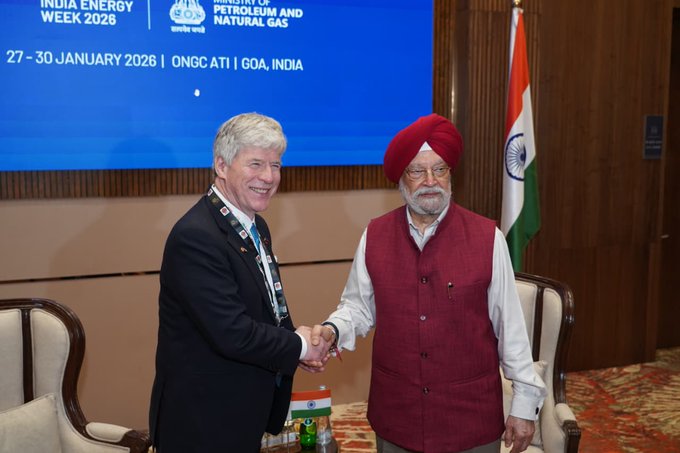
India Canada Energy Pact has emerged as a major milestone in bilateral relations after India and Canada signed a Joint Statement on Energy Cooperation during India Energy Week 2026 in Goa. The agreement reflects a renewed determination by both countries to work closely in conventional energy, clean energy, and emerging technologies, while also rebuilding political and economic trust. At a time when global energy markets are facing volatility and the transition to low-carbon systems is accelerating, this pact sends a strong message about the importance of stable and forward-looking partnerships.
Thank you for reading this post, don't forget to subscribe!The Joint Statement was signed following a bilateral meeting between India’s Union Minister for Petroleum and Natural Gas and Canada’s Minister of Energy and Natural Resources. This marked the first participation of a Canadian Cabinet Minister at India Energy Week, highlighting the growing importance Canada attaches to its energy relationship with India. The meeting followed directions from the Prime Ministers of both countries, who had agreed to re-engage at senior political and working levels during their interaction on the sidelines of the G7 Summit in Kananaskis, Canada, in June 2025.
Strategic Reset in Bilateral Engagement
The India Canada Energy Pact represents a strategic reset in energy cooperation. Both sides acknowledged that energy security, supply diversification, and long-term stability are essential for economic growth. By formalising their intent through a Joint Statement, India and Canada have created a clear framework to guide future cooperation.
This renewed engagement is also symbolic. It demonstrates that both countries are committed to strengthening ties through practical collaboration, even as they address broader diplomatic and economic challenges.
Revival of Ministerial Energy Dialogue
A key outcome of the pact is the revival of the India–Canada Ministerial Energy Dialogue. This mechanism is designed to provide a structured platform for regular government-to-government interaction. It will enable policymakers to discuss priorities, align strategies, and remove barriers to cooperation.
The dialogue will also support commercial engagement by encouraging closer links between energy companies, investors, and technology providers. Regular meetings under this framework are expected to help translate policy commitments into real projects.

Expanding Trade in Conventional Energy
Conventional energy remains an important pillar of the India Canada Energy Pact. Canada has highlighted its ambition to become a global energy superpower, not only in clean fuels but also in oil and gas. The country is expanding its liquefied natural gas capacity, increasing crude oil exports to Asia through the Trans Mountain Expansion pipeline, and growing LPG exports from its west coast.
India, as the world’s third-largest oil consumer and fourth-largest LNG importer, has a strong and growing appetite for energy. With rapid urbanisation, industrial growth, and rising living standards, India is expected to drive more than one-third of global energy demand growth over the next two decades.
Recognising these complementary strengths, both sides agreed to deepen trade in LNG, LPG, and crude oil. At the same time, India can expand exports of refined petroleum products to Canada, creating a more balanced energy trade relationship.
Clean Energy and Climate Cooperation
The India Canada Energy Pact places strong emphasis on clean energy and climate action. Both countries reaffirmed their shared goal of reducing emissions while maintaining reliable and affordable energy systems.
Areas identified for collaboration include renewable energy, hydrogen, biofuels, sustainable aviation fuel, and battery storage. The Joint Statement also highlights the importance of reducing emissions from conventional energy systems through carbon capture, utilisation and storage.
These areas of cooperation reflect the understanding that the energy transition must be inclusive and practical, combining clean technologies with improvements in existing systems.
Critical Minerals and Supply Chains
Critical minerals are essential for clean energy technologies such as electric vehicle batteries, solar panels, and wind turbines. Canada has significant reserves of many critical minerals, while India has strong manufacturing capabilities and a rapidly expanding clean energy sector.
Under the India Canada Energy Pact, both sides plan to explore cooperation in critical mineral exploration, processing, and supply chains. This can help reduce dependence on limited sources and improve resilience against global disruptions.
Supply chain resilience is also a broader focus area, covering equipment, components, and raw materials across the energy sector.
Technology, Innovation, and AI
Technology and innovation are central to the future of energy. The Joint Statement highlights cooperation in applying artificial intelligence in the energy sector. AI can help optimise energy production, improve grid management, enhance efficiency, and reduce operational risks.
Research partnerships, knowledge exchange, and pilot projects will play an important role in advancing these technologies. By combining Canada’s research strengths with India’s scale and digital capabilities, both countries can accelerate innovation.
Strengthening Business-to-Business Ties
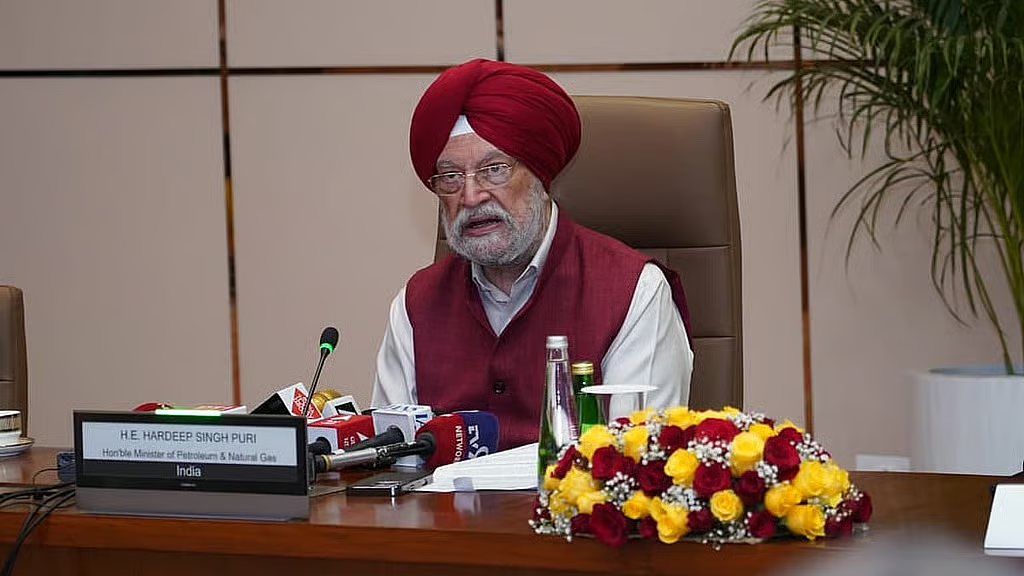
Beyond government-level cooperation, the India Canada Energy Pact encourages stronger business-to-business engagement. Energy companies, startups, and investors from both countries are encouraged to explore joint ventures, long-term supply agreements, and co-development of technologies.
India Energy Week 2026 provides a valuable platform for such interactions, bringing together global stakeholders and showcasing India’s growing role in the international energy landscape.
A Partnership Shaping the Energy Future
The India Canada Energy Pact reflects a shared vision of a future powered by secure, diversified, and cleaner energy. For India, it supports the goal of meeting rising demand while advancing the energy transition. For Canada, it opens opportunities in one of the world’s fastest-growing energy markets.
As both countries move forward with the commitments outlined in the Joint Statement, this partnership is expected to play a significant role in shaping a resilient and sustainable energy future for both nations.