India Global Big Cats Summit: A Historic Step Toward Worldwide Big Cat Conservation

India Global Big Cats Summit marks a major milestone in international wildlife protection, as India prepares to host the world’s first global gathering dedicated entirely to the conservation of big cats. Announced by Union Finance Minister Nirmala Sitharaman during the Union Budget 2026 presentation in Parliament, the summit highlights India’s growing leadership in environmental diplomacy and nature conservation. The event is expected to take place in 2026 and will bring together countries, leaders, and conservation experts from across the world to work toward a shared vision of protecting some of the planet’s most iconic species.
Thank you for reading this post, don't forget to subscribe!A Global Platform for Big Cat Conservation
The upcoming summit will be organised by the International Big Cat Alliance (IBCA), an international body focused on promoting cooperation among countries that are home to big cat species. The gathering is expected to include Heads of State, ministers, senior officials, scientists, and conservation organisations from around 95 big cat range countries.
The main goal of the summit is to encourage collective action to safeguard big cats and their habitats. Many big cat populations are under severe pressure due to shrinking forests, illegal wildlife trade, human-wildlife conflict, and climate change. By creating a global platform, the summit aims to help countries share experiences, successful models, and innovative solutions.
This international meeting also reflects a growing understanding that wildlife conservation cannot be achieved by any single nation alone. Big cats often move across borders, and the threats they face are interconnected. A united global response is therefore essential.
The International Big Cat Alliance
The International Big Cat Alliance was launched by Prime Minister Narendra Modi on April 9, 2023, and officially came into force on January 23, 2025. It has now become a treaty-based intergovernmental organisation with international legal status.
The Alliance works to bring together countries that host big cat species, encouraging them to collaborate rather than work in isolation. Its key objectives include promoting research, sharing knowledge, building capacity, and mobilising financial and technical resources for conservation.
By organising the first Global Big Cats Summit, the Alliance is taking an important step toward turning dialogue into coordinated global action. The summit is expected to strengthen partnerships and create long-term frameworks for cooperation.
Understanding Big Cats and Their Importance
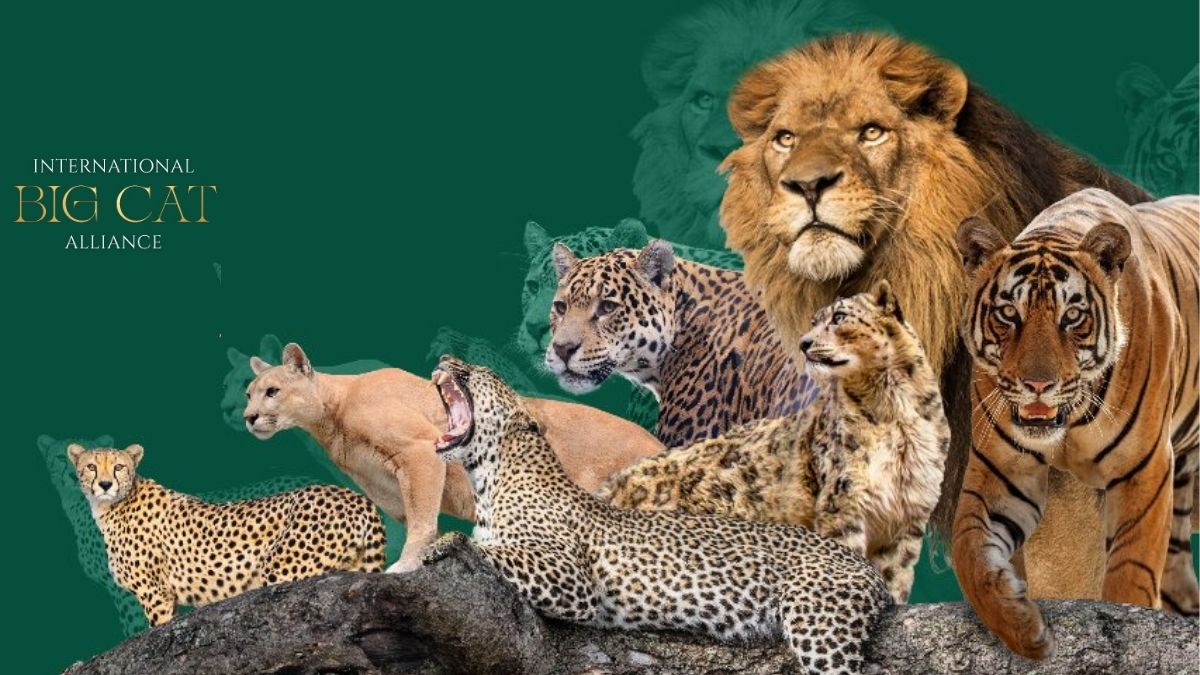
Big cats generally refer to large members of the cat family, especially those belonging to the genus Panthera. This group includes the tiger, lion, leopard, jaguar, and snow leopard. These species are capable of roaring, a unique trait that sets them apart from other cats.
Although the puma and cheetah do not belong to the Panthera genus, they are often included in broader discussions about big cats because of their size and ecological role.
Big cats are known as flagship and umbrella species. This means that protecting them also helps conserve large areas of habitat and countless other plant and animal species. Healthy big cat populations usually indicate healthy ecosystems.
India’s Rich Conservation Heritage
India has a long history of wildlife conservation and is home to several big cat species, including the Bengal tiger, Asiatic lion, Indian leopard, snow leopard, and clouded leopard. The country once also had the Asiatic cheetah, which was declared extinct in 1952. In recent years, India has taken steps toward cheetah reintroduction, showing its commitment to restoring lost species.
India’s success with initiatives such as Project Tiger and Project Lion has gained international recognition. The country now hosts the largest population of wild tigers in the world, a major conservation achievement.
Hosting the Global Big Cats Summit builds on this strong foundation and reflects India’s willingness to share its experience with the global community.
Strengthening Cross-Border Cooperation
Many big cat species live in regions that span multiple countries. For example, snow leopards range across the mountains of Inner Asia, while tigers move across parts of South and Southeast Asia. Protecting these animals requires countries to coordinate their policies, research, and enforcement efforts.
The summit is expected to encourage agreements on habitat connectivity, joint monitoring, and anti-poaching operations. It will also promote the exchange of technology, such as camera traps, satellite tracking, and data-sharing platforms.

A Step Toward a Shared Future Through India Global Big Cats Summit
The decision to host the world’s first Global Big Cats Summit places India at the center of a global movement to protect some of Earth’s most powerful and symbolic animals. Beyond conservation, the summit represents a broader message: that protecting nature is a shared responsibility and a key part of sustainable development.
By bringing nations together around a common cause, the India Global Big Cats Summit has the potential to inspire lasting international partnerships and create a safer future for big cats and the ecosystems they depend on.