


India Tests K-4 Missile From INS Arighaat

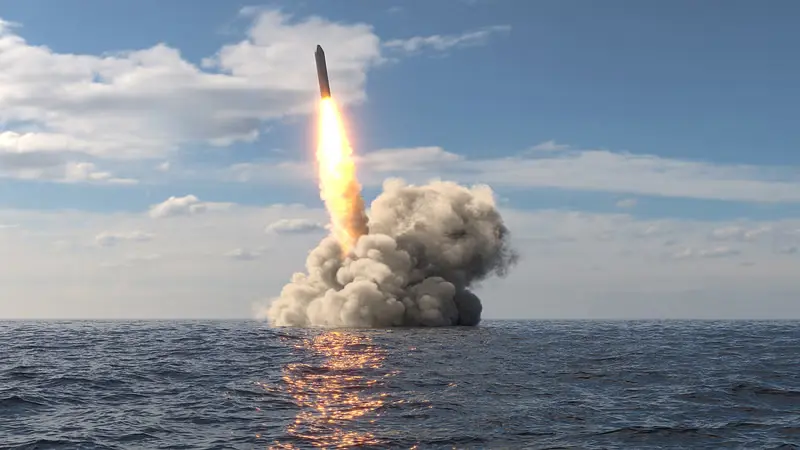
India Tests K-4 Missile in a major defence development that highlights the country’s growing strength in sea-based strategic capabilities. The intermediate-range ballistic missile was successfully launched from India’s nuclear-powered submarine INS Arighaat in the Bay of Bengal. The test took place off the coast of Visakhapatnam and is being seen as an important step in enhancing India’s underwater deterrence strength, even though the Ministry of Defence has not released an official statement.
Thank you for reading this post, don't forget to subscribe!This launch underlines India’s steady progress in strengthening its naval forces and ensuring long-term security through advanced submarine-based systems.
India Tests K-4 Missile With Significant Strategic Value
The missile tested was the K-4, a solid-fuel ballistic missile designed for launch from submarines. It is capable of reaching targets at a distance of up to 3,500 kilometres and can carry a heavy payload. Defence sources indicated that this missile is a key component in building a reliable sea-based defence capability.
Submarine-launched missiles are considered highly effective because they are difficult to detect and intercept. This makes them a powerful tool for maintaining balance and stability in the region. The recent test helps validate the missile’s performance under real operational conditions.
India Tests K-4 Missile as Part of Its Underwater Strength

The successful launch plays a vital role in strengthening India’s ability to respond effectively if needed. Sea-based missiles provide flexibility and survivability, as submarines can remain hidden deep underwater for long periods.
Experts believe that repeated trials are necessary before such missiles are fully deployed. Each test allows engineers and defence teams to fine-tune systems, check accuracy and ensure reliability. The latest launch is another step toward making the K-4 missile fully operational aboard India’s submarine fleet.
India Tests K-4 Missile From INS Arighaat
INS Arighaat is India’s second nuclear-powered ballistic missile submarine and is operated by the Strategic Forces Command. The submarine was commissioned in August last year and represents a major upgrade over earlier platforms.
With a displacement of around 6,000 tonnes, INS Arighaat is designed to carry advanced missiles and stay underwater for extended missions. It follows INS Arihant, India’s first such submarine, which became fully operational in 2018. INS Arihant mainly carries the shorter-range K-15 missile, while INS Arighaat is built to support longer-range systems like the K-4.
This launch is the first reported firing of a K-4 missile directly from INS Arighaat, after earlier trials conducted from submerged platforms.
India Tests K-4 Missile and Expands Naval Capability
The test reflects India’s long-term focus on building a strong and modern navy. Submarines like INS Arighaat add depth to India’s maritime strength and allow the country to maintain continuous patrols in strategic waters.
Having missiles with longer reach on submarines gives India the ability to maintain effective coverage without bringing vessels too close to potential threat zones. This enhances safety and operational flexibility while reinforcing overall defence preparedness.
India Tests K-4 Missile Amid Future Submarine Plans
India is also moving forward with plans to expand its submarine fleet. The third submarine under this programme, INS Aridhaman, is expected to be commissioned in early 2026. A fourth submarine is planned for induction by 2027–28.
These upcoming submarines will be larger, with a displacement of about 7,000 tonnes, offering greater endurance and improved missile-carrying capacity. In the longer term, India is also working on even bigger submarines weighing around 13,500 tonnes, equipped with more powerful nuclear reactors.
Such developments point to a clear roadmap aimed at strengthening underwater defence over the coming decades.
India Tests K-4 Missile Alongside Advanced Missile Development
Along with the K-4, India is developing more advanced submarine-launched missiles such as K-5 and K-6, which are expected to have longer ranges between 5,000 and 6,000 kilometres. These systems will further enhance India’s ability to maintain strategic balance.

The steady progression from shorter-range to longer-range missiles shows India’s focus on self-reliance and technological advancement in defence manufacturing. Each new system builds upon lessons learned from previous projects.
India Tests K-4 Missile to Strengthen Deterrence Balance
India’s defence posture relies on multiple layers, including land-based missiles and air-based systems. However, submarines are considered the most secure platform because they are hard to track and can operate silently in deep waters.
By equipping submarines with longer-range missiles like the K-4, India significantly boosts its ability to respond if required. This approach supports stability and ensures preparedness without aggressive intent, aligning with the country’s stated defence principles.
India Tests K-4 Missile as Part of Long-Term Security Vision
The recent test sends a clear signal about India’s commitment to safeguarding its maritime interests and national security. The integration of advanced missiles with modern submarines reflects careful planning and sustained investment in defence infrastructure.
As testing continues and more submarines enter service, India’s underwater fleet is expected to become a central pillar of its defence framework. The successful K-4 launch from INS Arighaat is another milestone in this ongoing journey.