


Internal Security Institutions in India

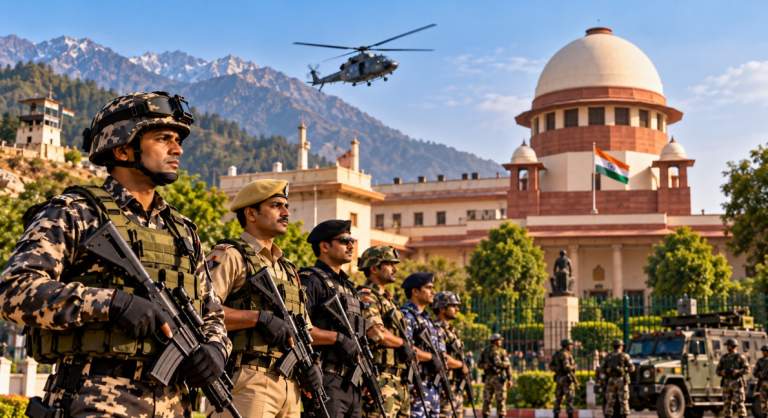
Internal Security Institutions form an important network that helps India deal with terrorism, cybercrime, organised crime, extremism, border challenges and other threats. The system includes intelligence agencies, investigation bodies, specialised security forces, cyber security organisations and coordination platforms. These institutions work at the central and state levels and share information to improve India’s overall security response.
India’s internal security environment is changing with the growth of digital technology, cross-border crime, online financial fraud, cyber attacks and new forms of information warfare. Because of this, coordination between different agencies has become increasingly important.

National Security Council and Strategic Coordination
The National Security Council (NSC) is India’s main advisory body for national security and strategic matters. It was established in 1998. The National Security Council Secretariat supports the national security decision-making system, with the National Security Adviser playing a central role.
The NSC system provides a framework for examining important security and strategic issues involving different ministries and agencies.
Multi-Agency Centre for Intelligence Sharing
The Multi-Agency Centre (MAC) operates under the administrative control of the Intelligence Bureau. It was established in 2001 following recommendations made after the Kargil conflict.
MAC helps security agencies share and analyse intelligence related to terrorism and other security threats. Subsidiary Multi-Agency Centres, or SMACs, operate at the state level to support local intelligence coordination.
Technology has also become an important part of intelligence analysis, with modern systems using tools such as artificial intelligence and geographic information systems to identify possible security hotspots.
NATGRID Connects Security Data
The National Intelligence Grid (NATGRID) was developed to improve access to information needed by authorised security and law-enforcement agencies. The system was conceived after the 2008 Mumbai terrorist attacks.
NATGRID links information from different areas, including immigration, banking, telecommunications, air travel and taxation. Data analytics can help authorised agencies identify connections between people, transactions and other security-related information.
Intelligence and Investigation Agencies
The Intelligence Bureau (IB) is India’s main domestic intelligence organisation. It works under the Ministry of Home Affairs and focuses on areas such as counter-intelligence, counter-terrorism and internal security.
The National Investigation Agency (NIA) was created under the National Investigation Agency Act, 2008. It investigates terrorism-related offences, terror financing and other cases that fall within its legal jurisdiction.
The Central Bureau of Investigation (CBI) is India’s major central investigative agency. It operates under the Department of Personnel and has investigative powers under the Delhi Special Police Establishment Act, 1946. It also serves as India’s national central bureau for cooperation with Interpol.
The Financial Intelligence Unit–India (FIU-IND) works under the Department of Revenue, Ministry of Finance. It receives and analyses information about suspicious financial transactions and supports efforts against money laundering and terror financing.
Cyber Security Gets Greater Attention
The growth of online crime has increased the importance of specialised Internal Security Institutions dealing with cyber threats.
The Indian Cyber Crime Coordination Centre (I4C) provides a national framework for coordinating action against cybercrime. It works with police agencies, banks, telecommunications companies and other stakeholders. Its activities include cyber threat analysis and support for reporting and investigating online crimes.
The National Critical Information Infrastructure Protection Centre (NCIIPC) is responsible for protecting critical information infrastructure. It focuses on digital systems that are important for sectors such as energy, banking, transport and telecommunications.
Central Armed Police Forces and Border Security
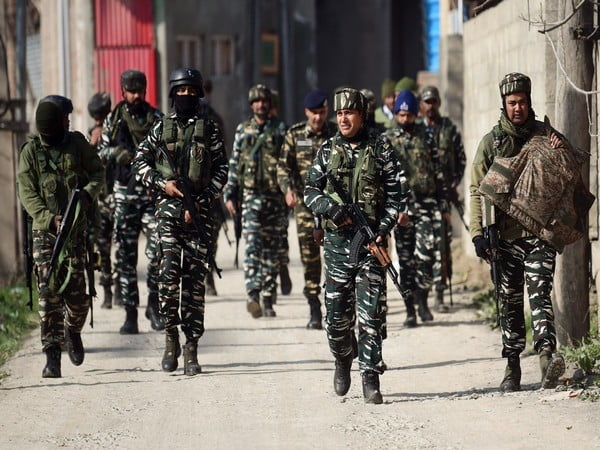
India’s internal security system also depends on the Central Armed Police Forces (CAPFs). Different forces have specialised responsibilities.
The Border Security Force (BSF) guards India’s borders with Pakistan and Bangladesh. The Indo-Tibetan Border Police (ITBP) operates along the high-altitude border with China. The Sashastra Seema Bal (SSB) is responsible for security along India’s borders with Nepal and Bhutan.
The Assam Rifles has an important role along the Myanmar border and in counter-insurgency operations in the Northeast. The Central Reserve Police Force (CRPF) handles a wide range of internal security duties, including counter-insurgency and election security.
The Central Industrial Security Force (CISF) protects important installations, airports and other strategic facilities, while the National Security Guard (NSG) specialises in counter-terrorism and hostage-rescue operations.
Three-Tier Coastal Security System
India also has a multi-layered coastal security arrangement. The Indian Navy has overall responsibility for maritime security, while the Indian Coast Guard plays a major role in coastal and offshore surveillance and coordination.
State Coastal Police operate closer to the shore and help monitor coastal areas and smaller vessels. This system was strengthened after the 2008 Mumbai attacks.
Recent Internal Security Focus in 2026
The importance of coordination among Internal Security Institutions was highlighted again during the 9th National Security Strategies Conference, held in New Delhi in August 2026. The conference brought together senior officials from central and state security organisations.
Discussions covered counter-terrorism, cybercrime, narcotics control, border infiltration and information warfare. The use of artificial intelligence for analysing intelligence inputs was also highlighted.
The Ministry of Home Affairs has additionally introduced the PRAHAAR framework in 2026 as a national counter-terrorism policy and strategy. It focuses on prevention, response, coordination, human rights, international cooperation and recovery from terrorism-related threats.
India’s internal security architecture therefore combines intelligence collection, investigation, financial monitoring, cyber protection, border management and specialised security forces. The increasing use of technology and stronger information sharing are becoming central to how these institutions respond to modern security challenges.