



New Sunflower Species Found in Arunachal

New sunflower species have been discovered in the high-altitude Himalayan region of Arunachal Pradesh, adding another important record to India’s rich plant biodiversity. Researchers from the CSIR-Institute of Himalayan Bioresource Technology (IHBT) have identified a previously unknown flowering plant belonging to the sunflower family. The newly described species has been named Doronicum sanctum and was formally presented in a scientific study published on August 11, 2026.
The discovery has drawn attention to the unique biodiversity of the eastern Himalayas, especially Arunachal Pradesh, which is known for its forests, mountains, rivers and rare plant and animal species. Scientists say discoveries like this show why continued research and conservation work are important in remote Himalayan regions.

A New Member of the Sunflower Family
Doronicum sanctum belongs to the genus Doronicum, a group of flowering plants commonly known as Leopard’s Bane. The genus is part of the Asteraceae family, one of the largest families of flowering plants in the world.
The Asteraceae family includes many well-known plants such as sunflowers, daisies and marigolds. However, Doronicum sanctum is different from the common sunflowers usually seen in gardens and farms. It is a high-altitude flowering plant adapted to the cold and challenging conditions of the Himalayan mountains.
Researchers have described the discovery as especially important because it is the first documented member of the Doronicum genus found in Northeast India. Earlier records of this genus in India were mainly limited to the Western Himalayan region.
Discovery in the High Mountains of Tawang
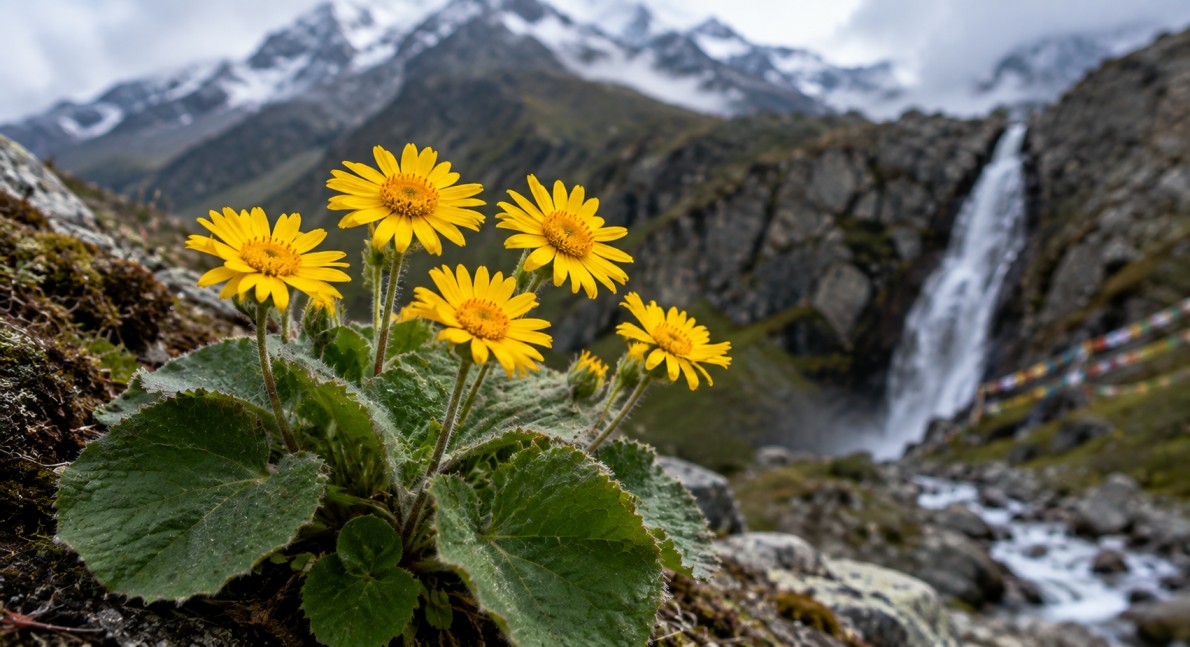
The new sunflower species was found in Tawang district of Arunachal Pradesh at an elevation of around 4,000 to 4,086 metres above sea level. The discovery site is located near the Chumi Gyatse Holy Waterfalls, an area that is known for its natural beauty and cultural importance.
The eastern Himalayan landscape provides a special environment for plants that can survive at high altitudes. Cold temperatures, strong winds, rocky slopes and a short growing season create difficult conditions. Despite these challenges, the region supports many unique plant species that are not easily found elsewhere.
The location of the discovery also highlights the importance of botanical surveys in remote parts of India. Many Himalayan areas remain difficult to access, and scientists believe that further research could lead to the discovery of more previously undocumented plants.
Unique Features of Doronicum sanctum
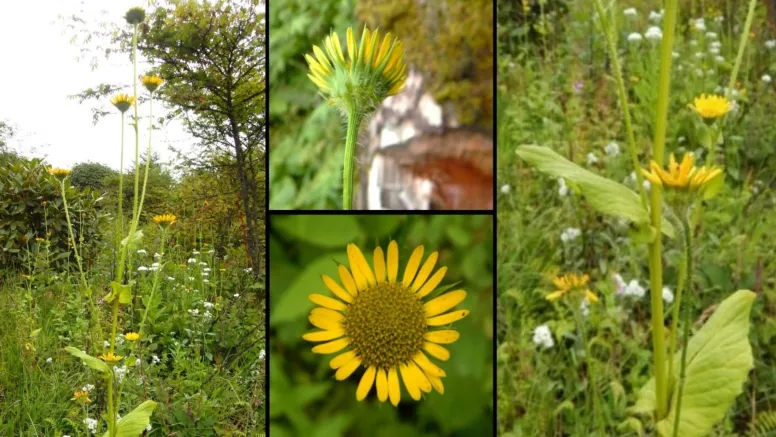
Researchers identified Doronicum sanctum by carefully studying its physical characteristics. The plant has attractive yellow flowers and heart-shaped leaves. Other features helped scientists separate it from related species.
The plant also has pubescent ray cypselae and a caducous pappus. These scientific terms describe special features connected to the plant’s fruit and seed structure. Such details are important because closely related plant species can often look very similar at first glance.
In the sunflower family, a cypsela is a type of dry fruit commonly produced by flowering plants. The pappus is a modified structure that can help seeds spread through wind or other natural processes. Studying these features allows researchers to accurately classify plants and understand their relationship with other species.
The species name sanctum comes from Latin and means “holy.” The name is believed to be connected to the religious and cultural importance of the area where the plant was discovered.
Arunachal Pradesh and Himalayan Biodiversity
Arunachal Pradesh is increasingly becoming an important region for biodiversity research in India. Its forests and mountain ecosystems are home to a large variety of plants, birds, insects and animals. The state’s location in the eastern Himalayas makes it especially important for scientists studying climate change and environmental changes.
High-altitude plants are particularly sensitive to changes in temperature and rainfall. As global temperatures continue to rise, scientists are closely studying how mountain ecosystems are changing. Plants growing in small and isolated areas may face greater risks if their natural habitats are affected by climate change or human activity.
The discovery of Doronicum sanctum comes at a time when biodiversity conservation has become an important global topic. Countries around the world are increasing efforts to document plant and animal species before environmental changes cause permanent damage to natural habitats.
Earlier Plant Discoveries in Tawang
The Tawang region has already produced several important discoveries related to Himalayan plant life. In 2021, researchers identified another alpine flowering plant, Cremanthodium indicum, near Penga-Teng Tso Lake in the Tawang region.
That plant was later assessed as critically endangered, showing how vulnerable some high-altitude species can be. Many such plants grow only in limited locations, making habitat protection especially important.
The discovery of Doronicum sanctum adds another chapter to the growing scientific record of Arunachal Pradesh. It also brings attention to the need for continued field research, careful documentation and protection of India’s unique Himalayan ecosystems.