



Interstellar Comet 3I/ATLAS Methane Discovery by NASA

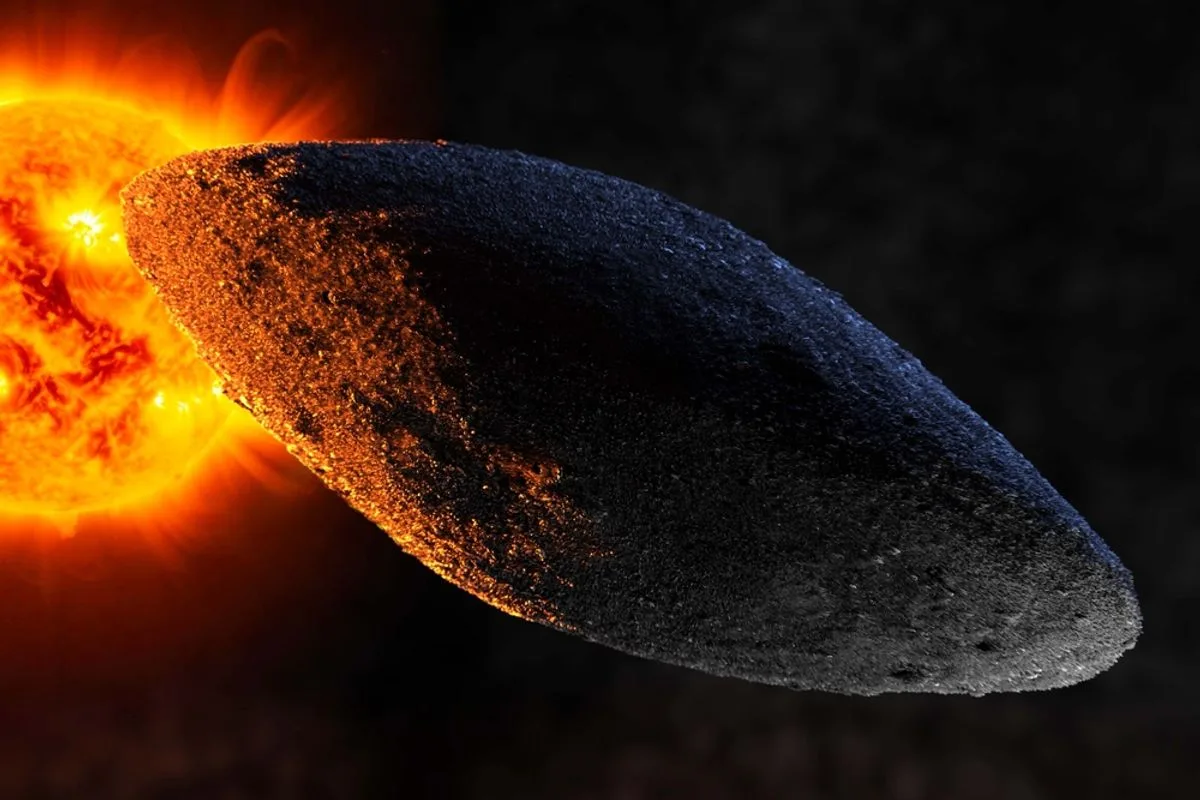
Interstellar Comet 3I/ATLAS Methane discovery has brought fresh attention to space research and the study of objects beyond our Solar System. Scientists from NASA and the European Space Agency recently confirmed the presence of methane on the interstellar comet 3I/ATLAS. This important finding was made using the James Webb Space Telescope, which continues to uncover hidden details about distant cosmic objects.
Role of the James Webb Space Telescope
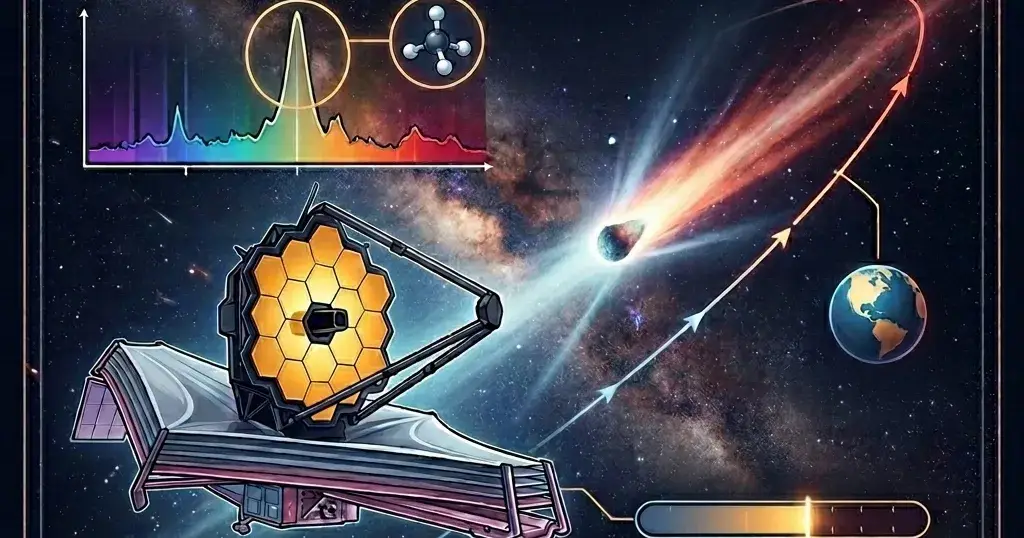
The James Webb Space Telescope is one of the most advanced observatories ever launched into space. It uses infrared technology to study cold and faraway objects that cannot be seen clearly with ordinary telescopes. Its Mid-Infrared Instrument (MIRI) helps scientists detect gases, dust, and ice in space. With this tool, researchers were able to identify methane on 3I/ATLAS, marking the first direct detection of this gas in an interstellar object.

What Are Interstellar Objects
Interstellar objects are natural bodies that come from outside our Solar System. Unlike planets and regular comets, they do not orbit the Sun. Instead, they travel on a path that brings them into the Solar System for a short time before they continue their journey back into deep space. Before 3I/ATLAS, only two such objects had been confirmed ʻOumuamua and Borisov. These rare visitors help scientists understand conditions in distant star systems.
Discovery of Comet 3I/ATLAS
Comet 3I/ATLAS was discovered on July 1, 2025, by the ATLAS survey telescope in Chile. This telescope is designed to scan the sky and detect moving objects like asteroids and comets. After its discovery, scientists quickly began observing the comet more closely. The James Webb Space Telescope later captured detailed data about its chemical composition during observation periods in December 2025.
Methane and Space Chemistry
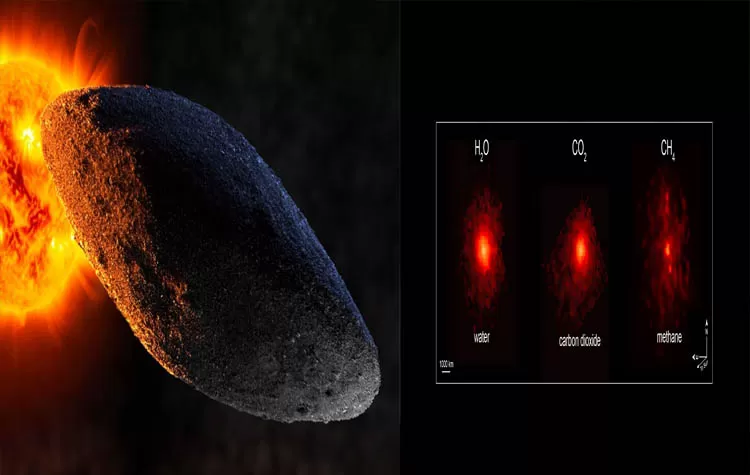
Methane is a simple molecule made of carbon and hydrogen. It is commonly found in space and plays an important role in understanding how celestial objects form. Scientists often study methane along with water and carbon dioxide to compare different environments in which comets are created. The presence of methane on 3I/ATLAS provides clues about the conditions in another star system where this comet may have formed.
Unique Composition of 3I/ATLAS
One of the most interesting findings about 3I/ATLAS is its unusual chemical makeup. Scientists observed high levels of carbon dioxide along with methane. The ratio of methane to water is different from most comets found in our Solar System. This suggests that the comet formed in a region with different temperatures and chemical conditions, making it unique and valuable for research.
Observation Details and Distance
The methane detection was made during several observations in December 2025. At that time, the comet was located between 329 million and 379 million kilometers from the Sun. Even at such a great distance, the James Webb Space Telescope was able to gather clear and detailed information. This shows how powerful modern space technology has become.
Importance of the Discovery
The findings were published in The Astrophysical Journal Letters in April 2026. This research provides the first mid-infrared chemical fingerprint of an interstellar object. It gives scientists a new way to study and compare objects from beyond our Solar System. The discovery also connects with current developments in space exploration, where advanced tools are helping researchers learn more about the universe.
Growing Interest in Space Exploration
This discovery comes at a time when global interest in space science is increasing. With new missions, improved telescopes, and international collaboration, scientists are exploring deeper into space. Interstellar objects like 3I/ATLAS offer rare opportunities to study materials that formed around other stars, helping us better understand how planets and systems develop across the universe.