




Invasive cane toad: Global Ecological Threat and Expanding Environmental Impact

Invasive cane toad populations are rising worldwide, turning this species into one of the most notorious examples of how a single introduction can destabilise entire ecosystems. The toad’s spread across continents highlights the dangers of relocating wildlife without understanding long-term ecological consequences. Today, the invasive cane toad is considered a major biological threat, known for overwhelming native species, poisoning predators and altering natural food webs. This news analysis explores how the species evolved into a global problem, its adaptability, its toxic defences and why countries continue struggling to contain its impact.
Thank you for reading this post, don't forget to subscribe!Invasive cane toad: How a pest-control experiment backfired
The invasive cane toad was originally introduced outside its native South and Central America as part of an agricultural strategy. Officials believed that releasing the species into farmlands would help control beetles and pests damaging sugar-cane crops. The plan backfired dramatically. Instead of reducing pest populations, the toads multiplied at alarming rates and spread far beyond farmlands, moving into forests, wetlands and even urban neighbourhoods.
From the Caribbean to Pacific islands and especially Australia, the invasive cane toad became a symbol of ecological miscalculation. With few natural predators in introduced regions, the species faced little resistance. Over time, they outcompeted native amphibians and disrupted ecological balances already vulnerable to human activities.
Invasive cane toad: Origins and rapid global introduction

The species was transported to multiple regions throughout the 20th century. Countries including Australia, Hawaii, Fiji, the Philippines and several Caribbean islands imported the cane toad hoping to protect sugar industries. However, the toads failed to control beetle populations since the pests lived in parts of sugar-cane plants the toads could not reach.
What followed was a rapid spread. The invasive cane toad adapted to its new environments, reproduced quickly and colonised landscapes with astonishing resilience. Their introduction remains one of the most cited failures in ecological experimentation.
Invasive cane toad: Physical traits and toxic defences
Adult cane toads generally measure between 10–20 centimetres, though some grow significantly larger. Their muscular build, dry and warty skin and large parotoid glands behind the eyes are defining characteristics. These glands secrete a potent cocktail of bufotoxins, which can be fatal to predators that have no natural resistance. Even adult freshwater crocodiles and certain snakes have suffered declines due to ingestion of cane toads in Australia.
Juvenile cane toads, though smaller and less toxic, still possess survival advantages, allowing the population to expand consistently. Their toxins also pose risks to pets like dogs and cats, creating public safety concerns in residential areas.
Invasive cane toad: Adaptability and invasive success
The invasive cane toad thrives under conditions that many native species cannot withstand. Their physiology allows them to survive extreme heat, dryness and sudden weather variations. They reproduce rapidly, laying thousands of eggs at a time in freshwater bodies, making population control extremely difficult.
Studies show that cane toads at the invasion front develop longer limbs and better endurance, enabling faster dispersal. Their ability to thrive in disturbed habitats construction sites, gardens, farms and city outskirts makes them resilient in the face of urbanisation. Human activity inadvertently creates new pathways for the species to expand.
Invasive cane toad: Ecological impact across continents
The species consumes insects, small vertebrates and carrion, shifting the dynamics of ecosystems as they establish dominance. The invasive cane toad competes directly with local amphibians for food resources and habitats. Their toxic secretions continue to devastate predator populations in Australia, where animals like quolls, snakes and certain lizards die upon attempting to consume them.
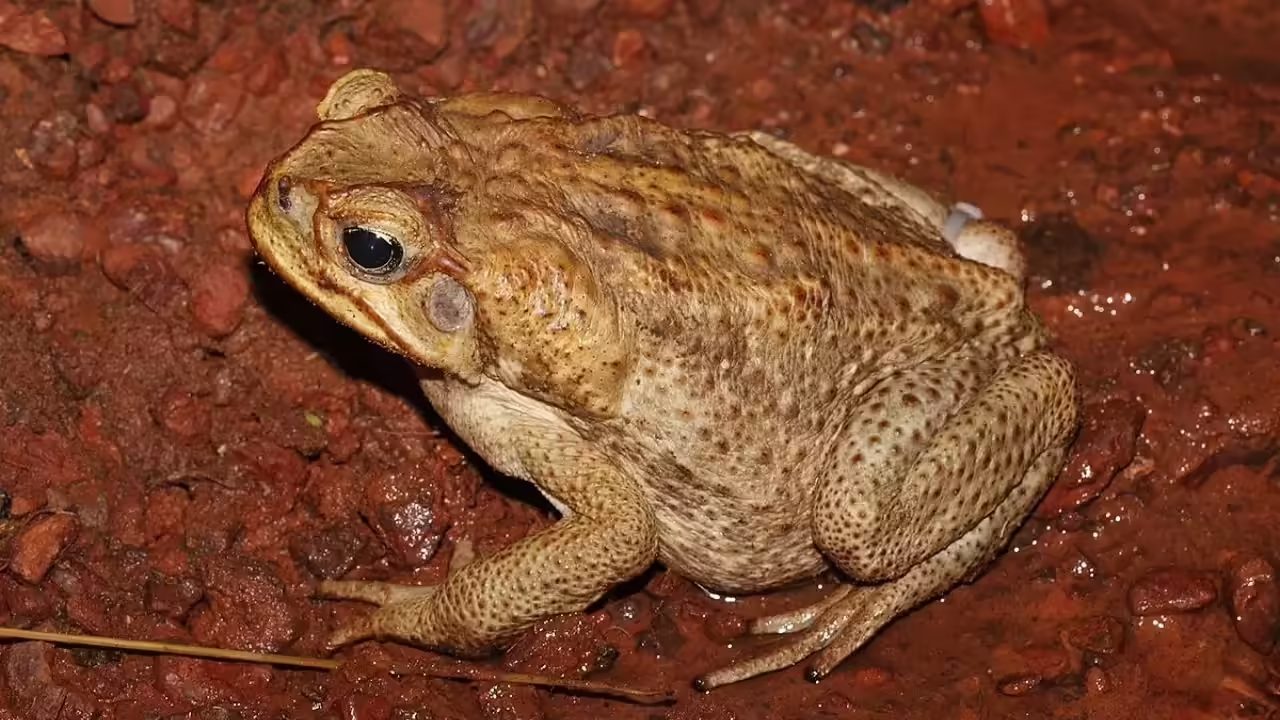
Their presence has reshaped food webs and destabilised ecological interactions developed over millennia. Countries invaded by the species struggle with management due to its high reproductive rate and wide environmental tolerance. Conservationists warn that without sustained intervention, the invasive cane toad could spread into newer regions already stressed by climate change and habitat loss.
Invasive cane toad: Attempts at management
Authorities use trapping, fencing, public awareness campaigns and selective removal efforts to control populations. However, large-scale eradication is nearly impossible. The species’ massive numbers and adaptability mean that management strategies often only slow, not stop, expansion.
Some scientists are exploring biological control methods, behavioural conditioning for predators and habitat-based strategies, though none provide a complete solution. The challenge lies in addressing a species that evolves rapidly and thrives across landscapes altered by human development.