Japan’s Shinkansen: Redefining Speed, Safety, and Design in 2025

Japan’s Shinkansen, the country’s legendary high-speed rail network, continues to stand as a global benchmark for speed, safety, and innovation in modern transportation. In 2025, the network once again made international headlines when Prime Minister Narendra Modi travelled aboard the Shinkansen from Tokyo to Sendai. This event highlighted not only the importance of the system in Japan but also its enduring status as a symbol of engineering excellence worldwide.
Thank you for reading this post, don't forget to subscribe!A Historic Journey That Redefined Travel
The Shinkansen, literally meaning “new trunk line,” was first launched in 1964, just in time for the Tokyo Olympics. Its debut was nothing short of revolutionary, connecting Tokyo, Nagoya, and Osaka in record time. Before its introduction, the journey between Tokyo and Osaka took nearly 16.5 hours in 1889 by train. By 1965, the Shinkansen had reduced the same route to just over three hours. This leap forward marked the beginning of Japan’s transformation into a nation powered by high-speed rail.
Over the last six decades, the Shinkansen has expanded to cover the length of the country, from the snowy landscapes of Hokkaido in the north to the subtropical climate of Kyushu in the south. This vast network has not only made domestic travel more convenient but has also shaped the very geography of Japan by connecting distant regions and reducing travel times dramatically.
Speed and Efficiency That Rival Air Travel
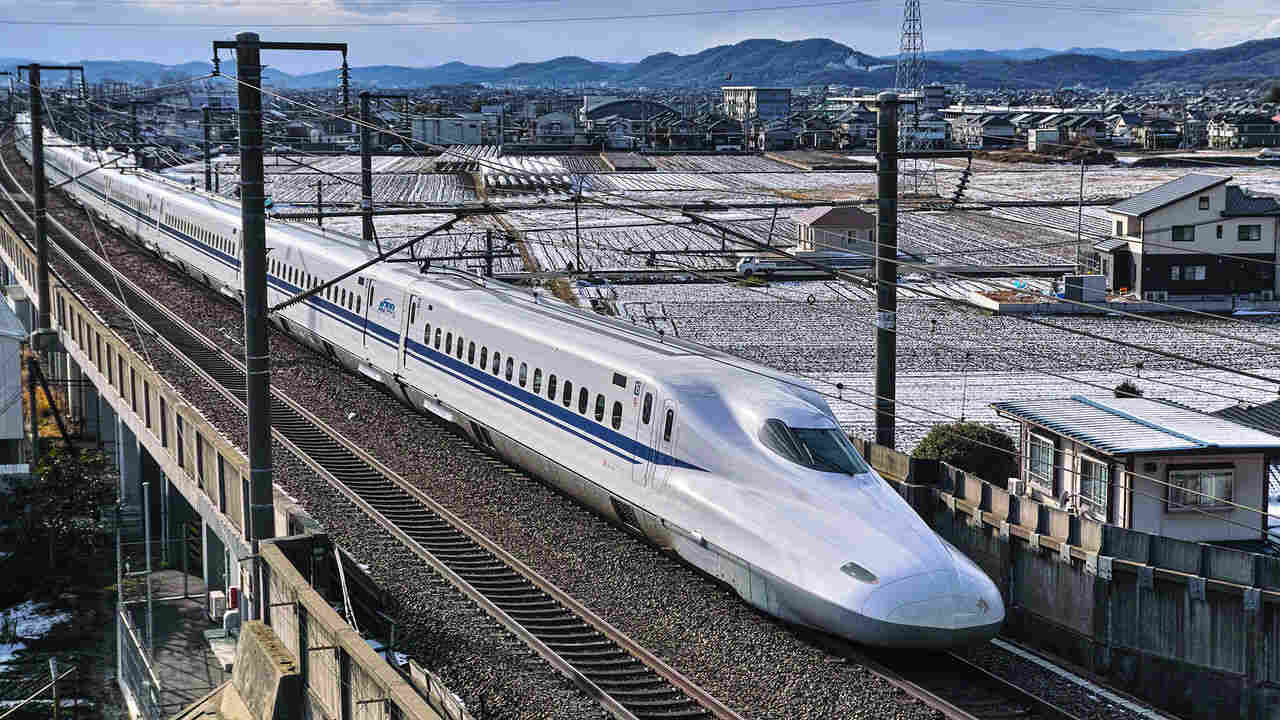
One of the greatest strengths of Japan’s Shinkansen lies in its ability to combine speed with efficiency. Today, trains operate at speeds between 275 km/h and 320 km/h depending on the line. The fastest service, the Nozomi, connects Tokyo and Osaka—a distance of 515 kilometers—in just 2 hours and 21 minutes. This means passengers can travel between two of Japan’s largest economic centers in less time than it often takes to board, fly, and disembark from a domestic flight.
Dedicated tracks, advanced signalling systems, and the absence of level crossings ensure that these trains are never delayed by slower local services. Unlike many rail systems around the world, the Shinkansen operates with remarkable precision. Trains often depart and arrive within seconds of their scheduled times, a level of punctuality that continues to amaze international visitors.
An Impeccable Safety Record
Japan’s Shinkansen is not just fast; it is also one of the safest high-speed rail systems in the world. In over 60 years of operation, the network has reported zero passenger fatalities due to accidents. This extraordinary record is the result of meticulous planning, constant monitoring, and rigorous maintenance standards.
Even during natural disasters such as earthquakes, the Shinkansen has proven its resilience. Sophisticated early warning systems automatically slow or halt trains at the first sign of seismic activity, ensuring passenger safety. This commitment to protecting lives has made the Shinkansen a trusted and dependable choice for millions of daily commuters and travelers.
Biomimicry and Design Excellence
One of the most fascinating aspects of the Shinkansen’s development is its use of biomimicry, where engineers take inspiration from nature to solve design challenges. In its early years, engineers faced a serious issue: when trains entered tunnels at high speed, they created loud sonic booms due to sudden air pressure changes.
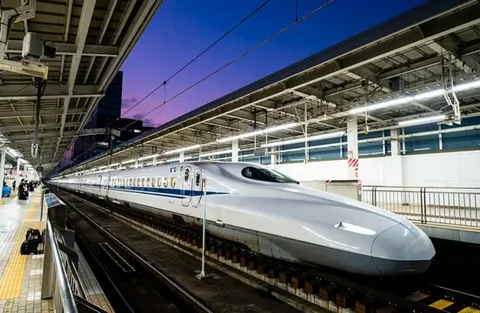
The solution came from Eiji Nakatsu, an engineer and avid birdwatcher, who observed the kingfisher bird diving into water with barely a splash. By redesigning the train’s nose to mimic the bird’s streamlined beak, engineers not only eliminated the tunnel boom but also increased the train’s efficiency and reduced energy consumption. This breakthrough highlighted how lessons from the natural world can shape cutting-edge technology.
The Broader Impact on Japan and the World
The impact of Japan’s Shinkansen extends far beyond transportation. Domestically, it has boosted regional economies by making smaller cities more accessible and attractive for tourism and business investment. Towns once considered remote are now within easy reach of Tokyo or Osaka, leading to urban growth and cultural exchange across regions.
Internationally, the Shinkansen has become a model for high-speed rail development. Its technology and operational standards have inspired projects in countries including China, France, and India, where the Mumbai–Ahmedabad high-speed rail project is being built with Japanese expertise. The system’s success demonstrates that high-speed rail can be both environmentally sustainable and economically transformative.
Looking Toward the Future
As of 2025, the Shinkansen continues to evolve with newer trains offering greater speed, comfort, and environmental benefits. Japan is also investing in magnetic levitation (maglev) technology, which aims to push travel speeds even further beyond today’s limits. With these advancements, the Shinkansen is set to maintain its reputation as a pioneer in global railway innovation.
At the same time, its cultural impact cannot be overlooked. To the Japanese people, the Shinkansen is more than just a train; it is a symbol of precision, progress, and resilience. To the world, it remains a shining example of how infrastructure can drive national development while setting new standards in technology and safety.
Conclusion
Japan’s Shinkansen is more than a railway network—it is a story of vision, engineering brilliance, and a commitment to excellence. From its humble beginnings in 1964 to its recognition as a global standard in 2025, it has transformed the way people move, work, and connect. As nations across the world look to replicate its success, the Shinkansen will continue to stand as proof that modern transportation can combine speed, safety, and sustainability without compromise.