Keralam Renaming: Centre Clears Name Change

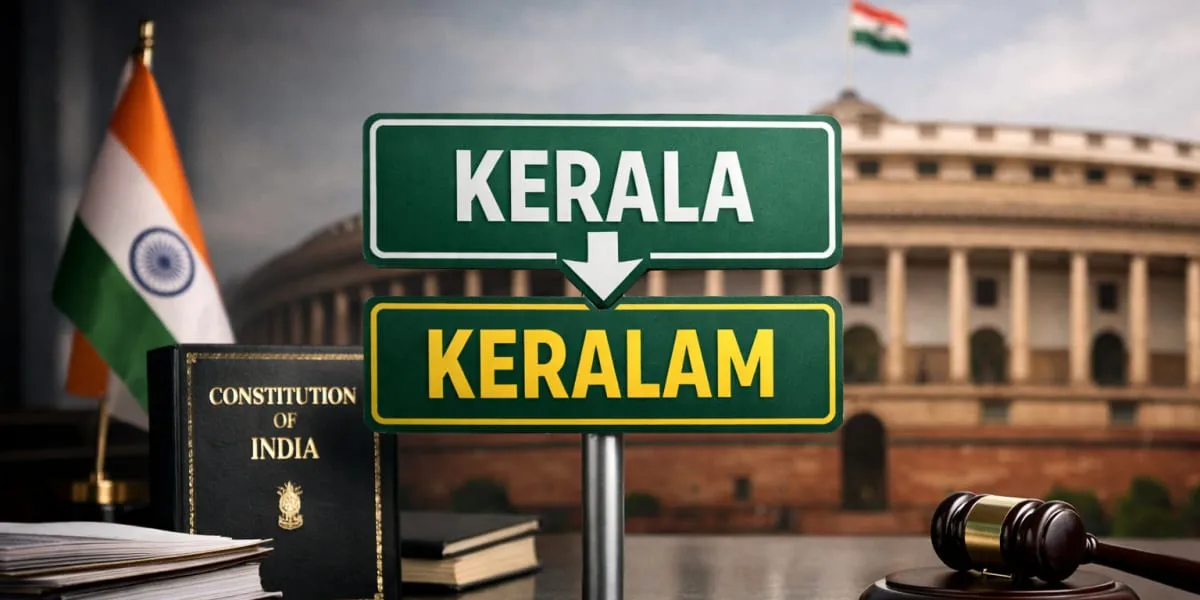
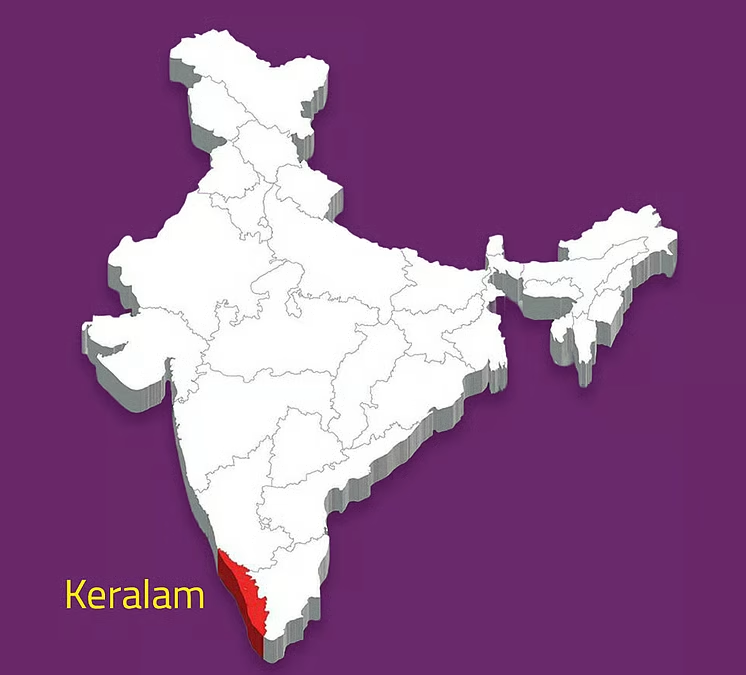
Keralam Renaming has moved a step forward after the Union Cabinet approved a proposal to officially change the name of Kerala to “Keralam.” The decision marks an important development in recognising the Malayalam name of the state within the Constitution of India. The move comes as political discussions are increasing in the state ahead of the upcoming Assembly elections.
Thank you for reading this post, don't forget to subscribe!The proposal had been pending since 2024, when the Kerala Legislative Assembly passed a unanimous resolution requesting the Centre to update the state’s name in the Constitution. The state government argued that “Keralam” is the original name used in Malayalam and better reflects the cultural and linguistic identity of the region.
How the Process Works
With Cabinet approval now granted, the constitutional process can begin formally. Under Article 3 of the Constitution of India, Parliament has the authority to change the name, area, or boundaries of any state. However, before introducing such a Bill, the President must seek the views of the concerned state legislature.
In this case, a proposed Bill titled the Kerala (Alteration of Name) Bill, 2026 will be prepared and sent to the Kerala Legislative Assembly for its opinion. Once the Assembly shares its response, the Union government can introduce the Bill in Parliament with the President’s recommendation.
Officials have confirmed that the proposal was reviewed by the Ministry of Home Affairs and legally examined by the Ministry of Law and Justice before being placed before the Cabinet.
Why the Name Change Matters
The idea behind Keralam Renaming is rooted in language and identity. “Kerala” is the English version of the state’s name, while “Keralam” is how it is written and spoken in Malayalam, the state’s official language. Supporters of the change say that updating the constitutional name is a way to respect local culture and heritage.
Language has always played a major role in India’s state formation. Kerala itself was created on November 1, 1956, after the States Reorganisation Act reorganised state boundaries based on language. This date is celebrated every year as Kerala Piravi Day, marking the birth of the modern state.
Many people in the state believe that using “Keralam” officially would bring the constitutional name closer to everyday usage. The government has described the step as symbolic but meaningful.
Political Timing and Public Debate
The approval of Keralam Renaming has come at a time when political discussions are gaining momentum in the state. Assembly elections are approaching, and parties are actively presenting their achievements and promises to voters.
Some observers believe that the name change could strengthen regional pride and cultural identity. Others see it as a natural correction rather than a political strategy. So far, there has been no major opposition within the state, as the original resolution in 2024 was passed unanimously.
Across India, several cities and states have changed their names in recent decades to reflect local languages or historical roots. Examples include Bombay becoming Mumbai and Madras becoming Chennai. These changes were often aimed at restoring traditional names or removing colonial-era influences.
Administrative Impact
If Parliament approves the Bill and it receives Presidential assent, “Keralam” will replace “Kerala” in the First Schedule of the Constitution. Government records, official documents, and legal references would gradually adopt the updated name.
In daily life, however, the impact may be limited. Many people already use “Keralam” in Malayalam conversations and media. English-language communication may continue to use “Kerala” informally, depending on public preference and international usage.
The government is expected to manage the transition smoothly to avoid confusion in official communication, banking systems, passports, and other documentation.
Cultural Significance
Keralam Renaming carries emotional value for many residents. Kerala is known for its strong literary tradition, high literacy rate, and rich cultural heritage. Malayalam language and literature have played a central role in shaping the state’s identity.
By adopting “Keralam” officially, supporters believe the state can highlight its linguistic roots more clearly. Cultural organisations and writers have often pointed out that the Malayalam name better reflects the spirit of the land and its people.
The state is also globally recognised for tourism, Ayurveda, backwaters, and festivals like Onam. International branding may continue to use “Kerala” widely, but within India, “Keralam” could gain stronger recognition.
Broader National Context
Across the country, discussions about cultural identity and regional pride have become more visible in recent years. From promoting local languages to celebrating traditional festivals, states are focusing on preserving their heritage while also participating in national development.

At the same time, India is moving forward on digital governance, economic reforms, and infrastructure expansion. In this environment, symbolic decisions like Keralam Renaming show how cultural recognition can go hand in hand with administrative progress.
The Centre’s approval also reflects coordination between state and central governments on constitutional matters. While political differences may exist on other issues, the unanimous resolution from the Kerala Assembly helped the proposal move forward without major controversy.
What Happens Next
The next stage involves sending the proposed Bill to the Kerala Legislative Assembly for its formal views. After that, Parliament will debate and vote on the amendment. If passed and signed by the President, the new name will become official under the Constitution.
Until then, Kerala continues to function under its existing name in constitutional documents. However, the Cabinet’s approval marks a significant milestone in the journey toward Keralam Renaming.
As discussions continue, many citizens are watching with interest to see how the process unfolds. Whether seen as a cultural correction or a political statement, the step reflects the continuing importance of language and identity in India’s federal structure.