NASA Great Dyke Discovery Reveals Hidden Ancient Structure

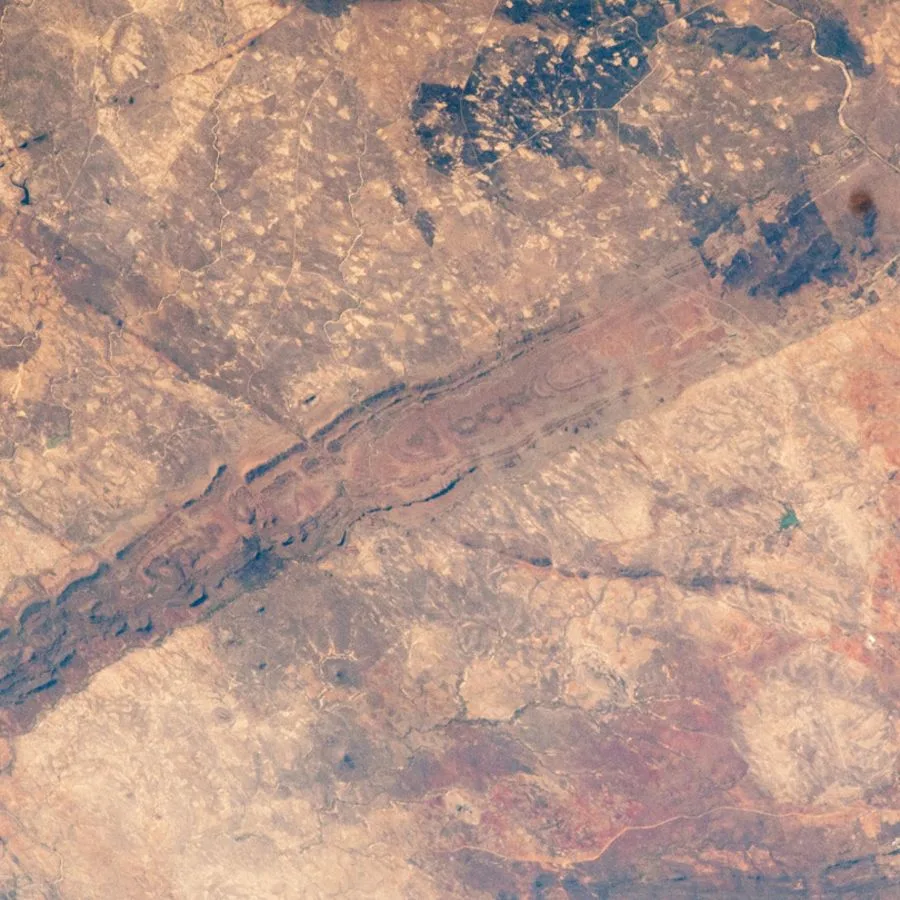
NASA Great Dyke Discovery has revealed a hidden geological structure deep inside Zimbabwe’s famous Great Dyke formation. Scientists used satellite imaging and geophysics mapping to detect the ancient feature, which is believed to be around 2.5 billion years old.
Thank you for reading this post, don't forget to subscribe!NASA Great Dyke Discovery and Ancient Earth
The Great Dyke of Zimbabwe is one of the world’s oldest geological formations. It stretches about 550 kilometres from north-east to south-west across central Zimbabwe. The width of the formation ranges from 3 to 12 kilometres.
Researchers say the hidden structure cannot be seen on the surface. It was discovered through advanced satellite technology and underground mapping methods. Scientists believe the structure may be an ancient magmatic pipe or a magma storage zone formed during the early history of Earth.
What Makes the Great Dyke Special
The Great Dyke is not a normal dike. Geologists classify it as a lopolith, which means it has a saucer-like shape that lies parallel to nearby rock layers.
The formation dates back to the Archaean Eon, a time when the Earth’s crust was still developing. Because the region remained tectonically stable for billions of years, the Great Dyke preserved many ancient geological features inside it.
The hidden internal structure discovered by NASA-funded research may help scientists better understand how magma moved and cooled deep underground in the early Earth.
Rich Mineral Resources Inside the Great Dyke
The Great Dyke is also famous for its rich mineral wealth. It contains valuable metals such as platinum, chromium, nickel, copper, iron, titanium, vanadium and tin.
These minerals formed as magma slowly cooled and separated into different layers over time. Scientists study these mineral-rich zones to understand Earth’s ancient volcanic and geological processes.
Zimbabwe’s Great Dyke remains one of the most important geological sites in the world for studying early crust formation and ancient magma systems.
Modern Technology Helps Geological Research
Satellite imagery and geophysics mapping have become important tools for studying hidden underground structures. These technologies allow scientists to examine deep geological formations without digging into the surface.
The NASA Great Dyke Discovery shows how modern space-based technology can help researchers uncover secrets buried deep inside the Earth for billions of years.