



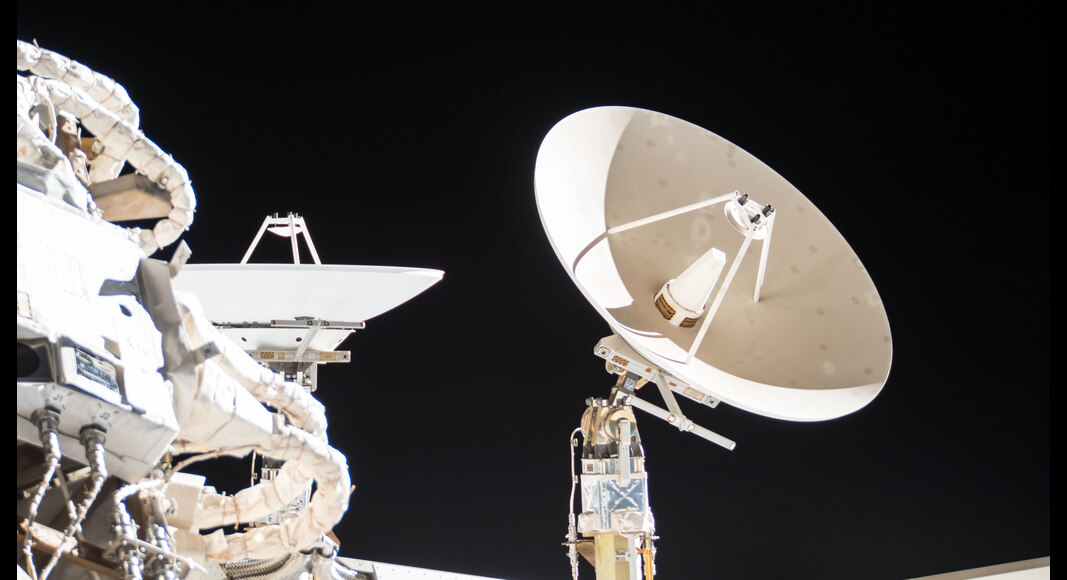
Ku-band Antenna Installed on ISS

Ku-band Antenna installation on the International Space Station marked another important step in maintaining reliable communication between astronauts in orbit and teams on Earth. On 25 August 2026, NASA astronaut Anil Menon and European Space Agency astronaut Sophie Adenot completed a spacewalk outside the International Space Station (ISS) to install and connect a replacement Ku-band communication antenna. The operation, known as U.S. Spacewalk 98, lasted for around six and a half hours.
The spacewalk began at approximately 8:27 a.m. EDT and ended at 2:57 p.m. EDT. Working in the challenging environment of space, the two astronauts carried out maintenance activities on the exterior of the orbital laboratory. The successful installation of the new communication equipment is important for the ISS, which depends on a strong and continuous connection with ground stations for daily operations, scientific research, and crew support.

Ku-band Antenna and ISS Communication
The Ku-band antenna plays an important role in communication between the International Space Station and Earth. Ku-band is part of the microwave frequency spectrum and is widely used in satellite communication systems because it can support the transfer of large amounts of data. On the ISS, communication systems are used for voice calls, scientific information, telemetry, video transmission, and other operational data.
The replacement antenna was installed on the Z1 truss of the International Space Station. The Z1 truss is one of the important external structural sections of the ISS and supports several systems and pieces of equipment. Installing a new antenna in space requires careful planning because astronauts must work while wearing pressurised spacesuits and handling equipment in microgravity.
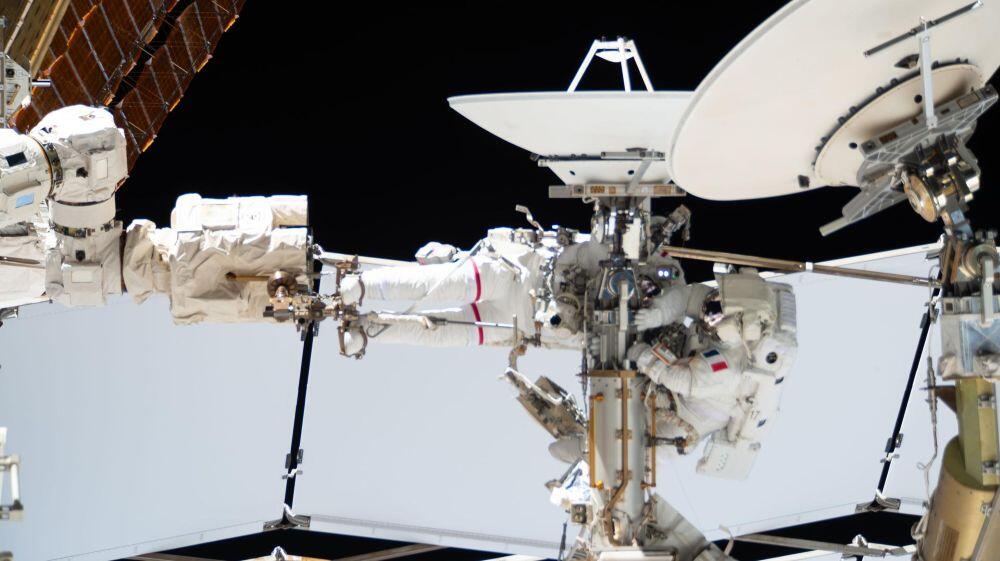
Sophie Adenot and Anil Menon’s Spacewalk
The 25 August operation was another important career milestone for both astronauts. Sophie Adenot completed her second career spacewalk during the mission. Her participation also continues the growing role of international astronauts in the maintenance and operation of the International Space Station.
Anil Menon completed his third consecutive career spacewalk. He had previously participated in spacewalks on 6 August and 18 August 2026. Carrying out multiple spacewalks within a short period requires extensive preparation and coordination between astronauts, engineers, flight controllers, and support teams on Earth.
Spacewalks, officially called extravehicular activities or EVAs, are among the most demanding tasks performed by astronauts. During an EVA, astronauts leave the protected environment of the spacecraft and work directly in outer space. They must follow detailed procedures while dealing with extreme temperatures, limited movement, and the vacuum of space.
Robotic Support During the Mission
The astronauts outside the ISS received support from crew members working inside the station. NASA astronauts Jack Hathaway and Jessica Meir assisted with preparations and coordination during the spacewalk.
Jack Hathaway operated Canadarm2, the large robotic arm attached to the International Space Station. Canadarm2 is used for several important tasks, including moving equipment, supporting astronauts during maintenance work, handling cargo, and assisting with station assembly activities. Robotic systems such as Canadarm2 have become an essential part of ISS operations and help astronauts perform difficult tasks more safely and efficiently.
Importance for Future Space Operations
The installation of the Ku-band antenna comes at a time when international space agencies are continuing to focus on the future of human spaceflight. The ISS remains an important centre for scientific research and international cooperation, even as agencies prepare for new missions to the Moon and deeper space.
Reliable communication systems are essential for these future plans. Data collected during ISS operations helps scientists and engineers improve technologies that may later be used on lunar missions, commercial space stations, and other human spaceflight programmes.
The latest spacewalk also highlights the close cooperation between NASA and the European Space Agency. Astronauts from different countries continue to work together on the ISS, supporting scientific research, station maintenance, and the development of technologies for the next stage of space exploration.