Lyriothemis keralensis Discovery Adds New Dragonfly to India

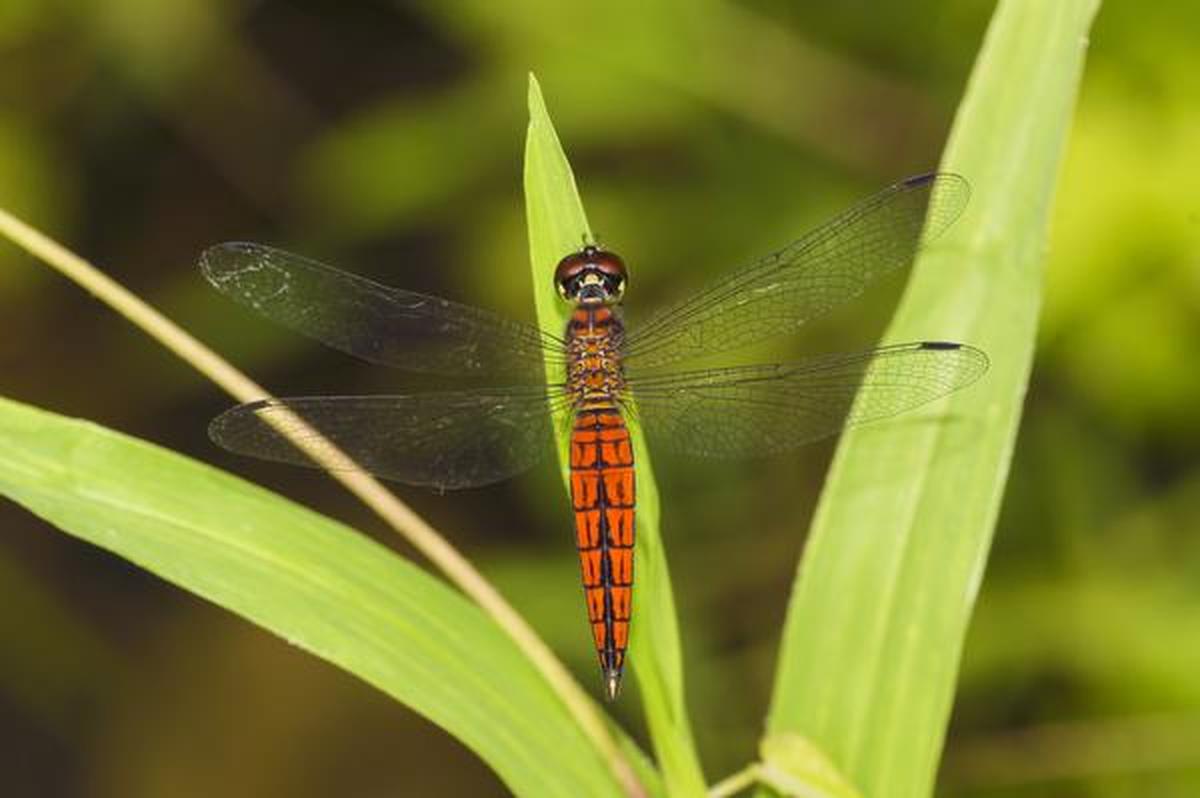
Lyriothemis keralensis Discovery has created excitement in the scientific community after researchers confirmed a new species of dragonfly from the coastal regions of Kerala. Commonly called the Slender Bombardier, this newly identified species adds to India’s growing list of documented insects and highlights the richness of biodiversity found in the Western Ghats and nearby landscapes.
Thank you for reading this post, don't forget to subscribe!The discovery was officially announced after more than ten years of careful field research and scientific study. It shows that even in well-explored areas, nature continues to surprise scientists with hidden diversity.
Lyriothemis keralensis Discovery After a Decade of Research
The research was led by Dr Dattaprasad Sawant, Dr A Vivek Chandran, Renjith Jacob Mathews and Dr Krushnamegh Kunte. Their detailed findings were published in the International Journal of Odonatology. The dragonfly was first noticed in 2013 in the Varappetty area of Kothamangalam in Kerala.
At first, researchers believed the insect was Lyriothemis acigastra, also known as the Little Bloodtail, which is found in parts of northeast India. However, something about the Kerala specimen seemed slightly different. These small differences encouraged the team to continue studying the species carefully over the years.
Their patient work, including repeated field visits and close examination of physical features, finally confirmed that the dragonfly was not the known species but an entirely new one.
Lyriothemis keralensis Discovery Corrects Earlier Identification
The turning point in the Lyriothemis keralensis Discovery came after detailed comparisons between the Kerala population and specimens of Lyriothemis acigastra. Scientists studied body shape, wing patterns and reproductive structures to look for consistent differences.
They also examined preserved samples kept in museums for over a hundred years. These comparisons helped confirm that the new dragonfly showed stable traits that were clearly different from its close relative. The repeated differences proved that it was not a variation but a separate species.
Such careful classification is important because even small mistakes in identification can lead to confusion in understanding biodiversity and conservation needs.
Lyriothemis keralensis Discovery and Its Unique Features
The new dragonfly has several physical features that make it stand out. It has a slimmer abdomen compared to similar species and a distinct tail structure. The male’s reproductive organs also show unique characteristics that helped confirm its classification.
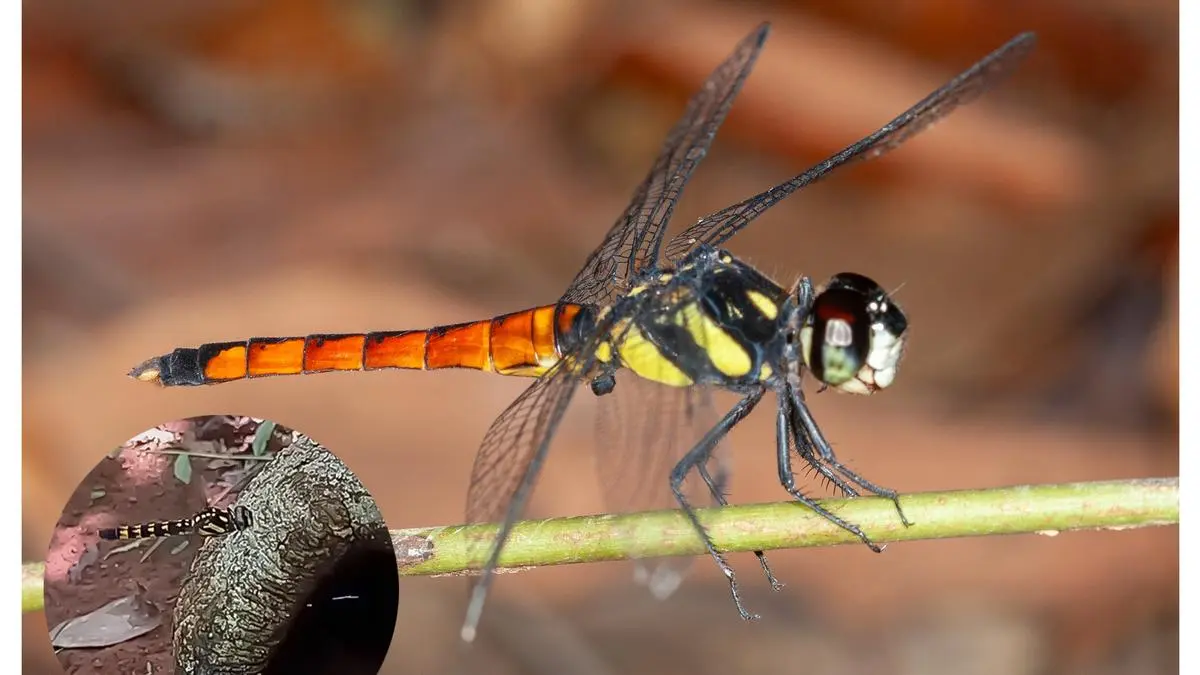
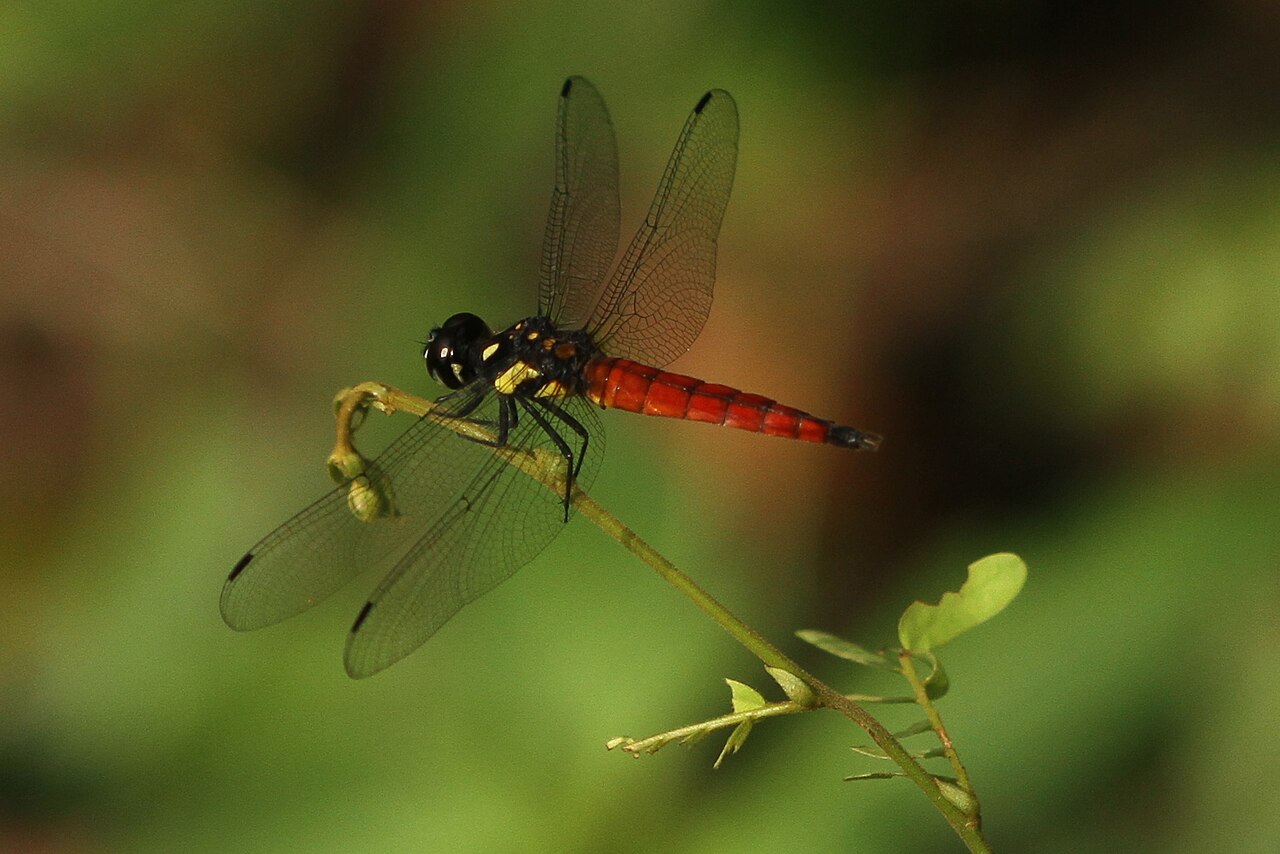
Adult males have a striking deep blood-red abdomen marked with black patterns. Females are slightly broader and show a mix of yellow and black colours. The species measures around three centimetres in length, making it relatively small but visually noticeable.
The dragonfly is mostly seen during the monsoon season when water levels are high. As the rainy season ends and water bodies shrink, sightings become rare. This seasonal appearance suggests that the insect’s life cycle is closely linked to rainfall patterns.
Lyriothemis keralensis Discovery and Its Habitat
One of the most interesting aspects of the Lyriothemis keralensis Discovery is its habitat preference. Unlike many dragonflies that live mainly in dense forests or protected wetlands, this species survives in human-modified landscapes.
Researchers found it in shaded irrigation canals and small seasonal pools located within pineapple and rubber plantations. These microhabitats, often overlooked, provide the right balance of water, shade and vegetation needed for the dragonfly’s survival.
This finding is important because it shows that biodiversity does not exist only in remote forests. Agricultural lands and village ecosystems also support unique species. Protecting these smaller habitats can be just as important as conserving large forest areas.
Lyriothemis keralensis Discovery and Conservation Concerns
The discovery comes at a time when Kerala and many other parts of India are facing environmental pressures such as land-use change, pesticide use and climate shifts. Since the dragonfly depends on seasonal water bodies and plantation landscapes, changes in farming practices could directly affect its survival.
Scientists have pointed out that conservation efforts should include responsible land management. Farmers and local communities play a key role in protecting irrigation canals, ponds and vegetation that support such species.
With growing awareness about biodiversity and climate resilience, discoveries like this highlight the need to balance development with ecological protection.
Lyriothemis keralensis Discovery Highlights India’s Insect Diversity
India is home to thousands of insect species, many of which are still being studied. The Western Ghats region, in particular, is known as a biodiversity hotspot. Yet, new species continue to be found, showing that there is still much to learn about the country’s natural wealth.
Dragonflies are especially important indicators of environmental health. They rely on clean water for breeding, and their presence often signals a healthy ecosystem. The Lyriothemis keralensis Discovery not only adds to scientific records but also reminds people about the importance of protecting freshwater systems.
In recent years, discussions around biodiversity conservation have gained momentum at both national and global levels. With climate change affecting rainfall patterns and water availability, protecting small water bodies has become more important than ever. This new species adds urgency to these conversations.
Lyriothemis keralensis Discovery Inspires Future Research
The discovery has encouraged further study of insect life in southern India. Researchers believe that many more species could be waiting to be identified, especially in areas that are not part of large protected forests.
The story of Lyriothemis keralensis shows how careful observation, patience and long-term research can reveal hidden details of nature. It also highlights the value of museum collections, which help scientists compare new findings with older records.
As research continues, the discovery stands as a reminder that even small insects play an important role in maintaining ecological balance.