



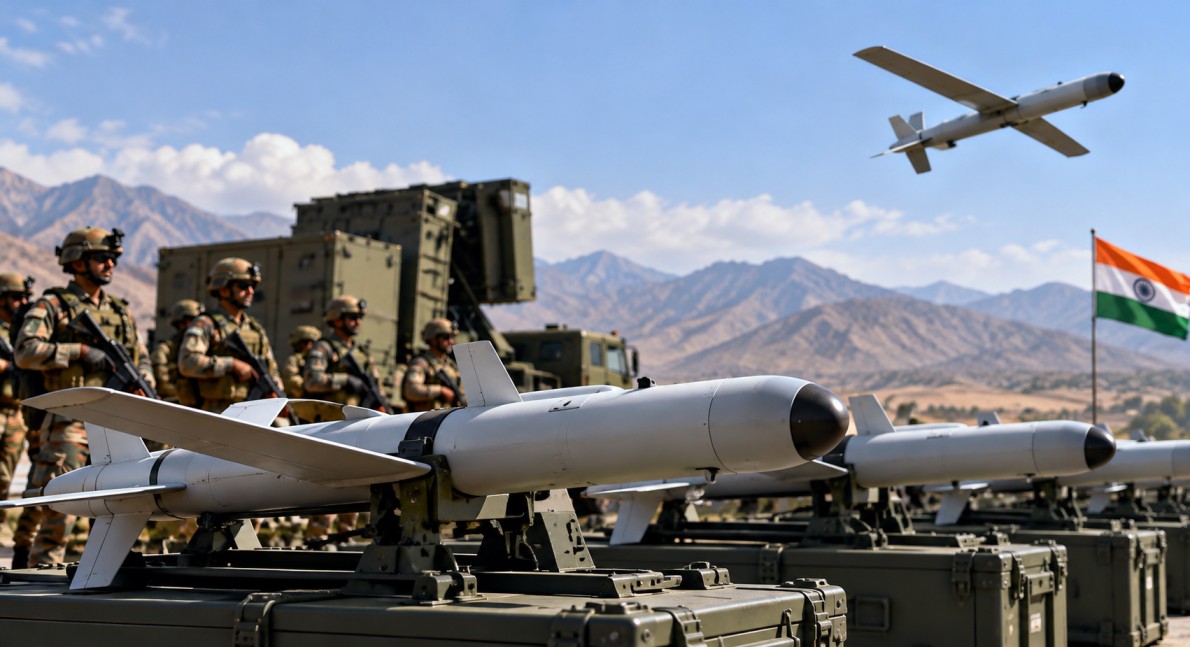
Nagastra-1R: 450 Drones Delivered

Nagastra-1R Drones became an important part of India’s defence news in October 2026 after Solar Defence and Aerospace Limited (SDAL) delivered 450 loitering munitions to the Indian Army. The delivery took place on 13 and 14 October 2026. According to the supplied report, this was the largest single-batch delivery of loitering munitions to the Indian Army by a manufacturer.
SDAL is a subsidiary of Solar Industries India. The Nagastra-1R is an indigenously developed unmanned aerial system designed for short-range military operations. It combines aerial observation with the ability to strike a selected target. The latest delivery highlights the role of Indian defence manufacturers in supplying locally developed military equipment.

Indian Army’s ₹158 Crore Procurement Contract
The Indian Army placed an order worth approximately ₹158 crore with SDAL in June 2025 under an emergency procurement contract. The order followed technical trials conducted in March 2025, in which four companies participated.
According to the supplied report, SDAL was the only company to demonstrate all the required operational parameters during these trials. The company later completed the delivery of 450 Nagastra-1R systems in October 2026.
This contract followed an earlier order for 480 Nagastra-1 loitering munitions. Solar Industries completed the earlier supply to the Indian Army by December 2024. The newer Nagastra-1R version has a higher stated level of locally sourced content.
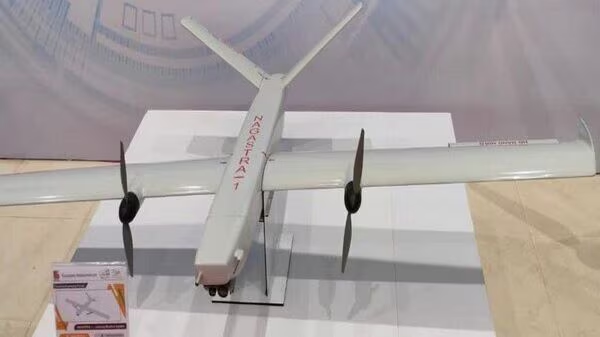
What Is the Nagastra-1R Drone?
The Nagastra-1R is a loitering munition, sometimes described as a kamikaze drone. It is designed to remain in the air while monitoring an area before engaging a target. Unlike conventional missiles that generally travel directly towards a target, loitering munitions can stay airborne while the target is assessed.
The system combines features of an unmanned aerial vehicle and a precision-strike weapon. It is intended to support the Indian Army’s short-range operational needs.
One of its reported features is an abort-and-recovery option. This allows the system to be recalled rather than used against a target when the mission is cancelled or an engagement is no longer required. This feature distinguishes it from loitering munitions designed to be expended in every mission.
More Than 80% Indigenous Content
A key feature of the Nagastra-1R is its reported indigenous content of more than 80%. Indigenous content refers to the share of a product’s components or value that comes from within the country.
The earlier Nagastra-1 system had more than 75% indigenous content. The increase in the newer version reflects a greater stated share of locally sourced components or value.
Developing defence equipment within India can help domestic manufacturers build technical skills, strengthen local supply chains and reduce dependence on imported systems. However, the actual impact depends on the availability of local components, production capacity, maintenance support and the ability to meet future requirements.
The Nagastra-1R delivery also shows the involvement of private Indian companies in supplying equipment to the armed forces.
How Loitering Munitions Are Used
Loitering munitions are unmanned systems designed to remain airborne over an area before engaging a target. They can combine surveillance and target engagement within a single platform.
Their ability to remain in the air can provide additional time to assess a developing situation. Depending on the system and its capabilities, operators may use information gathered during flight to decide whether an engagement should take place.
These systems are different from ordinary surveillance drones, which are mainly used to observe and collect information. They are also different from conventional missiles, which are generally designed to travel towards a target after launch.
The Nagastra-1R is intended for short-range military operations. Its reported recovery option offers an alternative to using the munition in every mission.
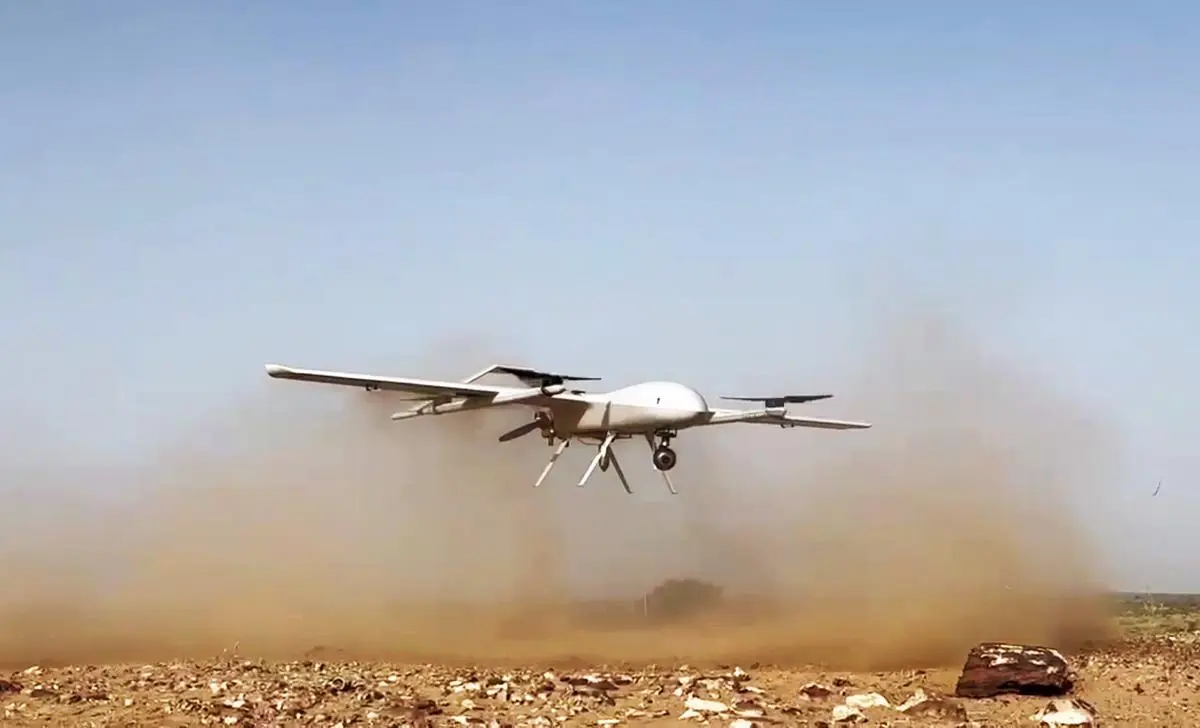
India’s Growing Domestic Defence Manufacturing
India has been expanding domestic defence production through the development and procurement of locally manufactured equipment. Private companies are playing a role in producing systems for the armed forces, including unmanned aerial platforms and other modern defence technologies.
The delivery of 450 Nagastra-1R systems adds to Solar Industries’ earlier supply of 480 Nagastra-1 units. These deliveries demonstrate the company’s continued involvement in providing loitering munitions to the Indian Army.
As military technology continues to develop, unmanned systems are receiving greater attention because of their potential roles in surveillance, reconnaissance and precision strikes. At the same time, their use raises important questions about operational safety, human control, accountability and compliance with international humanitarian law.
The October 2026 delivery is therefore a notable development for India’s domestic defence industry and its supply of unmanned systems to the armed forces.