National Biofoundry Network to Boost India’s Bioeconomy and Biotech Innovation

National Biofoundry is the latest ambitious step by the Government of India to strengthen biotechnology, biomanufacturing, and the nation’s expanding bioeconomy. In August 2025, India’s Science and Technology Minister Jitendra Singh launched the National Biofoundry Network, a key initiative that aims to accelerate biotech innovation, create new jobs, and transform early-stage research into market-ready products.
Thank you for reading this post, don't forget to subscribe!India’s bioeconomy has grown exponentially over the last decade, jumping from $10 billion in 2014 to $165.7 billion in 2024. With the introduction of the National Biofoundry Network under the BioE3 Policy, the government has set a bold target of achieving a $300 billion bioeconomy by 2030.
National Biofoundry Network
The National Biofoundry Network is made up of six leading institutions across India. Its core purpose is to bridge the gap between research and commercialization by converting early-stage biotechnological ideas into scalable, market-ready products.
This network will play a vital role in:
- Supporting indigenous biomanufacturing
- Creating skilled jobs in biotechnology
- Strengthening India’s capacity for innovation
- Enabling entrepreneurs and researchers to access advanced infrastructure
By facilitating collaboration between research institutions, startups, and industries, the National Biofoundry Network is designed to make India self-reliant in biotechnology while contributing to global scientific progress.
BioE3 Policy and Its Goals
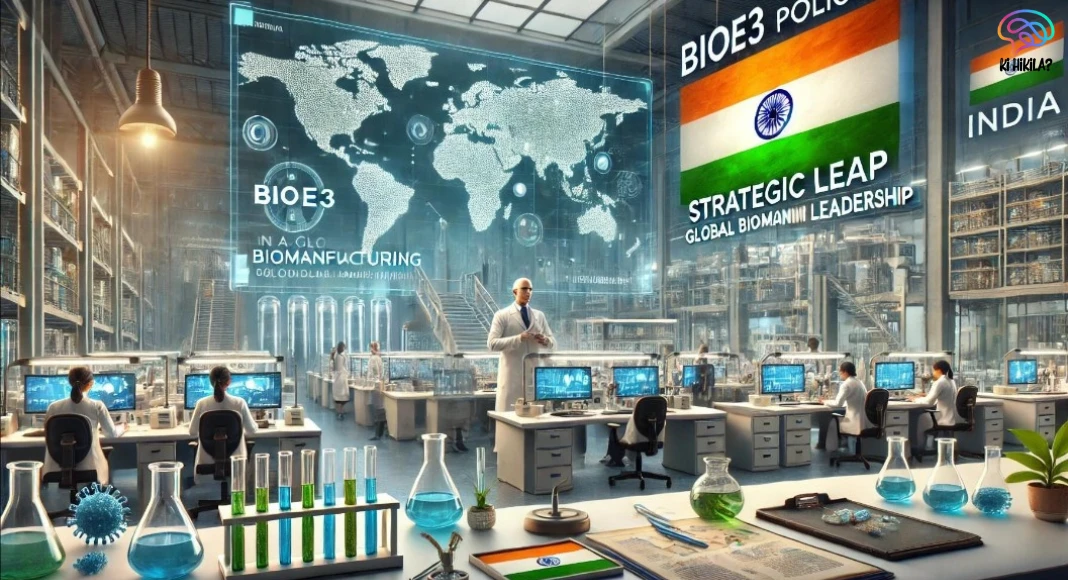
The BioE3 Policy, under which the National Biofoundry initiative has been launched, stands for Bioeconomy, Bioenergy, and Bioenvironment. Its objective is to place biotechnology at the center of India’s economic growth while promoting environmental sustainability and public health.
Key goals of the BioE3 Policy include:
- Developing bio-based products and enabling their commercialization.
- Establishing BioEnablers like biofoundries, biomanufacturing hubs, and Bio-Artificial Intelligence centers.
- Targeting six priority sectors:
- Bio-based chemicals
- Functional foods and nutraceuticals
- Precision biotherapeutics
- Climate-resilient agriculture
- Carbon capture and utilization
- Marine and space biotechnology research
The policy aims to align India’s biotech capabilities with global sustainability efforts, while simultaneously boosting economic output.
Achievements in the First Year
Since the introduction of the BioE3 framework, India has already achieved several milestones. Notable highlights include:
- Inauguration of India’s first Biomanufacturing Institute in Mohali, Punjab, a state-of-the-art facility for industrial-scale biotech development.
- Launch of more than a dozen joint research projects by the Department of Biotechnology (DBT), focusing on frontier areas such as cell and gene therapy, climate-smart agriculture, and carbon capture technologies.
- A memorandum of understanding (MoU) with Assam, setting up a BioE3 Cell to encourage state-level bioeconomy initiatives and localized innovation hubs.
These achievements demonstrate the seriousness of India’s commitment to making biotechnology one of the key drivers of national growth.
India’s Bioeconomy Growth
The bioeconomy refers to the sustainable use of renewable biological resources to produce food, energy, medicines, and industrial products. India’s bioeconomy contributed 4.25% of the GDP in 2024, reflecting its growing importance.
Major sectors contributing to India’s bioeconomy include:
- Biopharmaceuticals and biomedicine – vaccines, drugs, and therapeutics
- Bioagriculture – crop innovations and sustainable farming
- Bioindustrial products – green chemicals and biofuels
- Bioscience research – advanced molecular and genetic studies
The National Biofoundry will serve as a foundation to expand these sectors, enabling India to compete with leading global biotechnology powers.
Talent and Skill Development
Biotechnology innovation is only possible with a strong talent pipeline. Recognizing this, the Department of Biotechnology (DBT) has made skill development a central pillar of the National Biofoundry strategy.
Through investments in training, funding, and institutional support, DBT aims to nurture a new generation of skilled scientists, bioengineers, and entrepreneurs. This will ensure a steady workforce capable of driving innovation while attracting global collaborations.
Global and State-Level Collaboration
India’s biotechnology ambitions are not limited to national borders. The country has engaged with 52 countries to share inputs and strategies linked to the BioE3 Policy. The Ministry of External Affairs and DBT are leading efforts to strengthen international partnerships in biotech research, bioenergy solutions, and green innovations.
At the state level, collaborations like the MoU with Assam showcase how localized bioeconomy hubs will spread the benefits of biotechnology across regions. These state-level initiatives will encourage startups, research institutions, and industries to tap into bio-based innovation at a grassroots level.
Conclusion
The launch of the National Biofoundry Network is a game-changing step for India’s biotech sector. By converting innovative ideas into scalable products, fostering skill development, and building international partnerships, the initiative will not only drive economic growth but also support sustainable development goals.
With its bioeconomy already valued at $165.7 billion in 2024 and targeted to reach $300 billion by 2030, India is positioning itself as a global biotechnology leader. The National Biofoundry will be the backbone of this transformation—accelerating innovation, strengthening indigenous industries, and creating opportunities for the future workforce.
As the world increasingly relies on biotechnology for health, environment, and economic sustainability, India’s biofoundry model may emerge as a blueprint for other nations.