

Naval Rescue Drones: Indian Academy Develops System

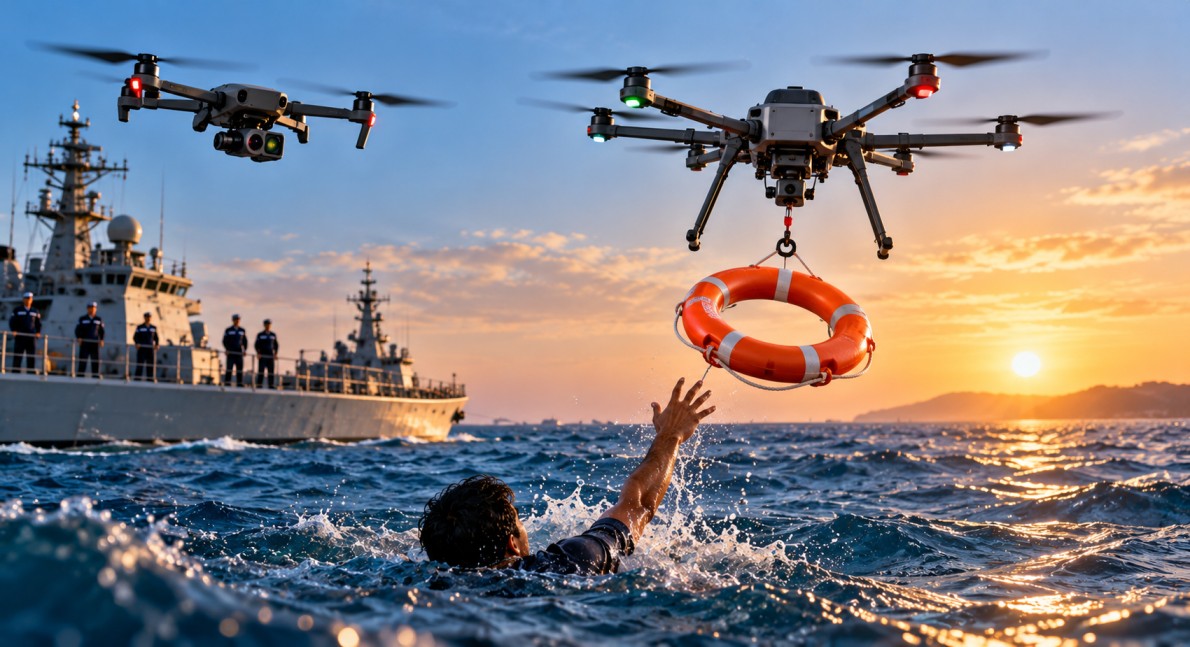
Naval Rescue Drones were unveiled by the Indian Naval Academy on 27 October 2026 as an indigenously developed system for maritime Search and Rescue (SAR) operations. The system uses two unmanned aerial vehicles (UAVs) that work together to locate people in distress at sea and deliver a lifebuoy to their position. It combines camera-based surveillance, artificial intelligence (AI), GPS navigation and operator control to support rescue teams during emergencies.
How the Twin-Drone Rescue System Works
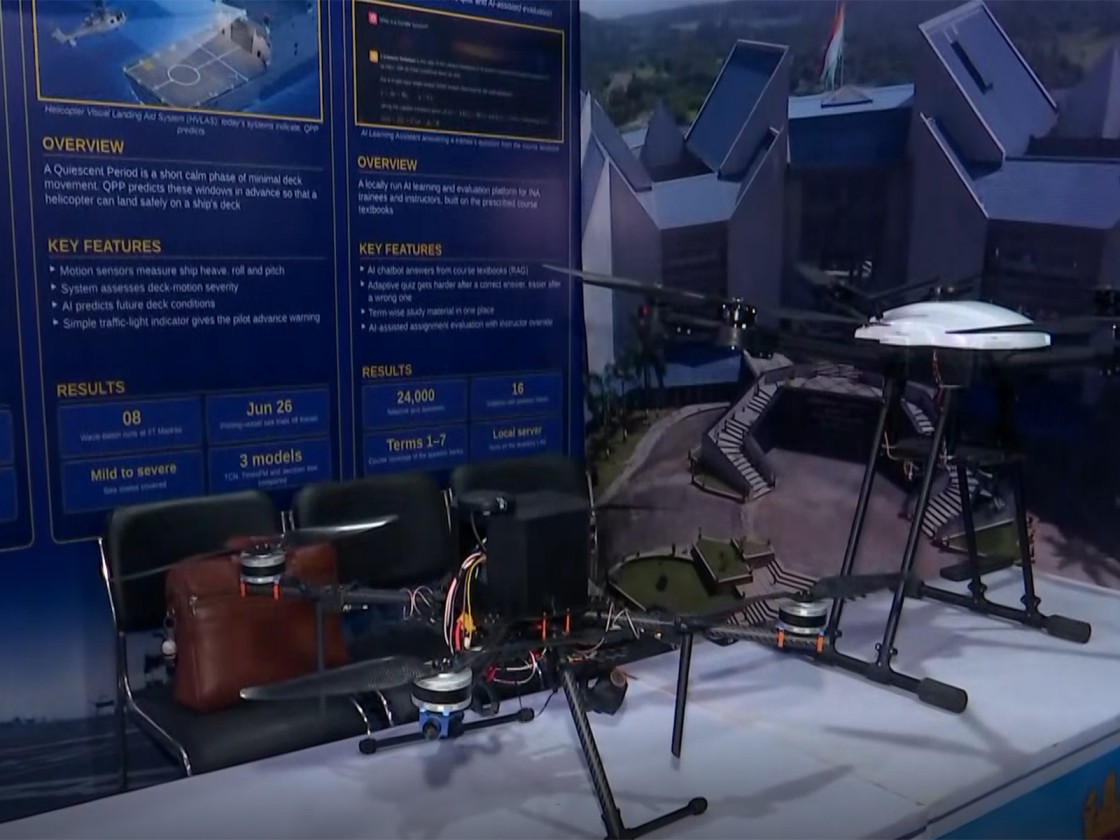
The system consists of two different drones, each designed for a specific task. The first is a quadcopter that searches the water for people who may need help. The second is a hexacopter that carries and releases a lifebuoy near the identified location.

The quadcopter uses optical and thermal cameras to scan the surrounding area. Its 2K optical camera provides video images, while thermal imaging can help detect heat patterns that may be difficult to identify using a normal camera alone.
The drone sends live video feeds to the system, where an artificial intelligence model helps identify possible people in the water. Once a potential person is detected, the information can be used to guide the second drone towards the location.
The hexacopter then uses GPS navigation to reach the target area and release a lifebuoy. The final decision to proceed remains under operator control, allowing a human operator to assess the situation before the rescue equipment is delivered.
Role of Artificial Intelligence in Rescue Operations
Artificial intelligence plays an important role in helping the search drone examine video footage. The system uses a model from the YOLO family, whose name stands for “You Only Look Once”. YOLO models are designed to detect objects in images and video in near real time.
In a maritime emergency, quickly identifying a person in a large area of water can be difficult. Waves, changing light, poor visibility and the distance between a rescue team and a person in distress can make visual searches more challenging.
AI-assisted detection can help operators focus their attention on areas where a person may be present. Thermal cameras provide another source of information, although their performance depends on environmental conditions and the difference between the target and its surroundings.
The technology is intended to support human rescue teams rather than replace them. Operators still need to assess the detection, confirm the location and decide how to respond.
Specifications of the Two Drones
The two Naval Rescue Drones have different operating capabilities because they perform separate tasks.
The quadcopter is designed for searching and surveillance. It has a reported flight time of 45 minutes, a payload capacity of 0.5 kilograms and a maximum speed of 50 kilometres per hour.
The hexacopter is designed to carry and deliver rescue equipment. It has a reported flight time of 25 minutes, a payload capacity of 2.5 kilograms and a maximum speed of 40 kilometres per hour.
Both drones have a stated operating radius of 10 kilometres. They communicate through long-range radio-frequency links, allowing information to pass between the aircraft and the operating team.
These specifications help explain how the system divides its work between locating a person and delivering a flotation aid. Actual performance during a rescue would depend on factors such as weather, wind, battery condition, sea conditions and communication quality.
Indigenous Technology Developed by the Indian Naval Academy
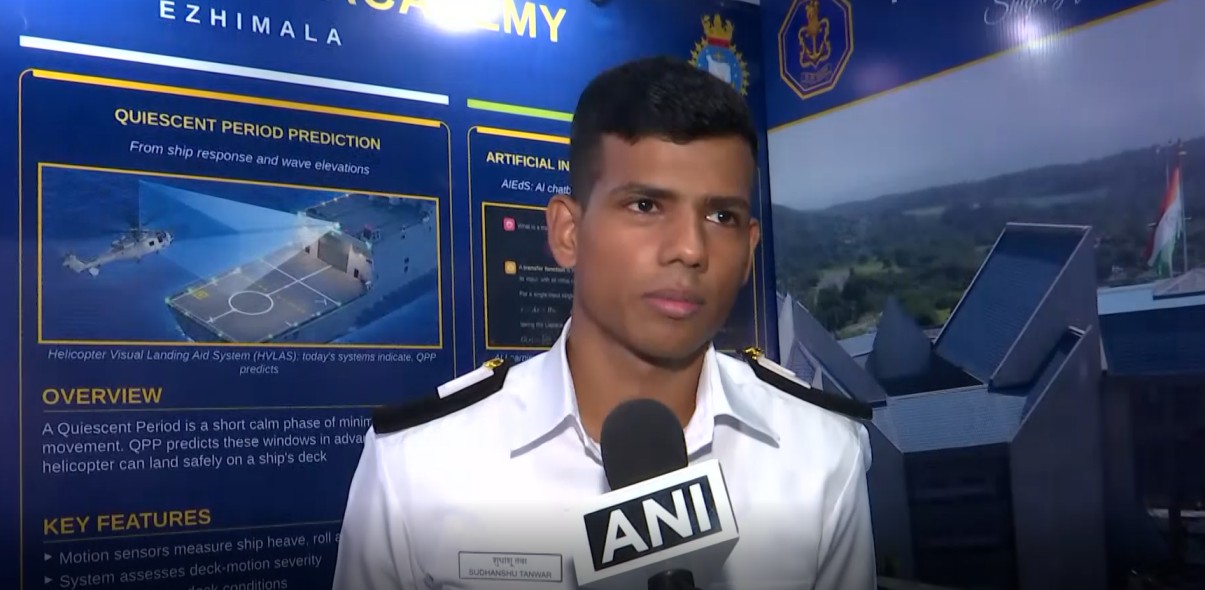
The system was developed by a team at the Indian Naval Academy. Midshipman Sudhanshu Tanwar was among the developers involved in the project.
Indigenous development allows institutions to design technology for specific operational needs and build experience in areas such as robotics, navigation, communication and AI-based detection.
The project also demonstrates how relatively small unmanned aircraft can be adapted for practical maritime safety tasks. Instead of sending a rescue team immediately to search a wide area, a drone may help identify a possible location and deliver a lifebuoy while further assistance is arranged.
The effectiveness of such a system would depend on reliable detection, safe flight, accurate positioning and the ability to operate in challenging marine conditions.
Why Drone-Based Maritime Search and Rescue Matters
Maritime Search and Rescue operations help locate and assist people facing danger at sea. Emergencies may involve people falling overboard, boating accidents, vessels in distress or other incidents that require rapid assistance.
Aerial drones can provide a useful view of the water from above and may reach some locations faster than teams travelling by boat. A drone carrying a lifebuoy can also provide immediate flotation support while rescuers work to reach the person.
However, delivering a lifebuoy is only one part of a rescue. People in distress may still require medical care, extraction from the water and transport to safety. Drone-based assistance therefore works best as part of a wider rescue plan involving trained personnel and suitable rescue equipment.
The International Maritime Organization (IMO), a specialised agency of the United Nations, works on maritime safety and security. The International Convention on Maritime Search and Rescue was adopted in 1979 and entered into force in 1985, providing an international framework for cooperation in rescue operations.
The twin-drone system unveiled by the Indian Naval Academy shows how AI, thermal imaging and unmanned aircraft can be combined to support maritime rescue work. Further testing and operational experience will help establish how effectively the system can perform in different sea and weather conditions.