Pakistan Astronaut Nears Tiangong Mission

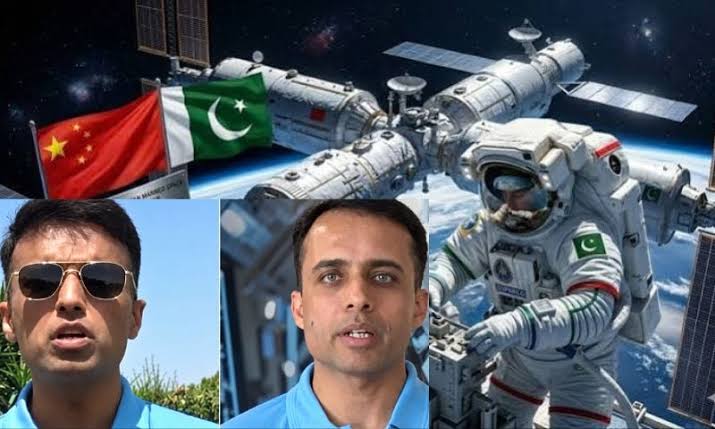
Pakistan Astronaut training has entered an important stage as two Pakistani pilots, Zeeshan Ali and Khurram Daud, continue their preparation in China for a planned mission to the Tiangong space station. One of the two candidates is expected to be selected for the mission and would become the first Pakistani to travel to a Chinese space station. The planned flight is part of growing space cooperation between Pakistan and China.
Thank you for reading this post, don't forget to subscribe!Two Pilots Undergo Astronaut Training
Zeeshan Ali and Khurram Daud are undergoing astronaut training at the China Astronaut Research and Training Centre in Beijing. Their programme includes technical and physical preparation for spaceflight, along with training designed to help them work safely in the Tiangong environment.
The candidates are being trained in spacecraft systems, microgravity procedures and other aspects of human spaceflight. Mandarin language training is also part of the preparation because the mission will be conducted with Chinese spaceflight teams.
A final decision on which pilot will fly is expected around October 2026. The selected astronaut will serve as a payload specialist rather than as the spacecraft’s pilot.
Pakistan-China Space Cooperation
The planned crewed mission is connected to a wider programme of space cooperation between Pakistan and China. Discussions on sending a Pakistani astronaut to China’s space station began several years ago, with cooperation between Pakistan’s Space and Upper Atmosphere Research Commission (SUPARCO) and Chinese space authorities.
The mission would give Pakistan an opportunity to participate directly in human spaceflight research. It would also expand the scientific side of the relationship between the two countries, which already includes satellite and space technology projects.
The Pakistani participant is expected to spend about a week in orbit and carry out scientific activities aboard Tiangong.
Scientific Experiments in Space
SUPARCO has said that the selected astronaut will conduct four biotechnology experiments during the mission. The research is linked to areas including food security and climate-related challenges.
Experiments conducted in microgravity can help researchers study biological processes that behave differently compared with conditions on Earth. Such research can contribute to a better understanding of plant growth, biological systems and other areas relevant to long-duration space activity.
The planned biotechnology work also gives the mission a research focus rather than making it only a symbolic human spaceflight milestone for Pakistan.
What Is the Tiangong Space Station?
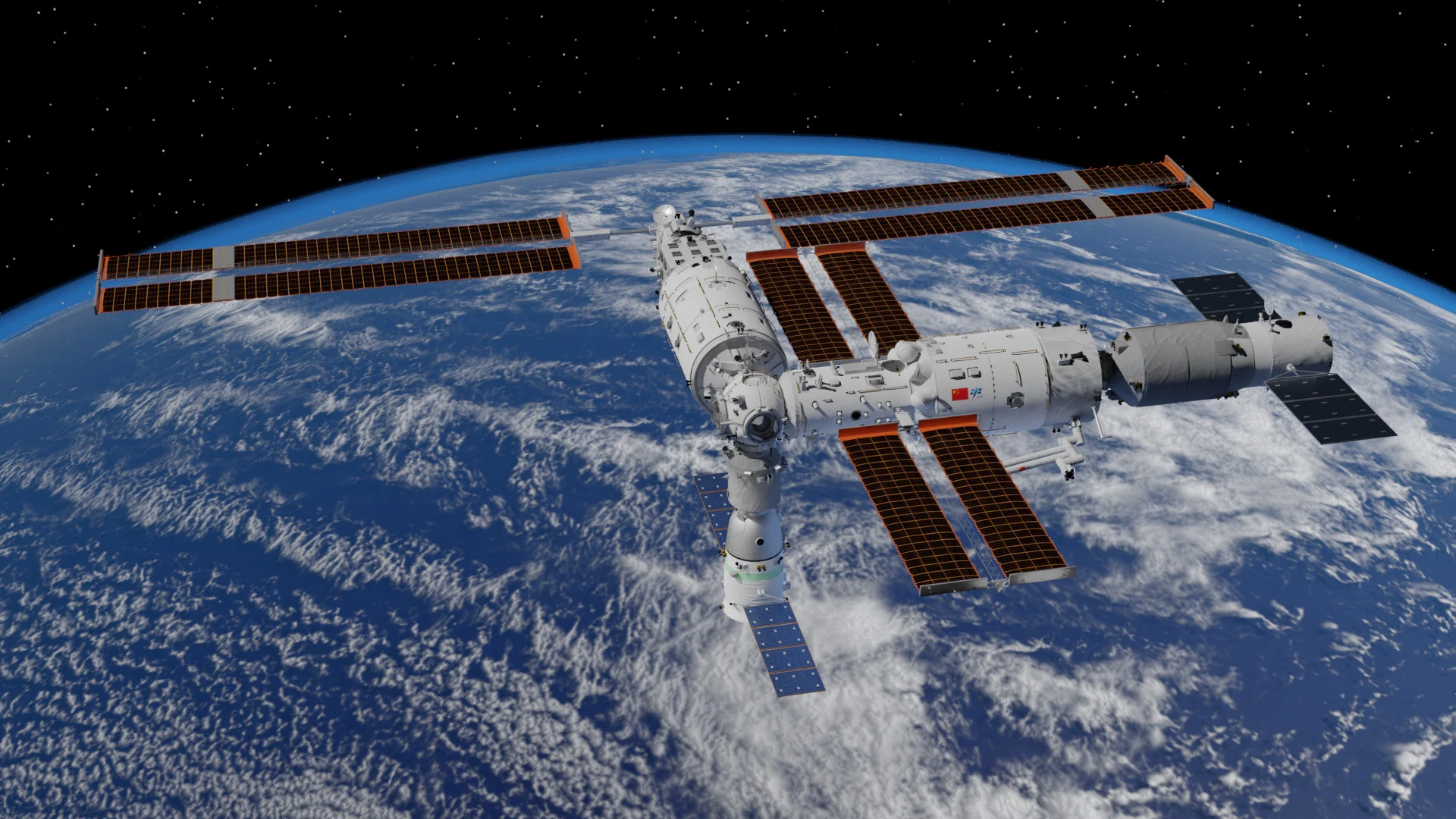
Tiangong is China’s modular space station in low Earth orbit. It is operated by the China Manned Space Agency and is used for human spaceflight, scientific research and experiments in microgravity.
The station consists of several major modules and supports rotating crews of Chinese astronauts. It has laboratories and facilities designed for research that cannot easily be performed under normal gravity on Earth.
China has continued expanding its human spaceflight programme around Tiangong, while also developing plans for future lunar missions. The station has therefore become an important part of China’s long-term space programme.
Training for Life in Orbit
Astronaut training requires candidates to prepare for the physical and technical challenges of spaceflight. The Pakistani pilots are undergoing centrifuge exercises and other training designed to prepare them for the forces experienced during launch and other phases of a mission.
Microgravity procedures are another major part of the programme. Astronauts must learn how to move, work and conduct experiments in an environment where objects and people appear weightless.
Language training is also important because the Pakistani astronaut will work closely with Chinese astronauts and mission teams. Understanding technical instructions and communication procedures is essential during an orbital mission.
Pakistan’s Human Spaceflight Milestone
If the mission proceeds as planned, the selected candidate will become Pakistan’s first astronaut to travel on an orbital space mission. It would represent a new stage in Pakistan’s space programme, which has so far focused mainly on satellites, remote sensing, communications and other space applications.
The mission would also be different from Pakistan’s earlier connection with commercial suborbital spaceflight. In October 2023, Namira Salim became the first Pakistani woman to travel to space when she flew on Virgin Galactic’s commercial suborbital mission.
An orbital mission aboard Tiangong would involve a substantially different type of flight, with the astronaut spending several days in low Earth orbit and working on scientific experiments.
Wider Space Projects Between Pakistan and China
Human spaceflight is only one part of Pakistan-China cooperation in space. The two countries have also worked together on satellite programmes and other space technology projects.
Pakistan is also developing a lunar rover for China’s planned Chang’e-8 mission, which is expected to contribute to China’s future lunar exploration programme. Chang’e-8 is part of China’s broader plans for robotic lunar exploration and future activities around the Moon.
The planned Tiangong mission therefore comes within a wider period of cooperation in which Pakistan is seeking greater participation in international space research and China is expanding partnerships around its human and robotic space programmes.