
KAZIND-2026 India-Kazakhstan Exercise

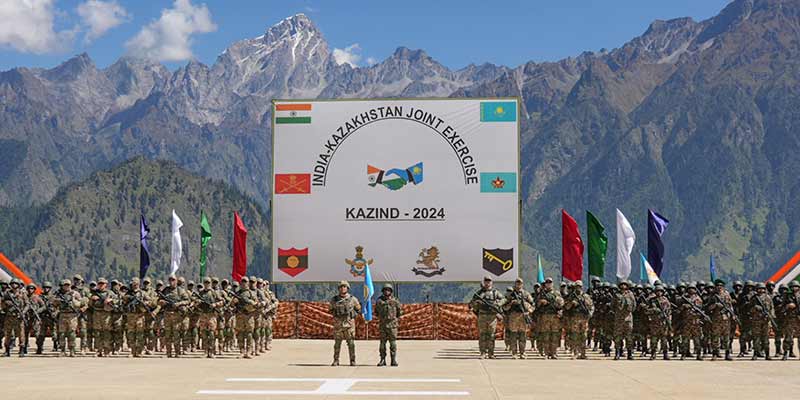
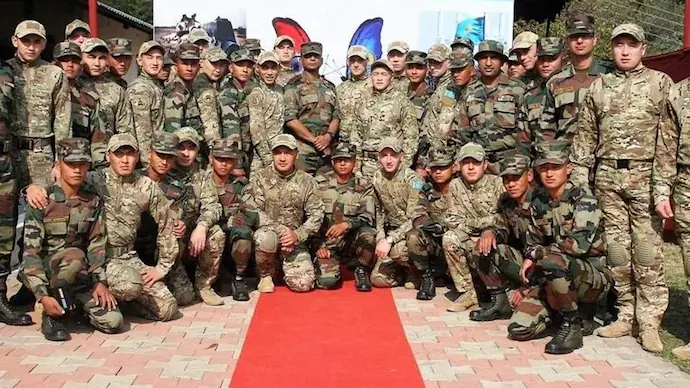
KAZIND-2026 is being conducted by India and Kazakhstan from 28 September to 11 October 2026 in Oskemen, Kazakhstan. The exercise is the ninth edition of the joint military exercise between the two countries and focuses mainly on counter-terrorism operations in difficult and challenging environments.
Thank you for reading this post, don't forget to subscribe!The exercise brings together troops from the Indian Armed Forces and the Kazakhstan Armed Forces for joint training. The Indian contingent includes around 60 personnel, mainly from a battalion of the Garhwal Rifles, along with personnel from the Indian Air Force. Kazakhstan is also represented by a similar-sized contingent, mainly from its Land Forces.
KAZIND-2026 Strengthens Defence Cooperation
KAZIND-2026 is part of the continuing defence cooperation between India and Kazakhstan. Joint military exercises allow the armed forces of both countries to train together, understand each other’s operational methods and improve coordination during complex situations.
The exercise is being conducted under a United Nations mandate and is focused on operations in a sub-conventional environment. Such operations can involve counter-terrorism missions, security operations and responses to armed threats that are different from conventional warfare between regular armies.
For India and Kazakhstan, the exercise also provides an opportunity to share military experience and develop common procedures for operations in difficult terrain.
Indian and Kazakhstan Contingents Take Part
The Indian contingent has around 60 members from the armed forces. A major part of the contingent comes from the Garhwal Rifles, an infantry regiment of the Indian Army. Indian Air Force personnel are also participating in the exercise.
The Kazakhstan contingent is of a similar size and is mainly drawn from the Kazakhstan Land Forces. The participation of personnel from different branches allows the exercise to cover several aspects of modern military operations.
During the training period, soldiers from both countries will work together in planned activities and field exercises. This joint participation is designed to improve communication and coordination between the two forces.
Training in Semi-Urban and Mountainous Areas
One of the important features of KAZIND-2026 is training in semi-urban and mountainous terrain. These environments can create different challenges for military personnel because movement, surveillance and communication can become more difficult.
The troops will practise operations designed around simulated security threats. Training in such conditions allows soldiers to work on movement, planning, quick response and coordination while dealing with changing situations.
Mountainous areas require careful planning because of difficult routes, limited visibility and challenging weather conditions. Semi-urban environments can also require troops to operate in areas with buildings, narrow roads and other obstacles.
Counter-Terrorism Operations Form the Core
Counter-terrorism training is a major part of KAZIND-2026. The participating troops will conduct several drills based on simulated terrorist threats.
The exercises include responses to terrorist attacks, raids, search-and-destroy operations and cordon-and-search missions. These activities are designed to help troops practise how to identify threats, secure an area and respond to an armed group.
Cordon-and-search operations involve surrounding a particular area and carrying out a systematic search. Such exercises require coordination between different teams so that the area can be controlled and searched properly.
The troops will also practise special heliborne operations. These operations involve the movement of personnel using helicopters and require close coordination between ground forces and air assets.
Air Mobility and Modern Technology
KAZIND-2026 also gives importance to air mobility and modern military technology. Indian and Kazakhstan forces will practise the integrated use of unmanned aerial systems and counter-unmanned aerial system capabilities.
Unmanned aerial systems can be used for surveillance and monitoring during military operations. They can provide information about an area without requiring personnel to enter potentially dangerous locations.
At the same time, counter-UAS systems are becoming an important part of modern military planning because armed forces need ways to detect and respond to unwanted or hostile drones.
The inclusion of these technologies in KAZIND-2026 reflects the changing nature of military operations. Modern forces increasingly combine traditional ground operations with surveillance systems, aerial platforms and other technologies.
Joint Planning and Field Operations
Another important part of KAZIND-2026 is joint planning. Soldiers from both countries will work together before carrying out different training activities.
Joint planning helps participating forces understand operational procedures and improve coordination. It also gives troops an opportunity to learn how another country’s military approaches different situations.
The field activities will involve the execution of planned missions under simulated conditions. These drills are expected to test the ability of the participating contingents to respond to different counter-terrorism situations.
The focus will remain on teamwork, communication, tactical movement and the coordinated use of available resources.
Validation Exercise at the End
KAZIND-2026 will move towards a final validation exercise. During this phase, both contingents will use the tactics and procedures practised during the earlier stages of the exercise.
The validation phase will involve a simulated terrorist threat. The participating troops will have to apply their training in a coordinated field situation.
Such an exercise provides an opportunity to assess how effectively the two contingents can operate together. It also helps identify areas where communication, planning or operational procedures can be improved.
Ninth Edition of KAZIND
The 2026 exercise is the ninth edition of KAZIND. The continuation of the exercise reflects the ongoing military relationship between India and Kazakhstan.
Regular joint exercises provide opportunities for armed forces to train in different environments and share operational experience. They can also improve familiarity between personnel from the participating countries.
For India, cooperation with Kazakhstan is part of its wider defence engagement with Central Asian countries. Kazakhstan, as an important Central Asian country, also maintains defence and security cooperation with India through military exchanges and joint activities.
India-Kazakhstan Military Cooperation
India and Kazakhstan have maintained defence cooperation through training programmes, military exchanges and joint exercises. KAZIND is one of the activities that brings personnel from the two armed forces together for practical field training.
The exercise also provides a platform for both sides to understand different military practices. By operating together, personnel can develop better coordination and communication for situations covered by the exercise.
KAZIND-2026, being held in Oskemen from 28 September to 11 October, combines traditional counter-terrorism drills with air mobility and unmanned systems training. The exercise will continue with joint field activities before the final validation phase tests the tactics and procedures developed by the participating forces.