Remote Ultrasound in Antarctica By AIIMS

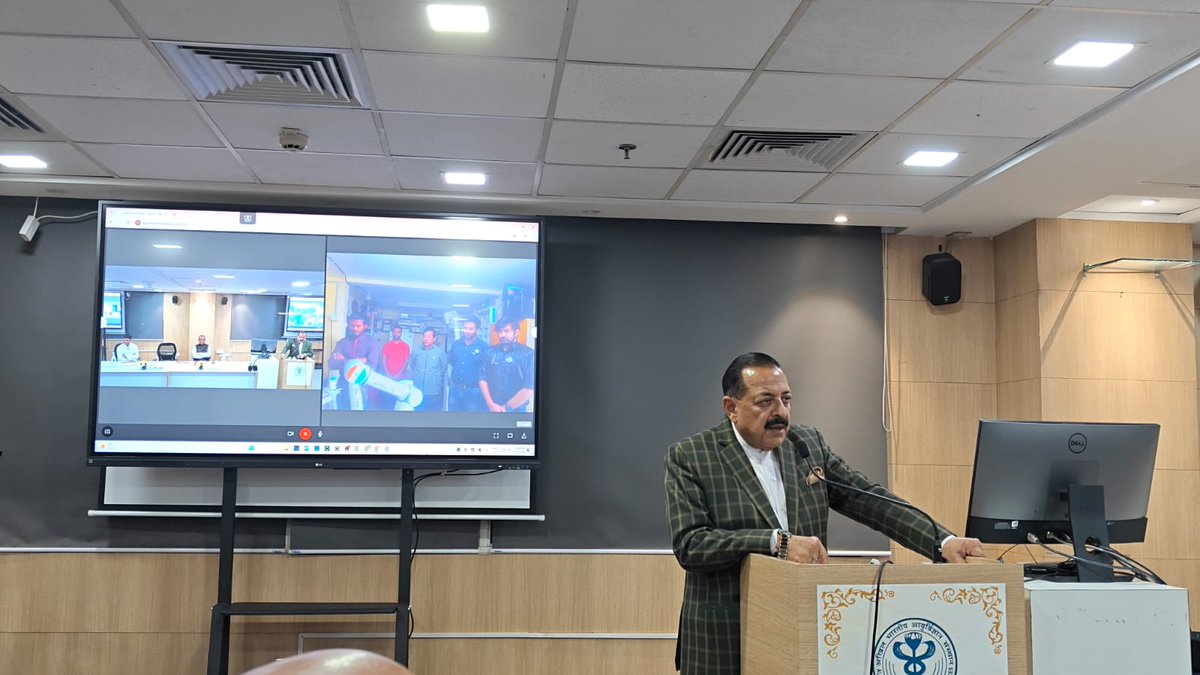
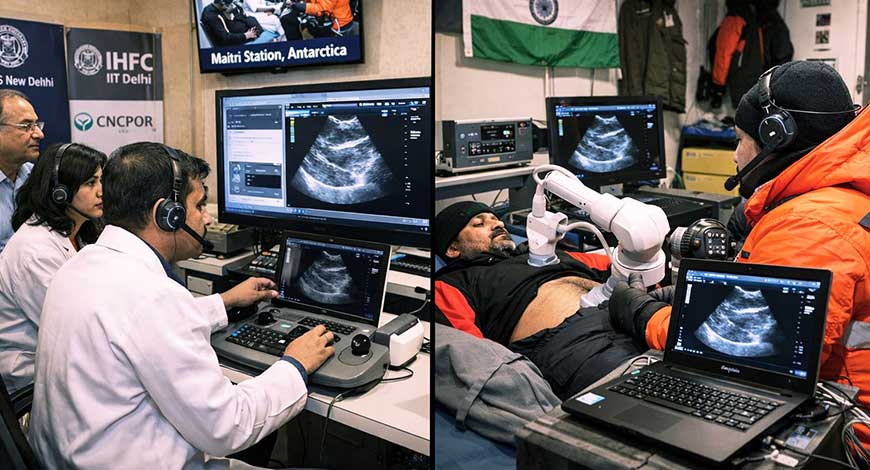
Remote Ultrasound in Antarctica has become a reality after doctors at All India Institute of Medical Sciences, New Delhi successfully conducted a real-time scan on a patient located nearly 12,000 kilometers away. The patient was stationed at India’s Maitri research base in Antarctica, one of the most isolated places on Earth.
Thank you for reading this post, don't forget to subscribe!This breakthrough shows how advanced telemedicine can deliver specialist healthcare even in extreme environments. For scientists and staff living in Antarctica, access to advanced medical care is usually very limited. Severe weather, distance, and lack of infrastructure make emergency treatment extremely difficult.
The successful procedure demonstrates that complex diagnostic tests can now be performed remotely, without the need to transport patients across continents.
Remote Ultrasound in Antarctica Made Possible By Tele-Robotic System
The ultrasound was carried out using a tele-robotic diagnostic system. This technology allows doctors in India to remotely control medical equipment located thousands of kilometers away.
The system installed at the Maitri station was operated by specialists in New Delhi. Through real-time connectivity, they could move the ultrasound probe, capture images, and guide the procedure as if they were physically present.
The project was developed through collaboration among multiple institutions, including the National Centre for Polar and Ocean Research, Indian Institute of Technology Delhi, AIIMS, and several technology startups.
Experts say this is the first time such a system has been deployed at an Antarctic research station anywhere in the world.
Remote Ultrasound in Antarctica At Maitri Station: India’s Antarctic Base
The patient was located at Maitri, India’s second permanent research station in Antarctica. The station operates under India’s polar research program managed by the Ministry of Earth Sciences.
Life at Maitri is extremely challenging. Temperatures can drop far below freezing, and during winter the region experiences months of darkness and isolation. Travel in or out of the continent is often impossible for long periods.
Around 25 to 30 scientists and support staff typically remain at the station during winter months. Medical facilities are basic, with limited diagnostic equipment and no access to specialized doctors on site.
Remote Ultrasound in Antarctica Why Remote Healthcare Is Critical
Providing healthcare in Antarctica is unlike anywhere else in the world. There are no nearby hospitals, and evacuation flights depend on weather conditions that can be unpredictable for weeks or even months.
Personnel working there face several risks:
- Severe cold injuries and frostbite
- Accidents during fieldwork
- Isolation-related health issues
- Limited medical supplies
- Delayed emergency response
Although trained medical officers are stationed at research bases, they may not have expertise in specialized diagnostics such as advanced imaging. In serious cases, doctors must decide whether to evacuate a patient a decision that can involve high cost and risk.
Remote ultrasound technology allows specialists to assess injuries and internal conditions quickly, helping teams decide the best course of action.
Real-Time Diagnosis From 12,000 Kilometers Away
During the demonstration, doctors in New Delhi guided and controlled the scan in real time. High-speed communication links transmitted images instantly, allowing experts to interpret results without delay.
This capability is especially valuable for detecting:
- Internal injuries
- Abdominal problems
- Organ conditions
- Fluid accumulation
- Pregnancy-related issues
- Trauma assessment
Immediate diagnosis can save lives by enabling timely treatment decisions. It can also prevent unnecessary evacuations, which are complex and expensive operations in Antarctica.
Remote Ultrasound in Antarctica Logistics and Deployment
Transporting advanced medical equipment to Antarctica is a major challenge. The tele-robotic system had to be shipped from Goa to the icy continent under careful conditions.
The deployment was coordinated by NCPOR, which manages India’s polar missions. The successful installation shows India’s growing technical capability in operating complex systems in extreme climates.
Officials said the system functioned smoothly despite harsh temperatures and environmental conditions, proving that such technology can be reliable even in remote polar regions.
Potential Use Beyond Antarctica
While the demonstration focused on polar research stations, experts believe the technology has far wider applications.
Remote ultrasound systems could be used in:
- High-altitude military posts
- Offshore oil platforms
- Disaster zones after earthquakes or floods
- Remote islands
- Rural and tribal areas with limited healthcare access
In many parts of India, specialist doctors are concentrated in major cities. Tele-robotic systems could bridge this gap by allowing experts to treat patients without travel.
Built on Pandemic-Era Innovation
The technology used in Antarctica has its roots in innovations developed during the Covid-19 pandemic. Hospitals needed ways to treat infectious patients while minimizing physical contact.
AIIMS used similar remote imaging systems to examine patients safely during that period. Adapting the technology for Antarctica required modifications to ensure reliability in extreme cold and limited connectivity.
The success of this project highlights how solutions developed during global crises can evolve into long-term medical advancements.
Strengthening India’s Polar Research Presence
India has maintained a scientific presence in Antarctica for over three decades. Research activities include climate studies, geology, atmospheric science, and environmental monitoring.
Medical support is a crucial component of these missions. Ensuring the safety of personnel encourages long-term research and international collaboration.
The successful remote ultrasound demonstrates India’s ability to integrate advanced healthcare into polar operations, reinforcing its leadership in Antarctic science and technology.
Remote Ultrasound in Antarctica and the Future of Telemedicine
Remote Ultrasound in Antarctica represents a major step forward in digital healthcare. It shows that distance is no longer a barrier to specialist medical care when advanced communication and robotics are combined.
As telemedicine continues to evolve, similar technologies could transform healthcare delivery worldwide. Patients in remote villages, conflict zones, or disaster-hit areas may soon receive expert diagnosis without leaving their location.
The Antarctic demonstration proves that if medical care can reach one of the harshest places