Sansha Yongle Blue Hole Study Reveals Hidden Secrets of the Deep Ocean

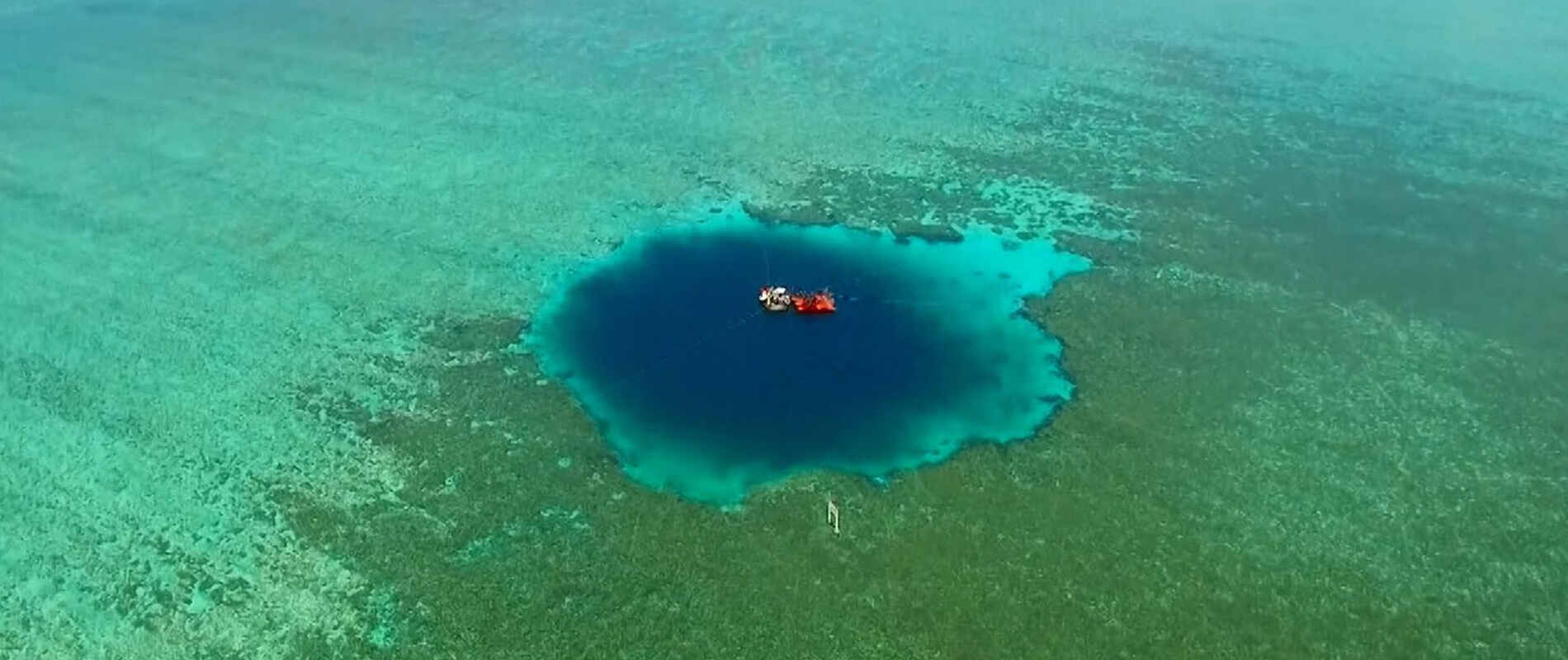
The Sansha Yongle Blue Hole Study has brought fresh attention to one of the most mysterious natural formations beneath the sea. Blue holes are often mistaken for calm, ordinary patches of water when seen from the surface. In reality, they are steep underwater sinkholes that drop sharply and change in shape, chemistry, and life conditions as they go deeper. Among them, the Sansha Yongle Blue Hole, also known as the Dragon Hole, stands out as a site of major scientific importance. Located in the South China Sea, this blue hole has become a natural laboratory for studying ocean history, geology, and extreme marine environments.
Thank you for reading this post, don't forget to subscribe!A Deep and Isolated Ocean Feature
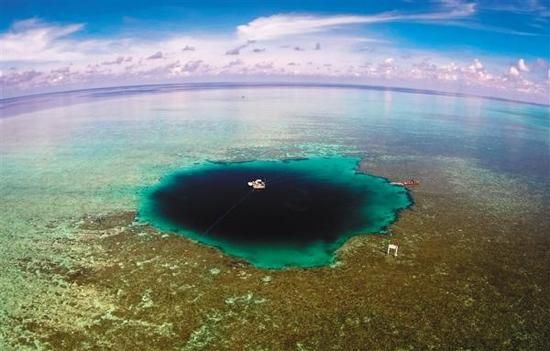
The Sansha Yongle Blue Hole lies near the Paracel Islands and was confirmed to reach a depth of 301.19 metres. For several years, it held the title of the deepest known blue hole on Earth, until a deeper one was later identified in Mexico. Even without the record, the Dragon Hole remains unique because of its isolation and internal structure. Unlike open ocean trenches, this blue hole is almost sealed from surrounding waters, creating conditions that rarely change over time.
From the surface, the hole blends into nearby reefs and open sea. There are no strong visual signs of the dramatic drop below. This contrast between appearance and reality is one reason blue holes remained poorly understood for so long. Only with modern tools has it become possible to explore them in detail.
A Complex Shape Beneath the Surface
One of the most important findings of the Sansha Yongle Blue Hole Study is that the hole is not a simple vertical shaft. Early assumptions suggested it went straight down, but detailed surveys proved otherwise. As researchers explored deeper, they found that the hole bends and tilts. The deepest point is located more than 100 metres horizontally away from the surface opening.
Near the top, the entrance is wide and open. As depth increases, the passage narrows sharply, then widens again at certain levels. This uneven shape suggests that the hole did not form from a single collapse. Instead, it developed gradually over long periods, shaped by erosion, changing sea levels, and chemical processes acting on limestone rock.
High-Tech Mapping Unlocks Accuracy
Measuring the true depth of the Dragon Hole was not easy. Traditional tools struggled inside the twisting interior. Signals bounced off angled walls, and navigation systems often lost accuracy. To solve this problem, scientists turned to advanced technology.
In 2017, a high-grade remotely operated vehicle was deployed into the hole. It was equipped with precise positioning systems, depth sensors, and imaging tools. The vehicle moved slowly through the narrow and curved sections, collecting data point by point. Researchers cross-checked readings from multiple instruments to reduce error.
The final confirmed depth of 301.19 metres was achieved only after careful verification. The process took longer than expected, but it produced the first complete three-dimensional map of the hole. This map remains a key reference for ongoing research.
Geological Records Written in Stone
Inside the Sansha Yongle Blue Hole, the rock walls tell a story of Earth’s past. Step-like ledges appear at various depths, carved into the limestone. These ledges align with periods when global sea levels were lower, often during colder climatic phases when more water was locked in ice.
As sea levels rose again, water flooded deeper into the cavity, expanding it further. Side chambers and sudden openings along the walls suggest long-term interaction between rock, seawater, and changing climate conditions. In this way, the hole acts as a geological record, preserving evidence of sea-level rise and fall over thousands of years.
Sharp Changes in Water Chemistry
Another major focus of the Sansha Yongle Blue Hole Study is the dramatic change in water chemistry with depth. Around 90 to 100 metres below the surface, oxygen levels drop rapidly. Above this zone, some marine organisms can survive, though life is limited. Below it, oxygen is almost completely absent.
In these deeper layers, hydrogen sulphide becomes detectable. This gas is toxic to most marine life and creates a hostile environment. Water circulation inside the hole is extremely weak, which prevents mixing with oxygen-rich seawater from outside. As a result, the chemical layers remain stable for long periods.
This stable stratification turns the Dragon Hole into a natural archive. Chemical signals trapped in the water provide clues about past ocean conditions, including changes in temperature, circulation, and biological activity.
Limited Life but Valuable Insights
Because of low oxygen levels, life inside the deeper parts of the hole is scarce. Fish and corals are mostly confined to the upper layers. However, the absence of life is itself valuable to science. It allows researchers to study chemical and physical processes without the disturbance caused by active ecosystems.
Microbial communities adapted to low-oxygen conditions may still exist, offering insight into how life survives in extreme environments. These findings can help scientists understand similar conditions in other parts of the ocean and even on other planets.
Why the Study Still Matters
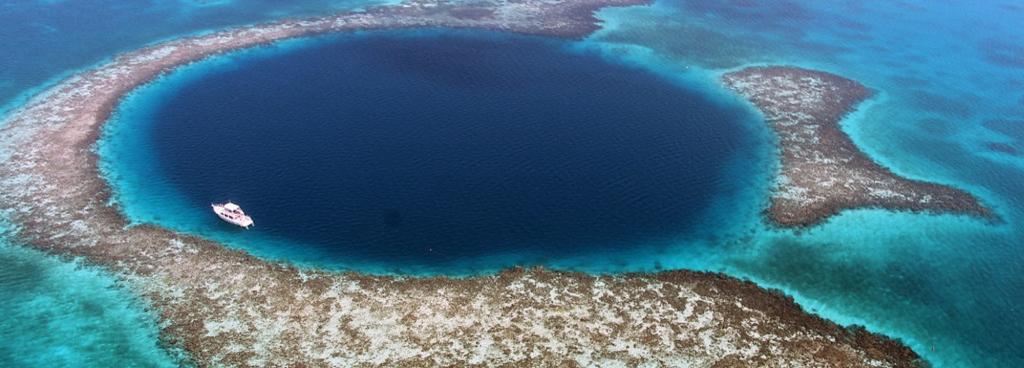
Even though it is no longer the deepest known blue hole, the Sansha Yongle Blue Hole remains one of the best-studied and most informative. Its complex shape, stable chemistry, and clear geological markers make it a reference site for blue hole research worldwide.
The Sansha Yongle Blue Hole Study continues to influence how scientists explore underwater sinkholes, reconstruct past climates, and understand the hidden processes of the deep sea. What appears calm and ordinary at the surface holds a detailed record of Earth’s changing oceans, preserved silently in the depths below.