UttarakhandGreenTax2025: State to Impose Green Tax on Vehicles from December 2025

Uttarakhand is set to introduce a green tax on all vehicles entering the state from December 2025 as part of its broader environmental conservation and pollution control efforts. The initiative, spearheaded by the state transport department, aims to safeguard the fragile Himalayan ecosystem and ensure cleaner surroundings across its popular tourist destinations such as Dehradun, Mussoorie, Nainital, and Rishikesh.
Thank you for reading this post, don't forget to subscribe!New Green Tax Mechanism in Uttarakhand
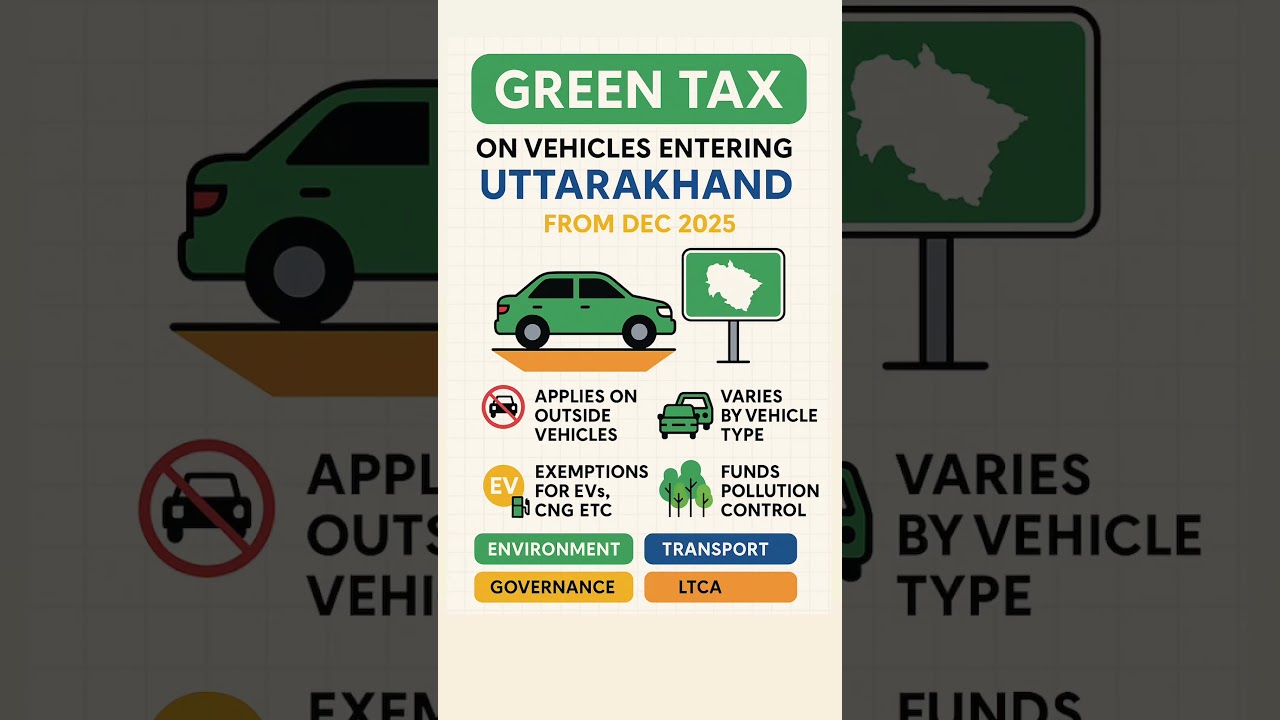
Under the new policy, the UttarakhandGreenTax2025 framework will charge different rates depending on the type and weight of the vehicle. According to state officials, ₹80 will be charged for small vehicles, ₹250 for small cargo vehicles, ₹140 for buses, and between ₹120 and ₹700 for trucks depending on their weight.
A key highlight of this initiative is the fully automated tax collection system. The process will rely on Automatic Number Plate Recognition (ANPR) cameras installed at 37 entry points across the state borders. These cameras will capture each vehicle’s registration number and transmit the data to a vendor authorized by the transport department.
Once the vehicle details are verified, the vendor’s system will connect to the National Payments Corporation of India (NPCI) database, identify the owner’s payment wallet, and automatically deduct the corresponding tax amount. This amount will then be credited directly to the state’s transport department account, ensuring transparency and efficiency in the collection mechanism.
Objective and Broader Environmental Goals
The central aim of the UttarakhandGreenTax2025 policy is to discourage unnecessary vehicular movement into the state’s eco-sensitive zones, reduce emissions, and generate funds for long-term environmental conservation projects.
Uttarakhand’s mountainous terrain and growing tourism have led to an exponential rise in vehicle traffic, especially during peak travel seasons. This has increased air pollution levels and strained the state’s ecological balance. The green tax will act as both a deterrent for excess vehicular entry and a source of funding for initiatives under the Clean Uttarakhand Mission.
Funds collected through the green tax will be directed toward pollution control, air quality monitoring, forest conservation, and maintaining cleanliness in key hill towns and pilgrimage routes. By leveraging modern technology and digital payment infrastructure, Uttarakhand aims to create a self-sustaining eco-regulatory system that protects its natural assets without imposing bureaucratic hurdles.
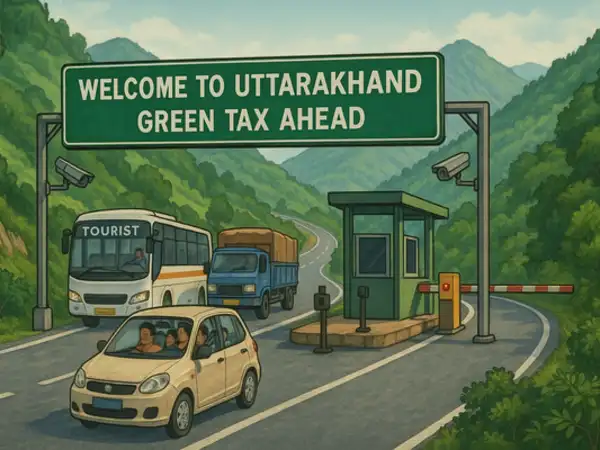
Green Tax Policies Across India
The UttarakhandGreenTax2025 initiative is not an isolated effort but part of a growing national trend toward sustainable transport policies. Several Indian states have already introduced green tax mechanisms to curb vehicular pollution.
For instance, Himachal Pradesh imposes a similar entry tax on vehicles from other states entering tourist hubs like Shimla and Manali, while exempting locally registered vehicles. States such as Maharashtra, Karnataka, Telangana, Andhra Pradesh, Madhya Pradesh, Rajasthan, and Jharkhand levy recurring green taxes primarily on older vehicles commercial ones over eight years old and private ones over fifteen years old.
Revenue from these taxes is typically used to fund urban air quality programmes, pollution control infrastructure, and public awareness campaigns promoting cleaner mobility. Uttarakhand’s model, however, distinguishes itself through its real-time digital collection system, which reduces manual intervention and enhances accountability.
Exam-Oriented Key Facts
- Implementation Date: December 2025
- Applicable Vehicles: All vehicles entering Uttarakhand from other states
- Rates: ₹80 for small vehicles, ₹250 for small cargo vehicles, ₹140 for buses, ₹120–₹700 for trucks (based on weight)
- Collection Method: Automated via ANPR cameras and the NPCI payment system
- Purpose: To reduce vehicular emissions, protect eco-sensitive areas, and fund pollution control measures
- Comparable Models: Himachal Pradesh, Maharashtra, and Karnataka
- Policy Alignment: Clean Uttarakhand Mission and India’s broader green mobility goals
National Trend Toward Eco-Friendly Transport
The UttarakhandGreenTax2025 announcement reflects India’s larger commitment to sustainable development and carbon reduction goals. Vehicular emissions are a significant contributor to air pollution in both urban and hill regions, making transport regulation a vital part of climate action.
By integrating technology, transparency, and environmental responsibility, the new tax structure is expected to promote eco-friendly mobility choices among tourists and transporters. It may also encourage a gradual shift toward electric vehicles (EVs), public transport, and shared mobility solutions, reducing the dependency on private fuel-based transport.
Environmental experts suggest that the move could also strengthen Uttarakhand’s position as a model for digital governance in environmental regulation. Automated tax collection using ANPR and NPCI integration ensures not only seamless operation but also minimizes revenue leakage and manual errors.
As the state continues to experience high inflows of vehicles especially during Char Dham Yatra, tourism peaks, and festive seasons this system could significantly reduce congestion and emissions at critical points. Additionally, it demonstrates how digital innovation can support climate resilience and sustainable tourism in Himalayan regions.
Looking Ahead
With UttarakhandGreenTax2025, the state takes a decisive step toward balancing its tourism-driven economy with ecological preservation. The green tax serves a dual purpose: regulating incoming traffic and channeling resources toward conservation efforts.
If implemented effectively, Uttarakhand’s green tax policy could become a national benchmark for other environmentally sensitive states such as Sikkim, Arunachal Pradesh, and Jammu & Kashmir, where fragile ecosystems face similar challenges.
By merging automation with sustainability, Uttarakhand sets an example of how states can leverage technology to achieve cleaner, greener, and more sustainable mobility futures protecting not only its natural heritage but also the well-being of future generations.