


Census in India: Complete Guide to Population Census

Census in India is the official process of counting every person living in the country. It also collects important information about age, gender, education, occupation, language, religion, housing, and many other social and economic details. This information helps the government understand the country’s population and plan for future development.
Thank you for reading this post, don't forget to subscribe!India conducts a population census every ten years, making it one of the largest administrative exercises in the world.
What is Census?
A census is the process of collecting, compiling, analyzing, and publishing information about every person living in a country at a particular time.
The census helps to understand:
- Total population
- Population growth
- Literacy rate
- Employment status
- Housing conditions
- Migration
- Social and economic conditions
The data collected is used by governments, researchers, planners, and businesses.
Who Conducts Census in India?
The Office of the Registrar General and Census Commissioner of India, under the Ministry of Home Affairs, is responsible for conducting the Census in India.
Before 1951, a temporary organization was formed for every census. After that, a permanent census organization was established.
Legal Basis of Census in India
The population census is conducted under the Census Act, 1948.
The law was introduced by Sardar Vallabhbhai Patel, who was India’s Home Minister at that time.
The Census is also included as a Union Subject under Article 246 of the Constitution of India and appears in Entry 69 of the Union List in the Seventh Schedule.
Is Census Information Confidential?
Yes.
The information collected during the census is completely confidential.
The Census Act, 1948 protects the privacy of every citizen. Even courts cannot access individual census information.
Any census official who shares confidential information can face legal punishment.
Why is Census in India Important?
The census is useful in many ways.
| Importance | Explanation |
|---|---|
| Population Data | Gives accurate information about the country’s population. |
| Government Planning | Helps prepare development plans and welfare schemes. |
| Policy Making | Supports decisions related to education, health, employment, and housing. |
| Election Boundaries | Helps in drawing parliamentary and assembly constituencies. |
| Distribution of Funds | Assists the Finance Commission in allocating grants to states. |
| Business Planning | Helps companies understand market demand and customer distribution. |
| Research | Used by researchers to study population trends and social changes. |
History of Census in India
Population counting has existed in India for thousands of years.
Ancient India
The Rigveda mentions early forms of population records between 800 BC and 600 BC.
The famous book Arthashastra, written by Kautilya, advised rulers to maintain population records for taxation and administration.
During the rule of Emperor Akbar, the Ain-i-Akbari included detailed information about population, agriculture, trade, and wealth.
Census During British Rule
Modern census activities started during British administration.
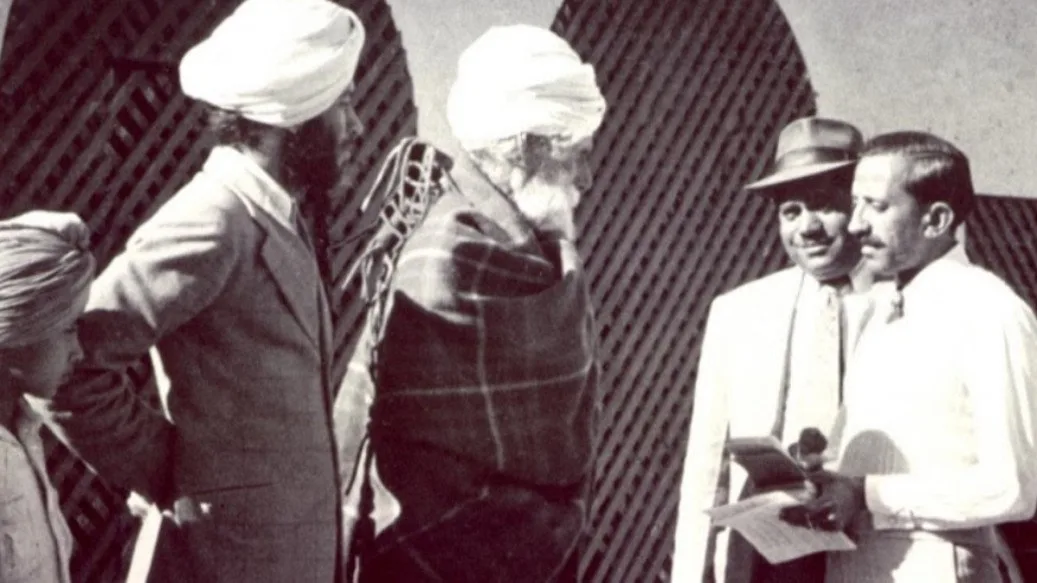
Some important events include:
| Year | Event |
|---|---|
| 1824 | Census conducted in Allahabad. |
| 1827–28 | Census conducted in Banaras by James Prinsep. |
| 1830 | First complete city census conducted in Dacca (now Dhaka). |
| 1836–37 | Second census conducted by Fort St. George administration. |
| 1849 | Government ordered population records every five years. |
| 1872 | First non-synchronous Census conducted under Lord Mayo. |
| 1881 | First synchronous Census conducted across British India. |
Since 1881, India has conducted a census every ten years without interruption until the Covid-19 pandemic.
Important Census Years in India
Census 1881
This was India’s first official nationwide census. It collected information about population, occupations, and social conditions.
Census 1891
This census followed a similar pattern but achieved better population coverage.
Census 1901
More regions such as Balochistan, Rajputana, Andaman and Nicobar Islands, Punjab, Burma, and remote areas of Kashmir were included.
Census 1921 – The Great Divide
The decade between 1911 and 1921 is the only period when India’s population declined by 0.31%.
This happened mainly because of the 1918 influenza pandemic, which caused millions of deaths.
For this reason, 1921 is known as “The Great Divide” in India’s demographic history.
Census 1971
A new question about fertility among married women was included.
Census 1991
The definition of literacy changed.
People aged 7 years and above who could read and write were considered literate.
Census 2001
Technology was used on a large scale for the first time.
Handwritten forms were scanned using Intelligent Character Recognition (ICR) technology, making data processing faster and more accurate.
Census 2011
The census recorded a significant decline in population growth in the Empowered Action Group (EAG) States, including Uttar Pradesh, Bihar, Rajasthan, Madhya Pradesh, Jharkhand, Chhattisgarh, Uttarakhand, and Odisha.
Census 2021
The 2021 Census was postponed because of the Covid-19 pandemic.
It was planned to become India’s first digital census, allowing people to complete self-enumeration through online systems.
It also proposed collecting information about households headed by members of the transgender community.
What is the Socio Economic and Caste Census (SECC)?
The Socio Economic and Caste Census (SECC) was conducted in 2011.
It was the first caste-based survey after 1931.
The main purpose was to collect information about:
- Economic condition of families
- Housing status
- Employment
- Education
- Assets
- Specific caste details
This information helps governments identify poor families and provide welfare benefits.
Difference Between Census and SECC
| Census | SECC |
|---|---|
| Counts the entire population. | Identifies poor and deprived families. |
| Data remains confidential. | Data is used by government departments. |
| Conducted under the Census Act, 1948. | Conducted for welfare planning and beneficiary identification. |
| Used for demographic analysis. | Used for social and economic policy implementation. |
Importance of SECC
The SECC provides valuable information about poverty and inequality.
Its benefits include:
- Better identification of poor families
- Improved welfare schemes
- Better understanding of social inequality
- Support for reservation policies with statistical data
- Improved planning for development programmes
Concerns About SECC
Although SECC is useful, it also faces several challenges.
Caste Sensitivity
Caste is an emotional and politically sensitive issue in India. A caste census may increase social divisions or strengthen caste identities.
Incomplete Data Release
Much of the caste-related data collected in SECC has not been fully released due to political and administrative concerns.
Caste and Poverty Are Different
Experts believe caste alone cannot measure poverty or backwardness. Many people from the same caste may have different economic conditions.
Challenges in Conducting Census in India
Some major challenges include:
- Reaching remote villages and difficult terrains
- Collecting accurate information from every household
- Managing a very large population
- Ensuring privacy and data security
- Delays due to natural disasters or pandemics
- Training lakhs of census workers
Despite these challenges, India continues to improve census methods with digital technology.
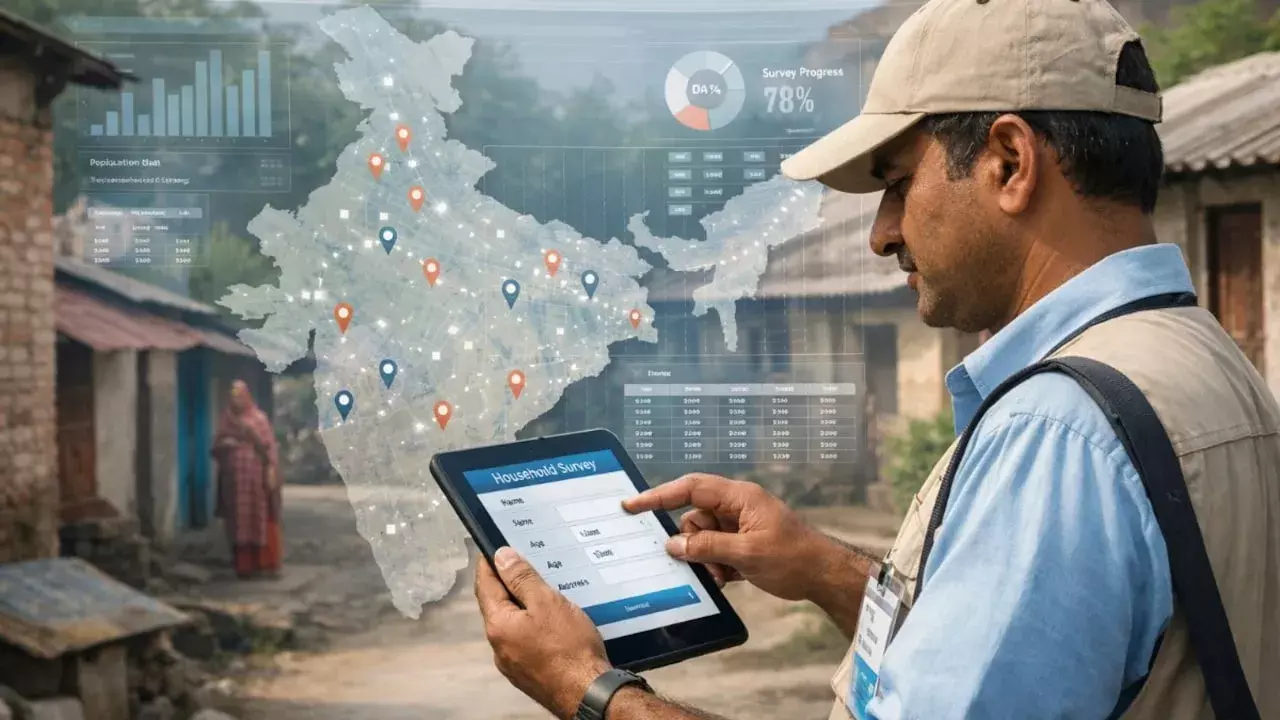
Future of Census in India
The future census is expected to become more technology-driven.
Digital data collection, online self-enumeration, GPS mapping, and faster data processing will improve accuracy and reduce the time needed to publish results.
Modern technology will also help the government make better development plans based on real-time population information.
FAQs
What is Census in India?
Census in India is the official process of counting every person and collecting demographic, social, and economic information across the country.
How often is the Census conducted in India?
The population census is conducted every ten years.
Which ministry conducts the Census in India?
The Ministry of Home Affairs conducts the census through the Office of the Registrar General and Census Commissioner of India.
Under which law is the Census conducted?
The Census is conducted under the Census Act, 1948.
Why is Census important?
It helps the government in planning, policymaking, development projects, welfare schemes, elections, and resource distribution.
What is SECC?
The Socio Economic and Caste Census collects information about the economic condition and caste details of families to improve welfare programmes.
Why was the 2021 Census postponed?
The 2021 Census was postponed because of the Covid-19 pandemic.