Panchayati Raj: Strengthening Rural Local Governance in India

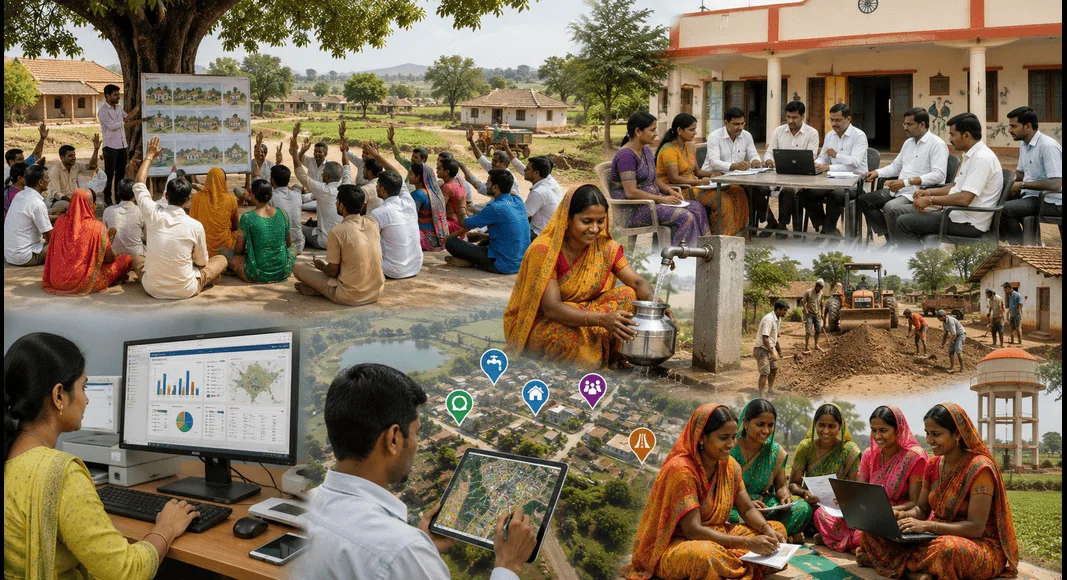
Panchayati Raj marked another important year in strengthening local self-government in rural India. The Ministry of Panchayati Raj worked towards improving governance, increasing transparency, promoting digital technology, and making Gram Panchayats more capable of planning and implementing development projects.
Thank you for reading this post, don't forget to subscribe!The Panchayati Raj system gives power to people at the village level. It allows local communities to participate directly in decision-making through Gram Sabhas and elected Panchayats. This system ensures that development plans are prepared according to the real needs of villages rather than being decided only at higher levels of government.
The year 2019 saw major efforts to digitize Panchayat administration, improve financial transparency, strengthen local planning, and train elected representatives. Since then, several new initiatives have been introduced until 2025, making Panchayats more effective in delivering government services and achieving sustainable rural development.
What is the Ministry of Panchayati Raj?
The Ministry of Panchayati Raj (MoPR) is responsible for promoting and strengthening the Panchayati Raj system across India. It ensures that the provisions of the 73rd Constitutional Amendment Act, 1992 are properly implemented.
The ministry works to:
- Strengthen Gram Panchayats
- Improve rural governance
- Promote digital administration
- Build the capacity of Panchayat representatives
- Ensure better delivery of public services
- Encourage participation of villagers in development planning
Its overall goal is to make local governments more transparent, accountable, and capable of improving the lives of rural people.
Understanding Panchayati Raj
Panchayati Raj is India’s system of local self-government in rural areas.
The system allows people living in villages to participate directly in governance through elected representatives.
India follows a three-tier Panchayati Raj system:
- Gram Panchayat at the village level
- Panchayat Samiti at the block or tehsil level
- Zila Parishad at the district level
These institutions prepare development plans, implement government schemes, maintain village infrastructure, and address local issues.
History of Panchayati Raj in India
The idea of local self-government existed in India for centuries, but modern Panchayati Raj developed gradually after Independence.
Community Development Programme (1952)
The government introduced the Community Development Programme to encourage rural development through people’s participation.
Balwantrai Mehta Committee (1957)
The committee studied rural development programmes and recommended a three-tier Panchayati Raj system.
Its recommendations became the foundation of today’s Panchayati Raj institutions.
Ashok Mehta Committee (1978)
This committee suggested reforms to strengthen local governments and improve decentralization.
L. M. Singhvi Committee
The committee recommended giving constitutional status to Panchayats and making Gram Sabha the foundation of local democracy.
73rd Constitutional Amendment (1992)
This became one of the biggest milestones in Indian democracy.
Implemented in 1993, it:
- Gave constitutional status to Panchayats
- Made regular Panchayat elections compulsory
- Reserved seats for women and weaker sections
- Strengthened Gram Sabhas
- Provided constitutional recognition to local self-government
Today, Panchayati Raj is one of the world’s largest democratic governance systems.
Fourteenth Finance Commission Grants
One of the biggest developments during 2019 was the effective use of Fourteenth Finance Commission (FFC) Grants.
These grants provided financial support directly to Gram Panchayats for local development.
The Ministry ensured proper monitoring through the Public Financial Management System (PFMS).
Major achievements included:
- Digital tracking of Panchayat funds
- Geo-tagging of around 5.5 lakh public assets
- Online financial monitoring
- Greater transparency in spending
- Digital payments through PRIASoft-PFMS
Geo-tagging helped citizens and government officials verify the actual location of development works.
Panchayat Enterprise Suite (PES)
The Ministry developed several software applications under the Panchayat Enterprise Suite (PES) to modernize village administration.
These digital tools improved planning, accounting, monitoring, and transparency.
PlanPlus
PlanPlus helps Panchayats prepare and upload Gram Panchayat Development Plans (GPDPs).
Citizens can also see planned development activities in their villages.
ActionSoft
ActionSoft tracks:
- Progress of development works
- Fund flow
- Project implementation
- Physical and financial progress
It improves transparency throughout the execution process.
PRIASoft
PRIASoft manages:
- Income
- Expenditure
- Financial records
- Voucher entries
It supports proper accounting and digital financial management.
Benefits of Digital Panchayat Administration
The adoption of digital platforms has transformed Panchayat governance.
Major benefits include:
- Faster planning
- Better financial accountability
- Less paperwork
- Reduced corruption
- Easy monitoring
- Improved public participation
- Better use of government funds
Digital governance has made Panchayats more efficient than before.
Mission Mode Project on e-Panchayat
The e-Panchayat Mission Mode Project (MMP) was launched to completely digitize Panchayat administration.
Several important initiatives were introduced.
Unified Portal
A user-friendly portal allows Panchayats to:
- Prepare plans
- Track projects
- Monitor progress
- Update records
Real-time Financial Monitoring
Integration with PFMS enables real-time payments and better financial control.
Gram Manchitra
Gram Manchitra is a GIS-based planning tool.
It helps Panchayats:
- View village maps
- Plan infrastructure
- Identify development gaps
- Select suitable project locations
It supports scientific and data-based planning.
Rashtriya Gram Swaraj Abhiyan (RGSA)
Launched in 2018, the Rashtriya Gram Swaraj Abhiyan (RGSA) aims to strengthen Panchayati Raj Institutions across India.
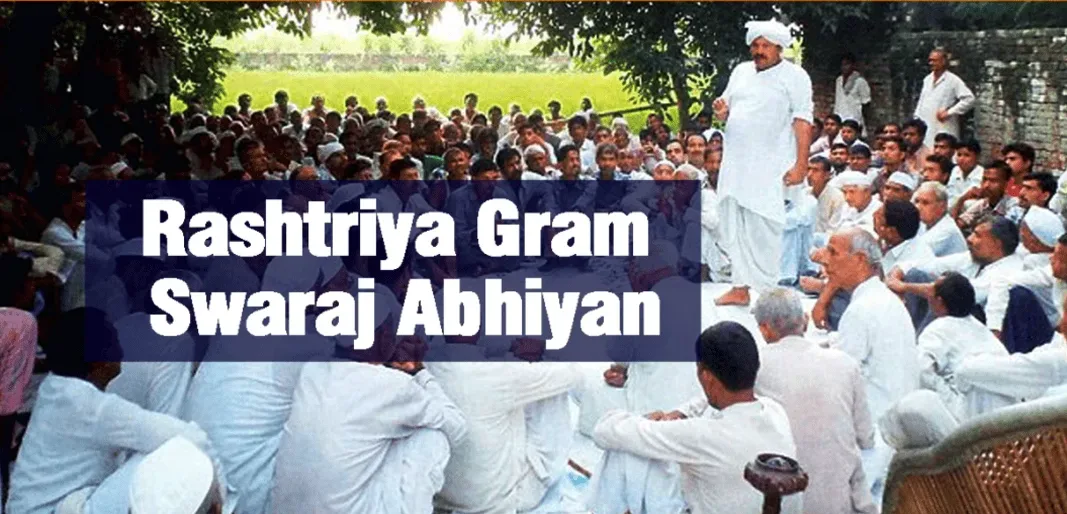
The scheme supports more than 2.5 lakh Panchayats by improving their governance capacity.
Its major objectives include:
- Better training for elected representatives
- Stronger Gram Sabhas
- Inclusive governance
- Efficient use of available resources
- Better planning
- Improved service delivery
Focus on Sustainable Development Goals (SDGs)
RGSA aligns Panchayat activities with the United Nations Sustainable Development Goals (SDGs).
Priority areas include:
- Poverty reduction
- Healthcare
- Nutrition
- Education
- Drinking water
- Sanitation
- Women’s empowerment
- Digital payments
- Water conservation
- Social inclusion
The programme ensures that no community is left behind.
People’s Plan Campaign (Sabki Yojana Sabka Vikas)
The People’s Plan Campaign (PPC) encourages every Gram Panchayat to prepare its own development plan.
The campaign promotes:
- Public participation
- Transparent planning
- Community meetings
- Better use of available funds
During PPC 2019, Panchayats prepared development plans for the financial year 2020–21 with active participation from villagers.
This approach ensures that development reflects local needs instead of top-down decisions.
Incentivization of Panchayats
The Ministry encourages healthy competition among Panchayats through various national awards.
Outstanding Panchayats receive financial incentives and recognition.
Major awards include:
Deen Dayal Upadhyay Panchayat Sashaktikaran Puraskar (DDUPSP)
Awarded to the best-performing Gram, Block, and District Panchayats.
Nanaji Deshmukh Rashtriya Gaurav Gram Sabha Puraskar
Recognizes Gram Sabhas that actively involve citizens in governance.
GPDP Award
Given for preparing excellent Gram Panchayat Development Plans.
Child-Friendly Gram Panchayat Award
Rewards Panchayats working for child welfare.
e-Panchayat Puraskar
Honours States and Union Territories for outstanding digital governance.
These awards motivate Panchayats to improve governance and public services.
National Panchayat Day
Every year, 24 April is celebrated as National Panchayat Day.
It marks the implementation of the 73rd Constitutional Amendment Act in 1993.
The day recognizes the important role of Panchayats in strengthening democracy at the grassroots level.
Major Developments from 2020 to 2025
After 2019, the Panchayati Raj system continued to evolve rapidly.
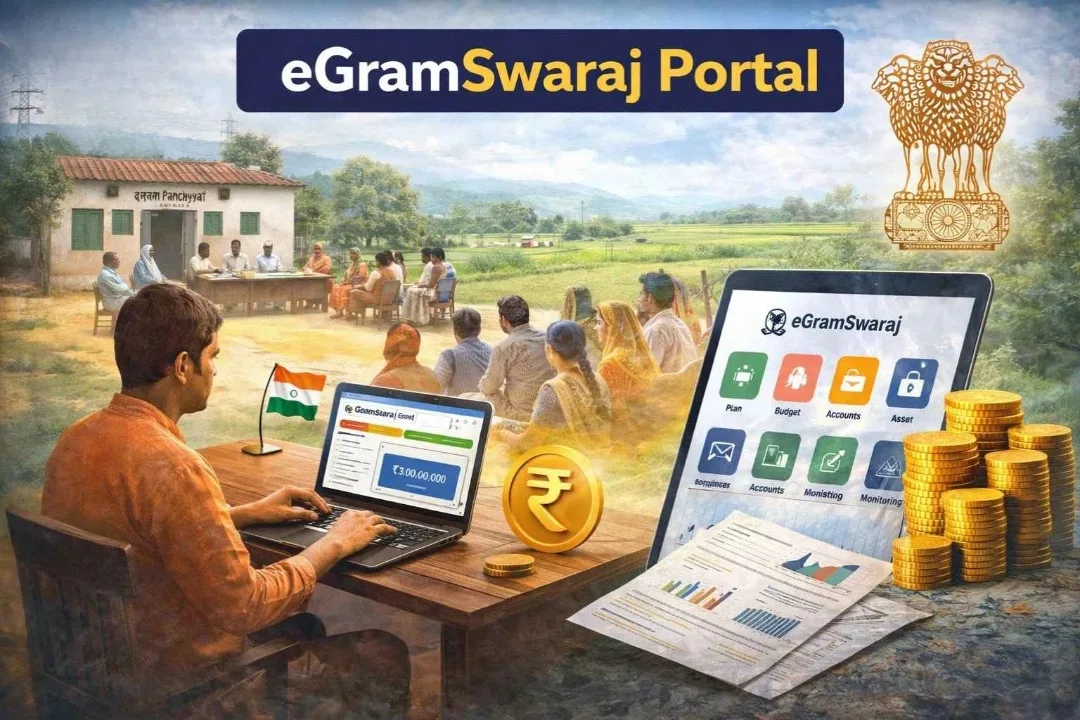
eGramSwaraj Portal
The Government launched the eGramSwaraj Portal, integrating planning, budgeting, accounting, and monitoring into one digital platform.
SVAMITVA Scheme
Launched in 2020, the SVAMITVA Scheme uses drone technology to survey village lands.
It provides legal property cards to rural households, helping reduce land disputes and improve access to bank loans.
Digital Payments
Most Panchayats now make payments digitally through integrated financial systems, improving accountability and reducing delays.
Greater Women’s Participation
Women continue to play a larger role in Panchayat governance. Many states provide more than the constitutional minimum reservation for women, leading to stronger participation in local decision-making.
Better Local Planning
Technology-driven planning tools now help Panchayats prepare more accurate development plans using maps, satellite data, and local information.
Focus on SDG Localization
Panchayats are increasingly involved in achieving Sustainable Development Goals by improving sanitation, education, health services, drinking water, environmental conservation, and livelihood opportunities.
Capacity Building
Thousands of Panchayat representatives have received online and offline training under RGSA, improving their administrative and financial management skills.
Challenges Faced by Panchayati Raj Institutions
Despite significant progress, several challenges remain.
Some important issues include:
- Limited financial resources
- Shortage of trained staff
- Digital literacy gaps
- Delays in fund release
- Unequal capacity among Panchayats
- Weak public participation in some areas
Addressing these challenges will further strengthen grassroots democracy.
The Way Forward
India’s future rural development depends heavily on strong Panchayati Raj Institutions.
Greater financial autonomy, regular training, better digital infrastructure, and active citizen participation can make Panchayats even more effective.
The use of technology, transparent governance, and community participation will help villages become more self-reliant and inclusive. As India moves toward becoming a developed nation, empowered Panchayats will continue to play a central role in improving rural infrastructure, delivering government schemes, and ensuring sustainable development.
Conclusion
Panchayati Raj was an important year in strengthening local governance through technology, financial transparency, and better planning. The Ministry of Panchayati Raj focused on digitizing administration, empowering Gram Panchayats, promoting community participation, and improving accountability.
Between 2020 and 2025, initiatives such as eGramSwaraj, the SVAMITVA Scheme, expanded digital governance, and stronger implementation of Rashtriya Gram Swaraj Abhiyan further transformed rural administration. Today, Panchayats are becoming more capable, transparent, and citizen-friendly than ever before.
A strong Panchayati Raj system ensures that democracy truly reaches every village, allowing local people to participate directly in shaping the future of their communities.
FAQs About India’s Panchayati Raj
1. What is Panchayati Raj?
Panchayati Raj is India’s system of local self-government in rural areas. It allows elected local bodies to manage village development and public services.
2. What is the role of the Ministry of Panchayati Raj?
The Ministry of Panchayati Raj strengthens Gram Panchayats by improving governance, promoting digital services, building capacity, and ensuring the implementation of the 73rd Constitutional Amendment.
3. What is the 73rd Constitutional Amendment?
The 73rd Constitutional Amendment Act, 1992 gave constitutional status to Panchayati Raj Institutions and established a three-tier system of local self-government in rural India.
4. What is the Panchayat Enterprise Suite (PES)?
Panchayat Enterprise Suite (PES) is a group of digital applications such as PlanPlus, ActionSoft, and PRIASoft that help Panchayats manage planning, finances, and project monitoring.
5. What is the Rashtriya Gram Swaraj Abhiyan (RGSA)?
RGSA is a centrally sponsored scheme that strengthens Panchayati Raj Institutions through training, better governance, digital technology, and improved service delivery.
6. What is the People’s Plan Campaign (PPC)?
The People’s Plan Campaign encourages Gram Panchayats to prepare Gram Panchayat Development Plans (GPDPs) with active participation from local citizens.
7. What is Gram Manchitra?
Gram Manchitra is a GIS-based planning tool that helps Panchayats map village resources and prepare better development plans.
8. What are the Fourteenth Finance Commission Grants?
These grants provide financial assistance directly to Gram Panchayats for local development projects and improve transparency through digital monitoring.
9. Why is National Panchayat Day celebrated?
National Panchayat Day is celebrated every year on 24 April to mark the implementation of the 73rd Constitutional Amendment and recognize the importance of local self-government.
10. What major developments took place after 2019?
From 2020 to 2025, the government introduced initiatives like eGramSwaraj, SVAMITVA Scheme, expanded digital payments, GIS-based planning, and strengthened Panchayat governance through technology and capacity building.