Rock Art (Part-2): Complete Guide to Rock-Cut Architecture in India

Rock Art (Part-2) is an important topic in Indian Heritage and Culture that explains the beauty, history, and development of rock-cut architecture in India. This form of art shows how ancient Indian craftsmen created temples, caves, and monasteries by cutting directly into solid rocks. It reflects not only artistic skills but also religious beliefs, cultural values, and advanced engineering knowledge of ancient India.
Thank you for reading this post, don't forget to subscribe!What is Rock-Cut Architecture?
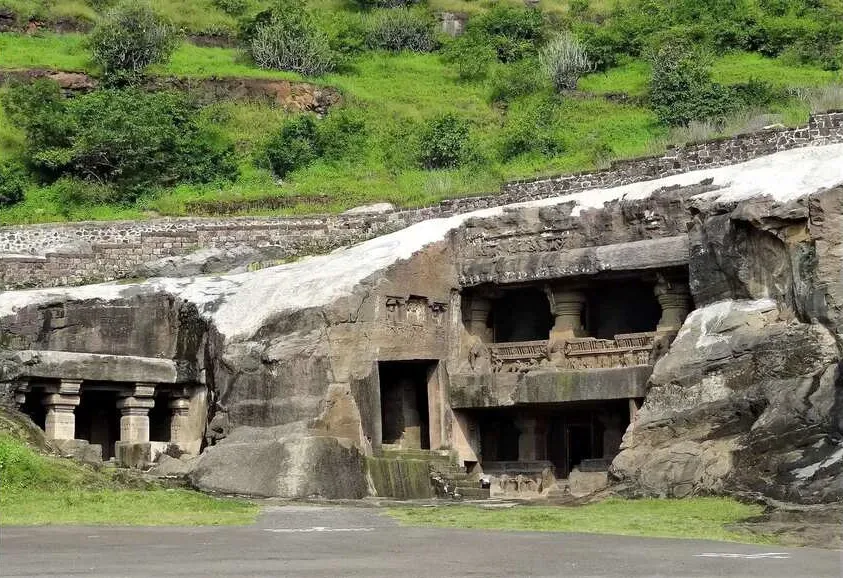
Rock-cut architecture is a special type of construction where buildings are made by carving out solid natural rock. Unlike normal buildings that are constructed by joining materials like bricks or stones, these structures are created by removing unwanted rock to form spaces like rooms, halls, and temples.
This technique required great skill, patience, and planning because once the rock was cut, it could not be replaced. Any mistake could damage the entire structure.
Rock-cut architecture is found in many parts of India, but the most famous examples are located in the Western Deccan region, where large cave temples and monasteries were built.
Historical Background
Rock-cut architecture in India mainly developed during the rule of the Satavahana dynasty and later rulers. Over time, it evolved through different stages and became more advanced in design and decoration.
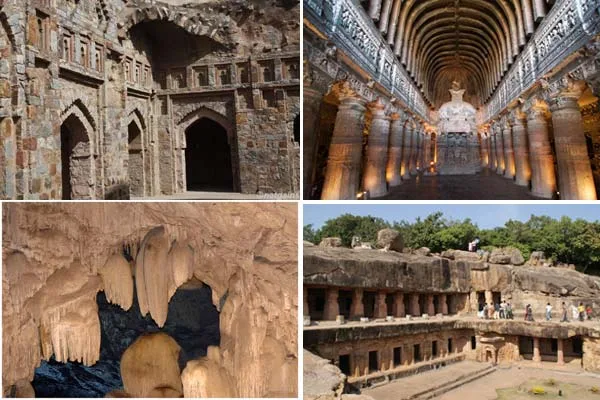
Timeline of Development
Rock-cut architecture in India developed in three main phases:
1. Early Phase (2nd Century BC – 2nd Century AD)
This was the beginning stage, where simple caves were made mainly for monks to live and pray.
2. Middle Phase (5th Century AD – 7th Century AD)
During this period, architecture became more complex. Caves had better designs, decorations, and religious symbols.
3. Later Phase (7th Century AD – 10th Century AD)
In this stage, large temples and detailed sculptures were created. Rock-cut architecture reached its peak during this time.
Importance of Rock-Cut Architecture
Rock-cut architecture holds a very important place in Indian history because:
- It represents the finest examples of ancient Indian art.
- It shows the religious life of people, especially Buddhism, Hinduism, and Jainism.
- It demonstrates advanced engineering and artistic skills.
- Many caves were used as monasteries, prayer halls, and living spaces.
- It is more similar to sculpture than architecture because structures are carved out instead of built.
Types of Rock-Cut Architecture
Rock-cut architecture can be divided into two main types:
1. Rock-Cut Caves
2. Rock-Cut Temples
Let us understand both in detail.
Rock-Cut Caves
Rock-cut caves are one of the earliest and most important examples of Rock Art (Part-2) in India. These caves were mainly used by monks for living, meditation, and religious activities. Over time, their design, structure, and decoration became more advanced.
Mauryan Period (322 BC – 185 BC)
The earliest rock-cut caves in India belong to the Mauryan period, especially during the rule of Emperor Ashoka (273–232 BC) and his grandson Dasharatha.
During this time:
- Caves were mainly used as Viharas (living quarters) by Jain and Buddhist monks.
- Initially, these caves were used by the Ajivika sect, and later they were occupied by Buddhist monks as monasteries.
- The caves were simple in design but highly polished, showing excellent craftsmanship.
The most important examples of this period are:
These caves were created during the reign of Dasharatha and are considered the oldest surviving rock-cut caves in India.
Post-Mauryan Period
After the Mauryan period, the construction of rock-cut caves continued, but with many improvements and new features. This period saw the real development of cave architecture.
Major Developments:
- Growth of both Viharas (monasteries) and Chaitya halls (prayer halls)
- Chaitya halls were generally rectangular or quadrangular chambers with flat or curved roofs used for worship
- Large arch-shaped entrances were carved, along with windows and balconies
- Caves included open courtyards and stone screen walls to protect from rain
- Walls were decorated with carvings of humans, animals, and symbolic figures
These features made the caves not only functional but also artistic and beautiful.
Important Examples:
- Karle Chaitya Hall – one of the finest examples of early Chaitya architecture
- Ajanta Caves – a group of 29 caves, including:
- 25 Viharas (residential caves)
- 4 Chaityas (prayer halls)
The Ajanta caves are especially famous for their artistic design and religious importance.
Gupta Period (4th Century AD – 6th Century AD)
The Gupta period is often called the Golden Age of Indian Architecture. During this time, rock-cut caves continued to develop, and new artistic elements were added.
Key Features:
- Continued construction and improvement of cave structures
- Introduction of mural paintings on cave walls
- More detailed and refined sculptures
- Greater religious influence, especially of Hinduism along with Buddhism
Important Caves of the Gupta Period
Udayagiri Caves (Madhya Pradesh)
- Located in Madhya Pradesh, these caves consist of 20 rock-cut chambers
- Some caves have inscriptions from the reign of Chandragupta II
- These caves are important because they represent some of the earliest Hindu art in India
One of the most famous caves here is:
- Cave 5 (Varaha Cave)
- It contains a huge sculpture of Lord Vishnu in his Varaha (boar) avatar
- The sculpture shows Vishnu rescuing the Earth Goddess from chaos
- Surrounded by gods and saints, this scene represents divine power and protection
Ajanta Caves (Maharashtra)
- Located in the Sahyadri hills near the Waghora River
- Carved out of volcanic rock during the 4th century AD
- Consists of 29 caves arranged in a horseshoe shape
Out of these:
- 25 caves are Viharas (living spaces)
- 4 caves are Chaityas (prayer halls)
Ajanta caves are world-famous for:
- Beautiful wall paintings (murals)
- Detailed sculptures
- Depictions of Buddhist stories and teachings
Ellora Caves (Maharashtra)
- Located about 100 km from Ajanta caves
- A group of 34 caves belonging to different religions:
- 17 Hindu caves
- 12 Buddhist caves
- 5 Jain caves
- Developed between the 5th and 11th centuries AD
- These caves show religious harmony, as all three religions are represented in one place
Ellora is considered one of the greatest examples of rock-cut architecture in India.
Bagh Caves (Madhya Pradesh)
- Located on the banks of the Bagh River
- A group of 9 Buddhist caves developed around the 6th century AD
These caves are:
- Architecturally similar to the Ajanta caves
- Known for their beautiful paintings and artistic decoration
- Important examples of rock-cut monasteries and shrines
In modern history, these caves were rediscovered in 1818, which helped scholars understand ancient Indian art better.
Other Important Rock-Cut Caves
Udayagiri and Khandagiri Caves (Odisha)
- Built by King Kharavela
- Used by Jain monks
- Famous for the Hathigumpha inscription
Sittanavasal Caves (Tamil Nadu)
- Known for Jain paintings
Jogimara Cave (Chhattisgarh)
- Contains ancient love story inscriptions
- Dates back to around 1000–300 BC
Nasik Caves (Maharashtra)
- 24 Buddhist caves
- Also called Pandav Leni
- Show influence of both Hinayana and Mahayana Buddhism
- Known for water management systems
Rock-Cut Temple Architecture
Rock-cut temples are different from caves because they are designed like full temples carved from a single rock. These temples look like constructed buildings, but in reality, they are chiselled out of one large stone.
About
A monolithic rock-cut temple is carved out of a single huge rock. These temples are made in the shape of wooden or stone-built temples and include detailed carvings on walls, pillars, and ceilings. They show excellent skills of art, planning, and engineering.
The architects of the Pallava Dynasty were the first to start carving such monolithic temples. Their work laid the foundation for the development of rock-cut temple architecture in India.
Development in South India
Rock-cut temple architecture in South India began under the Pallava ruler Mahendravarman. The temples built during the Pallava period show different styles based on the rulers, and they can be divided into four stages.
Stages of Development
1. Mahendra Group
This is the earliest stage of Pallava temple architecture.
- Temples were mainly rock-cut
- Known as mandapas
- Simple in design
- Unlike Nagara style, mandapas here were full temples, not just assembly halls
2. Narasimha Group
This is the second stage of development.
- Temples became more decorative
- Intricate sculptures were added
- Mandapas were divided into separate rathas (chariot-shaped structures)
- Largest ratha: Dharmaraja Ratha
- Smallest ratha: Draupadi Ratha
3. Rajsimha Group
4. Nandivarman Group
- These stages mark the transition
- Development of structural temples began
- Rock-cut temples slowly declined
Important Rock-Cut Temples
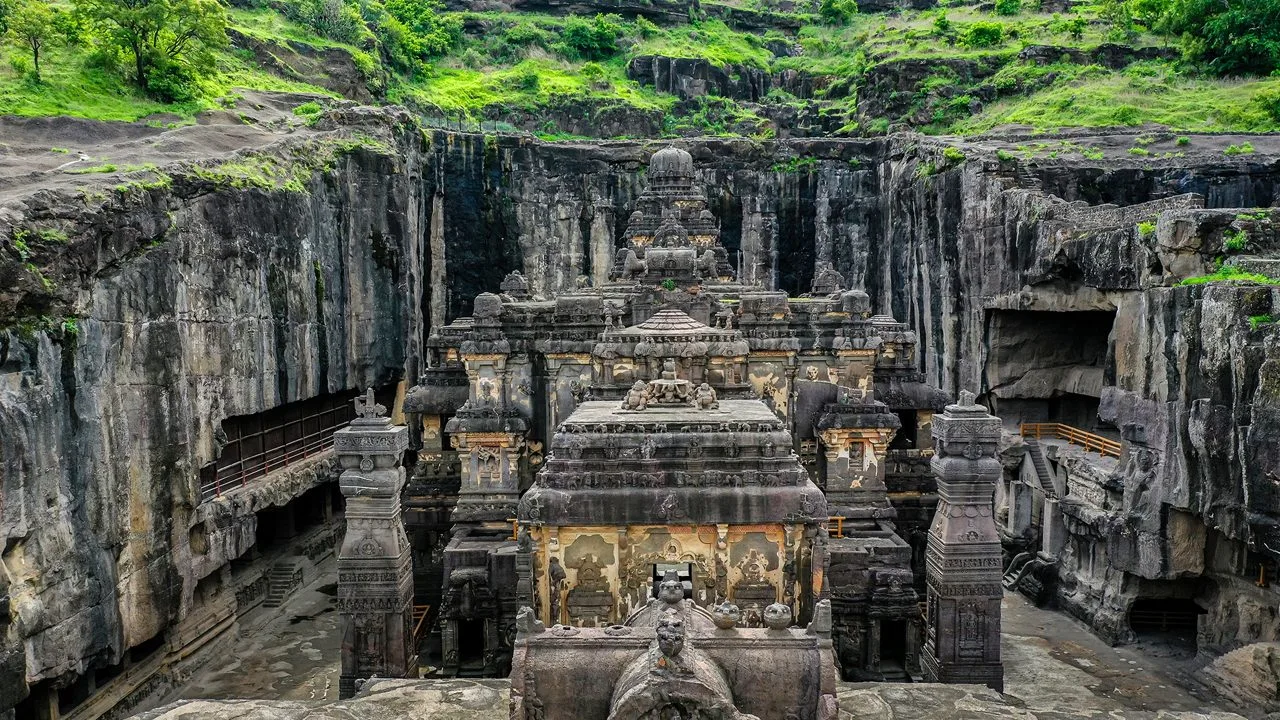
Kailash Temple (Ellora)
The Kailash Temple is one of the greatest examples of rock-cut architecture in the world.
- Dedicated to Lord Shiva
- Located in the Ellora caves
- Built under Rashtrakuta king Krishna I (8th century AD)
- Carved out of a single monolithic rock
- Includes a large courtyard
One of the most famous sculptures here shows Ravana shaking Mount Kailash, which is considered a masterpiece of Indian sculpture.
The temple also contains detailed carvings from the Ramayana and Mahabharata. It is one of the largest rock-cut temple complexes in the world and is recognized as a UNESCO World Heritage Site.
The temple shows a mix of Pallava and Chalukya architectural styles and includes sculptures of gods and goddesses from Hindu mythology.
Architecture at Mahabalipuram (Tamil Nadu)
Mahabalipuram, also known as Mamallapuram, was an important port city under the Pallava dynasty. It is famous for its beautiful rock-cut monuments.
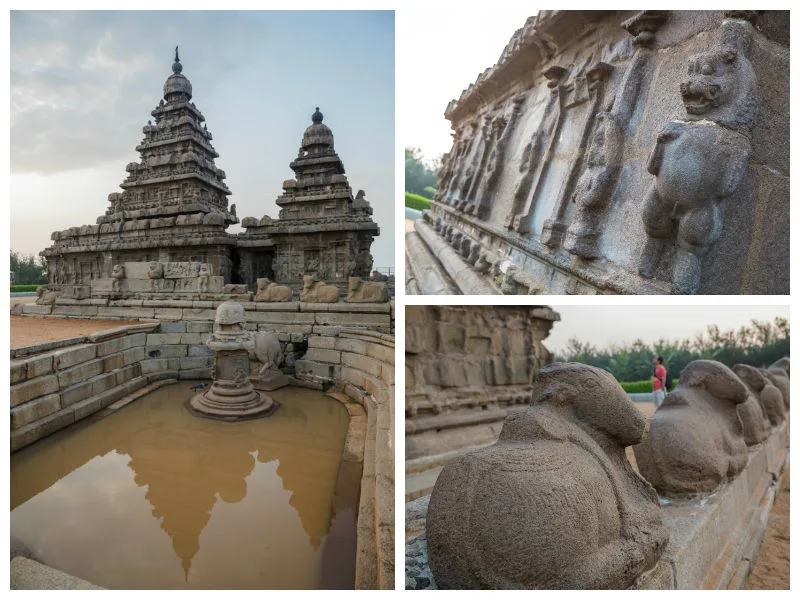
These monuments were declared a UNESCO World Heritage Site in 1984 as the “Group of Monuments at Mahabalipuram”.
Important Structures
Pancha Rathas
- Also called Pandava Rathas
- Earliest rock-cut temples in India
- Built in the 7th century AD
- Includes:
- Dharmaraja Ratha (largest)
- Bhima Ratha
- Arjuna Ratha
- Nakula-Sahadeva Ratha
- Draupadi Ratha
Rock-Cut Caves
Important cave temples include:
- Varaha Cave Temple
- Krishna Cave Temple
- Panchapandava Cave Temple
- Mahishasuramardini Mandapa
These caves contain beautiful carvings, including the famous scene of Goddess Durga killing Mahishasura.
Open-Air Rock Reliefs
- Famous example: Descent of the Ganges
- Also known as Arjuna’s Penance or Bhagiratha’s Penance
- Carved on two huge rocks
It tells the story of how the River Ganga came to Earth through the efforts of King Bhagiratha.
Shore Temple Complex
- Located near the sea
- Contains one large and two small temples
- Surrounded by walls decorated with Nandi (vehicle of Shiva)
The temple is mainly dedicated to Lord Shiva, but also includes a sculpture of Anantashayana Vishnu.
Badami Cave Temples (Karnataka)
Badami was the capital of the Chalukya dynasty and is famous for its rock-cut cave temples.
- Built in the 6th century AD
- Among the earliest temples in the Deccan region
- Total 4 caves:
- 3 Hindu
- 1 Jain
Key Features
Cave 1
- Sculpture of Lord Shiva as Nataraja
- Also includes Harihara (half Shiva, half Vishnu)
Cave 2
- Dedicated to Lord Vishnu
- Shows Vishnu as Trivikrama
- Also includes Vamana and Varaha avatars
Cave 3
- Largest and most detailed cave
- Contains carvings of:
- Trivikrama
- Anantasayana
- Vasudeva
- Narasimha
- Harihara
Cave 4
- Jain cave
- Sculptures of:
- Bahubali
- Parshvanatha
- Mahavira
- Also includes other Tirthankaras
Vijayanagara Architecture (Note)
The rulers of the Vijayanagara Empire were great supporters of art and architecture.
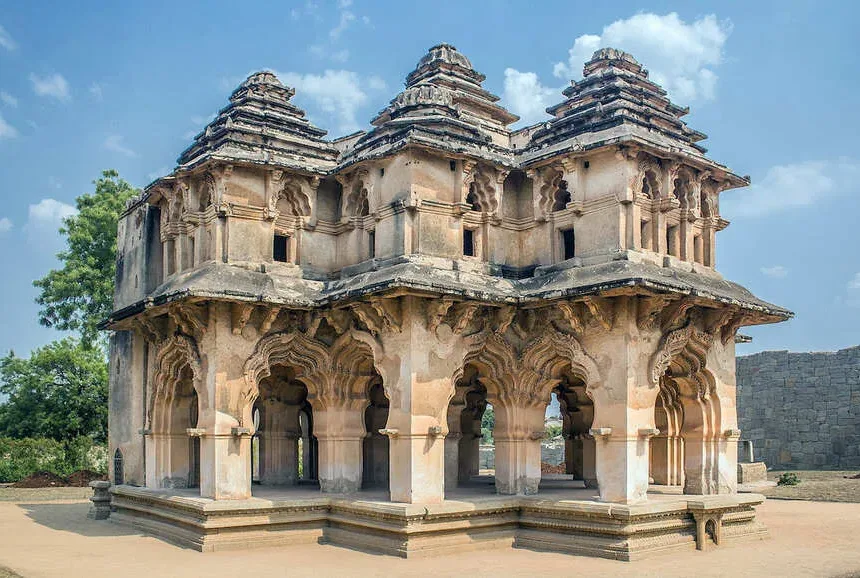
Features:
- Highly decorated temple walls
- Large entrance towers (Gopurams)
- Monolithic pillars
Examples:
- Vittalaswami Temple
- Virupaksha Temple (Hampi)
- Rock-cut idol of Narasimha
Conclusion
Rock Art (Part-2) helps us understand the richness of India’s ancient architecture and culture. Rock-cut architecture is not just about carving stones; it is about expressing devotion, creativity, and technical excellence.
From simple caves of the Mauryan period to grand temples like the Kailash Temple, this form of architecture shows a continuous journey of development and innovation. It reflects how ancient Indians used natural resources to create lasting monuments that still inspire people today.
These structures are not only historical sites but also symbols of India’s artistic and cultural heritage. Protecting and preserving them is important for future generations.
FAQs – Rock Art (Part-2)
1. What is Rock Art (Part-2)?
Rock Art (Part-2) mainly focuses on rock-cut architecture in India, where structures like caves and temples are carved out of solid rocks.
2. What is rock-cut architecture?
Rock-cut architecture is a technique where buildings are made by cutting and carving natural rock instead of using bricks or stones.
3. When did rock-cut architecture begin in India?
It began around the 3rd century BC during the Mauryan period, especially under Emperor Ashoka.
4. What are the main types of rock-cut architecture?
There are two main types:
- Rock-cut caves
- Rock-cut temples
5. What were rock-cut caves used for?
Rock-cut caves were mainly used by monks for living (Viharas) and prayer (Chaitya halls).
6. What is the difference between Chaitya and Vihara?
- Chaitya: Prayer hall
- Vihara: Living place for monks
7. Which is the most famous example of rock-cut caves in India?
Ajanta Caves and Ellora Caves are the most famous examples.
8. Why is the Gupta period called the Golden Age of architecture?
Because during this time, art, sculpture, and architecture developed greatly, including beautiful cave paintings.