

Rock Art in India(Part-1): A Complete Guide to Prehistoric Paintings and Cultural Heritage

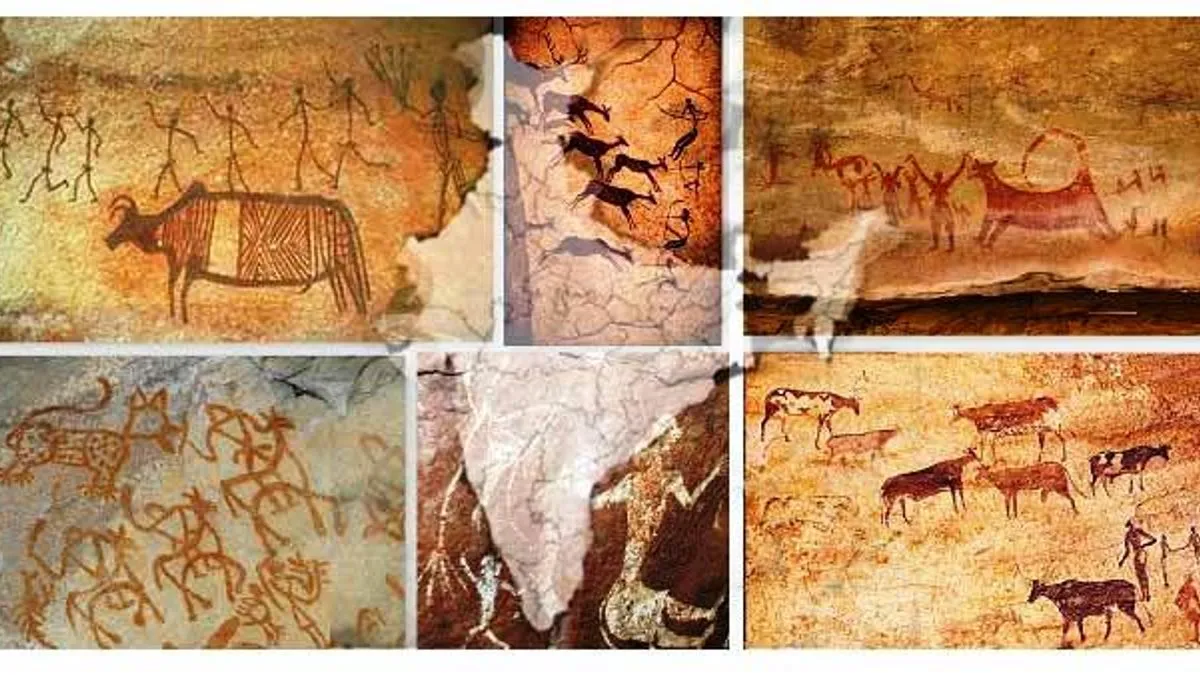
Rock Art in India is one of the most fascinating and important parts of our ancient history. It helps us understand how early humans lived, what they believed in, and how they expressed themselves. Long before the invention of writing, humans used rocks and caves as their canvas. They painted, carved, and engraved different images to tell stories, record events, and express their thoughts.
Thank you for reading this post, don't forget to subscribe!Rock art is not just simple drawings; it is a powerful form of communication. These artworks give us a glimpse into the life of prehistoric people, their environment, their culture, and their daily activities. India is one of the richest countries in the world when it comes to rock art. From caves to rock shelters, many ancient sites across the country preserve these valuable treasures.
What is Rock Art?
Rock art refers to ancient human-made markings, paintings, or carvings created on natural stone surfaces. These artworks are usually found in caves, rock shelters, boulders, and open rock surfaces.
Rock art includes different forms such as:
- Paintings and drawings on rock surfaces
- Engravings carved into rocks
- Stencils and prints made using hands or tools
- Sculptures and bas-relief carvings
These artworks were created thousands of years ago, mainly during prehistoric times when humans did not have a written language.
India has one of the largest and most diverse collections of rock art in the world. These artworks are found in different parts of the country such as Madhya Pradesh, Uttar Pradesh, Karnataka, Andhra Pradesh, Bihar, and Uttarakhand.
Types of Rock Art
Rock art is generally divided into three main types:
1. Petroglyphs
Petroglyphs are images carved or engraved into the surface of rocks. Early humans used sharp tools to cut into the rock and create shapes and figures.
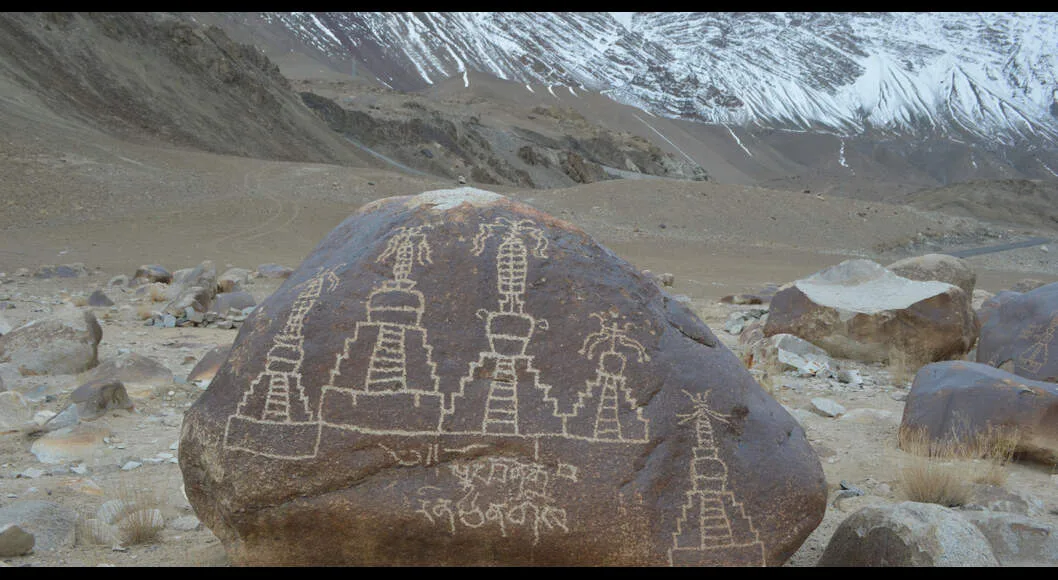
These carvings often show:
- Hunting scenes
- Animals
- Human figures
- Dance and rituals
Petroglyphs are commonly found in regions like Jammu & Kashmir and Karnataka.
2. Pictographs
Pictographs are paintings made on rock surfaces using natural colors. These are the most common form of rock art in India.
Natural materials like minerals were used to create colors such as:
- Red (from ochre or haematite)
- White (from limestone)
- Yellow and green (from other minerals)
Pictographs usually show:
- Animals
- Human activities
- Hunting scenes
- Social life
3. Earth Figures
Earth figures are large designs created on the ground using stones, soil, or other natural materials. These are less common in India but are still an important form of rock art.
Significance of Rock Art in India
Rock art in India is not just about drawings; it has deep meaning and importance. Let us understand its significance:
1. Cultural and Spiritual Heritage
Rock art reflects the beliefs, traditions, and spiritual life of ancient people. It shows how early humans connected with nature and their surroundings.
These artworks are still important for tribal communities today, as they represent their ancestors and cultural roots.
2. Source of History
Rock art acts as a historical record. Since prehistoric people did not have written language, these paintings and carvings are the only way to understand their life.
From rock art, we learn about:
- Hunting methods
- Food habits
- Tools and weapons
- Social structure
3. Understanding Human Evolution
Rock art helps us understand how human thinking and creativity developed over time. It shows the progress from simple drawings to more complex designs.
4. Diversity of Cultures
India’s rock art shows the diversity of ancient cultures. Different regions have different styles, themes, and techniques.
Prehistoric Rock Paintings in India
Prehistoric rock paintings are those that were made before the invention of writing systems. These paintings are very old and give us valuable information about early human life.
Discovery in India
The first discovery of rock paintings in India was made in 1867–68 by an archaeologist named Archibald Carlleyle.
Since then, many rock art sites have been discovered across the country.
Major Phases of Prehistoric Paintings
Prehistoric rock art in India is divided into three main phases:

- Upper Paleolithic Period
- Mesolithic Period
- Chalcolithic Period
1. Upper Paleolithic Paintings
The Upper Paleolithic period began around 40,000 years ago. This was a time when humans made great progress in culture and tools.
Features
- Use of stone tools made from bones, teeth, and horns
- Simple and linear paintings
- Use of green and dark red colors
Painting Techniques
The walls of caves were made of quartzite, so natural minerals were used as colors.
Common materials:
- Ochre (geru) for red color
- Lime mixed with water
- Natural minerals for yellow, green, and white
Themes
- Large animals like bison, elephants, and tigers
- Stick-like human figures
- Hunting scenes
Use of Colors
- Red for hunters
- Green for dancers
- White and dark red for animals
2. Mesolithic Paintings
The Mesolithic period lasted from around 10,000 BCE to 8,000 BCE. This period shows more advanced and detailed paintings.
Features
- Smaller but more detailed paintings
- Use of mainly red color
- Greater variety of themes
Themes
- Group hunting scenes
- Use of weapons like bows, arrows, and spears
- Traps and snares for catching animals
Depiction of Animals
Animals were an important part of these paintings. Common animals include:
- Elephant
- Tiger
- Deer
- Boar
- Rhinoceros
- Birds and reptiles
Social Life
One important feature of Mesolithic paintings is the representation of social life.
We can see:
- Men, women, and children
- Dancing and celebrations
- Handprints and fingerprints
3. Chalcolithic Paintings
The Chalcolithic period came after the Neolithic Age and before the Bronze Age. During this time, humans started using metal tools.
Features
- Use of green and yellow colors
- More complex designs
- Increase in number of paintings
Themes
- Battle scenes
- Men riding horses and elephants
- Use of weapons like bows and arrows
- Musical instruments like harp
Geometrical Designs
Paintings also include shapes like:
- Circles
- Spirals
- Rhomboids
Famous Rock Art Site: Bhimbetka
One of the most important rock art sites in India is the Bhimbetka Rock Shelters.
Location
It is located in the Vindhya ranges near Bhopal in Madhya Pradesh.
Discovery
The site was discovered in 1957–58 by V. S. Wakankar.
UNESCO Status
Bhimbetka was declared a UNESCO World Heritage Site in 2003.
Importance of Bhimbetka
- Contains more than 500 rock shelters
- Paintings are as old as 30,000 years
- Shows continuous human habitation from 100,000 BC to 1000 AD
In some caves, there are multiple layers of paintings, showing how different generations used the same space.
Painting Techniques
Artists used natural materials:
- Red ochre for red color
- Limestone for white
- Chalcedony for green
Brushes were made from plant fibers.
Themes of Bhimbetka Paintings
- Daily life of early humans
- Hunting and war scenes
- Animals like deer, elephant, and bison
- Simple geometric designs
Rock Art in Chhattisgarh
Chhattisgarh also has many important rock art sites, especially in the Kanker district.
Important Sites
- Udkuda
- Garagodi
- Khaperkheda
- Gotitola
- Kulgaon
These sites show:
- Human figures
- Animals
- Bullock carts
- Handprints
Jogimara Caves
Another important site is the Jogimara Caves.
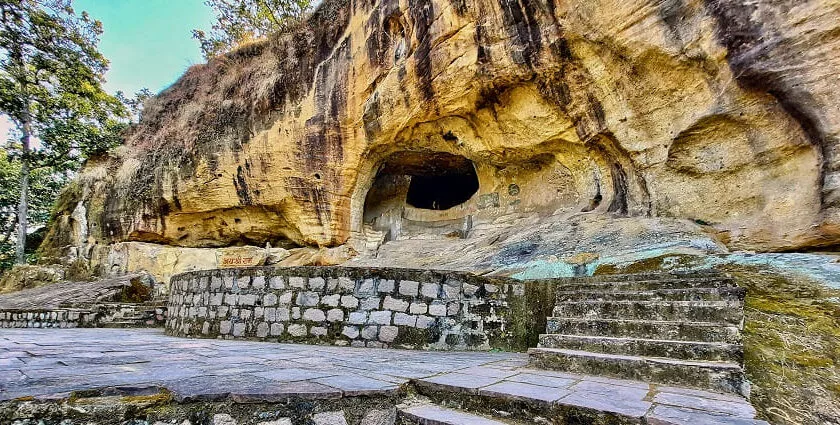
- These paintings are from around 1000 BCE
- They were created before famous cave sites like Ajanta Caves
- They belong to the pre-Buddhist period
Other Interesting Rock Art Sites
- Ghodasar and Kohabaur in Koriya district
- Chitwa Dongri in Durg district
Some paintings even show:
- Foreign figures
- Animals like donkeys
- Agricultural scenes
- Mythical creatures like dragons
Importance of Colors in Rock Art
Colors used in rock art were natural and had special meanings.
Common colors:
- Red: energy, hunting, life
- White: peace and animals
- Green: nature and dance
- Yellow: sunlight and warmth
These colors were made from minerals found in nature.
Conclusion
Rock Art in India is a priceless treasure that connects us to our ancient past. It is not just about drawings on rocks but about understanding the life, culture, and thinking of early humans.
From simple stick figures to complex battle scenes, rock art shows the journey of human creativity and development. Sites like Bhimbetka and Jogimara provide valuable insights into prehistoric life and continue to attract historians and researchers from all over the world.
By studying and preserving these artworks, we can keep our rich cultural heritage alive for future generations. Rock art reminds us that even thousands of years ago, humans had the desire to express themselves, tell stories, and connect with the world around them.
FAQs on Rock Art in India
1. What is rock art?
Rock art refers to ancient drawings, paintings, and carvings made by early humans on rocks, caves, and stone surfaces.
2. What are the main types of rock art?
There are three main types of rock art:
- Petroglyphs (carvings on rocks)
- Pictographs (paintings on rocks)
- Earth figures (designs made on the ground)
3. Why is rock art important?
Rock art is important because it helps us understand the life, culture, and beliefs of prehistoric humans. It also acts as a historical record.
4. When were prehistoric rock paintings made?
Prehistoric rock paintings were made thousands of years ago, before the invention of writing systems.
5. Who discovered rock paintings in India?
Rock paintings in India were first discovered by Archibald Carlleyle in 1867–68.
6. What colors were used in rock art?
Early humans used natural colors like red, white, yellow, and green, made from minerals such as ochre and limestone.