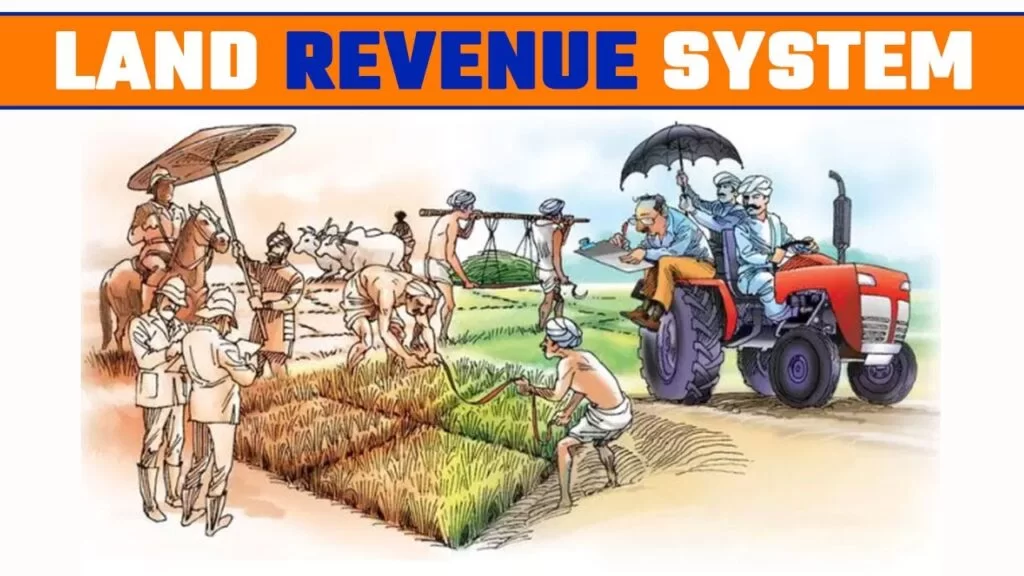
Land Revenue Systems in British India Explained

Land Revenue Systems in British India formed the backbone of colonial administration and economy. For the British rulers, land revenue was not just a source of income it was the primary financial pillar that sustained their empire in India. Through various land revenue policies, the British aimed to maximize their earnings, but in doing so, they deeply affected the rural economy, agricultural productivity, and the lives of millions of peasants.
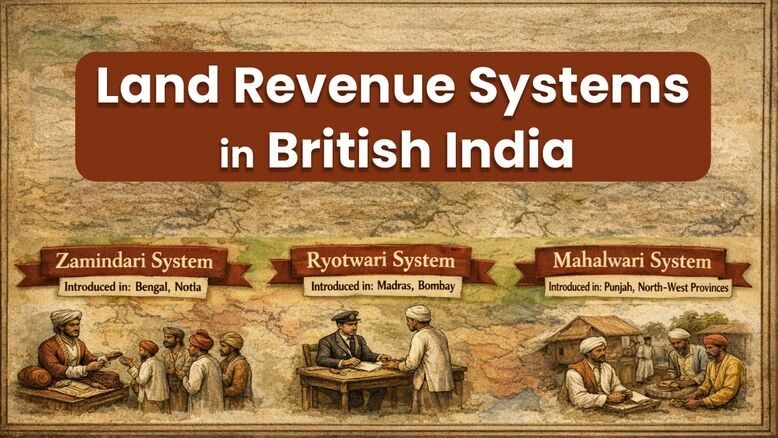
Thank you for reading this post, don't forget to subscribe!Before India gained independence in 1947, three major land tenure systems dominated the country: the Zamindari System, the Ryotwari System, and the Mahalwari System. Each system had its own method of tax collection, administration, and relationship between the state and the cultivators. While these systems differed in structure, they all shared a common objective ensuring a steady and high revenue flow to the British government.
Importance of Land Revenue in British India
The British East India Company and later the British Crown relied heavily on land revenue as their main source of income. Agriculture was the primary occupation of the Indian population, and thus taxing land became the most efficient way to extract wealth.
The key objectives behind implementing Land Revenue Systems in British India were:
- To ensure a regular and fixed income for the government
- To establish administrative control over rural areas
- To create a loyal class of intermediaries
- To commercialize agriculture for global trade
However, these objectives often ignored the welfare of farmers, leading to exploitation and rural distress.
Types of Land Revenue Systems in British India
There were three major types of Land Revenue Systems in British India:
- Zamindari System
- Ryotwari System
- Mahalwari System
The primary difference among these systems was the method of revenue collection and the party responsible for paying the tax.
The Zamindari System
The Zamindari System was one of the earliest and most influential Land Revenue Systems in British India. It was introduced in 1793 by Lord Cornwallis under the Permanent Settlement Act.
Key Features of the Zamindari System
- Zamindars were recognized as the legal owners of land
- They acted as intermediaries between the government and farmers
- Revenue was fixed permanently
- Zamindars collected tax from peasants and paid it to the British government
- The government’s share was about 89%, while zamindars kept 11%
Regions Where It Was Practiced
The Zamindari system was prevalent in:
- Bengal
- Bihar
- Odisha
- Uttar Pradesh
- Parts of Andhra Pradesh and Madhya Pradesh
Permanent Settlement Agreement
Under the Permanent Settlement:
- Zamindars were granted hereditary rights over land
- They had full control over their territories
- Revenue demand remained fixed permanently
This system was expected to encourage zamindars to invest in agricultural development, but the results were quite the opposite.
Problems of the Zamindari System
For Cultivators
- Farmers faced heavy taxation
- No ownership rights over land
- Constant fear of eviction
- Forced to take loans from moneylenders
For Zamindars
- High fixed revenue demand
- Risk of losing land if unable to pay revenue
- Lack of interest in improving agriculture
For the British Government
- No increase in revenue despite rising agricultural prices
- Limited financial growth due to fixed revenue
The Ryotwari System
The Ryotwari System was another major component of the Land Revenue Systems in British India, developed in southern India.
It was introduced by Captain Alexander Read and later expanded by Sir Thomas Munro in the early 19th century.
Key Features of the Ryotwari System
- Direct settlement between the government and cultivators (Ryots)
- No intermediaries involved
- Farmers had ownership rights over land
- Revenue was assessed periodically
- Ryots could sell, lease, or transfer land
Regions Where It Was Implemented
- Tamil Nadu
- Maharashtra
- Berar
- East Punjab
- Coorg
- Assam
Advantages of the Ryotwari System
- Eliminated exploitative middlemen
- Provided ownership rights to farmers
- Allowed flexibility in land transactions
Problems of the Ryotwari System
- High revenue demands by the government
- Corruption among local officials
- Dependence on moneylenders
- Loss of land due to debt
Despite its advantages, the system failed to protect farmers from exploitation.
The Mahalwari System
The Mahalwari System was introduced in 1822 by Holt Mackenzie and later popularized by Lord William Bentinck.
It was mainly implemented in North-Western provinces.
Key Features of the Mahalwari System
- Revenue collected from entire village (Mahal)
- Village headman responsible for payment
- Periodic revision of revenue
- Collective responsibility of villagers
Regions of Implementation
- Uttar Pradesh
- Punjab
- Madhya Pradesh
- Parts of Central India
Problems of the Mahalwari System
- Faulty land surveys
- Corruption and manipulation
- High administrative costs
- Inefficiency in revenue collection
The system ultimately proved unsuccessful due to poor implementation.
Impact of Land Revenue Systems in British India
The Land Revenue Systems in British India had far-reaching consequences:
Economic Impact
- Decline in agricultural productivity
- Rise in rural indebtedness
- Exploitation of peasants
Social Impact
- Creation of landlord class
- Increased inequality
- Displacement of farmers
Political Impact
- Rise of peasant movements
- Growing dissatisfaction with British rule
Other Land Revenue Systems
Apart from the three main systems, there were additional systems in practice:
Taluqdari System
- Taluqdars were large landholders
- Acted as intermediaries like zamindars
- Prevalent in regions like Oudh and Bengal
- Created to manage land and increase revenue
Malguzari System
- Practiced in Central Provinces
- Malguzars acted as revenue collectors
- Given ownership rights under British rule
- Farmers had limited rights and could be evicted
Failure of Land Revenue Systems in British India
The British believed that these systems would modernize agriculture and create prosperous farmers. However, this vision failed due to:
- Excessive revenue demands
- Lack of investment in agriculture
- Exploitation by intermediaries
- Poor administration
Many farmers abandoned their lands, leading to deserted villages and declining rural economy.
Conclusion
The Land Revenue Systems in British India were designed primarily to serve colonial interests rather than the welfare of Indian farmers. While systems like Zamindari, Ryotwari, and Mahalwari differed in structure, they all resulted in widespread poverty, exploitation, and economic distress.
These systems disrupted traditional agricultural practices and created long-term socio-economic problems that continued even after independence. Understanding these systems helps us grasp the roots of rural inequality and agrarian challenges in modern India.
Frequently Asked Questions (FAQs)
1. What are the Land Revenue Systems in British India?
The Land Revenue Systems in British India refer to the methods used by the British government to collect taxes from agricultural land. The three main systems were the Zamindari System, Ryotwari System, and Mahalwari System.
2. Who introduced the Zamindari System?
The Zamindari System was introduced by Lord Cornwallis in 1793 under the Permanent Settlement Act.
3. What was the main feature of the Ryotwari System?
The main feature of the Ryotwari System was that the government collected revenue directly from the farmers (ryots), without involving any intermediaries.
4. In which regions was the Mahalwari System implemented?
The Mahalwari System was mainly implemented in Uttar Pradesh, Punjab, Madhya Pradesh, and parts of Central India.
5. Why did the British introduce different land revenue systems?
The British introduced different Land Revenue Systems in British India to maximize revenue collection and manage diverse regional conditions across the country.
6. What were the major problems of the Zamindari System?
The Zamindari System led to exploitation of farmers, high rents, lack of ownership rights for cultivators, and little interest by zamindars in improving agriculture.
7. What was the advantage of the Ryotwari System?
The Ryotwari System eliminated middlemen and gave ownership rights to farmers, allowing them to sell or lease their land.
8. Why was the Mahalwari System considered a failure?
The Mahalwari System failed due to faulty land surveys, corruption, high revenue demands, and inefficient administration.