British Economic Policy in India: A Complete Explanation (1757–1857)

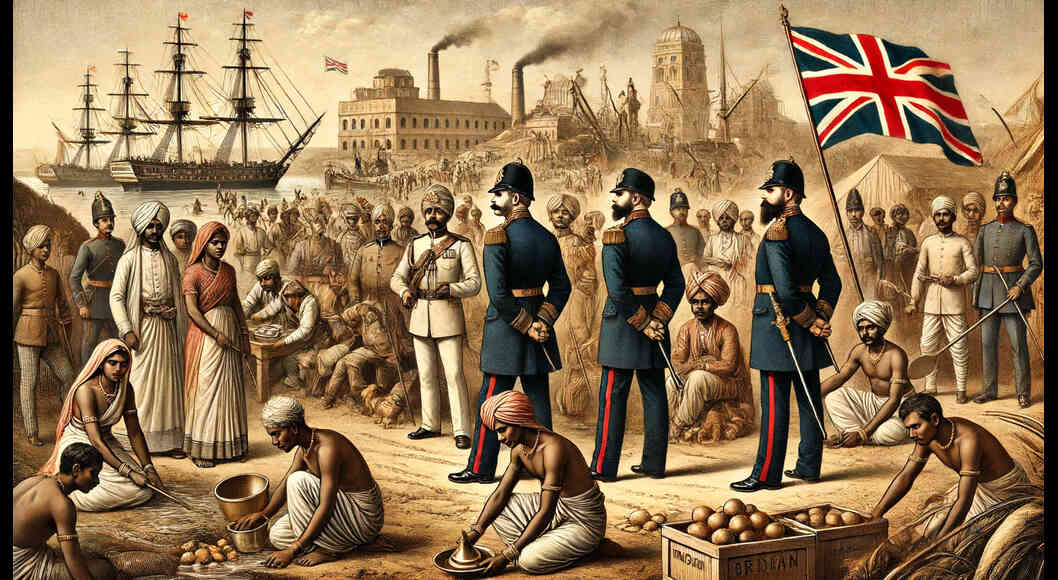
British Economic Policy in India changed the entire structure of the Indian economy between 1757 and 1857. During this time, India was slowly turned into a colony that mainly served the needs of Britain. This period started after the famous Battle of Plassey and ended with the Revolt of 1857.
Thank you for reading this post, don't forget to subscribe!Before British rule, India had a strong economy based on agriculture, handicrafts, and trade. But British policies slowly destroyed this system and created poverty, unemployment, and economic imbalance.
Phases of British Economic Exploitation in India
The British did not exploit India in the same way all the time. Their methods changed over time. These changes can be divided into three phases:
1. Mercantilist Phase (1757–1813)
This was the early stage of British rule. During this time, the main goal was to collect wealth from India.
- The British East India Company used Indian money to buy Indian goods.
- These goods were then sold in Britain for profit.
- A large amount of wealth was taken out of India.
This process is known as the “Drain of Wealth.” Later, Dadabhai Naoroji explained this idea in detail.
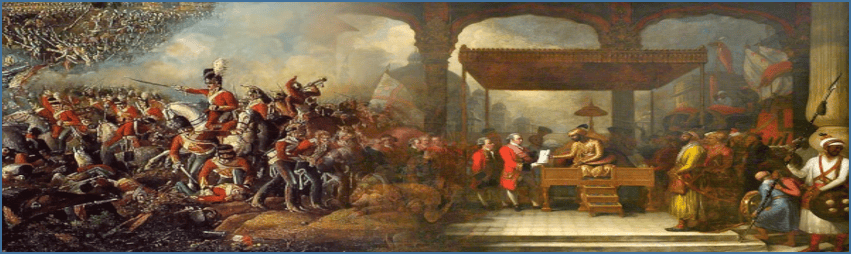
After getting Diwani rights in Bengal, Bihar, and Odisha in 1765, the Company started collecting land revenue directly from farmers. Their main aim was to earn maximum profit.
2. Free Trade Phase (1813–1858)
This phase began with the Charter Act of 1813.
- The monopoly of the East India Company ended.
- British traders were allowed to trade freely in India.
- India became a supplier of raw materials like cotton and indigo.
- British finished goods were sold in Indian markets.
This led to the decline of Indian industries. Indian artisans could not compete with cheap machine-made goods from Britain.
3. Finance Capitalism Phase (After 1858)
After 1858, India came under direct British Crown rule.
- British banks and companies invested in India.
- Railways, plantations, and industries were developed.
- However, these developments mainly benefited Britain.
India remained dependent on Britain for economic growth.
Major Land Revenue Systems Under British Rule
Land revenue was the main source of income for the British government. They introduced different systems to collect taxes from farmers, but most of these systems caused great suffering to peasants.
1. Revenue Farming (1772)
Introduced by Warren Hastings.
- This system was also called the Ijaradari System.
- It was first used during the Mughal period and later adopted by the British.
- In this system, the right to collect revenue was given to the highest bidder through auctions every year.
- These contractors collected taxes from farmers.
Problems:
- Contractors often exploited farmers, leading to poverty and suffering.
- Many contractors promised high payments to the government but failed to collect enough revenue.
- They forced farmers to pay more, which created pressure and hardship.
- Nepotism (favoritism) in giving contracts caused losses to the government.
- Overall, the system failed and destroyed the condition of farmers due to very high tax demands.
2. Permanent Settlement (1793)
Introduced by Lord Cornwallis.
- This system fixed land revenue permanently.
- The government collected tax through intermediaries called Zamindars.
- Zamindars gave most of the revenue (about 10/11th) to the government and kept a small share.
- The aim was to create a loyal class of landowners and make tax collection easy.
- It was mainly used in West Bengal, Bihar, Odisha, Uttar Pradesh, Andhra Pradesh, and Madhya Pradesh.
Effects:
- Farmers had no ownership rights over land.
- Zamindars charged very high rent.
- Many farmers became poor and fell into debt.
- Many zamindars also lost their land when they could not pay fixed revenue.
Problems:
- Farmers had insecure land rights and could be removed anytime.
- Zamindars focused only on collecting rent and did not improve agriculture.
- Even when agricultural production increased, the government could not increase its revenue due to fixed rates.
3. Ryotwari System (1792)
Introduced by Alexander Read in the Madras Presidency.
- In this system, tax was collected directly from farmers (called ryots).
- Farmers were treated as landowners.
- They had rights to sell, transfer, or lease their land.
- As long as they paid revenue, they could not be removed from their land.
- This system was used in South India, Maharashtra, Assam, and some other regions.
- One advantage was that it removed middlemen like zamindars.
Problems:
- Taxes were very high and often wrongly calculated.
- Farmers were overburdened and faced financial problems.
- Local officials had too much power and were not properly supervised.
- Farmers depended on moneylenders (mahajans) for loans.
- Many farmers lost their land when they failed to repay loans.
4. Mahalwari System (1822)
Introduced by Holt Mackenzie.
- This system was introduced in North-Western Provinces (present-day Uttar Pradesh).
- Revenue was collected from the whole village instead of individual farmers.
- The village was called a “Mahal”, and it was treated as one unit.
- Village headmen were responsible for paying revenue.
- Revenue rates were revised from time to time, not fixed permanently.
- Later, Lord William Bentinck expanded this system to other areas like Punjab and Madhya Pradesh.
Problems:
- The system was based on incorrect land surveys.
- Corruption and manipulation were common.
- Sometimes, the cost of collecting revenue was higher than the revenue itself.
- Farmers suffered due to heavy tax pressure.
Major Economic Policies of British Rule
1. Commercialisation of Agriculture
The British changed farming in India.
- Farmers were forced to grow cash crops like cotton, indigo, and jute.
- Food crops were reduced.
- Farmers depended on market prices.
Result:
- Farmers faced losses when prices fell.
- Food shortages increased.
2. Development of Railways
Railways started in 1853 under Lord Dalhousie.
Benefits:
- Better transport system.
Real Purpose:
- To carry raw materials to ports.
- To bring British goods into villages.
- To move British army quickly.
Railways were built using Indian money, but profits went to British investors.
3. Deindustrialisation of India
Before British rule, India was famous for handicrafts and textiles.
But British policies destroyed these industries:
- Heavy taxes on Indian goods in Britain.
- Cheap machine-made goods flooded Indian markets.
- Indian artisans lost jobs.
This process is called deindustrialisation.
Economic Impact of British Policies in India
1. Destruction of Traditional Economy
India’s self-sufficient village economy was destroyed.
- Local industries declined.
- People became dependent on agriculture.
2. Decline of Artisans
- Handloom weavers lost their work.
- Cheap British goods replaced Indian products.
- Many artisans became laborers.
3. Poverty of Farmers
- High taxes made farmers poor.
- They depended on moneylenders.
- Debt increased in villages.
4. Rise of New Landlord Class
- Old zamindars lost land.
- New rich people bought land.
- Farmers faced more exploitation.
5. Stagnation of Agriculture
- No investment in irrigation or technology.
- Productivity remained low.
- Farmers suffered from poor conditions.
6. Growth of Modern Industries
Some industries like coal mining and railways developed.
But:
- They were controlled by British companies.
- Indians got fewer benefits.
7. Poverty and Famines
- Food shortages increased.
- Many famines occurred in the 19th century.
- Millions of people suffered.
Economic Criticism of British Rule
Many Indian thinkers strongly criticized British economic policies and explained how these policies harmed India’s economy.
1. Dadabhai Naoroji
He was known as the “Grand Old Man of India.” He gave the famous Drain Theory in his book Poverty and the Un-British Rule in India (1901).
- He explained that British rule caused a continuous outflow of wealth from India to Britain without any return benefit.
- According to him, nearly one-third of India’s revenue was sent to Britain.
- This included salaries of British officials, pensions, profits of British companies, and expenses of British troops.
He clearly showed that India was becoming poorer because of this economic drain.
2. Romesh Chandra Dutt
He wrote Economic History of India (1901–03) and gave a detailed study of British economic policies.
- He explained how British taxation policies destroyed Indian industries.
- He showed that high land revenue caused poverty among farmers.
- He also described how Indian textile industries declined due to British policies.
- He criticized railways, saying they helped British goods enter Indian markets, which increased the drain of wealth.
3. Mahadev Govind Ranade
He was an economist and social reformer.
- He described India as a dependent colonial economy.
- He said India was forced to supply raw materials and buy British finished goods.
- This destroyed local industries.
- He suggested that India should develop industries and infrastructure to grow economically.
4. Gopal Krishna Gokhale
He strongly criticized British tax policies.
- He said taxes in India were too high compared to the country’s income.
- He demanded a fair financial system.
- He also suggested reducing military expenses.
- He supported investment in education and infrastructure for India’s development.
5. G. Subramania Iyer
He supported economic nationalism and wrote Some Economic Aspects of British Rule in India.
- He said India’s backwardness was caused by British rule, not by its past.
- He supported protection of Indian industries from foreign competition.
- He suggested developing non-agricultural industries to reduce dependence on farming.
- He also criticized the exploitation of farmers by moneylenders and middlemen.
Long-Term Effects of British Economic Policy in India
The impact of British policies was not limited to 1757–1857. It affected India for many years.
- India became a poor country despite rich resources.
- Industrial growth was very slow.
- Agriculture remained backward.
- Economic inequality increased.
Even after independence, India had to work hard to rebuild its economy.
Why British Policies Were Harmful
British economic policy in India was not made for Indian development.
Their main goals were:
- To earn profit
- To supply raw materials to British industries
- To create a market for British goods
Because of this:
- India lost its economic strength
- Poverty increased
- Development was ignored
Summary
British Economic Policy in India completely changed the Indian economy between 1757 and 1857. The British used different methods like land revenue systems, trade policies, and industrial control to exploit India.
Farmers suffered due to high taxes, artisans lost their jobs, and industries declined. India became dependent on Britain for trade and development.
Indian thinkers strongly criticized these policies and showed how wealth was drained from India.
FAQs
1. What is British Economic Policy in India?
It refers to the economic rules and systems introduced by the British to control and exploit India’s resources.
2. What was the Drain of Wealth?
It was the process by which India’s wealth was taken to Britain without any return benefit.
3. Which land revenue system was most harmful?
The Permanent Settlement was very harmful because it gave power to zamindars and ignored farmers’ rights.
4. What is deindustrialisation?
It means decline of industries. In India, it happened due to British policies and machine-made goods.
5. Who gave the Drain Theory?
Dadabhai Naoroji gave the Drain Theory.