


Sexual and Reproductive Health Rights: Meaning, Importance and Challenges

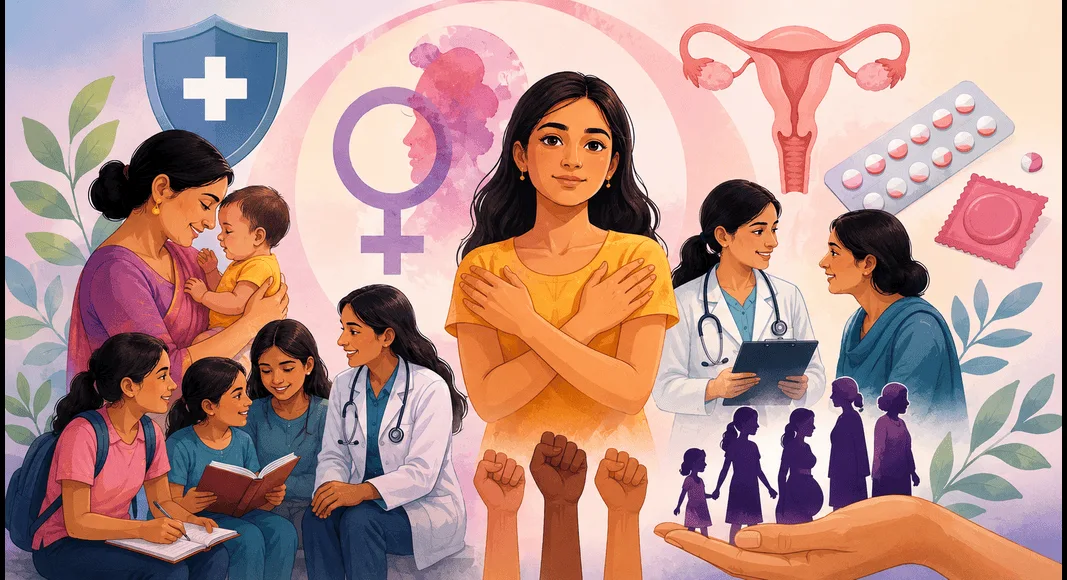
Sexual and Reproductive Health Rights (SRHR) are an important part of human rights. These rights allow every person to make informed and independent decisions about their body, health, relationships, and family life without fear, discrimination, pressure, or violence.
Thank you for reading this post, don't forget to subscribe!A healthy society cannot be built unless women, men, adolescents, and children enjoy equal access to quality healthcare and accurate information. SRHR not only improves individual health but also supports gender equality, education, economic growth, and sustainable development.
India has made significant progress in improving maternal health, reducing child marriages, and increasing access to healthcare. However, many challenges still exist, such as gender discrimination, lack of awareness, unsafe abortions, poor access to contraception, and violence against women. Strengthening Sexual and Reproductive Health Rights is therefore essential for building a healthier and more equal society.
What are Sexual and Reproductive Health Rights (SRHR)?
Sexual and Reproductive Health Rights refer to the rights of every individual to enjoy good sexual and reproductive health throughout life.
These rights include:
- The right to make decisions about one’s own body.
- The right to receive quality healthcare.
- The right to access family planning services.
- The right to safe pregnancy and childbirth.
- The right to accurate health information.
- The right to live free from discrimination, violence, and coercion.
- The right to privacy and dignity.
These rights apply equally to women, men, adolescents, and persons with disabilities.
According to the United Nations, SRHR includes the right to life, health, liberty, equality, privacy, information, and access to healthcare services without discrimination.
Basic Principles of SRHR
Sexual and Reproductive Health Rights are based on several important principles.
Respect for Bodily Autonomy
Every individual has the right to make decisions regarding their own body without force or pressure.
Equality
Everyone should receive equal healthcare services regardless of gender, religion, caste, income, disability, or social background.
Privacy
Personal health decisions should remain confidential and respected.
Freedom from Violence
No person should face sexual violence, forced marriage, forced pregnancy, or forced sterilization.
Access to Information
People should receive correct scientific information about reproductive health, family planning, menstruation, pregnancy, and sexually transmitted diseases.
Constitutional Protection in India
India’s Constitution protects several rights related to SRHR.
Article 21
Article 21 guarantees the Right to Life and Personal Liberty.
The Supreme Court has interpreted this article to include:
- Right to dignity
- Right to privacy
- Right to healthcare
- Right to reproductive choice
Puttaswamy Judgment (2017)
The Supreme Court recognized privacy as a Fundamental Right. It also stated that reproductive decisions are a part of personal liberty under Article 21.
This judgment strengthened women’s right to make independent reproductive choices.

Why are Sexual and Reproductive Health Rights Important?
Better Health
Access to proper healthcare reduces maternal deaths, infant mortality, and reproductive diseases.
Women’s Empowerment
Women who control their reproductive choices can continue education, build careers, and become financially independent.
Gender Equality
SRHR promotes equal rights and opportunities for both women and men.
Healthy Families
Proper family planning helps parents provide better education, nutrition, and healthcare for children.
Economic Development
Healthy citizens contribute more effectively to the country’s economy.
Sustainable Development
SRHR supports several Sustainable Development Goals (SDGs), especially those related to health, education, and gender equality.
Major Challenges to SRHR in India
Despite progress, India continues to face several challenges.
Gender Discrimination
In many parts of India, women still have limited freedom to make decisions about marriage, pregnancy, and healthcare.
Lack of Awareness
Many adolescents receive little or no scientific education about reproductive health, leading to myths and misinformation.
Unsafe Abortions
Although abortion is legal under certain conditions, many women still undergo unsafe abortions due to lack of awareness and healthcare access.
Unsafe abortions remain one of the major causes of maternal deaths.
Limited Access to Contraception
Millions of women, especially in rural areas, cannot easily access contraceptive methods.
This results in unwanted pregnancies and poor maternal health.
Child Marriage
Although child marriage has declined, it still exists in some regions.
Early marriage often leads to:
- Early pregnancy
- School dropout
- Health complications
- Economic dependence
Gender-Based Violence
Domestic violence, sexual harassment, and marital violence continue to affect women’s physical and mental health.
Social Stigma
Topics like menstruation, sexual health, contraception, and reproductive rights are often treated as taboo, preventing people from seeking medical advice.
Current Situation in India
India has made remarkable progress in reproductive health over the last two decades.
Some important achievements include:
- Maternal Mortality Ratio has declined significantly.
- Child marriage has reduced considerably.
- Teenage pregnancies have decreased.
- Institutional deliveries have increased.
- Life expectancy has improved.
- Access to healthcare services has expanded.
However, surveys also show that many women still cannot independently make decisions regarding their own healthcare.
Many unintended pregnancies continue to occur because of poor access to contraception and limited awareness.
International Agreements Supporting SRHR
India supports several international agreements promoting women’s rights and reproductive health.
Convention on the Elimination of All Forms of Discrimination Against Women (CEDAW)
CEDAW encourages countries to eliminate discrimination against women and ensure equal rights.
International Covenant on Civil and Political Rights (ICCPR)
This agreement protects:
- Equality
- Freedom
- Privacy
- Right to life
- Human dignity
Beijing Declaration and Platform for Action
This global declaration promotes women’s empowerment, education, health, and equal participation in society.
Sustainable Development Goals (SDGs)
The United Nations included SRHR under:
- SDG 3: Good Health and Well-being
- SDG 5: Gender Equality
India is committed to achieving these goals by 2030.
Government Initiatives for SRHR
National Health Policy 2017
The policy focuses on improving reproductive, maternal, child, and adolescent healthcare.
Rashtriya Kishor Swasthya Karyakram (RKSK)
Launched in 2014, this programme improves adolescent health through:
- Health education
- Mental health support
- Nutrition awareness
- Reproductive health services
Family Planning Programme
India continues to expand access to modern contraceptive methods and counseling services.
The programme aims to help couples plan pregnancies safely and responsibly.
Midwifery Services
The government has introduced trained midwives to improve maternal healthcare during pregnancy and childbirth.
National Health Mission (NHM)
The NHM supports reproductive and child healthcare services across rural and urban India.
Role of Education in SRHR
Education is one of the strongest tools for protecting reproductive health.
Schools should provide age-appropriate and scientific information about:
- Puberty
- Menstrual hygiene
- Personal hygiene
- Safe relationships
- Consent
- Pregnancy
- Family planning
- Prevention of sexually transmitted infections
When young people receive correct information, they make safer and healthier decisions.
Technology and SRHR
Modern technology can improve reproductive healthcare.
Examples include:
- Telemedicine consultations
- Mobile health applications
- Digital health records
- Online counseling
- Artificial Intelligence-based health support
- Virtual Reality and Augmented Reality for menstrual and health education
Technology helps people living in remote areas access quality healthcare.
What More Should India Do?
Several important steps can further strengthen Sexual and Reproductive Health Rights.
Improve Awareness
Large-scale awareness campaigns should educate people about reproductive health and gender equality.
Strengthen Healthcare Services
Primary health centres should provide affordable reproductive healthcare across rural and urban India.
Increase Access to Contraception
Modern contraceptive methods should be easily available for everyone.
Ensure Safe Abortion Services
Women should have access to legal, affordable, and safe abortion services through trained healthcare providers.
End Child Marriage
Strict enforcement of child marriage laws and better education for girls can reduce early pregnancies.
Train Healthcare Workers
Doctors, nurses, and community health workers should receive regular training in respectful and non-discriminatory reproductive healthcare.
Encourage Community Participation
Community leaders, schools, NGOs, and healthcare workers should work together to remove myths and social stigma.
Promote Gender Equality
Women should have equal opportunities in education, employment, healthcare, and decision-making.
Importance of SRHR for India’s Future
A country cannot achieve sustainable development without ensuring good reproductive health for all citizens.
Strong Sexual and Reproductive Health Rights help:
- Reduce maternal mortality
- Improve child health
- Increase women’s participation in education and employment
- Reduce poverty
- Improve family welfare
- Promote gender equality
- Build healthier communities
Investment in SRHR is not only a health investment but also an investment in India’s future development.
Conclusion
Sexual and Reproductive Health Rights are essential for protecting the dignity, health, and freedom of every individual. They allow people to make informed choices about their bodies and future while ensuring equal access to quality healthcare.
India has made considerable progress in reducing maternal deaths, improving healthcare, and empowering women. However, challenges like gender discrimination, unsafe abortions, lack of awareness, child marriage, and unequal healthcare access still require serious attention.
The combined efforts of governments, healthcare workers, educational institutions, communities, and families can ensure that every person enjoys these basic human rights. A society where everyone has access to Sexual and Reproductive Health Rights is healthier, more equal, and better prepared for sustainable development.
FAQs
1. What are Sexual and Reproductive Health Rights (SRHR)?
Sexual and Reproductive Health Rights are human rights that allow people to make informed decisions about their sexual and reproductive health without discrimination, coercion, or violence.
2. Why are Sexual Health Rights important?
They protect people’s health, dignity, equality, and freedom while ensuring access to healthcare, family planning, and reproductive services.
3. Which Article of the Indian Constitution protects reproductive rights?
Article 21, which guarantees the Right to Life and Personal Liberty, protects reproductive choices as part of personal liberty and privacy.
4. What is the Puttaswamy Judgment?
The Supreme Court’s Puttaswamy Judgment (2017) recognized the Right to Privacy as a Fundamental Right, including the right to make reproductive choices.
5. What are the major challenges to SRHR in India?
Major challenges include gender discrimination, child marriage, lack of awareness, unsafe abortions, limited access to contraception, and gender-based violence.
6. What is the Rashtriya Kishor Swasthya Karyakram (RKSK)?
RKSK is a government programme launched in 2014 to improve the health and well-being of adolescents, including reproductive and sexual health.
7. How does family planning improve reproductive health?
Family planning helps individuals choose the right time and number of children, reducing maternal and child health risks.
8. Which Sustainable Development Goals (SDGs) are related to SRHR?
SRHR is directly connected to SDG 3 (Good Health and Well-being) and SDG 5 (Gender Equality).
9. What role does education play in Sexual Health Rights?
Comprehensive health education spreads awareness about puberty, hygiene, consent, contraception, and reproductive health, helping people make informed decisions.
10. How can India strengthen Sexual Health Rights?
India can strengthen SRHR by improving healthcare services, increasing awareness, expanding family planning services, ending child marriage, ensuring safe abortion services, and promoting gender equality.