


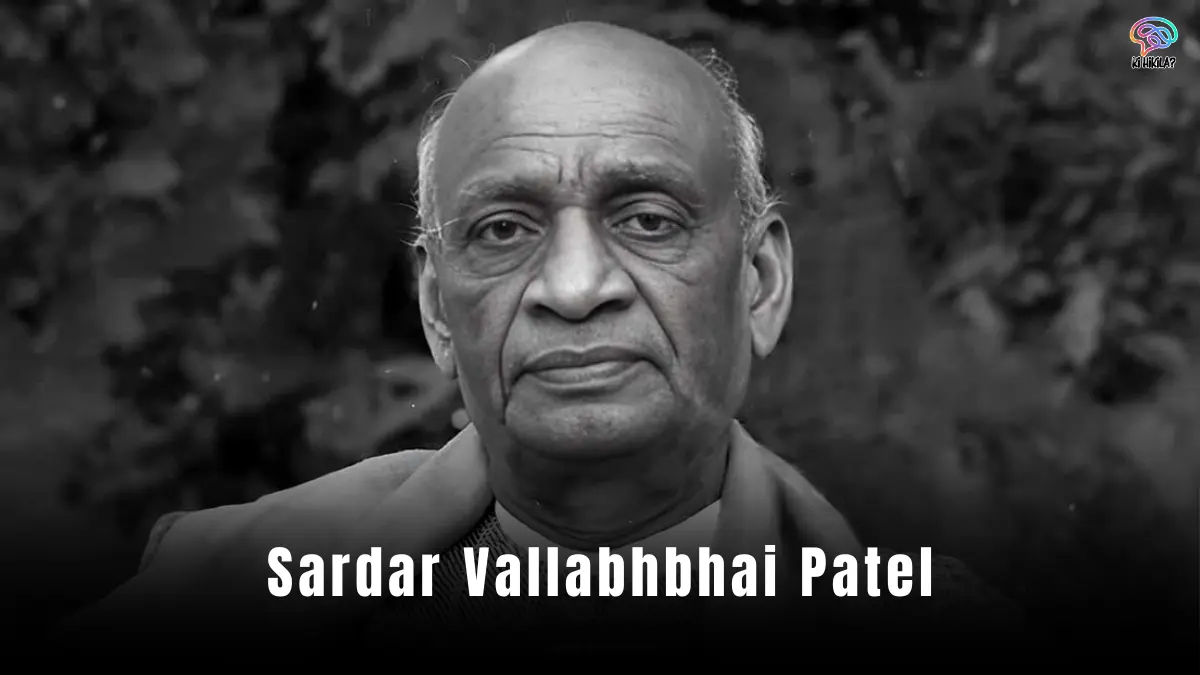
Sardar Vallabhbhai Patel: Honoring the Iron Man of India on His Death Anniversary

On December 15, India commemorates Sardar Vallabhbhai Patel’s death anniversary, remembering his pivotal role in unifying the nation and his enduring legacy.
Thank you for reading this post, don't forget to subscribe!Sardar Vallabhbhai Patel Death Anniversary
Sardar Vallabhbhai Patel, affectionately known as the “Iron Man of India,” passed away on December 15, 1950, in Bombay (now Mumbai) at the age of 75. His death was due to a massive heart attack, following a period of declining health intensified by the immense responsibilities he shouldered during India’s post-independence consolidation.
Every year, his death anniversary is observed to honor his monumental contributions to India’s unity and independence. In addition, his efforts to integrate over 500 princely states into the Indian Union are celebrated nationwide through Rashtriya Ekta Divas (National Unity Day) on his birth anniversary, October 31.
Amit Shah flags off ‘Run for Unity’ in Delhi
Every year, India commemorates Sardar Vallabhbhai Patel’s vision of a united nation through the ‘Run for Unity,’ a national event that highlights the importance of unity, integrity, and patriotism. In Delhi, this significant event is usually flagged off by the Union Home Minister, bringing together a diverse crowd of government officials, students, civil society members, and citizens from all walks of life. The run not only honors Patel’s legacy but also serves as a reminder of the challenges he overcame to unify India after independence.
The ‘Run for Unity’ is more than just a sporting event; it acts as a symbolic gesture of national solidarity. Participants traverse through key city landmarks, carrying banners and slogans emphasizing unity, national pride, and social cohesion. Various educational institutions and organizations use this occasion to organize discussions, awareness campaigns, and exhibitions on Sardar Patel’s contributions, reinforcing the message of collective responsibility and civic awareness among participants.
Additionally, the event fosters intergenerational engagement, where young students and youth leaders learn about the historical significance of Patel’s efforts in integrating over 500 princely states into the Indian Union. By participating in the run, citizens actively demonstrate their commitment to Patel’s vision of a strong, united India. Beyond Delhi, similar events are organized in states and districts across the country, making the ‘Run for Unity’ a truly nationwide tribute to the Iron Man of India.
Why the ‘Run for Unity’ is Celebrated
The ‘Run for Unity’ is celebrated to honor Sardar Vallabhbhai Patel’s immense contributions toward India’s unification and to reinforce the values of national integrity, patriotism, and social cohesion. Patel, known as the Iron Man of India, played a pivotal role in integrating over 500 princely states into the Indian Union, an achievement that laid the foundation for a strong and united nation.
The event serves as a reminder of the importance of unity in maintaining national stability and progress. By participating in the run, citizens symbolically demonstrate their commitment to Patel’s vision, promoting awareness of the significance of collective responsibility and civic duty in sustaining India’s democratic framework. Schools, colleges, and government institutions actively involve students and employees to instill the values of national pride and discipline.
Furthermore, the ‘Run for Unity’ is also an educational platform that connects history with present-day patriotism. Alongside the run, activities such as exhibitions, cultural programs, and awareness campaigns are organized to highlight Sardar Patel’s achievements and leadership qualities. This ensures that younger generations understand the historical significance of Patel’s efforts and are inspired to contribute positively to the nation, making the celebration both a tribute and a learning experience.
Sardar Vallabhbhai Patel Jayanti
Sardar Vallabhbhai Patel Jayanti is celebrated annually on October 31, marking the birth anniversary of India’s Iron Man. This day serves as a tribute to Patel’s immense contributions to India’s independence movement and his role in integrating the princely states to form a unified nation.
Across the country, government offices, educational institutions, and civil organizations hold ceremonies, discussions, and exhibitions highlighting his life, achievements, and values. Special programs focus on patriotism, leadership, and national unity, reflecting the principles that guided Patel throughout his career.
The day is also an opportunity to educate citizens, particularly the youth, about the historical challenges India faced during unification and the visionary leadership Patel exhibited. By commemorating his birth anniversary, India not only honors a freedom fighter but also reinforces the ideals of integrity, determination, and unity, which continue to inspire generations.
Sardar Vallabhbhai Patel’s Early Life and Education
Sardar Vallabhbhai Patel was born on October 31, 1875, in Nadiad, a town in present-day Gujarat. He hailed from a modest family and was instilled with values of discipline, hard work, and social responsibility from an early age. His father, a farmer, emphasized education and ethical conduct, which profoundly influenced Patel’s character and future leadership.
Patel completed his early education in Nadiad and later pursued law at the Gujarat College in Ahmedabad. After obtaining his degree, he began practicing as a lawyer, where his dedication, integrity, and eloquence quickly earned him respect among peers and the public. His legal career exposed him to the social and political challenges of British India, nurturing his awareness of the need for social justice and national unity.
His formative years laid the foundation for a career defined by discipline, resilience, and leadership, qualities that would later make him a central figure in India’s freedom struggle and the nation’s unification efforts.
Role of Sardar Vallabhbhai Patel in Indian Freedom Struggle
Sardar Vallabhbhai Patel played a crucial role in India’s struggle for independence, earning him the title of the “Iron Man of India.” He emerged as a leader of immense courage, strategic acumen, and unwavering determination, particularly during the civil disobedience and non-cooperation movements.
Patel was instrumental in organizing peasants and farmers against oppressive British policies, most notably during the Bardoli Satyagraha of 1928, where he led a successful campaign for fair taxation and rights. This victory not only strengthened the Indian National Congress but also cemented his reputation as a resolute leader committed to justice and equality.
Throughout the freedom struggle, Patel worked tirelessly to unite diverse groups, mobilize masses, and implement disciplined campaigns of non-violent resistance. His pragmatic approach combined with steadfast leadership made him a key architect in shaping India’s path to independence, earning admiration from fellow leaders and citizens alike.
Sardar Vallabhbhai Patel and Indian National Congress
Sardar Vallabhbhai Patel played a pivotal role in the Indian National Congress, contributing significantly to its strategies and leadership during the freedom movement. He was known for his pragmatic approach, organizational skills, and ability to unite diverse factions within the party.
As a senior leader, Patel focused on strengthening the party’s grassroots presence, particularly in rural areas, mobilizing farmers and peasants to participate in civil disobedience campaigns. His leadership during movements such as the Non-Cooperation Movement and Bardoli Satyagraha showcased his ability to inspire disciplined action while maintaining the principles of non-violence.
Within the Congress, Patel was also instrumental in negotiating with regional leaders and princely states, laying the groundwork for India’s eventual unification. His strategic insight and firm yet diplomatic leadership ensured that the Congress remained a cohesive and effective force throughout India’s struggle for independence.
Reforms Taken by Sardar Vallabhbhai Patel
Sardar Vallabhbhai Patel implemented several key reforms that strengthened India’s administrative, civil, and political systems, earning him a reputation as the architect of a unified and efficient India. His reforms focused on integration, governance, and public safety, ensuring stability in the newly independent nation.
Integration of Princely States
Patel’s most notable achievement was the integration of over 500 princely states into the Indian Union. Through a combination of diplomacy and firm negotiation, he persuaded rulers to join India, preventing potential fragmentation and ensuring a unified political structure.
Reorganization of States
He also initiated the reorganization of states, streamlining administrative divisions to enhance governance. This included aligning state boundaries with linguistic, cultural, and regional considerations, laying the foundation for a cohesive federal system.
Civil Service Reforms
Patel emphasized the professionalism and accountability of civil services, introducing reforms that improved efficiency and strengthened the administrative machinery.
Public Safety Reforms
He prioritized public safety and law enforcement, establishing mechanisms to maintain internal security and ensure the protection of citizens during the transitional period after independence.
Through these reforms, Sardar Vallabhbhai Patel not only consolidated political power but also strengthened the foundation of modern India, earning him enduring respect as a visionary leader.
What is the Reason for the Death of Sardar Vallabhbhai Patel?
Sardar Vallabhbhai Patel passed away on December 15, 1950, at the age of 75 in Bombay (now Mumbai). His death was caused by a massive heart attack, which followed a period of declining health.
The immense responsibilities Patel bore as India’s first Deputy Prime Minister and Minister of Home Affairs—especially overseeing the integration of over 500 princely states—had placed considerable strain on his health. Despite his personal challenges, he remained dedicated to the nation, ensuring political stability and administrative cohesion during a critical period in India’s history.
Patel’s passing was mourned across the country, as he was not only a freedom fighter and statesman but also a unifying force whose vision and determination had shaped the destiny of independent India.
Statue of Unity
The Statue of Unity, located in Kevadia, Gujarat, stands as a tribute to Sardar Vallabhbhai Patel, celebrating his unparalleled contributions to India’s unity and integrity. Inaugurated in 2018, it is currently the tallest statue in the world, symbolizing Patel’s strength, vision, and leadership.
The statue not only honors his legacy but also serves as a center for education, tourism, and cultural awareness. Visitors can learn about Patel’s life, achievements, and his pivotal role in integrating princely states and strengthening the Indian nation.
Through this monumental structure, Sardar Vallabhbhai Patel’s enduring influence is immortalized, inspiring generations to value unity, leadership, and dedication to the nation. It stands as a reminder of his visionary leadership and unwavering commitment to building a strong and united India.
Sardar Vallabhbhai Patel UPSC
Sardar Vallabhbhai Patel’s life and achievements are important topics for UPSC aspirants, particularly in sections related to Indian history, polity, and governance. His role in India’s freedom struggle, integration of princely states, and administrative reforms is frequently highlighted in exam syllabi.
Key points for UPSC preparation include:
- His leadership during the Bardoli Satyagraha and contribution to the non-cooperation movement.
- His pivotal role in integrating over 500 princely states into the Indian Union.
- Reforms in civil services, law enforcement, and state reorganization.
- His vision of national unity, discipline, and governance.
Understanding Patel’s strategies, leadership qualities, and administrative reforms provides aspirants with insights into effective governance and nation-building, which remain relevant for civil service examinations.
Conclusion
Sardar Vallabhbhai Patel, the Iron Man of India, played a transformative role in shaping the nation’s destiny. From his leadership in the freedom struggle to the integration of princely states, Patel’s contributions were pivotal in building a united, strong, and stable India.
His legacy extends beyond politics; his reforms in civil services, public safety, and state administration laid the foundation for effective governance in independent India. Annual commemorations like the Run for Unity and the Statue of Unity continue to inspire citizens to uphold the values of unity, patriotism, and discipline.
Patel’s life remains a symbol of resilience, vision, and unwavering dedication, reminding generations of the importance of leadership rooted in integrity and national service.
Must-Read Related Articles:
Jagadguru Basaveshwara: Inspiring Life, Teachings, and Legacy on Basava Jayanti
Neeraj Chopra Biography: Breaches 90m Mark at Doha Diamond League 2025 with 90.23m NR
Jawaharlal Nehru Biography: Remarkable Life & Legacy
Maharana Pratap Jayanti: Biography, Valor, and Battle of Haldighati
Frequently Asked Questions on Sardar Vallabhbhai Patel
Q1. Who was Sardar Vallabhbhai Patel?
A: Sardar Vallabhbhai Patel, known as the Iron Man of India, was a freedom fighter and India’s first Deputy Prime Minister who played a crucial role in unifying the nation.
Q2. When is Sardar Vallabhbhai Patel’s death anniversary observed?
A: His death anniversary is observed annually on December 15.
Q3. What is the ‘Run for Unity’?
A: The ‘Run for Unity’ is a nationwide event held to honor Sardar Patel’s contributions to national integration, promoting unity and patriotism among citizens.
Q4. When is Sardar Vallabhbhai Patel Jayanti celebrated?
A: His birth anniversary, or Jayanti, is celebrated on October 31 and is also observed as Rashtriya Ekta Divas (National Unity Day).
Q5. What was Sardar Patel’s role in the integration of princely states?
A: Patel successfully integrated over 500 princely states into India after independence, ensuring political unity and stability.
Q6. What is the Statue of Unity?
A: The Statue of Unity, located in Kevadia, Gujarat, is the world’s tallest statue, built to honor Sardar Patel and his contributions to national unity.
Q7. What reforms did Sardar Vallabhbhai Patel implement?
A: He introduced reforms in civil services, law enforcement, state reorganization, and public safety, strengthening India’s administrative framework.
Q8. How is Sardar Patel remembered in India?
A: He is remembered as the Iron Man of India, celebrated through death anniversary events, Rashtriya Ekta Divas, and the Statue of Unity, highlighting his vision of a united India.
Q9. What was the reason for Sardar Vallabhbhai Patel’s death?
A: Sardar Patel passed away on December 15, 1950, due to a massive heart attack.
Q10. Why is Sardar Vallabhbhai Patel important for UPSC exams?
A: His role in India’s freedom struggle, administrative reforms, and integration of princely states is frequently included in UPSC history, polity, and governance topics.