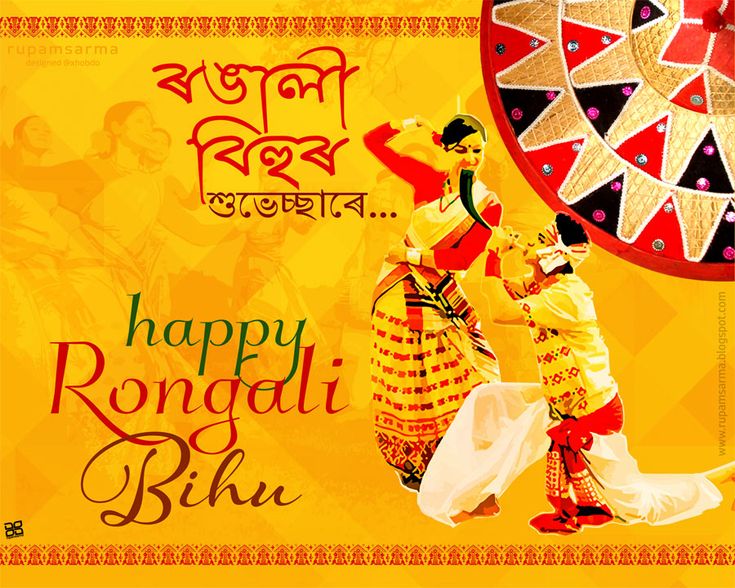
Bohag Bihu or Rongali Bihu of Assam – The Heartbeat of Assamese Culture

Bohag Bihu or Rongali Bihu of Assam is one of the most vibrant and joyful festivals celebrated in the northeastern state of Assam. It marks the Assamese New Year and the beginning of the agricultural season. Celebrated in the middle of April during the Assamese month of Bohag (Baisakh), Rongali Bihu fills the air with music, dance, laughter, and the spirit of togetherness.
Thank you for reading this post, don't forget to subscribe!Among the three Bihu festivals Rongali Bihu (Bohag Bihu), Magh Bihu (Bhogali Bihu), and Kati Bihu (Kongali Bihu) Rongali Bihu is the most colorful and widely celebrated. It is not just a festival; it is an emotion for the people of Assam. The festival reflects the close relationship between humans, nature, agriculture, and culture.
During Rongali Bihu, people wear traditional clothes, perform energetic Bihu dance, sing melodious Bihu songs, visit friends and relatives, and prepare delicious traditional food. Villages and cities across Assam become lively with celebrations that last for several days.
This festival is a beautiful symbol of honour, gratitude, unity, and renewal of life.
Meaning and Origin of the Word “Bihu”
The word “Bihu” is believed to have come from the Sanskrit word “Bishu.” This word means “to ask the gods for prosperity and blessings during the harvest season.” Over time, the word Bishu evolved into Bihu in Assamese language.
Bihu festivals are closely connected with the agricultural life of Assam. Since Assam is largely an agrarian society, farmers celebrate different stages of farming through these festivals.
There are three main Bihu festivals in Assam:
- Rongali Bihu (Bohag Bihu) – Celebrated in April, marking the Assamese New Year and beginning of sowing season.
- Magh Bihu (Bhogali Bihu) – Celebrated in January after the harvest season, known for feasting and bonfires.
- Kati Bihu (Kongali Bihu) – Celebrated in October during the growing season of crops, observed with prayers and simplicity.
Among these three, Rongali Bihu is the most joyful and festive, because it celebrates spring, youth, love, and new beginnings.
Importance of Bohag Bihu in Assamese Culture
Bohag Bihu is much more than a seasonal festival. It is deeply connected with Assamese identity and tradition.
The festival celebrates several important aspects of life:
- Nature: The arrival of spring with blooming flowers and green fields.
- Agriculture: The beginning of the farming season.
- Community: People gather together to celebrate and share happiness.
- Respect: Gratitude towards cattle, tools, elders, and nature.
- Love and Youth: Young people express joy through songs and dances.
The entire atmosphere during Rongali Bihu is filled with music, colors, and happiness. People forget their worries and celebrate life together.
The Seven Joyous Days of Bohag Bihu
One special feature of Bohag Bihu is that it is not a one-day festival. Instead, it is celebrated for seven days, and each day has its own traditions and meaning.
Day 1: Goru Bihu – Honouring the Cattle
The first day of Rongali Bihu is called Goru Bihu. The word “Goru” means cattle.
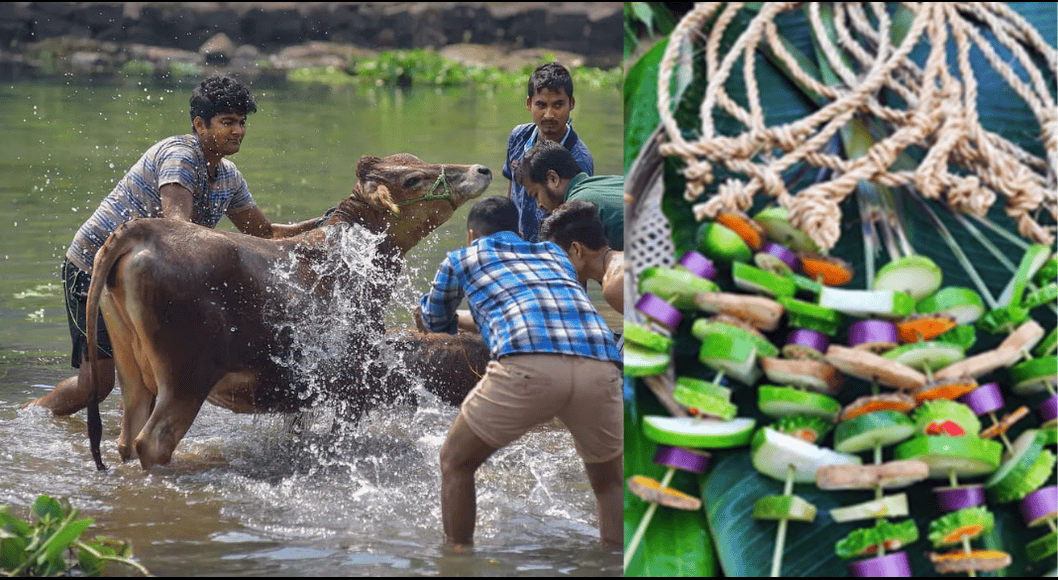
In Assam’s agricultural society, cows and buffaloes play an important role in farming. They help farmers plough the fields and prepare the land for cultivation. Therefore, on this day, people show respect and gratitude to their cattle.
On Goru Bihu:
- Cattle are taken to rivers or ponds and bathed.
- Farmers apply turmeric paste and black gram paste on their bodies.
- They decorate cattle with garlands and fresh leaves.
- Special traditional songs are sung for them.
Farmers also feed cattle with fresh vegetables and gourds. It is believed that this ritual keeps the animals healthy and brings prosperity in the coming year.
Eating the 101 Varieties of Greens (Ekho-Ek Bidh Xaak)
Another interesting tradition of Goru Bihu is eating 101 varieties of leafy greens, known as “Ekho-Ek Bidh Xaak.”
This mixture of greens is prepared using wild herbs and plants found in nature. The dish is believed to detoxify the body and improve health at the beginning of the new year.
Some common greens used in the dish include:
- Dhekia Xaak – Fiddlehead fern
- Laai Xaak – Mustard greens
- Paat Xaak – Jute leaves
- Tengesi Xaak – Hogweed
- Manimuni – Indian pennywort
- Kolmou Xaak – Water spinach
- Khutura Xaak – Amaranth
- Bhedai Lota – A medicinal plant for stomach health
Sometimes sour fruits like Ou Tenga (elephant apple) are added for taste.
This practice shows the deep knowledge of nature and traditional medicine among Assamese people.
Day 2: Manuh Bihu – The Day of People
The second day of Rongali Bihu is called Manuh Bihu, meaning “the Bihu of humans.”
This day is about renewal, respect, and celebration among people.
On Manuh Bihu:
- People wake up early and take a bath using turmeric and black gram paste.
- They wear new clothes, often traditional Assamese attire.
- Young people seek blessings from elders by touching their feet.
- Elders give blessings for a happy and successful year.
Family members exchange traditional sweets such as:
- Til Pitha
- Ghila Pitha
- Narikol Laru (Coconut laddoo)
- Til Laru (Sesame laddoo)
Friends and relatives visit each other’s homes and celebrate together. The entire day is filled with joy, laughter, and warm greetings.
Day 3: Gosain Bihu – Worship of Deities
The third day is called Gosain Bihu.
This day is dedicated to prayers and worship of household deities.
Families clean their homes and decorate the Tulsi plant in the courtyard. Offerings of fruits, flowers, and traditional food are made to the gods.
People pray for:
- Peace in the family
- Good harvest
- Health and prosperity
Although this day is quieter compared to other days, it has deep spiritual importance.
Day 4: Tator Bihu or Hat Bihu – Community Celebration
The fourth day of Bohag Bihu is known as Tator Bihu or Hat Bihu.
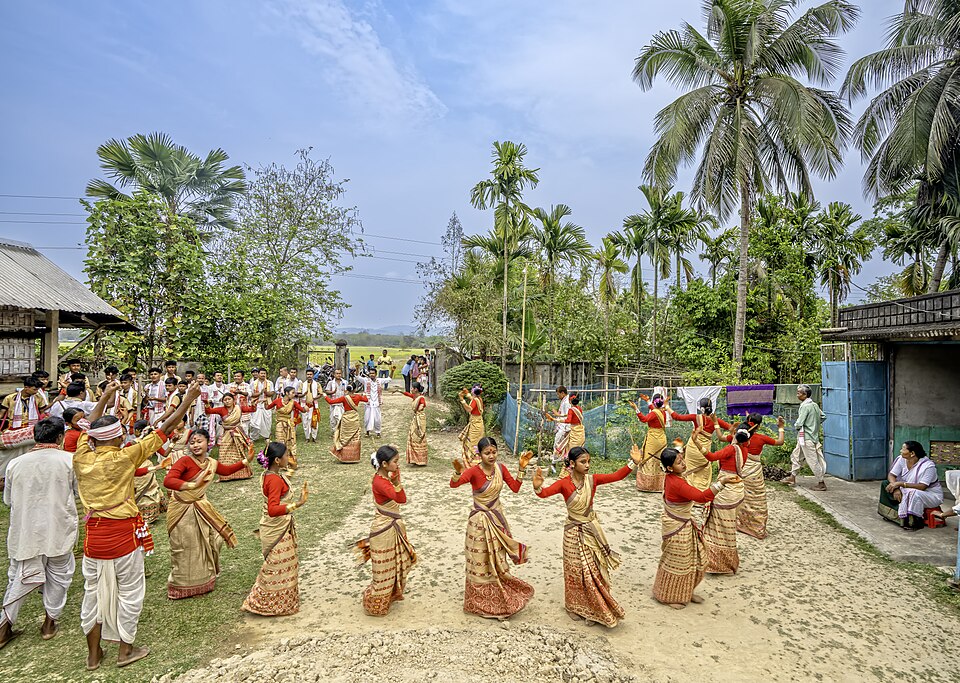
On this day, villages and towns organize public gatherings, fairs, and cultural events.
Important activities include:
- Bihu dance performances
- Bihu song competitions
- Community feasts
- Local markets and fairs (melas)
People come together wearing traditional Assamese clothes, creating a colorful and lively atmosphere. These events strengthen social bonds and community unity.
Day 5: Nangolor Bihu – Respect for Tools
The fifth day of the festival is Nangolor Bihu.
“Nangol” means plough, which is an important agricultural tool. On this day, farmers clean and worship their farming equipment.
Tools like:
- Ploughs
- Sickles
- Farming instruments
- Musical instruments like dhol and pepa
are cleaned and respected.
This ritual shows gratitude towards the tools that help people earn their livelihood.
Day 6: Senehi Bihu – The Celebration of Love
The sixth day is known as Senehi Bihu, meaning the Bihu of love.
This day is especially important for young people.
Young men and women:
- Sing romantic Bihu songs
- Perform Bihu dance
- Exchange small gifts
- Express feelings of love and friendship
Public Bihu events and melas also take place on this day. The atmosphere is full of romance, music, and youthful energy.
Day 7: Chera Bihu – A Farewell to the Festival
The final day is called Chera Bihu.
On this day, families relax and spend time together. They enjoy leftover festival foods and remember the joyful moments of the week.
Gradually, people return to their daily routine, but the happiness and memories of Bihu remain in their hearts.
Husori – A Unique Bihu Tradition
One of the most beautiful traditions of Rongali Bihu is Husori.
The word Husori comes from “Hussor,” meaning a group or troupe.
During Husori:
- Groups of young people visit different houses in the village.
- They perform Bihu songs and dances.
- Traditional instruments like dhol, pepa, gogona, and toka are played.
The performance often includes humorous lines, love songs, and social messages.
After the performance, the house owner offers:
- Money
- Gamusa
- Tamul-Paan (betel nut and leaves)
- Sometimes sweets or food
Husori strengthens community bonding and festive spirit.
Kopou Phool – The Flower of Bihu
The Foxtail Orchid, locally called Kopou Phool, is the state flower of Assam and an important symbol of Bihu.
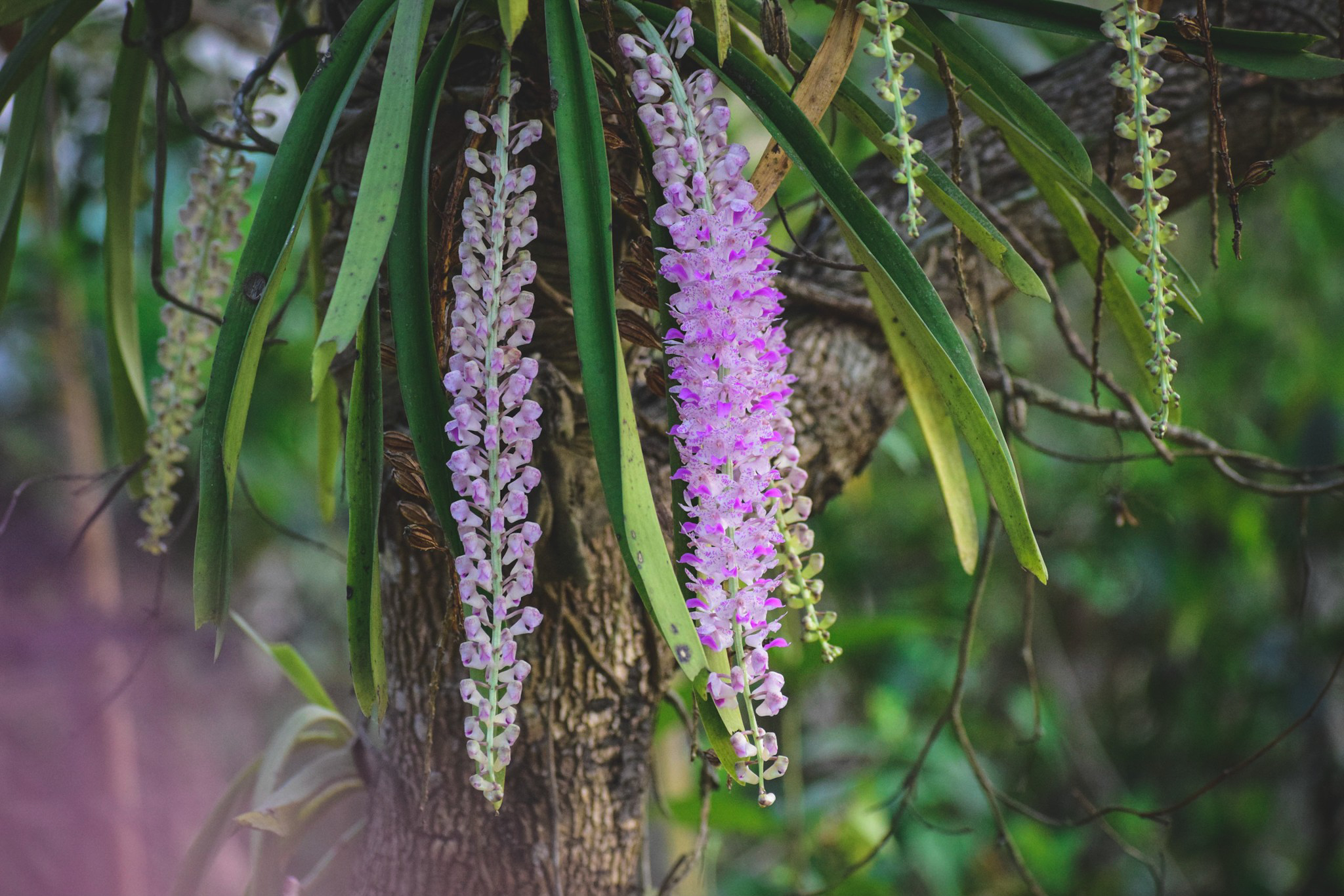
This beautiful purple-pink flower blooms in April, exactly during Bohag Bihu.
Young women wear Kopou Phool in their hair while performing Bihu dance. The flower represents:
- Youth
- Love
- Beauty
- Freshness of spring
The sight of Kopou flowers blooming in forests and gardens signals that Bihu has arrived.
Traditional Clothing during Bohag Bihu
Clothing plays an important role during the festival.
Men usually wear:
- Dhoti
- Gamosa
- Sometimes kurta
Women wear the elegant Mekhela Chador, often made of traditional handloom fabrics.
These clothes are often decorated with beautiful Assamese designs and patterns. Wearing traditional attire during Bihu shows pride in Assamese culture and heritage.
Bihu Dance and Music
The Bihu Dance is one of the most famous folk dances of India.
It is performed mainly by young men and women during Rongali Bihu. The dance is energetic and joyful, expressing love, happiness, and harmony with nature.
Important musical instruments used include:
- Dhol – Traditional drum
- Pepa – Horn made from buffalo horn
- Gogona – Bamboo instrument
- Toka – Bamboo clapper
- Baanhi – Flute
The rhythm of these instruments creates a lively atmosphere that makes everyone feel the spirit of the festival.
Delicious Food of Bihu
Food is another important part of Bohag Bihu celebrations.
Families prepare many traditional Assamese dishes using rice, coconut, sesame seeds, and jaggery.
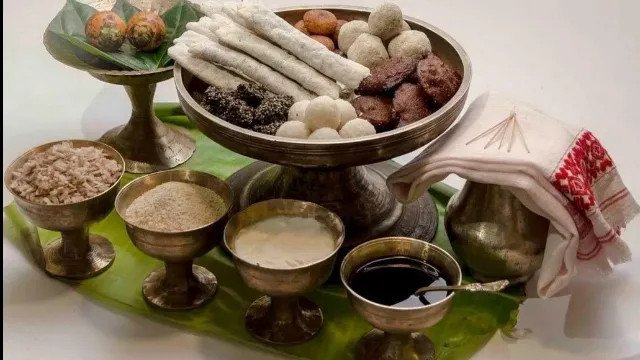
Popular Bihu foods include:
- Til Pitha
- Ghila Pitha
- Tekeli Pitha
- Narikol Laru
- Til Laru
People also enjoy simple home-cooked dishes like:
- Xaak Bhaji
- Khar
- Masor Tenga
These foods reflect the rich culinary tradition of Assam.
Role of Bihu in Assam’s Economy
Rongali Bihu also plays a very important role in the economy of Assam.
During this season:
- Markets become very busy.
- People buy new clothes, especially Mekhela Chador and Gamusa.
- Handloom weavers receive many orders.
- Musical instrument makers sell dhols and pepas.
Local fairs and exhibitions also allow small businesses and artisans to sell their products.
The Assam government and tourism department promote Bihu festivals to attract visitors, which further helps local businesses grow.
Impact of Rongali Bihu on Tourism
Rongali Bihu attracts many tourists from India and other countries.
Visitors come to Assam to experience:
- Traditional Bihu dances and music
- Local festivals and fairs
- Delicious Assamese food
- Beautiful landscapes like tea gardens and hills
Tourists also explore famous wildlife sanctuaries and cultural sites during this season.
Because of this, Rongali Bihu plays a major role in promoting cultural tourism in Assam.
New Year Festivals Across India
Interestingly, many parts of India celebrate their New Year and harvest festivals around the same time in April.
Some of them include:
- Vaisakhi (Punjab) – Celebrating harvest with Bhangra dance.
- Pohela Boishakh (West Bengal and Bangladesh) – Bengali New Year with music and sweets.
- Puthandu (Tamil Nadu) – Tamil New Year with family rituals.
- Vishu (Kerala) – Celebrated with Vishukkani and fireworks.
- Ugadi (Andhra Pradesh, Telangana, Karnataka) – Known for Ugadi Pachadi dish.
- Gudi Padwa (Maharashtra) – Marked by raising a Gudi flag.
- Cheiraoba (Manipur) – Meitei New Year festival.
- Navreh (Kashmir) – Kashmiri Pandit New Year celebration.
These festivals show the diversity and unity of Indian culture.
Conclusion
Bohag Bihu or Rongali Bihu of Assam is not just a festival; it is a celebration of life, culture, and nature. It marks the beginning of a new year filled with hope, prosperity, and happiness.
Through traditions like Goru Bihu, Husori, Bihu dance, traditional food, and community gatherings, the people of Assam express their gratitude to nature and strengthen their social bonds.
The blooming Kopou Phool, the rhythmic beats of the dhol, and the joyful laughter of people make Rongali Bihu a truly unforgettable experience.
Even in modern times, the festival continues to keep Assamese culture alive and vibrant, reminding everyone that festivals are not only about celebration but also about unity, respect, and the beauty of tradition.
FAQs about Bohag Bihu or Rongali Bihu
1. What is Bohag Bihu or Rongali Bihu?
Bohag Bihu or Rongali Bihu is the Assamese New Year festival celebrated in April to mark the beginning of the agricultural season.
2. How many Bihu festivals are celebrated in Assam?
There are three Bihu festivals: Rongali Bihu, Magh Bihu, and Kati Bihu.
3. Why is Rongali Bihu the most important Bihu?
It celebrates the New Year, spring season, and the beginning of farming, making it the most joyful festival.
4. What is Husori in Bihu?
Husori is a tradition where groups of people visit houses and perform Bihu songs and dances.
5. What is the significance of Kopou Phool in Bihu?
Kopou Phool is the state flower of Assam and symbolizes youth, love, and spring.
6. What foods are prepared during Bohag Bihu?
Popular foods include Til Pitha, Ghila Pitha, Narikol Laru, and Til Laru.
7. What is the 101 varieties of greens tradition?
On Goru Bihu, people eat a dish made of 101 leafy greens to detoxify the body and start the new year with good health.