



Magh Bihu: Assam’s Festival of Harvest and Food

Magh Bihu is one of the most important festivals of Assam. It is also known as Bhogali Bihu, the festival of food and harvest. Celebrated in the month of Magh (January), Magh Bihu marks the end of the harvesting season and the beginning of joy, feasting, and community bonding. This festival reflects the rich culture, traditions, and agricultural roots of Assam.
Thank you for reading this post, don't forget to subscribe!Magh Bihu is not just a festival; it is an emotion for Assamese people. From the warmth of the meji fire to the taste of traditional food, from community feasts to folk songs, Magh Bihu brings people together in happiness and gratitude.
What is Magh Bihu?
Magh Bihu is a harvest festival celebrated after the crops are harvested. Farmers thank nature and God for a good yield. Since the hard work of farming is over, people enjoy rest, food, and celebration.
Magh Bihu is called Bhogali Bihu because “Bhog” means enjoyment and food. It is a time when every home is filled with delicious dishes made from rice, jaggery, coconut, and sesame.
Why is Magh Bihu Celebrated?
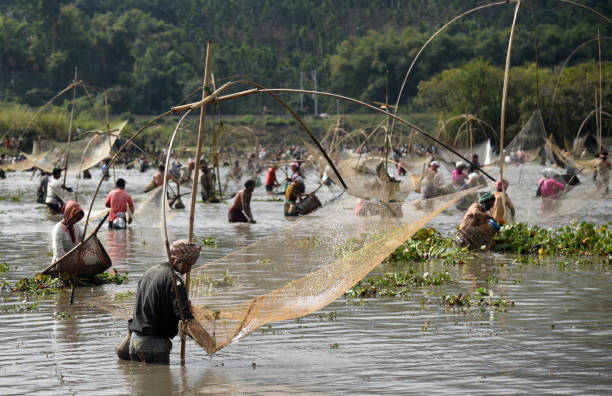
Magh Bihu is celebrated to:
- Mark the end of the harvest season
- Thank nature for crops and food
- Celebrate prosperity and abundance
- Strengthen community bonds
- Pass cultural values to the next generation
In earlier times, farmers depended fully on agriculture. A good harvest meant survival and happiness. Magh Bihu became a festival to celebrate this success.
When is Magh Bihu Celebrated?
Magh Bihu is celebrated on January 14 or 15, depending on the Assamese calendar. It coincides with Makar Sankranti, which is celebrated across India in different forms.
The festival usually lasts two days:
- Uruka – the night before Magh Bihu
- Magh Bihu Day – the main day of celebration
Uruka: The Night of Feasting
Uruka is one of the most exciting parts of Magh Bihu. It is celebrated on the night before Magh Bihu.
Community Feasts
- People gather near rivers, fields, or open spaces
- Temporary huts called Bhelaghar are made using bamboo, hay, and leaves
- Families and neighbors cook together
- Traditional food like rice, fish, meat, and pitha is prepared
Uruka symbolizes unity, sharing, and joy. Rich and poor sit together and eat the same food, showing equality and togetherness.
Magh Bihu Morning and the Meji Fire
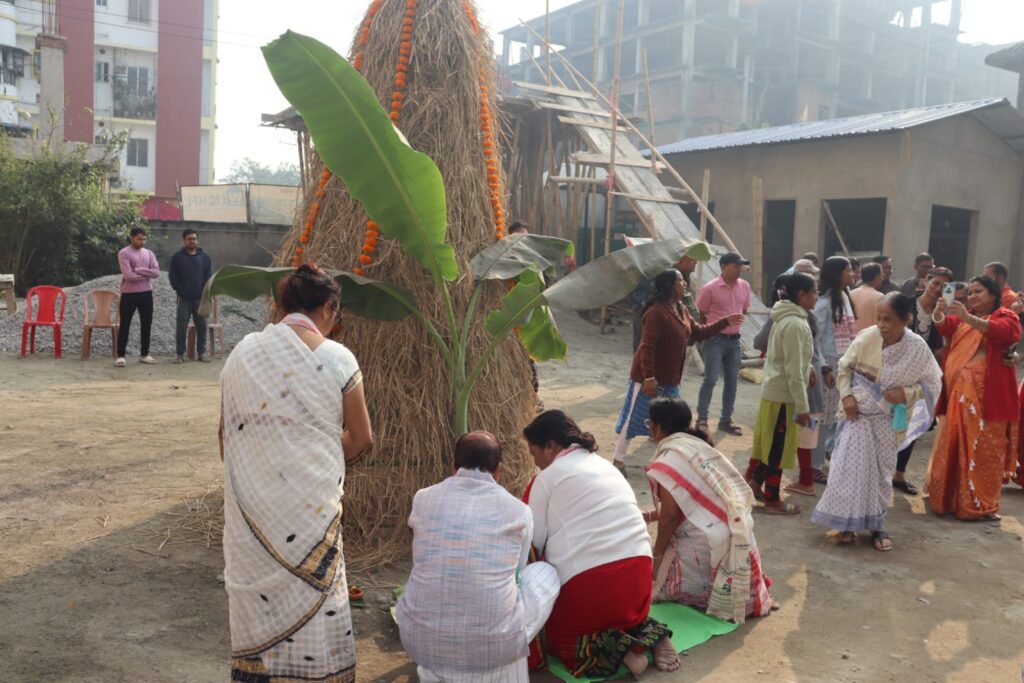
Early in the morning of Magh Bihu, people light the Meji, a tall structure made of bamboo, wood, and straw.
Significance of Meji
- People offer rice cakes, betel nuts, and food to the fire
- Prayers are offered for peace, health, and prosperity
- The fire symbolizes purity and new beginnings
After the rituals, people return home and enjoy food with family.
Traditional Food of Magh Bihu
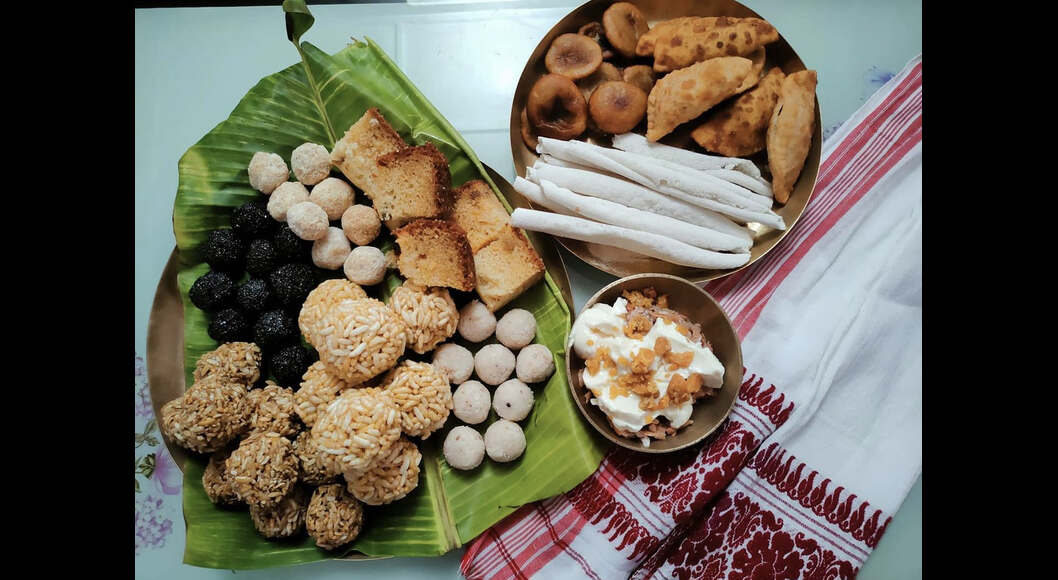
Food is the heart of Magh Bihu. Since it is the festival of harvest, rice-based food is most important.
Popular Magh Bihu Dishes
1. Pitha
- Til Pitha (sesame filling)
- Narikol Pitha (coconut filling)
- Ghila Pitha
- Sunga Pitha (cooked in bamboo)
2. Laru
- Til Laru (sesame balls)
- Narikol Laru (coconut balls)
3. Rice Products
- Chira (flattened rice)
- Muri (puffed rice)
- Akhoi (fried rice grains)
4. Fish and Meat
- Fresh river fish
- Duck meat
- Pork and chicken (in some communities)
Food is shared with guests, neighbors, and relatives, spreading love and happiness.
Bhelaghar: A Symbol of Community Life
Bhelaghar is a temporary hut made by young people using bamboo and straw.
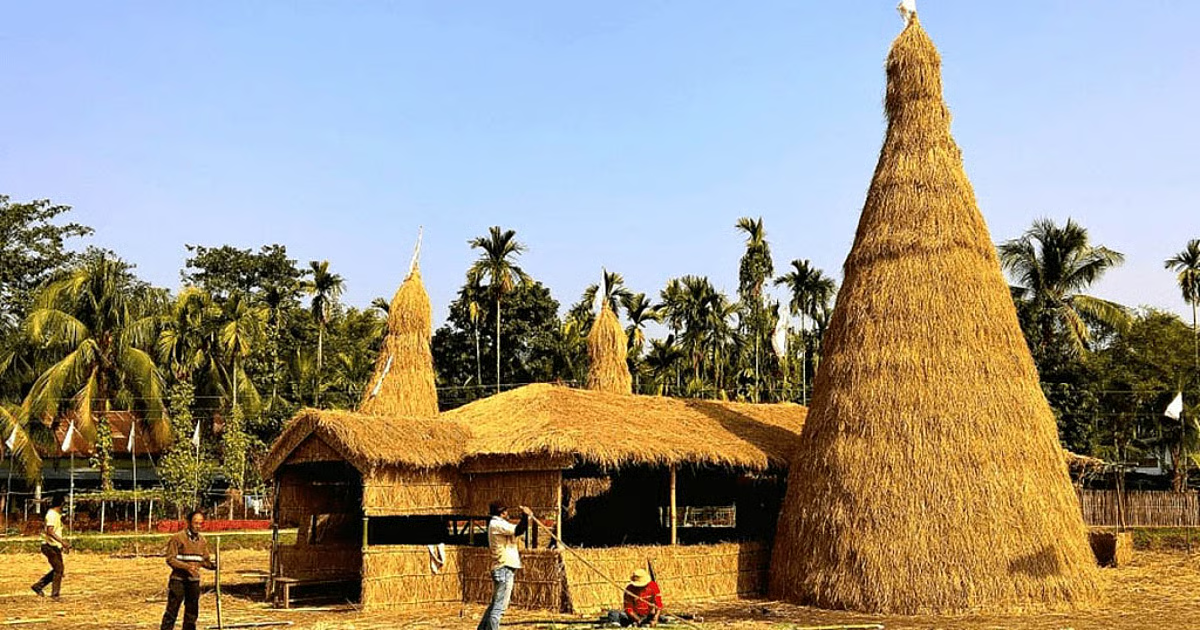
Importance of Bhelaghar
- Used for cooking and feasting on Uruka night
- Symbol of simplicity and unity
- Burnt the next morning after rituals
The burning of Bhelaghar represents letting go of old problems and welcoming a new phase of life.
Magh Bihu and Assamese Rural Life
Magh Bihu is deeply connected to rural Assam. Villages come alive with:
- Group cooking
- Traditional games
- Folk songs and laughter
- Community bonding
Even in modern times, villages try to keep these traditions alive.
Traditional Games Played During Magh Bihu
Games are an important part of Magh Bihu celebrations.
Popular Games
- Tekeli Bhonga (breaking earthen pots)
- Buffalo fights (now restricted in many places)
- Egg fights
- Tug of war
These games bring joy and excitement, especially for children and youth.
Magh Bihu in Modern Times
With urbanization, Magh Bihu celebrations have changed, but the spirit remains the same.
Modern Celebrations Include
- Community events in cities
- Cultural programs
- Social media greetings
- Office and school celebrations
Even people living outside Assam celebrate Magh Bihu to stay connected with their roots.
Cultural Importance of Magh Bihu
Magh Bihu teaches important life values:
- Gratitude for nature
- Sharing and caring
- Unity and equality
- Respect for tradition
- Simple living
It reflects the Assamese way of life peaceful, warm, and community-centered.
Difference Between Magh Bihu and Other Bihus
Assam celebrates three main Bihus:
| Bihu | Season | Meaning |
|---|---|---|
| Rongali Bihu | April | New Year and spring |
| Kati Bihu | October | Crop protection |
| Magh Bihu | January | Harvest and food |
Among all, Magh Bihu is most focused on food and feasting.
Magh Bihu and Makar Sankranti
Magh Bihu is celebrated at the same time as Makar Sankranti.
Across India:
- Pongal (Tamil Nadu)
- Lohri (Punjab)
- Uttarayan (Gujarat)
Though names differ, the idea is the same celebrating harvest and nature.
Environmental Message of Magh Bihu
Magh Bihu also reminds us to:
- Respect nature
- Use natural materials
- Live in harmony with the environment
Traditional celebrations were eco-friendly, using bamboo, leaves, and organic food.
Magh Bihu for the Younger Generation
Parents and elders use Magh Bihu to teach children about:
- Assamese culture
- Traditional food
- Community values
- Importance of agriculture
This helps preserve cultural identity.
How Magh Bihu Strengthens Social Bonds
Magh Bihu removes social barriers:
- Everyone eats together
- No difference between rich and poor
- Neighbors become family
This social unity is one of the strongest messages of the festival.
Challenges in Preserving Magh Bihu Traditions
Some challenges include:
- Urban lifestyle
- Lack of time
- Reduced farming culture
- Environmental restrictions
Still, many organizations and communities are working to preserve Magh Bihu traditions.
Conclusion
Magh Bihu is more than a festivalit is a celebration of life, food, culture, and unity. It reflects the soul of Assam and its deep connection with agriculture and nature. From the warmth of the meji fire to the sweetness of pitha, Magh Bihu fills hearts with joy and gratitude.
In a fast-changing world, Magh Bihu reminds us to slow down, share food, respect nature, and stay connected to our roots. This beautiful festival continues to unite people across generations and borders.
FAQs About Magh Bihu
1. What is Magh Bihu?
Magh Bihu is the harvest festival of Assam, celebrated in January after the harvest season.
2. Why is Magh Bihu called Bhogali Bihu?
It is called Bhogali Bihu because it focuses on food, enjoyment, and feasting.
3. What is Uruka in Magh Bihu?
Uruka is the night before Magh Bihu, celebrated with community feasts and cooking.
4. What is Meji in Magh Bihu?
Meji is a fire structure burnt on Magh Bihu morning for prayers and rituals.
5. What food is eaten during Magh Bihu?
Pitha, laru, rice products, fish, and meat are commonly eaten.
6. Is Magh Bihu celebrated outside Assam?
Yes, Assamese people celebrate Magh Bihu across India and abroad.