


Constitution Day: History, Significance, Theme, and Importance of Samvidhan Diwas

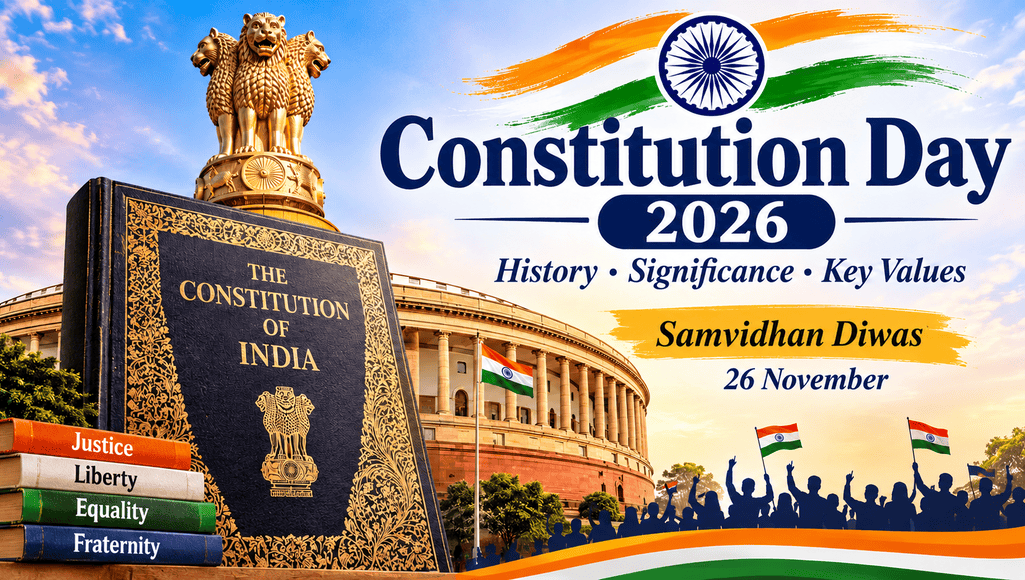
Constitution Day, also known as Samvidhan Diwas, is celebrated every year on 26 November in India to commemorate the adoption of the Indian Constitution by the Constituent Assembly on 26 November 1949. This day reminds every Indian citizen of the values of justice, liberty, equality, and fraternity that form the foundation of the world’s largest democracy. In 2026, India celebrates the 77th anniversary of the adoption of its Constitution.
Constitution Day is an important occasion to remember the contributions of Dr. B.R. Ambedkar and other members of the Constituent Assembly who worked together to prepare the Constitution of independent India. The day also encourages citizens, especially students and young people, to understand their constitutional rights, fundamental duties, and responsibilities towards the nation.

Constitution Day 2026: Important Highlights
Constitution Day is observed across the country through educational programmes, discussions, awareness campaigns, and activities that promote constitutional values.
| Particulars | Details |
|---|---|
| Name | Constitution Day |
| Also Known As | Samvidhan Diwas |
| Date | 26 November 2026 |
| Day | Thursday |
| First Official Celebration | 26 November 2015 |
| 2026 Anniversary | 77th Anniversary of Constitution Adoption |
| Historical Event | Adoption of the Indian Constitution |
| Adopted On | 26 November 1949 |
| Implemented On | 26 January 1950 |
| Drafting Committee Chairman | Dr. B.R. Ambedkar |
| Constituent Assembly President | Dr. Rajendra Prasad |
| Purpose | To promote constitutional awareness and values |
History of Constitution Day in India
The history of Constitution Day is closely connected with India’s independence and the formation of its democratic system. After gaining independence from British rule on 15 August 1947, India needed a strong constitutional framework to govern the country and protect the rights of its citizens.
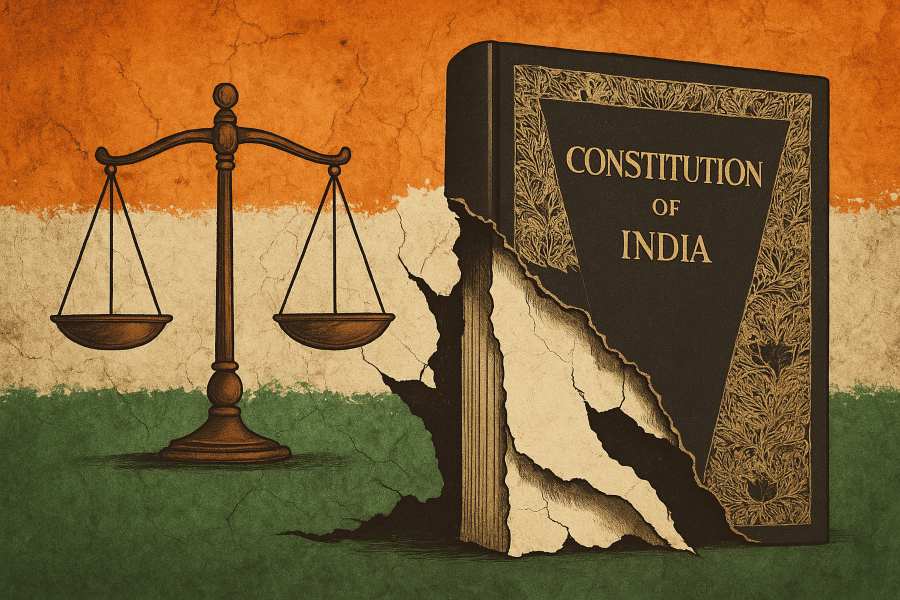
For this purpose, the Constituent Assembly was established to prepare a Constitution that would reflect the hopes, values, and aspirations of the Indian people.
The Constituent Assembly held its first meeting on 9 December 1946 in New Delhi. Dr. Sachchidananda Sinha served as the temporary chairman of the first meeting. Later, on 11 December 1946, Dr. Rajendra Prasad was elected as the permanent President of the Constituent Assembly.
On 29 August 1947, the Assembly formed the Drafting Committee under the chairmanship of Dr. B.R. Ambedkar. The committee was responsible for preparing and examining the draft of the Indian Constitution.
After several discussions, debates, and amendments, the Constituent Assembly adopted the Constitution on 26 November 1949. However, it officially came into effect on 26 January 1950, marking the beginning of India as a Republic.
Before 2015, 26 November was also observed as Law Day by legal institutions. On 19 November 2015, the Government of India officially declared 26 November as Constitution Day to honour Dr. B.R. Ambedkar during his 125th birth anniversary year.
Since then, Constitution Day has been celebrated every year to promote awareness of constitutional principles and recognise the contributions of the makers of the Indian Constitution.
Why Is Constitution Day Celebrated on 26 November?
Constitution Day is celebrated on 26 November because the Constituent Assembly officially adopted the Constitution of India on this date in 1949.
This historic decision established the foundation for India’s future political, social, and legal systems. The date represents the collective efforts of the members of the Constituent Assembly who worked to create a Constitution suitable for a diverse and independent nation.
Although the Constitution was adopted on 26 November 1949, it came into force on 26 January 1950. The date of 26 January was selected to honour the Purna Swaraj declaration of 1930, when Indian nationalists had proclaimed their demand for complete independence.
Therefore, 26 November is celebrated as Constitution Day, while 26 January is celebrated as Republic Day.
Role of Dr. B.R. Ambedkar in Making the Indian Constitution
Dr. Bhimrao Ramji Ambedkar played a major role in the preparation of the Indian Constitution. He was the Chairman of the Drafting Committee formed on 29 August 1947.
He is widely recognised as the principal architect of the Indian Constitution because of his leadership, legal knowledge, and contribution to the drafting process.
Dr. Ambedkar strongly supported social justice, equality, individual freedom, and the protection of disadvantaged communities. His ideas helped shape several important constitutional provisions.
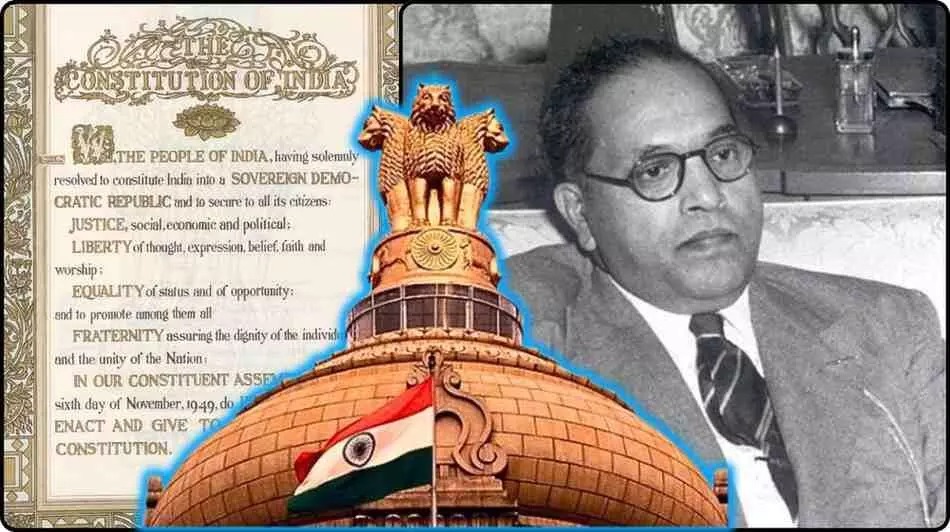
He believed that political democracy could not succeed without social and economic equality. His contribution helped establish a constitutional framework that protects individual rights and promotes equal opportunities.
Constitution Day provides an opportunity to remember his contribution and understand his vision of a democratic and inclusive India.
Constitution of India Drafting Timeline
The making of the Indian Constitution was a long and detailed process. The Constituent Assembly took 2 years, 11 months, and 17 days to complete this historic task. During this period, the Assembly held 11 sessions and discussed various constitutional provisions.
The following table highlights the major events in the making of the Indian Constitution.
| Important Events | Dates |
|---|---|
| First meeting of the Constituent Assembly | 9 December 1946 |
| Dr. Rajendra Prasad elected President | 11 December 1946 |
| Drafting Committee formed under Dr. B.R. Ambedkar | 29 August 1947 |
| Draft Constitution introduced in the Assembly | 4 November 1948 |
| Constitution adopted by the Constituent Assembly | 26 November 1949 |
| Members signed the Constitution | 24 January 1950 |
| Constitution came into force | 26 January 1950 |
This timeline shows the efforts and dedication of the Constituent Assembly in creating a constitutional framework for independent India.
Significance of Constitution Day
Constitution Day has great historical, educational, and national importance. It reminds citizens that the Constitution is not just a legal document but also a guide for maintaining democracy, protecting rights, and ensuring justice.
Some major reasons why Constitution Day is important are discussed below.
Promotes Constitutional Awareness: The day encourages citizens to learn about the Constitution, its provisions, and the principles that guide the country.
Honours the Constitution Makers: It pays tribute to Dr. B.R. Ambedkar, Dr. Rajendra Prasad, and all other members of the Constituent Assembly who contributed to the making of the Constitution.
Protects Fundamental Rights: It reminds citizens about their basic rights, including equality, freedom, and protection against exploitation.
Encourages Fundamental Duties: Constitution Day also highlights the responsibilities of citizens towards the country, society, and fellow human beings.
Strengthens Democracy: It promotes democratic values such as participation, accountability, freedom of expression, and respect for the rule of law.
Promotes National Unity: The Constitution provides a common framework for people belonging to different religions, languages, cultures, and communities.
Important Constitutional Values Highlighted on Constitution Day
The Preamble of the Indian Constitution introduces the fundamental values that guide the country’s democratic system. These principles are important for maintaining equality, justice, and national unity.
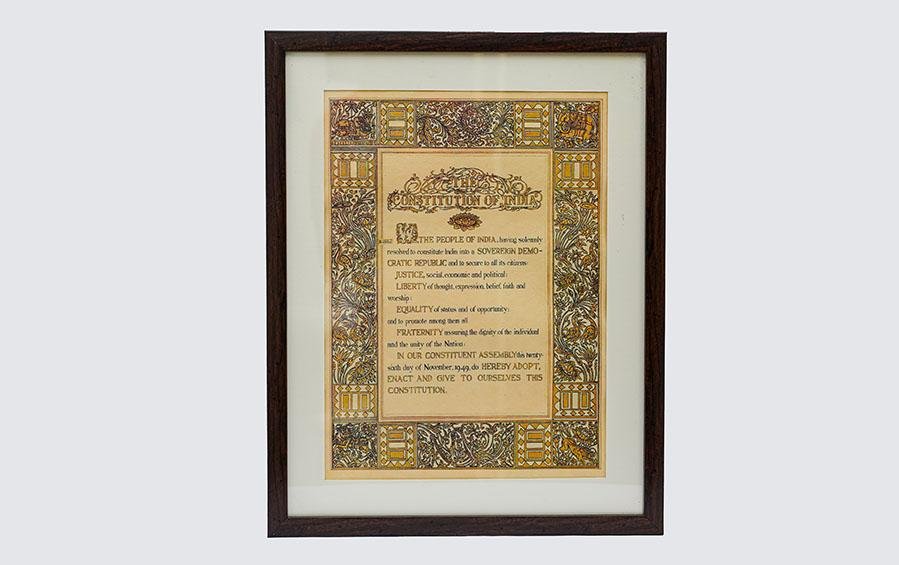
The major constitutional values include:
Justice: The Constitution aims to ensure social, economic, and political justice for every citizen. It promotes a society where everyone receives equal treatment and opportunities.
Liberty: It protects freedom of thought, expression, belief, faith, and worship, subject to constitutional limitations.
Equality: Every individual is entitled to equality before the law and equal protection of the laws. The Constitution also promotes equal opportunities for citizens.
Fraternity: It encourages brotherhood, mutual respect, and a sense of unity among all citizens while protecting the dignity of individuals and the unity and integrity of the nation.
Secularism: India respects all religions and does not establish any official state religion. The Constitution protects religious freedom and equality.
Democracy: It ensures that people participate in the political system through elected representatives and democratic institutions.
Rule of Law: Everyone, including government authorities, must act according to the law. No individual is above the law.
Fundamental Rights and Fundamental Duties of Indian Citizens
One of the most important features of the Indian Constitution is the protection of Fundamental Rights and the inclusion of Fundamental Duties.
Fundamental Rights are provided under Part III of the Constitution, from Articles 12 to 35. They protect individual freedoms and help maintain equality and justice.
The six categories of Fundamental Rights are:
| Fundamental Rights | Description |
|---|---|
| Right to Equality | Ensures equality before the law and prohibits discrimination on specified grounds. |
| Right to Freedom | Protects important freedoms, including speech and expression, subject to reasonable restrictions. |
| Right Against Exploitation | Prohibits human trafficking, forced labour, and certain forms of child labour. |
| Right to Freedom of Religion | Protects freedom of conscience and the right to practise and propagate religion, subject to constitutional provisions. |
| Cultural and Educational Rights | Protects the cultural and educational interests of minorities. |
| Right to Constitutional Remedies | Allows citizens to approach the courts for the enforcement of Fundamental Rights. |
Fundamental Duties are mentioned in Part IVA under Article 51A. They remind citizens of their responsibilities towards the nation.
Some important Fundamental Duties include respecting the Constitution, the National Flag and the National Anthem, protecting national unity, promoting harmony, preserving the environment, and developing scientific temper.
Understanding both rights and duties is essential for building a responsible and democratic society.
How Is Constitution Day Celebrated in India?
Constitution Day is observed across India through different educational, cultural, and awareness programmes. Government institutions, schools, colleges, universities, and other organisations organise activities to help people understand the importance of the Constitution.
Some common activities include:
- Reading the Preamble: Citizens, students, and government officials read the Preamble to understand the basic values of the Constitution.
- Educational Programmes: Schools and colleges organise special classes, lectures, and discussions about constitutional history.
- Debates and Essay Competitions: Students participate in debates, quizzes, and essay-writing competitions on democracy, Fundamental Rights, and constitutional values.
- Awareness Campaigns: Government departments and educational institutions spread awareness about the Constitution and the responsibilities of citizens.
- Seminars and Discussions: Legal experts, teachers, and public representatives discuss constitutional principles and their importance in modern India.
- Online Activities: Digital campaigns and educational resources help people learn about the Constitution.
These activities make Constitution Day an important occasion for promoting constitutional literacy among people of all age groups.
Difference Between Constitution Day and Republic Day
Many people confuse Constitution Day with Republic Day because both are connected with the Indian Constitution. However, these two occasions represent different historical events.
Constitution Day celebrates the adoption of the Constitution on 26 November 1949, whereas Republic Day celebrates the day the Constitution came into effect on 26 January 1950.
The following table explains the major differences.
| Features | Constitution Day | Republic Day |
|---|---|---|
| Date | 26 November | 26 January |
| Historical Event | Adoption of the Constitution | Enforcement of the Constitution |
| Year | 1949 | 1950 |
| Official Recognition | Declared in 2015 | Celebrated since 1950 |
| Main Purpose | Promotes constitutional awareness | Celebrates India becoming a Republic |
| Importance | Reminds citizens of constitutional values | Marks the establishment of the Republic of India |
| Major Activities | Preamble reading, debates, seminars | Republic Day parade, flag hoisting, cultural programmes |
Both days are important because they represent different milestones in India’s democratic journey.
Interesting Facts About the Indian Constitution
The Indian Constitution is one of the most important documents in the history of modern India. Here are some interesting facts about it:
- The Constitution was adopted on 26 November 1949.
- It came into effect on 26 January 1950.
- The Constituent Assembly took 2 years, 11 months, and 17 days to complete the drafting process.
- Dr. B.R. Ambedkar was the Chairman of the Drafting Committee.
- Dr. Rajendra Prasad was the President of the Constituent Assembly.
- The original Constitution contained 395 Articles, 22 Parts, and 8 Schedules.
- The original Constitution was handwritten by Prem Behari Narain Raizada.
- The original handwritten copies were decorated with artwork by artists led by Nandalal Bose.
- The Constituent Assembly held 11 sessions during the Constitution-making process.
- The Constitution was signed by 284 members of the Constituent Assembly on 24 January 1950.
- The Government of India officially declared 26 November as Constitution Day in 2015.
Importance of Constitution Day for Students and Young Citizens
Constitution Day is especially important for students because it helps them understand the democratic system and the responsibilities of citizenship.
Students learn about the Fundamental Rights that protect their freedoms and the Fundamental Duties that encourage them to contribute positively to society.
Schools and colleges can use this occasion to organise quizzes, debates, essay competitions, and discussions about the Constitution.
Learning about constitutional values at an early age helps young citizens develop respect for equality, justice, diversity, and democratic institutions.
It also encourages students to become responsible citizens who respect the rights of others and contribute to the development of the nation.
Conclusion
Constitution Day is an important national observance that celebrates the adoption of the Indian Constitution and honours the vision of its makers. Observed every year on 26 November, the day reminds us of the values of justice, liberty, equality, and fraternity that guide Indian democracy. The contributions of Dr. B.R. Ambedkar, Dr. Rajendra Prasad, and other members of the Constituent Assembly continue to inspire generations. Every citizen should understand the Constitution, respect its principles, protect democratic values, and perform their Fundamental Duties to help build a stronger, more inclusive, and democratic India.
Frequently Asked Questions (FAQs)
1. When is Constitution Day celebrated in India?
Constitution Day is celebrated every year on 26 November to commemorate the adoption of the Indian Constitution in 1949.
2. What is another name for Constitution Day?
Constitution Day is also known as Samvidhan Diwas or National Law Day.
3. Why is Constitution Day celebrated on 26 November?
It is celebrated on 26 November because the Constituent Assembly adopted the Indian Constitution on this date in 1949.
4. Who is known as the Father of the Indian Constitution?
Dr. B.R. Ambedkar is widely known as the principal architect of the Indian Constitution because of his major contribution as Chairman of the Drafting Committee.
5. When did the Indian Constitution come into effect?
The Indian Constitution came into effect on 26 January 1950, which is celebrated as Republic Day.
6. When was Constitution Day first officially celebrated in India?
The Government of India officially declared 26 November as Constitution Day in 2015. The first official celebration took place on 26 November 2015.
7. How long did it take to draft the Indian Constitution?
The Constituent Assembly took 2 years, 11 months, and 17 days to complete the Constitution-making process.
8. Who was the President of the Constituent Assembly?
Dr. Rajendra Prasad was the President of the Constituent Assembly.
9. What are the main values of the Indian Constitution?
The main values include justice, liberty, equality, and fraternity. Other important constitutional principles include democracy, secularism, and the rule of law.
10. What is the difference between Constitution Day and Republic Day?
Constitution Day marks the adoption of the Constitution on 26 November 1949, while Republic Day marks its implementation on 26 January 1950.