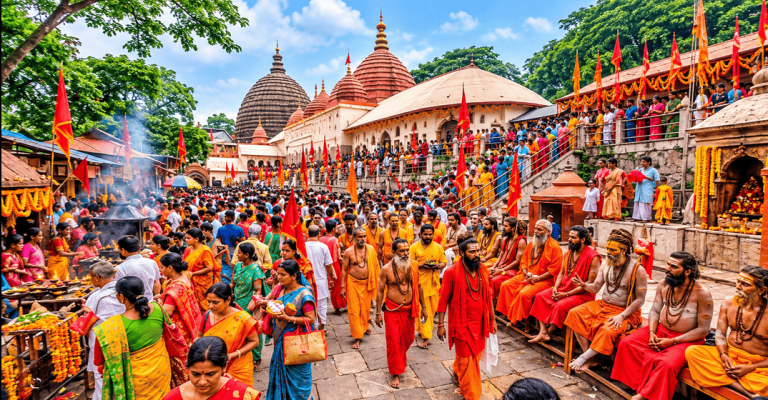



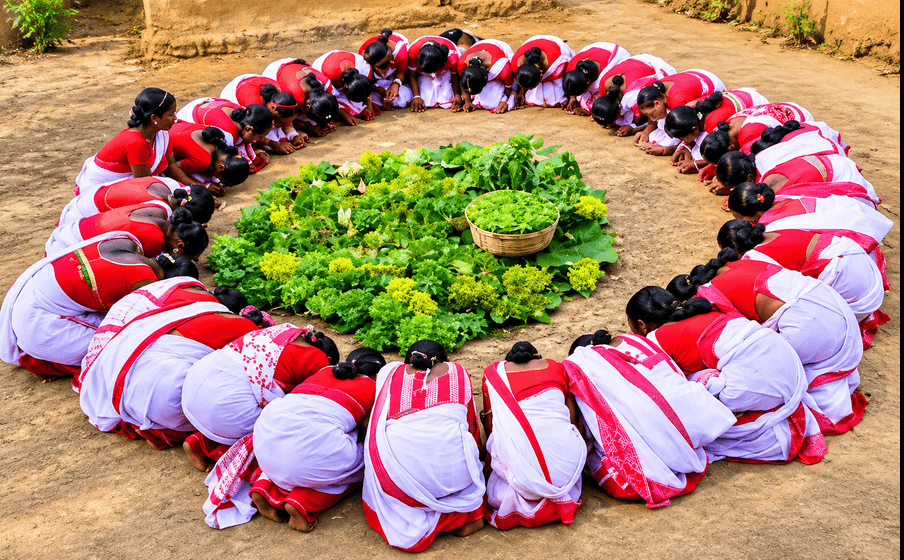
Karam Puja in Assam: History, Rituals and Cultural Significance

Karam Puja in Assam is an important traditional festival of the tea tribe and Adivasi communities. Celebrated with devotion, traditional songs, folk dances and nature-based rituals, the festival represents fertility, prosperity, agricultural well-being and community unity. It is closely connected with the cultural identity of Assam’s tea garden communities, whose ancestors brought many of these traditions from different parts of eastern and central India.
Also known as Karma Puja or Karam Parab, the festival is dedicated to the worship of the sacred Karam tree. It is generally observed on the Ekadashi tithi (eleventh lunar day) of the Shukla Paksha in the month of Bhadra or Bhado, which usually falls in August or September.

In Assam, Karam Puja is more than a religious celebration. It reflects the history, cultural traditions and social identity of the Adivasi communities. The festival also highlights the relationship between human life, agriculture and nature, making it an important part of Assam’s diverse cultural heritage.
What Is Karam Puja?
Karam Puja is a traditional agricultural festival celebrated by several Adivasi and tribal communities in India. It is particularly popular among the Munda, Ho, Oraon, Santhal, Kharia, Baiga and other communities.
The festival is observed in states such as Jharkhand, Odisha, Chhattisgarh, Bihar, West Bengal, Madhya Pradesh and Assam. Although the rituals and local customs may differ from one region to another, the central theme remains connected with nature, fertility, prosperity and agricultural development.
The Karam tree holds a special place in the celebration. It is worshipped as a symbol of life, strength, fertility and good fortune. People seek blessings for healthy families, good crops, prosperity and the well-being of their communities.
According to the Assam State Portal, Karam Puja is regarded as one of the most important agricultural festivals of the tea tribe communities in the state. The festival is associated with the worship of the Karam deity, who represents power and youthfulness.
Karam Puja and the Tea Tribe Communities of Assam
Karam Puja has a special cultural and historical connection with Assam’s tea tribe communities. These communities have roots in different parts of eastern and central India. During the colonial period, large numbers of people from regions such as present-day Jharkhand, Odisha, Chhattisgarh and neighbouring areas were brought to Assam to work in tea plantations.
Over generations, these communities developed a distinct cultural identity in Assam while preserving many of their traditional customs, languages, festivals, music and religious practices.
Karam Puja became an important part of this cultural continuity. It provides an opportunity for families and community members to come together, perform traditional rituals, sing folk songs and celebrate their shared heritage.
The festival also reflects the contribution of tea garden communities to Assam’s social and economic development. Their history is closely connected with the growth of the state’s tea industry, which has become an important part of Assam’s identity.
For the tea tribe and Adivasi communities, Karam Puja is not simply a festival observed on a particular day. It represents their collective memory, traditional beliefs, relationship with nature and cultural connection with their ancestral communities.
The Sacred Karam Tree and Its Significance
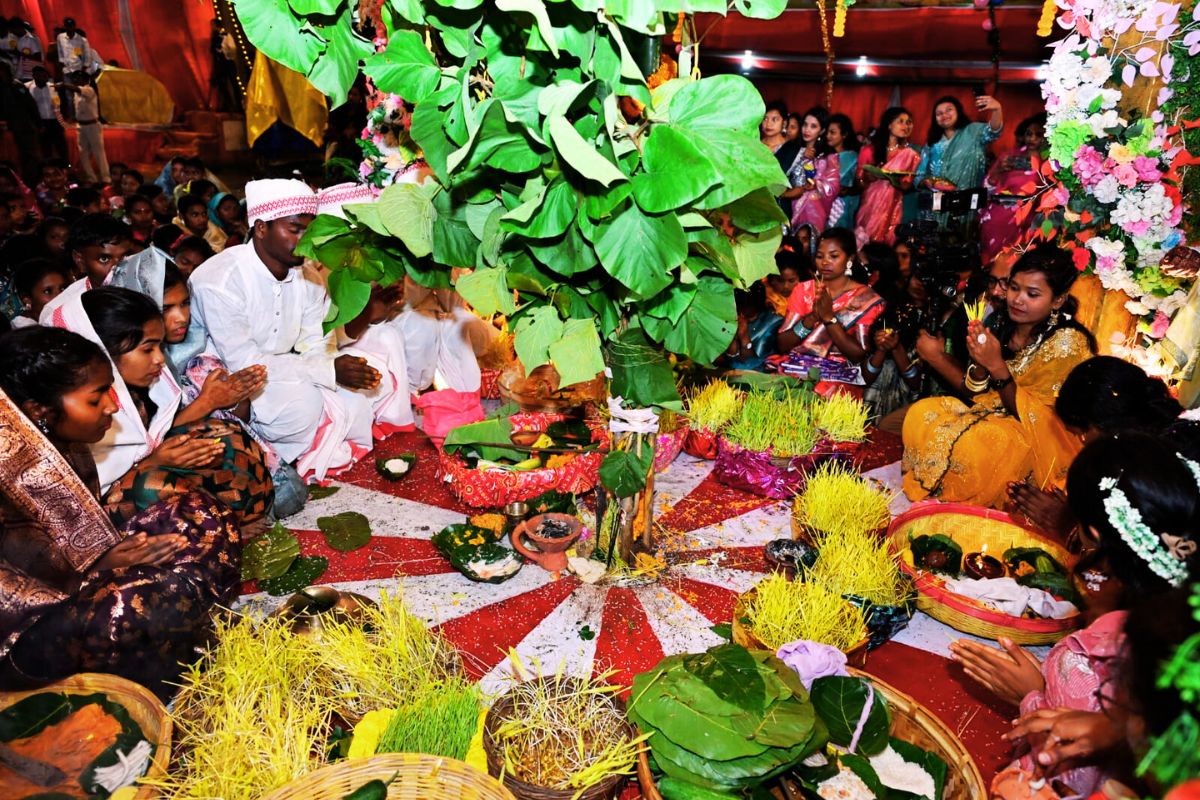
The Karam tree is the central element of Karam Puja. A branch of the tree is traditionally brought from the forest and installed at a designated place in the village, often in the courtyard or community gathering space known as the akhra.
The Assam State Portal identifies the Karam tree by the botanical name Nauclea parvifolia. The branch is decorated and worshipped as a sacred symbol during the festival.
The tree carries several cultural meanings:
- Fertility: It represents the hope for healthy families and the continuation of life.
- Agricultural prosperity: It symbolises the desire for good rainfall, healthy crops and a successful harvest.
- Strength and vitality: It represents energy, youthfulness and the power of life.
- Regeneration: Its association with nature reflects the cycle of growth and renewal.
- Environmental connection: It represents the close relationship between human communities and the natural world.
The worship of the Karam tree also reflects the traditional belief that human prosperity is connected with the health of the environment.
Traditional Rituals and Customs of Karam Puja
Karam Puja is celebrated through a series of traditional rituals. The exact practices can vary among communities and villages, but several customs are commonly associated with the festival.
Sowing of Seven Types of Seeds
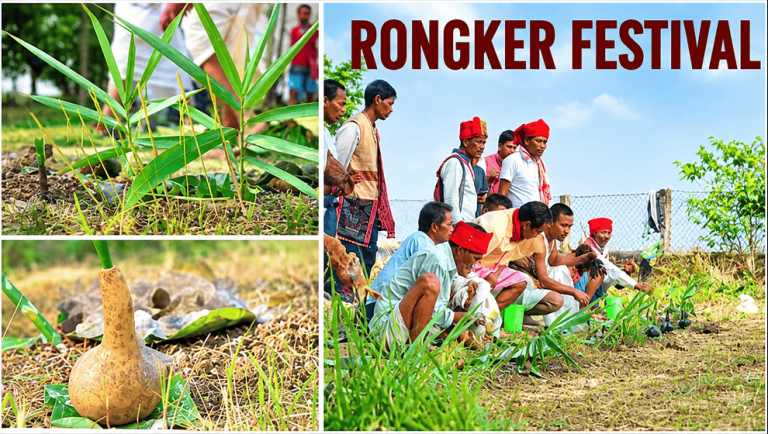
One of the important traditions associated with Karam Puja is the sowing of seven different types of seeds.
Before the main celebration, young women traditionally collect clean sand from a riverbank and place it in a small basket or container. They sow different varieties of seeds in the sand and take care of them until they begin to germinate.
The sprouting seeds are known as Jawa. They represent fertility, new life, agricultural growth and prosperity. The healthy growth of these seeds is traditionally associated with hopes for a good harvest and well-being.
Bringing and Installing the Karam Branch
The installation of the Karam branch is one of the central rituals of the festival.
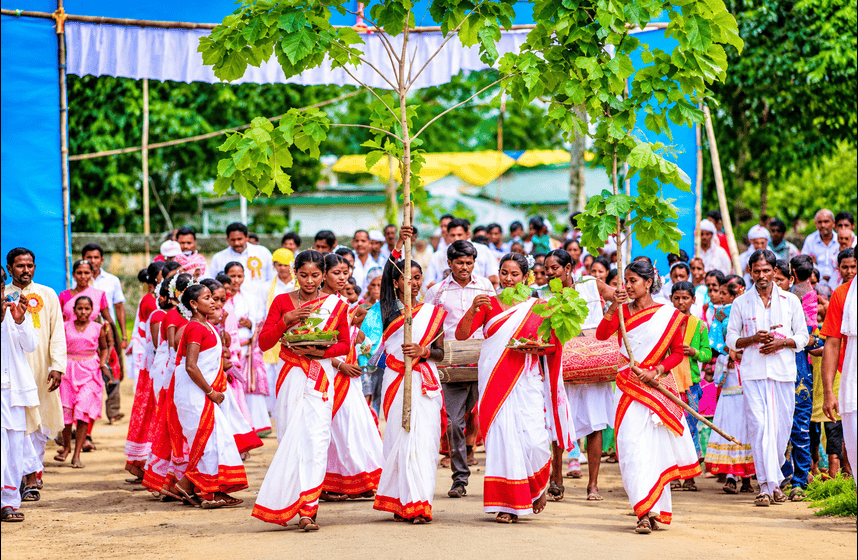
On the day of the celebration, community members traditionally visit the forest to collect a branch of the Karam tree. Drummers and other participants accompany them with traditional songs and music.
In many traditions, unmarried young women carry the branches back to the village while singing devotional songs. The branch is then installed in the village courtyard or akhra, which is cleaned and decorated for the occasion.
The sacred branch becomes the centre of the worship and community gathering.
Worship of Karam Raja or Karam Devta
The Karam branch is worshipped as Karam Raja or Karam Devta. People offer prayers and traditional offerings to seek blessings for prosperity, good health, fertility and agricultural success.
The village priest, traditionally known by names such as Jhankar or Dehuri in some Assam traditions, conducts the religious rituals.
According to the Assam State Portal, the offerings may include germinated grains and traditional preparations. The priest also narrates stories associated with the origin of Karam Puja. Ritual details differ among communities, so practices followed in one locality should not be assumed to be universal.
Traditional Songs, Music and Jhumur Dance
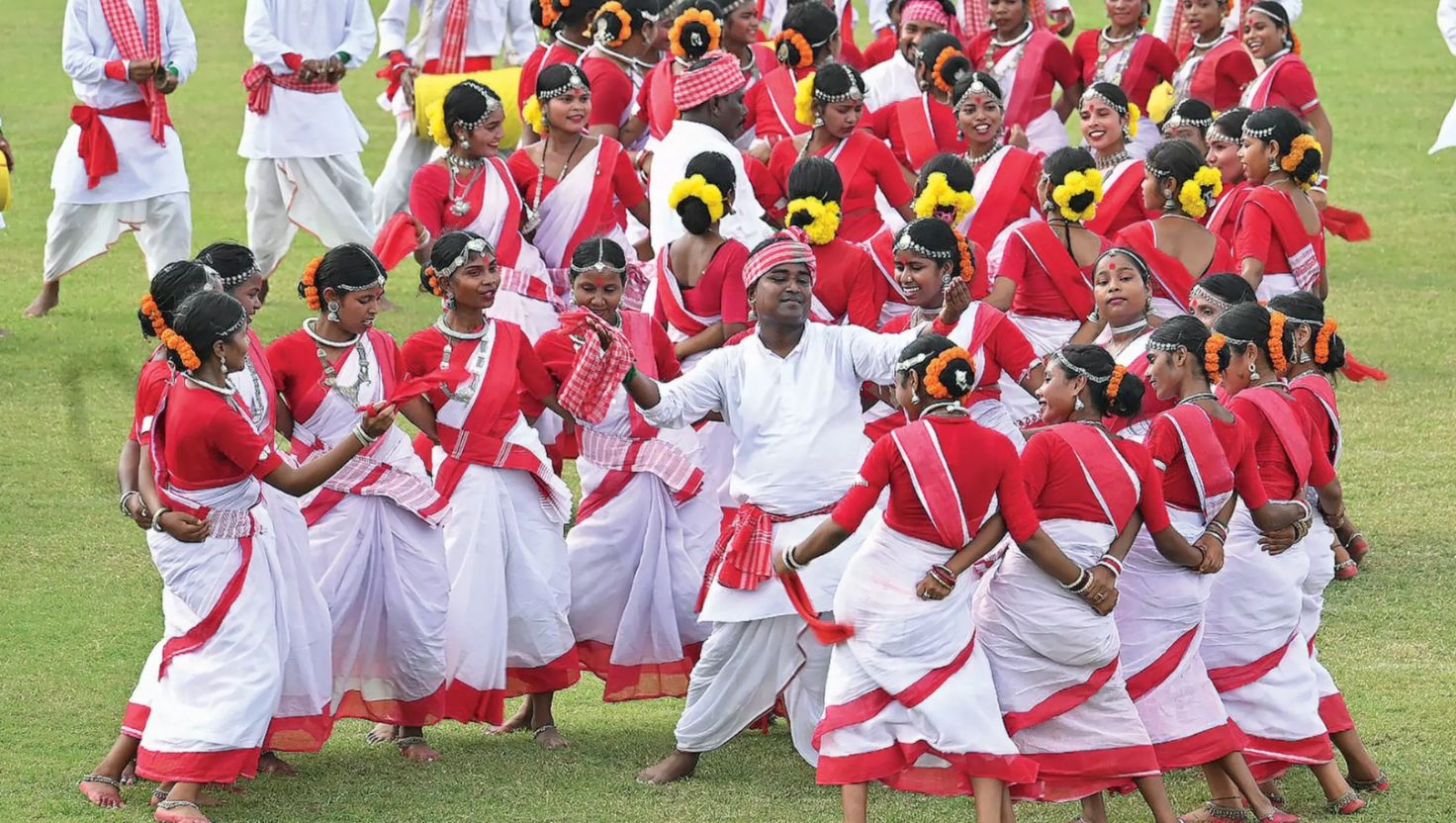
Music and dance are among the most attractive parts of Karam Puja. After the worship, community members gather around the sacred Karam branch and participate in traditional singing and dancing.
The performances are usually accompanied by traditional instruments such as the madol (a type of drum), along with other local musical instruments.
Jhumur or Jhumair dance has a particularly important connection with the cultural traditions of Assam’s tea garden communities. Men and women participate in rhythmic group performances, creating an atmosphere of celebration and togetherness.
These songs and dances are not simply forms of entertainment. They help preserve community history, traditional stories, cultural values and local languages. Older generations pass these traditions to younger members through participation in festivals.
The Government of Assam has also highlighted the connection between Jhumoir dance and the cultural heritage of tea garden communities. Its 2025 Governor’s Address described Jhumoir as a traditional expression of the tea garden workers’ joy, unity and cultural identity.
Community Feast and Traditional Food
Food is another important part of the celebration. Families and community members prepare traditional dishes and share meals during the festival.
In some communities, traditional rice-based beverages such as Haria are also associated with the celebrations. However, food and offering practices vary according to local customs and community traditions.
The community feast strengthens social relationships and provides an opportunity for people to celebrate together.
Immersion of the Karam Branch
The festival traditionally concludes with the ritual removal and immersion of the Karam branch.
In many traditions, the branch is taken to a river or another water body and immersed. Some local customs also associate the branch with agricultural fields, expressing the hope that the deity will protect crops and bless the harvest.
This concluding ritual symbolises the completion of the worship and the continuation of the natural cycle.
When Is Karam Puja Celebrated?
Karam Puja is generally celebrated during the month of Bhadra or Bhado, corresponding to August and September in the Gregorian calendar.
It is traditionally observed on the Ekadashi tithi of the Shukla Paksha. Since the festival follows the lunar calendar, its Gregorian date changes every year.
| Important detail | Information |
|---|---|
| Festival name | Karam Puja |
| Other names | Karma Puja, Karam Parab |
| Main community in Assam | Tea tribe and Adivasi communities |
| Main religious symbol | Sacred Karam tree |
| Traditional occasion | Bhadra Shukla Paksha Ekadashi |
| Usual months | August–September |
| Major cultural performances | Jhumur or Jhumair dance |
| Main themes | Fertility, agriculture, prosperity and nature |
Cultural Significance of Karam Puja in Assam
Karam Puja has a special place in Assam’s multicultural society. The state is home to numerous ethnic, linguistic, religious and indigenous communities, each contributing to its cultural heritage.
Festivals such as Bihu, Ali-Ai-Ligang, Baishagu, Bathow Puja and Karam Puja reflect the diversity of Assam’s cultural traditions.
Karam Puja is particularly important because it represents the heritage of tea tribe and Adivasi communities. Through this festival, these communities preserve their traditional beliefs, songs, dances and social practices.
It also demonstrates how cultural traditions can travel across geographical regions and become an integral part of a new society. The ancestral customs of communities that migrated to Assam have developed alongside the state’s other cultural traditions.
Therefore, Karam Puja is an important example of cultural interaction, continuity and diversity in Assam.
Relationship Between Karam Puja, Agriculture and Nature
The agricultural connection of Karam Puja makes it an important example of the relationship between traditional beliefs and the natural environment.
For farming communities, agriculture has historically depended on rainfall, soil fertility, water availability and seasonal changes. Festivals associated with agriculture often reflect people’s hopes for successful cultivation and protection from natural difficulties.
The worship of the Karam tree expresses respect for nature and the importance of natural resources in everyday life.
The festival also provides an opportunity to understand traditional ecological knowledge. Its emphasis on trees, germinating seeds, agricultural growth and community participation connects cultural practices with environmental awareness.
Today, issues such as deforestation, climate change, biodiversity loss, soil degradation and water scarcity affect agricultural communities across India.
In this context, traditional festivals such as Karam Puja remind people of the importance of maintaining a balanced relationship with the environment. Cultural traditions cannot independently solve environmental problems, but they can help strengthen awareness about the importance of nature and sustainable living.
Karam Puja and the Social Identity of Tea Garden Communities
The importance of Karam Puja extends beyond religious and cultural activities. It also represents the social identity and dignity of Assam’s tea garden communities.
For generations, tea garden workers and their families have contributed to the development of Assam’s tea industry. Their cultural traditions, including Karam Puja, are an important part of the state’s social history.
Recognition of traditional festivals is also connected with the broader discussion of workers’ welfare and social development.
The Assam Labour Welfare Department identifies several welfare provisions for plantation workers, including medical facilities, drinking water, housing, educational facilities, canteens and childcare facilities under the applicable plantation labour framework.
The preservation of cultural traditions should go hand in hand with opportunities for better education, healthcare, employment, women’s empowerment and social security.
Karam Puja also provides an opportunity to recognise the contribution of women in preserving cultural heritage. Women have important roles in traditional rituals, seed preparation, singing, dancing and passing cultural knowledge to younger generations.
Karam Puja as a Symbol of Cultural Continuity
Culture survives through the active participation of communities. Traditional festivals, folk songs, dances, rituals and oral stories help preserve cultural knowledge across generations.
Karam Puja is an example of this cultural continuity. Even after generations of settlement in Assam, tea tribe and Adivasi communities have maintained important elements of their ancestral traditions.
The festival also demonstrates that Assam’s cultural identity is not limited to one language, religion or ethnic group. It has developed through the interaction of many communities and historical traditions.
Preserving Karam Puja means protecting not only its religious rituals but also the songs, traditional instruments, dances, community gatherings and indigenous knowledge associated with it.
Community participation is essential to this process. Younger generations should have opportunities to learn about their cultural heritage and participate in traditional celebrations.
Conclusion
Karam Puja in Assam is an important festival that represents nature, fertility, agriculture, prosperity and community unity. It has a special historical and cultural connection with the tea tribe and Adivasi communities, whose traditions have become an important part of Assam’s multicultural heritage.
The sacred Karam tree, traditional seed-sowing rituals, worship of Karam Devta, Jhumur dance and folk songs make the festival a unique cultural celebration.
Beyond religious significance, Karam Puja highlights the importance of cultural preservation, environmental awareness and recognition of the communities that have contributed to Assam’s social and economic development.
As Assam continues to celebrate its diverse cultural traditions, Karam Puja remains an important reminder that the identity of a society is shaped by the people, traditions and shared memories that it preserves across generations.
Frequently Asked Questions (FAQs)
What is Karam Puja in Assam?
Karam Puja is a traditional agricultural festival celebrated mainly by the tea tribe and Adivasi communities of Assam. It is dedicated to the worship of the Karam tree and symbolises fertility, prosperity, agricultural growth and community well-being.
Which communities celebrate Karam Puja in Assam?
The festival is primarily celebrated by tea tribe and Adivasi communities, including people with Munda, Oraon, Santhal, Ho and other tribal cultural backgrounds.
When is Karam Puja celebrated?
Karam Puja is generally celebrated on the Ekadashi tithi of Shukla Paksha in the Hindu lunar month of Bhadra, usually during August or September.
What is the importance of the Karam tree?
The Karam tree represents fertility, prosperity, vitality, agricultural growth and the relationship between human beings and nature.
Which dance is associated with Karam Puja?
Jhumur or Jhumair dance is closely associated with the cultural celebrations of Assam’s tea tribe communities.
What is the significance of Karam Puja in Assam?
Karam Puja preserves the traditional beliefs, music, dance and cultural identity of tea tribe and Adivasi communities. It also reflects Assam’s multicultural heritage.
When was Karam Puja celebrated in Assam in 2026?
Karam Puja was celebrated on 22 September 2026. The Assam Government declared a paid holiday for employees of tea plantations and tea factories on this occasion.