Kali Puja: Celebrating the Divine Goddess of Power and Darkness

Kali Puja is one of the most vibrant and spiritually significant festivals in India, especially celebrated in the eastern states of West Bengal, Odisha, Assam, and Tripura. This festival is dedicated to Goddess Kali, the fierce and powerful form of the Divine Mother, who represents the destruction of evil, empowerment, and the cosmic balance of creation and destruction. Kali Puja, often coinciding with Diwali, brings together devotion, mysticism, and cultural exuberance in a unique and captivating manner.
Thank you for reading this post, don't forget to subscribe!Historical and Mythological Significance
The worship of Goddess Kali has deep roots in Hindu mythology and scriptures. Kali is regarded as a fierce manifestation of Goddess Durga, who emerges to annihilate demons and protect the righteous. According to legend, when the demon Raktabija threatened the universe, every drop of his blood that touched the ground produced a clone of him. To combat this, Goddess Kali appeared, consumed the demon’s blood, and ensured the safety of the world.
This story illustrates the profound symbolism of Kali Puja: the triumph of good over evil and the transformative power of divine energy. Kali’s dark complexion signifies the infinite nature of the cosmos, her fierce form reminds devotees of the impermanence of life, and her protruding tongue conveys humility, control over ego, and the act of consuming negativity.
Historically, Kali Puja gained prominence during the medieval period in Bengal, with temples dedicated to Kali flourishing across the region. Kings, landlords, and later common households adopted the tradition of organizing grand celebrations, including elaborate rituals, community feasts, and cultural programs.
When is Kali Puja Celebrated?
Kali Puja is celebrated on the new moon day (Amavasya) of the Hindu month of Kartik, which usually falls in October or November. Unlike Durga Puja, which spans several days, Kali Puja is primarily a night-long festival. Devotees believe that the night of Kali Puja is when the Goddess is most powerful, and worshipping her during this period brings prosperity, protection, and spiritual awakening.
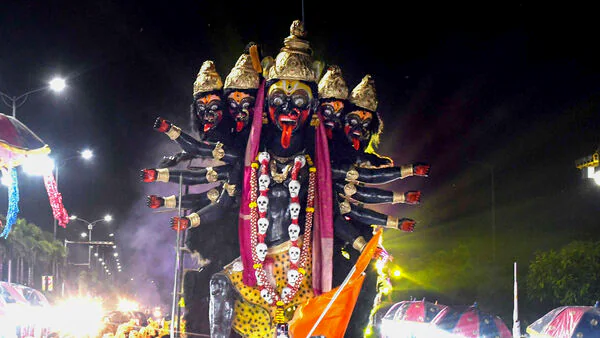
The festival coincides with the Diwali festivities in many parts of India, especially in Bengal, Assam, and Odisha. While Diwali in northern India focuses on Lord Rama’s return to Ayodhya and Lakshmi Puja, eastern India emphasizes Kali’s worship, highlighting the region’s unique cultural diversity.
Rituals and Traditions
Kali Puja is a festival full of intricate rituals, each holding symbolic significance. Some of the main rituals include:
1. Preparation and Decoration
In preparation for the festival, devotees clean and decorate their homes and temples with flowers, lamps, and colorful rangolis. Special attention is given to creating the idol of Goddess Kali, which is often depicted standing on the supine body of Lord Shiva, symbolizing the union of destructive and transformative energies.
2. Offerings and Prayers
Devotees offer a variety of items to Goddess Kali, including red hibiscus flowers, sweets, fruits, rice, and incense. Some rituals also include animal sacrifices in traditional settings, symbolizing the removal of negative forces, though many modern practices have replaced this with symbolic offerings like pumpkins or coconuts.
Prayers and mantras are recited throughout the night, with devotees often chanting the “Kali Chalisa” or other hymns praising her power and mercy. The night-long vigil, known as jagaran, is considered highly auspicious and spiritually cleansing.
3. Lighting of Diyas
Similar to Diwali, lighting lamps and candles is an essential part of Kali Puja. The illumination symbolizes the victory of light over darkness, both externally and internally. Devotees believe that lighting lamps during Kali Puja brings prosperity, removes ignorance, and purifies the surroundings.
4. Tantric Practices
Kali is often associated with Tantra, a mystical tradition that explores spiritual liberation and cosmic energy. While mainstream Kali Puja focuses on devotion and rituals, some practitioners engage in tantric rituals during this night to attain spiritual insights and empowerment. These practices, though esoteric, underscore the deep spiritual significance of Goddess Kali in Hindu philosophy.
Cultural Celebrations and Community Involvement
Kali Puja is not just a religious event but also a cultural extravaganza. Across West Bengal and Assam, communities organize grand pandals (temporary decorative structures) to house elaborate idols of Kali. These pandals become centers of art, culture, and social gatherings. Themes range from mythological stories to contemporary social issues, showcasing the creativity and social consciousness of the local population.
Cultural programs, including music, dance, and theatrical performances, accompany the rituals. Traditional Bengali songs, called bhajans, are sung in praise of the Goddess. Folk dances and drama enactments of mythological tales are performed, allowing the younger generation to connect with their heritage.
Food and Festivities
Like most Indian festivals, Kali Puja is incomplete without indulgent food. Traditional Bengali sweets such as rasgulla, sandesh, and malpua are prepared in large quantities. Families also prepare vegetarian feasts with rice, lentils, vegetables, and curries. In many households, a portion of the feast is offered to Goddess Kali as prasadam, which is then shared among family members and devotees.

In rural areas, community feasts called bhog are organized in temples, where devotees come together to partake in the offerings. These gatherings foster a sense of unity, compassion, and social bonding.
Significance of Kali Puja in Modern Times
Kali Puja holds immense relevance even today. Beyond the religious and mythological aspects, the festival emphasizes the importance of inner strength, fearlessness, and the destruction of negativity. In a rapidly changing world marked by uncertainty, social challenges, and personal struggles, Kali Puja serves as a powerful reminder to confront obstacles boldly, overcome fears, and cultivate resilience. The worship of Goddess Kali inspires individuals to embrace courage in the face of adversity, maintain moral integrity, and seek spiritual enlightenment, reminding devotees that darkness, whether external or internal, can always be transformed into light through determination, faith, and devotion.
Moreover, the festival has evolved into a vibrant platform for art, culture, and social awareness. The elaborate pandals and creative idol designs are not only expressions of devotion but also showcases of local craftsmanship, innovation, and artistic talent. In recent years, thematic pandals have focused on contemporary issues such as environmental conservation, climate change, education, social justice, women empowerment, and mental health awareness, making the festival socially relevant and thought-provoking. Kali Puja has therefore become a celebration that connects tradition with modern sensibilities, offering a meaningful blend of spiritual reflection, community bonding, and cultural expression for people of all ages.
Regional Variations
While West Bengal is considered the epicenter of Kali Puja, the festival is celebrated with distinctive local flavors across eastern and northeastern India, each region adding its own cultural nuances and traditions:
West Bengal: West Bengal remains the heartland of Kali Puja. Here, the festival is celebrated with grand community pandals featuring elaborately decorated idols of Goddess Kali. The pandals often follow artistic or thematic designs, from mythological depictions to contemporary social messages. Families and communities engage in night-long prayers, lighting of lamps, and preparation of traditional Bengali sweets such as rosogolla, sandesh, and malpua. Cultural performances, including devotional songs and folk dances, are integral, making the celebration both spiritual and artistic.
Odisha: In Odisha, Kali Puja coincides with Diwali, emphasizing both religious devotion and social gatherings. Devotees offer prayers to Goddess Kali for protection against evil and blessings for prosperity. Temples and homes are decorated with colorful lights, diyas, and floral arrangements. Community gatherings, known as mandaps, host cultural events such as folk music, dance performances, and storytelling sessions that highlight the state’s rich artistic heritage. Food also plays a significant role, with families preparing vegetarian feasts and traditional sweets to share with neighbors and relatives.
Assam: In Assam, particularly in districts like Guwahati, Jorhat, Dibrugarh, and Nagaon, Kali Puja blends devotion with local customs. Devotional songs, known as bhajans, are sung throughout the night, accompanied by the lighting of lamps and the chanting of mantras. Community feasts, cultural performances, and traditional Assamese folk dances are common, while some regions incorporate mela-like gatherings with exhibitions of local crafts. Schools and cultural organizations often organize competitions and programs during the festival, creating a vibrant community-centered celebration.
Tripura: The tribal communities of Tripura bring a unique dimension to Kali Puja by blending their indigenous customs with mainstream Hindu worship. The festival includes local music, dance, and art forms alongside traditional puja rituals. Tribal households often prepare special dishes and offer them to the Goddess, emphasizing both spirituality and community sharing. The celebration is also an occasion for preserving tribal cultural heritage and passing it on to younger generations.
Bihar and Jharkhand: In certain regions of Bihar and Jharkhand, Kali Puja is observed with both private household rituals and small community events. Although these states are less prominent for the festival compared to Bengal or Odisha, the night-long worship, lighting of lamps, and offerings to Goddess Kali remain central. Traditional songs and folk performances are often included to keep the festival culturally engaging.
Smaller Bengali Communities Across India: Outside the eastern states, Bengali communities in cities like Mumbai, Delhi, Pune, and Bangalore also celebrate Kali Puja with devotion. Community centers and temples organize pandals and cultural programs, enabling people far from their homeland to maintain their traditions. These celebrations often adapt to local conditions while retaining the essence of Kali Puja, emphasizing devotion, art, and social unity.
Through these regional variations, Kali Puja transcends religious boundaries and becomes a festival that reflects India’s cultural diversity. Each state and community adds its own unique flavor, yet the common thread remains the reverence for Goddess Kali, the illumination of homes and hearts, and the celebration of victory over darkness and evil.
Spiritual Lessons from Kali Puja
Kali Puja teaches several profound spiritual lessons:
- Courage in the Face of Adversity: Worshipping Kali encourages devotees to face life’s challenges fearlessly.
- Detachment and Transformation: The fierce form of Kali reminds devotees that attachment, ego, and ignorance must be destroyed for spiritual progress.
- Empowerment and Feminine Energy: Kali embodies Shakti, the divine feminine power, inspiring both women and men to embrace strength, resilience, and assertiveness.
- Balance of Creation and Destruction: Kali’s image of standing on Shiva symbolizes that destruction is necessary for creation, and every end is a new beginning.
Conclusion
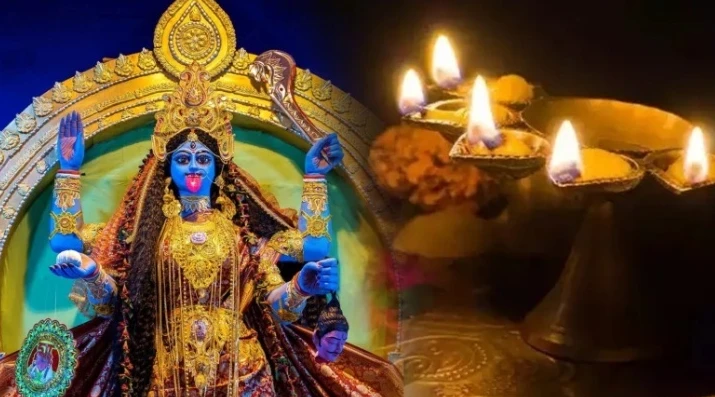
Kali Puja is more than just a festival; it is a celebration of the cosmic forces, cultural heritage, and spiritual awakening. From its mythological roots to modern-day cultural expressions, Kali Puja continues to inspire devotion, creativity, and social harmony. The night-long worship of Goddess Kali is a journey into understanding the power of destruction, renewal, and divine protection.
As families light lamps, chant mantras, and prepare festive delicacies, they not only honor the Goddess but also embrace the deeper lessons of life: courage, resilience, and the triumph of good over evil. Kali Puja stands as a timeless reminder of the power of faith, devotion, and the divine feminine that guides humanity through darkness into light.
FAQs on Kali Puja
1. What is Kali Puja?
Kali Puja is a Hindu festival dedicated to Goddess Kali, the fierce form of the Divine Mother. It celebrates the triumph of good over evil and is observed with rituals, prayers, and cultural festivities, primarily in eastern India.
2. When is Kali Puja celebrated?
Kali Puja is celebrated on the new moon day (Amavasya) of the Hindu month of Kartik, usually in October or November. In many regions, it coincides with Diwali.
3. Why is Kali Puja celebrated at night?
Devotees believe that Goddess Kali is most powerful during the night of Amavasya. Night-long worship, called jagaran, is performed to seek her blessings for protection, prosperity, and spiritual growth.
4. What are the main rituals of Kali Puja?
The main rituals include creating the idol of Goddess Kali, offering flowers, sweets, and fruits, performing prayers and mantras, lighting diyas, and participating in night-long vigils. Some traditional practices also include symbolic animal sacrifices.
5. Where is Kali Puja most prominently celebrated?
Kali Puja is most widely celebrated in West Bengal, Assam, Odisha, and Tripura. In these states, elaborate community pandals and cultural programs accompany the religious worship.
6. What offerings are made to Goddess Kali?
Devotees commonly offer red hibiscus flowers, rice, fruits, sweets, incense, and sometimes symbolic items like pumpkins or coconuts. These offerings are believed to please the Goddess and remove negative energies.
7. Is Kali Puja related to Diwali?
Yes, in eastern India, Kali Puja coincides with Diwali. While Diwali in other parts of India focuses on Lakshmi Puja, the eastern tradition emphasizes worshipping Goddess Kali on this auspicious night.
8. What is the spiritual significance of Kali Puja?
Kali Puja teaches courage, fearlessness, and the destruction of negativity and ego. It symbolizes the balance of creation and destruction and inspires devotees to embrace strength, resilience, and divine feminine energy.
9. Can Kali Puja be celebrated at home?
Yes, families can perform Kali Puja at home by setting up an idol or image of Goddess Kali, decorating the puja area, offering flowers and sweets, chanting mantras, and lighting lamps.
10. How is Kali Puja celebrated in modern times?
Today, Kali Puja combines traditional rituals with cultural festivities. Community pandals, thematic decorations, social awareness campaigns, music, dance, and charitable activities are now an integral part of the celebration.