Nobel Prize Day: A Celebration of Human Excellence and Hope

Nobel Prize Day stands as a moment each year when the world pauses to honour the greatest achievements of humanity in science, literature, peace, and economics. This is a celebration not just of individual brilliance but of collective progress, hope, and the relentless human spirit striving to make life better for all. On Nobel Prize Day we remember why knowledge, creativity, and courage matter.
Thank you for reading this post, don't forget to subscribe!From the very start, the story of the Nobel Prize has been one of dreams, dedication, and a vision for a better world. This blog explores what Nobel Prize Day means, how the prizes came to be, what they represent, and spotlights the most recent winners whose contributions shine a light on our world’s future.
What is the Nobel Prize and How Did It Begin
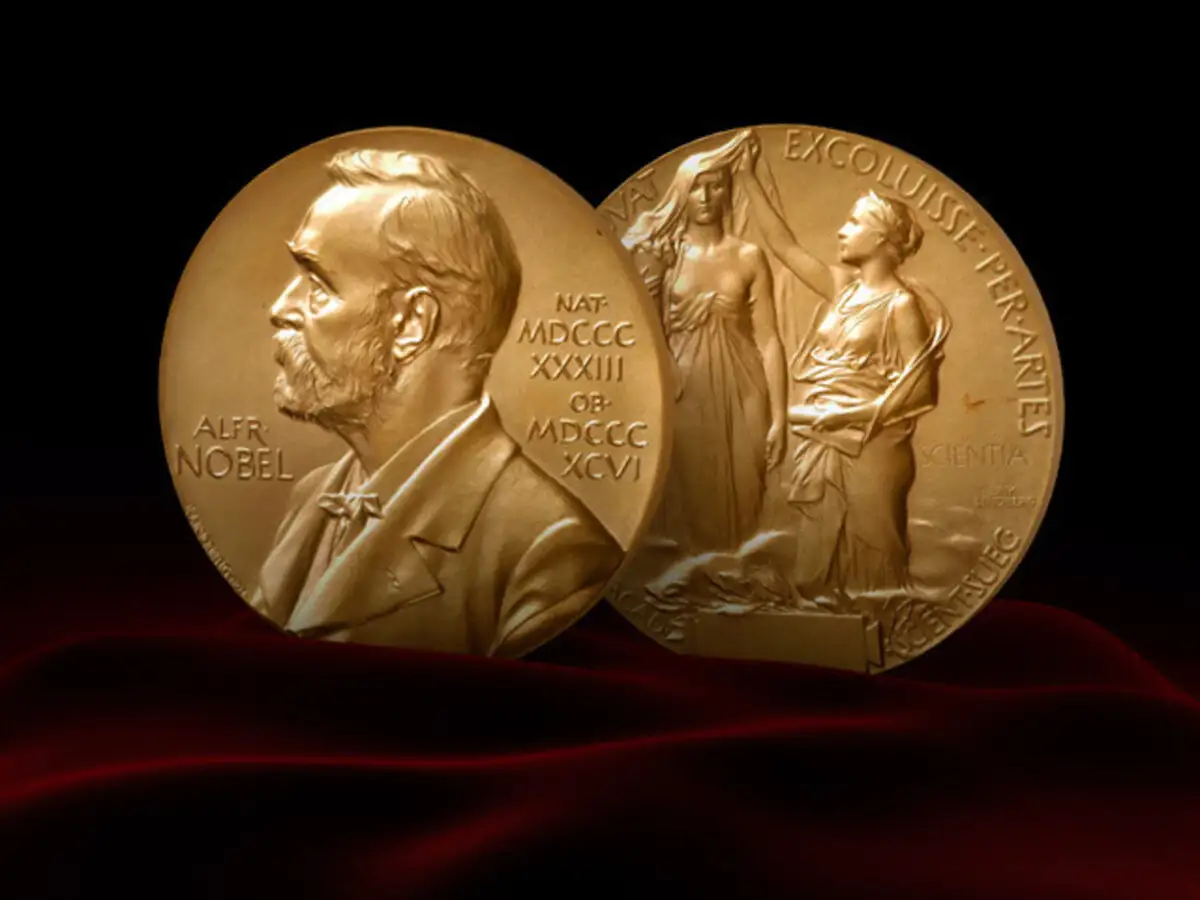
The Nobel Prize was established by Alfred Nobel, a Swedish chemist, engineer, and industrialist. Nobel is best known for inventing dynamite a creation that transformed civil engineering and construction, but also assisted destruction in wars. Confronted with the dual nature of his legacy, Nobel decided to direct his fortune to honour those who “have conferred the greatest benefit to humankind.”

In his will, Alfred Nobel stipulated that prizes should be given annually in several fields. When the awards were first handed out in 1901, there were prizes for Physics, Chemistry, Physiology or Medicine, Literature, and Peace. Later, in 1968, a sixth prize was established: the Sveriges Riksbank Prize in Economic Sciences in Memory of Alfred Nobel (commonly referred to as the Nobel Prize in Economic Sciences).
The idea behind the Nobel Prize is simple but powerful. It is not about fame or fortune though the laureates do receive a medal and a monetary award but about recognising work that deepens human knowledge, enriches culture, protects humanity, or advances peace.
Why Nobel Prize Day Matters
Nobel Prize Day matters because it brings global attention to values that bind humanity together: knowledge, empathy, justice, creativity, and progress. Here is why it holds special significance:
- It acknowledges the power of ideas. Many Nobel laureates have transformed how we understand the world in physics, medicine, chemistry, or the way we see society and peace. Their discoveries often lead to breakthroughs that benefit millions.
- It uplifts voices from across the world. Laureates come from different countries, cultures, and backgrounds. This reminds us that excellence knows no borders and that everyone has a chance to contribute.
- It inspires future generations. Young students, researchers, writers, activists seeing the achievements rewarded each year motivates them to aim high and work for causes bigger than themselves.
- It celebrates moral courage and vision. Especially in areas like peace and literature, the Nobel Prize honours people who challenge injustice, respond to human suffering, or reflect deeply on life.
Because of this, Nobel Prize Day is not just for scholars or scientists. It belongs to everyone who believes in progress, empathy, and human dignity.
How the Nobel Prize Is Awarded
Every year, a careful and secret process selects the laureates. Eligible nominators (such as professors, past laureates, and other qualified individuals) submit their suggestions by a deadline. The various committees entrusted with the Nobel Prize review hundreds of nominations, analyze contributions, discuss merits, and finally decide who will receive the award. The identities of nominees remain confidential for many years.
The announcements come each October over several days. In 2025, for example:
- The prize for Physiology or Medicine was announced on 6 October.
- Physics followed on 7 October.
- Chemistry on 8 October.
- Literature on 9 October.
- Peace Prize on 10 October.
- Economic Sciences Prize on 13 October.
Later, usually on 10 December each year the anniversary of Alfred Nobel’s death the formal award ceremony is held, medals and diplomas are presented, and laureates deliver speeches in Stockholm (or Oslo, in the case of the Peace Prize).
Nobel Prize Day in Modern Times
Over a century after the first awards, Nobel Prize Day continues to carry enormous prestige and relevance. In a world facing climate change, pandemics, inequality, and conflict, the Nobel Prize remains a beacon of hope. It highlights efforts that push humanity forward whether through scientific discovery, cultural expression, or advocacy for peace and justice.
Each year, media around the world covers the announcements, shelters applause and debate, and ordinary people read about the laureates and their stories. These stories often become symbols of resilience, creativity, and moral conviction.
For many countries and communities especially those that rarely feature in global headlines Nobel Prize Day offers a moment of pride and recognition. It reminds us that human progress depends not only on powerful institutions but also on individuals who dare to dream, question, and act.
Recent Nobel Prize Winners: A Glimpse of Today’s Human Achievements
As of 2025, the most recent set of Nobel winners reflect a wide range of human endeavour from deep scientific research to bold moral action.
In 2025:
- The Nobel Prize in Physiology or Medicine went to Mary E. Brunkow, Fred Ramsdell and Shimon Sakaguchi for their discovery about how the immune system maintains tolerance helping our bodies avoid attacking themselves.
- The Nobel Prize in Physics was awarded to John Clarke, Michel H. Devoret and John M. Martinis for their work on macroscopic quantum mechanical tunnelling and energy quantisation in electric circuits a discovery with deep implications for quantum technology and computing.
- The Nobel Prize in Chemistry was awarded to Susumu Kitagawa, Richard Robson and Omar M. Yaghi for the development of metal–organic frameworks materials that have opened new frontiers for gas storage, catalysis and environmental applications.
- The Nobel Prize in Literature was awarded to László Krasznahorkai, a Hungarian novelist, for a body of literary work that, in the judges’ words, “reaffirms the power of art” even in the face of despair and “apocalyptic terror.” His work stands as a testament to human creativity and reflection.
- The Nobel Peace Prize was awarded to Maria Corina Machado of Venezuela for her courageous efforts to promote democratic rights and for her struggle to help the country move from dictatorship toward democracy. Her recognition underscores the importance of civil courage and human rights in today’s world.
- The Sveriges Riksbank Prize in Economic Sciences in Memory of Alfred Nobel (commonly Nobel Prize in Economic Sciences) was awarded to Joel Mokyr, Philippe Aghion and Peter Howitt for their work explaining innovation-driven economic growth and how technological progress sustains long-term prosperity.
These winners represent a wide spectrum of human endeavour from deeply technical scientific research that could change how we treat disease or build technology, to literature that helps us examine the human condition, to moral courage in politics, and to economic theories that help shape societies.
What Nobel Prize Day Tells Us: Reflections and Lessons
Looking at Nobel Prize Day and its laureates offers more than just admiration. It offers lessons and hope:
- Great achievements take time. Most laureates work for years or decades before their contributions are recognized. Their stories teach patience, perseverance, and faith in long-term vision.
- Progress is often collective. Many Nobel Prizes are shared between co-researchers, collaborators, or co-winners reminding us that breakthroughs rarely happen in isolation.
- Science and art matter. Whether it is understanding immune tolerance, quantum circuits, or writing novels that challenge how we view the world all forms of human creativity are vital.
- Courage and conscience are indispensable. The Peace Prize, and even literature, often go to people who speak truth, fight injustice, or show empathy. Nobel Prize Day recognizes moral strength as much as intellectual strength.
- Our world needs the Nobel spirit more than ever. In a time of division, inequality, climate crisis, and conflict the values behind the Prize (knowledge, justice, empathy, innovation) are urgent reminders of what humanity could and should strive for.
How People Around the World View Nobel Prize Day
Every year when the announcements come, people around the world follow with curiosity, pride, respect, and sometimes surprise. Students read about the winners, teachers discuss their work, media analyses the significance. For some, especially in countries that rarely make global headlines, a Nobel Prize for a citizen becomes a moment of national pride and global visibility.
For young aspirants scientists, writers, activists the stories of Nobel laureates become a source of inspiration. Many newspapers and educational websites summarise their work in simple language, so that even people far from academia can understand why their contributions matter.
In recent times, especially, as global issues such as pandemics, climate change, inequality, and political instability challenge humanity, Nobel Prize Day becomes more than a ceremony. It becomes a sign of hope that even in difficult times, individuals and ideas can shine through, make a difference, and lead us to a better world.
Concluding Thoughts
Nobel Prize Day is a celebration of the best of human spirit intelligence, creativity, courage, empathy, and a drive to make life better for all. Each year, when the new laureates are announced, the world gets a glimpse into what is possible when people dream big and work hard.
The recent 2025 laureates remind us that progress is happening: in medicine, we learn more about how our own immune system protects us; in physics and chemistry we push the boundaries of what is possible; in literature, we examine the depths of human existence; in peace and human rights, we remember our responsibility to justice; and in economics, we understand how innovation can shape societies.
For students, thinkers, citizens Nobel Prize Day offers a message: the future belongs to ideas, to compassion, to perseverance. If we believe in that and are ready to act, learn, question, and dare then each of us has the potential to contribute to humanity’s betterment.
Nobel Prize Day is more than an award ceremony. It is a tribute to hope, to human potential, to the idea that every big change starts with a single idea, a single person, a single act of courage. Let us carry that spirit forward in our studies, our work, our communities, and in how we treat each other as fellow human beings.