


Swimming: Health, Fitness & Fun

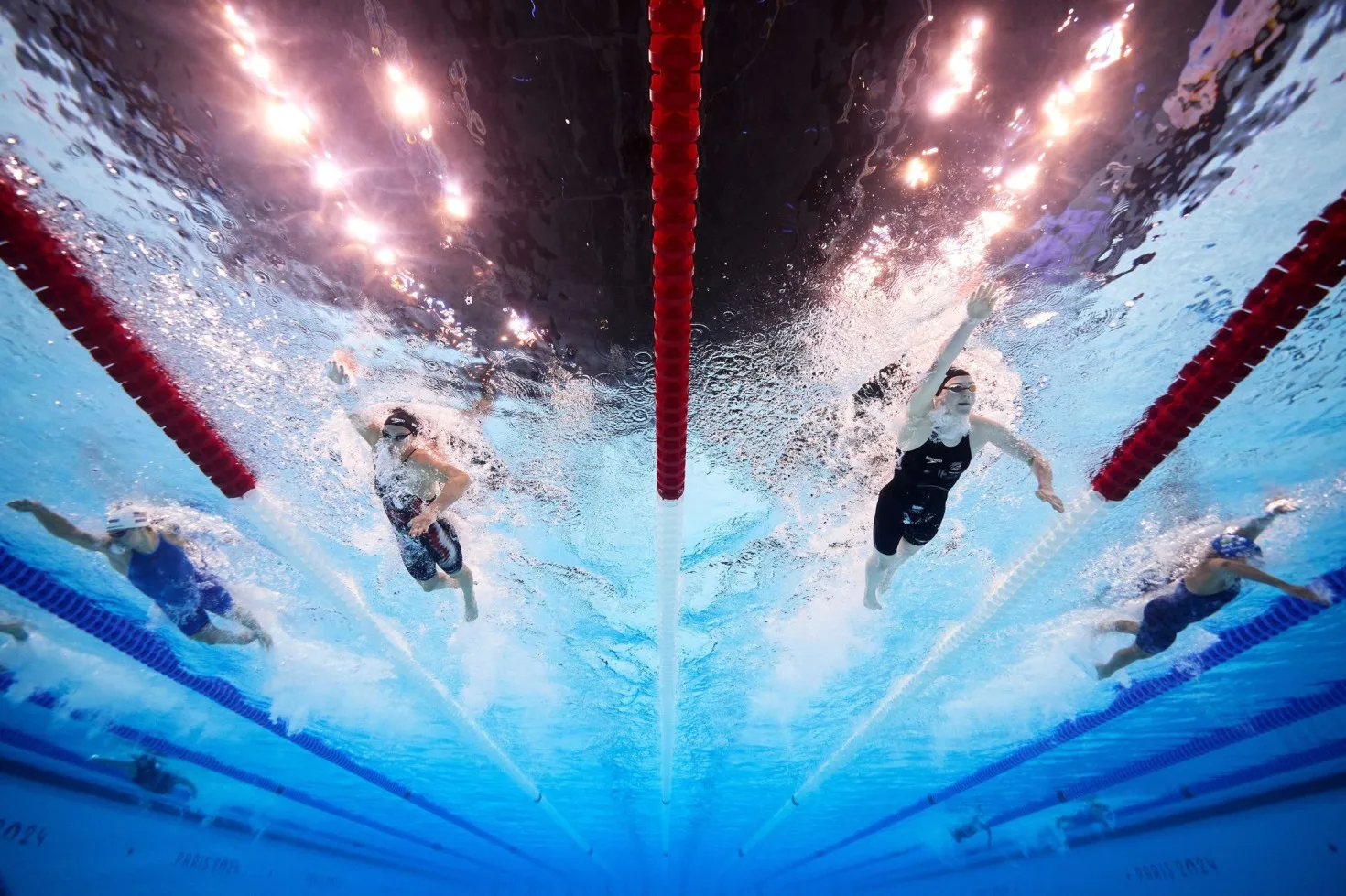
Swimming is one of the most popular sports and recreational activities in the world. It involves moving the body through water using the arms and legs and is both a sport and an essential life skill. Swimming helps people stay healthy, active, and safe, and it is enjoyed for fun, fitness, therapy, and competition. It is also a major event in the Olympic Games, attracting millions of viewers worldwide. Swimming is mainly an individual sport where one swimmer competes in each lane, but it also includes team events like relays, where four swimmers form a team and compete together in a pool.
History
Swimming has a very long history, with evidence showing that people were swimming as early as 2500 BCE in ancient Egypt. It was also common in civilizations like Greece, Rome, and Assyria, where it was used for training and education. In ancient Greece and Rome, swimming was part of military practice, while in Japan, swimming races were held as early as the 1st century BCE. The Romans even built swimming pools, including heated ones introduced by Gaius Maecenas. During the Middle Ages, swimming became less popular in Europe due to fear of diseases, but it regained popularity in the 17th and 19th centuries. Important developments include the first swimming organization in London in 1837, the first championship in Australia in 1846, the formation of World Aquatics in 1909, and the inclusion of swimming in the Olympic Games since 1896.
Number of Players
Swimming is mainly an individual sport, but it can also be played as a team in relay events.
- Individual events: 1 swimmer per lane
- Relay events: 4 swimmers per team
Each swimmer competes in their own lane in a swimming pool.
Player Eligibility
Swimming is open to everyone, but for competitive events:
- Swimmers must meet age and qualification standards
- They must be registered with a recognized swimming federation
- Fitness and medical clearance may be required
- No doping or banned substances allowed
In international competitions, players must follow rules set by World Aquatics.
Dress Code
Swimmers wear special clothes designed to reduce water resistance.
- Swimsuit (tight-fitting)
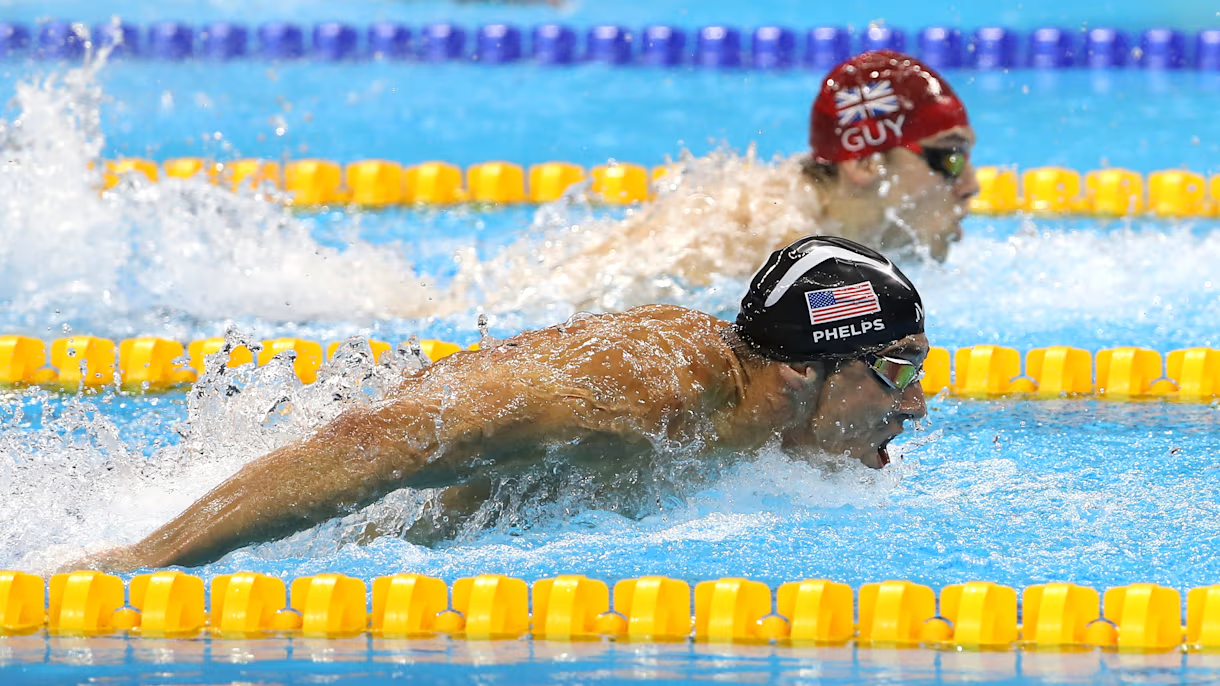
- Swimming cap (protects hair and improves speed)
- Goggles (protect eyes and improve vision underwater)
Modern swimsuits are made from advanced materials to help swimmers move faster. However, high-tech suits were banned after 2009 to keep competition fair.
Duration of the Game
Swimming does not have a fixed time like other sports.
- The duration depends on the distance of the race
- Example:
- 50 meters: about 20-30 seconds
- 1500 meters: around 15-20 minutes
Each race is timed, and the swimmer with the fastest time wins.
Basic Rules of Swimming
Here are the simple rules of competitive swimming:
- Swimmers must stay in their assigned lane
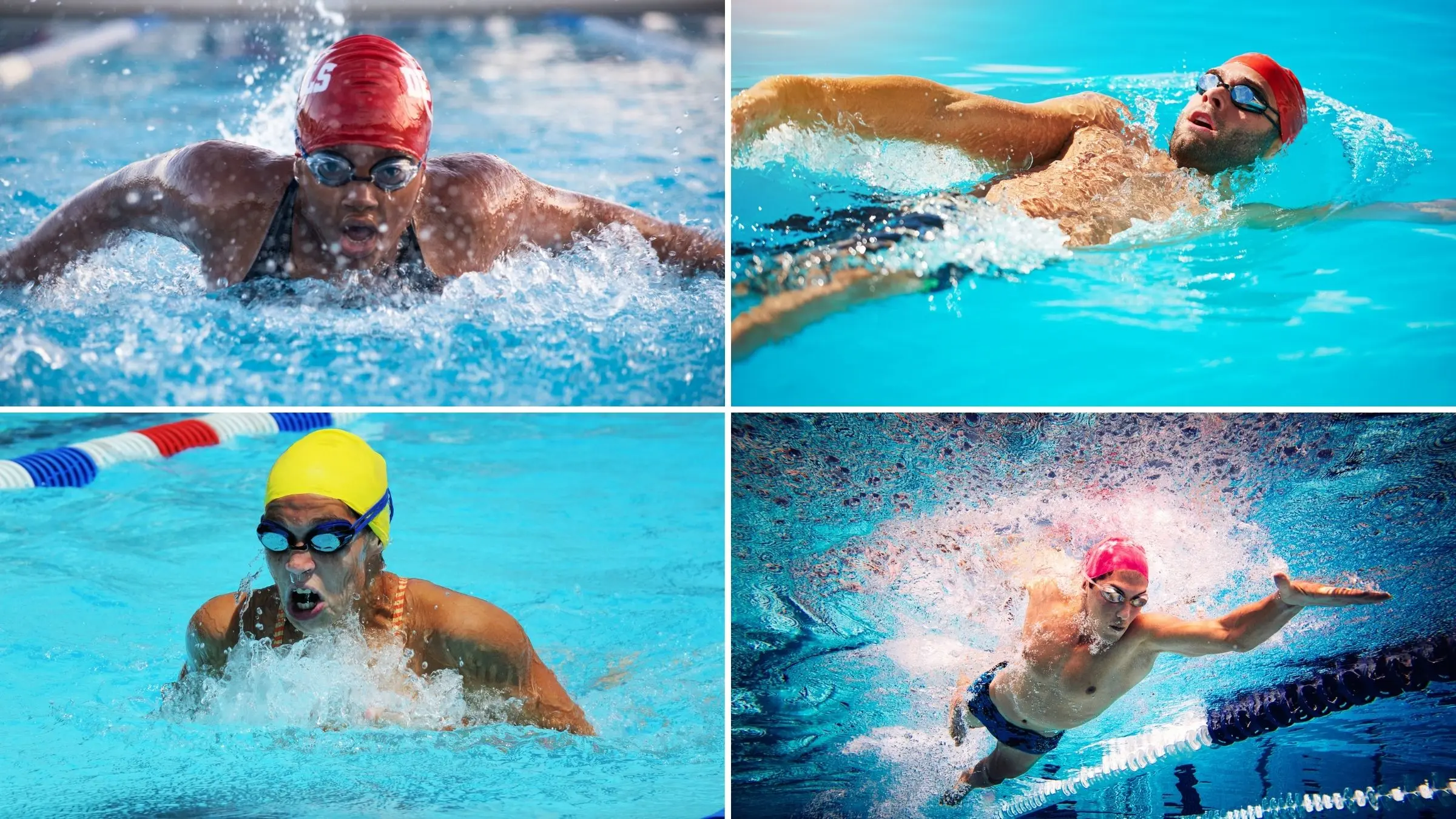
- Each stroke has its own rules:
- Freestyle – any stroke (mostly front crawl)
- Backstroke – swim on the back
- Breaststroke – frog-like movement
- Butterfly – both arms move together
- Starts:
- Most races begin with a dive
- Backstroke starts in water
- Turns:
- Swimmers must touch the wall properly
- Finish:
- The swimmer must touch the wall to complete the race
Benefits of Swimming
Swimming is one of the best exercises for the body and mind.
Physical Benefits
- Improves heart health
- Builds strong muscles
- Increases flexibility
- Helps in weight loss
- Good for lungs and breathing
Mental Benefits
- Reduces stress
- Improves mood
- Increases focus
Special Benefits
- Safe for injured people
- Useful for therapy
- Helps in learning lifesaving skills
Challenges in Swimming
Even though swimming is beneficial, it also has some challenges:
- Requires access to clean water or pools
- Risk of drowning if not trained
- Needs proper coaching for competitive level
- Expensive equipment and training facilities
- Fear of water in beginners
Successful Players
Many swimmers have become legends in this sport.
- Michael Phelps – Most Olympic medals in history
- Katie Ledecky – Famous for long-distance freestyle
- Ian Thorpe – Known as “Thorpedo”
- Mark Spitz – Won 7 gold medals in one Olympics
- Caeleb Dressel – Modern sprint champion
These players have inspired millions of young swimmers.
Major International Competitions
Swimming has many important global competitions:
- Olympic Games
- World Aquatics Championships
- Commonwealth Games
- Asian Games
- FINA World Cup
These competitions bring together the best swimmers from around the world.
India’s Role and Success in Swimming
India is still developing in swimming but has shown progress.
Notable Indian Swimmers
- Virdhawal Khade
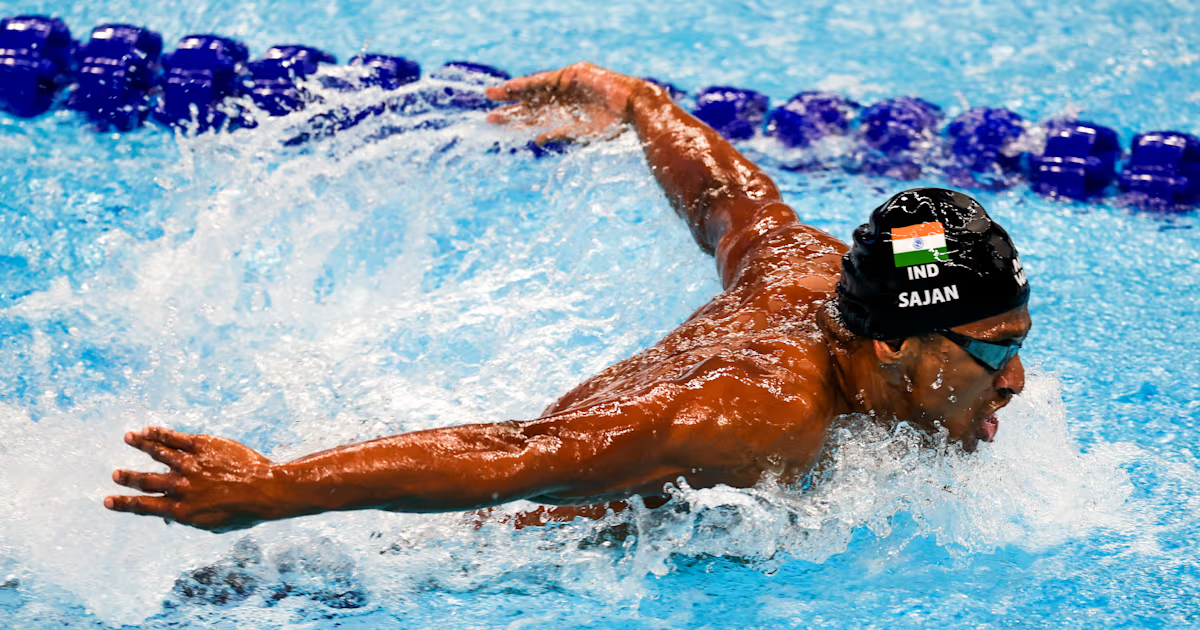
- Sajan Prakash
- Srihari Nataraj
Achievements
- Participation in Olympics and world events
- National records improving year by year
- Growth of swimming academies
Challenges in India
- Lack of proper infrastructure
- Limited funding
- Need for better training facilities
However, awareness and support are increasing, and India’s future looks promising.
Future of Swimming
The future of swimming is very bright, with many new developments improving the sport. Better training methods like interval training are helping swimmers increase their speed and endurance. Advanced technology, such as underwater cameras and modern timing systems, is making training and competitions more accurate and effective. There are also more international competitions being organized, which give swimmers greater opportunities to perform at higher levels. Swimming is becoming increasingly popular among young people, and facilities are improving in developing countries. In addition, swimming is gaining importance not just as a sport but also for fitness and safety education, making it an essential skill for everyone.
Conclusion
Swimming is a complete sport that benefits both body and mind. It has a rich history from ancient civilizations to modern Olympic competitions. It is easy to learn but takes dedication to master.
With proper training, discipline, and facilities, anyone can become a good swimmer. Countries like India are slowly improving in this field, and the future looks hopeful.
Swimming is not just a sport it is a life skill that can save lives, improve health, and bring joy to millions of people around the world.
FAQs on Swimming
- What is swimming?
Swimming is moving through water using arms and legs for sport or fun. - Is swimming a good exercise?
Yes, it improves fitness, strength, and heart health. - How many types of strokes are there?
There are four main strokes: freestyle, backstroke, breaststroke, and butterfly. - Can beginners learn swimming easily?
Yes, with practice and proper guidance, anyone can learn. - What equipment is needed for swimming?
Basic equipment includes a swimsuit, goggles, and a swim cap. - Is swimming safe for children?
Yes, but supervision and training are important. - How long should I swim daily?
20–30 minutes daily is good for fitness. - What are the benefits of swimming?
It improves health, reduces stress, and builds muscle. - Is swimming an Olympic sport?
Yes, it is a major event in the Olympic Games. - Can swimming help in weight loss?
Yes, it burns calories and helps in weight management.