



Government Exams in India: A Detailed Preparation Roadmap

Government exams in India have long been considered the most prestigious career pathway. They offer security, stability, and social respect, making them a top choice among students and professionals alike. Every year, millions of aspirants apply for these exams, hoping to earn positions that allow them to serve the nation while building a stable career.
Yet, behind every successful candidate lies months or even years of preparation, strategy, and unwavering focus. The landscape of competitive exams in India is vast and diverse, from civil services and banking to defense and teaching, each with its own pattern, eligibility, and expectations.

Why Choose a Government Job in India
Before beginning preparation, it’s essential to understand why government jobs continue to hold such value in a rapidly modernizing economy.
- Unmatched Job Security: Government jobs offer stability that private jobs often cannot guarantee. Once appointed, employees enjoy long-term security and steady career growth.
- Attractive Pay and Benefits: Modern pay commissions have made salaries in government sectors competitive. Added benefits include housing, pensions, medical coverage, and allowances.
- Work-Life Balance: Fixed work hours, paid leaves, and family-friendly policies create a healthy work-life balance.
- Social Recognition: Holding a government position still carries prestige, especially in administrative and defense services.
- Service to Nation: Many aspirants choose this path to contribute meaningfully to public service and national development.
Categories of Government Exams
Government exams in India are conducted by various bodies and target different educational qualifications and interests. Knowing where you fit is the first step toward focused preparation.

- Civil Services (UPSC): The most competitive exams in India, including IAS, IPS, and IFS. They test overall intellect, decision-making, and awareness of national and global issues.
- Staff Selection Commission (SSC): Conducts exams like CGL, CHSL, and MTS for clerical and administrative roles. They are suitable for 12th pass and graduate candidates.
- Banking and Finance: Conducted by IBPS, SBI, and RBI for posts like Probationary Officer, Clerk, or Grade B Officer. Focus is on reasoning, numerical aptitude, and general awareness.
- State Public Service Commissions (PSC): State-level administrative exams similar to UPSC, offering posts in state government departments.
- Defence and Police: Includes NDA, CDS, AFCAT, and state police recruitment. These exams require both intellectual and physical fitness.
- Railways (RRB): Offers massive employment opportunities for technical and non-technical posts across India.
- Education and Research: Exams like UGC NET, CTET, and state-level TET qualify candidates for teaching and academic research roles.
- Public Sector Undertakings (PSUs): ONGC, NTPC, BHEL, and similar organizations recruit through GATE or internal exams for engineering and technical roles.
Eligibility and General Requirements
Each exam has specific eligibility conditions, but understanding the general framework helps you prepare early.
- Nationality: Candidates must be Indian citizens or meet specific domicile requirements.
- Educational Qualification: Varies from Class 10 to post-graduation, depending on the post. UPSC and SSC generally require a bachelor’s degree.
- Age Limit: Most exams have an age limit between 18 to 32 years, with relaxations for SC/ST/OBC and differently-abled candidates.
- Physical Fitness: Defense, police, and certain railway roles have physical standards and medical requirements.
- Language Skills: For some exams, knowledge of the regional or official language may be mandatory.
Keeping track of official notifications ensures you meet every condition before applying.
Understanding Exam Patterns and Syllabus
Government exams in India have evolved to test logical thinking, awareness, and communication rather than rote memorization. Although patterns vary, most include common sections.

- General Studies: Covers History, Polity, Geography, Economy, Science, and Current Affairs. It’s crucial for UPSC, SSC, and state exams.
- Reasoning Ability: Tests problem-solving and critical thinking through puzzles, series, and logic-based questions.
- Quantitative Aptitude: Focuses on arithmetic, algebra, geometry, and data interpretation. Accuracy and speed are key here.
- English Language or Communication: Assesses grammar, comprehension, and vocabulary.
- General Awareness and Current Affairs: Keeps you updated on government policies, events, and national achievements.
- Professional or Technical Papers: Specific to specialized exams like GATE, RBI, or PSUs.
A smart aspirant always aligns their study plan with the latest syllabus provided in the official notification.
Building a Strategic Study Plan
A roadmap becomes meaningful only when it translates into daily discipline. The most successful candidates don’t just study hard; they study strategically.
- Begin with the Syllabus: Start by understanding every section and topic thoroughly before collecting study material.
- Set Clear Goals: Break down the preparation into months, weeks, and daily targets. Small, consistent steps build long-term mastery.
- Prioritize Weak Areas: Identify subjects that need extra attention and allocate specific time to strengthen them.
- Use Quality Resources: Stick to trusted books and government publications instead of hoarding too many materials.
- Integrate Current Affairs Daily: Dedicate 30 minutes daily to newspapers or reliable online summaries.
- Practice and Revise: Solve mock tests, analyze errors, and keep revising to retain what you’ve learned.
- Balance Study and Rest: Productivity improves when you manage energy, including breaks, sleep, and light exercise in your routine.
Choosing the Right Study Material
Choosing the right resources saves time and builds clarity. Some materials remain evergreen across exams.
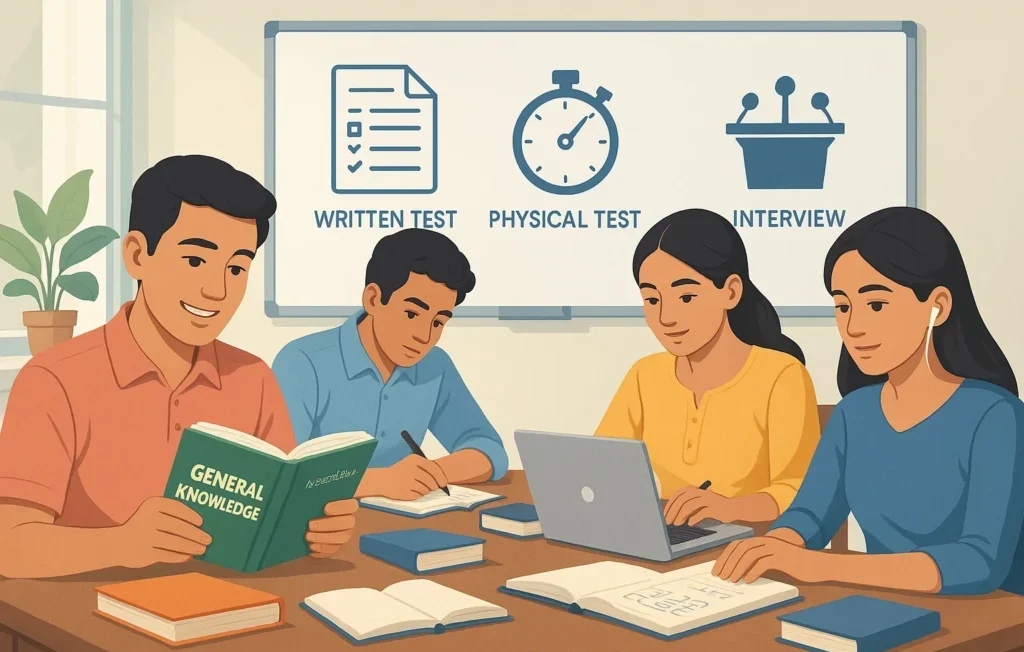
- NCERT Textbooks (Class 6–12): Excellent for basics in History, Geography, and Science.
- Standard Books: Laxmikanth for Polity, Spectrum for History, and Ramesh Singh for Economy are long-time favorites.
- Monthly Magazines: Pratiyogita Darpan, Vision IAS, or GKToday compilations for updated current affairs.
- Mock Test Series: Use platforms like Testbook, Oliveboard, or Gradeup for exam-like practice.
- Online Courses: Channels like StudyIQ, Unacademy, or BYJU’s for structured learning.
- Government Portals: Follow upsc.gov.in, ssc. Nic. In IBPS. In, and other official sites for notifications.
Maintaining Motivation and Consistency
Preparing for government exams is often a marathon, not a sprint. Staying motivated during this journey is vital.
- Visualize Your Goal: Remind yourself why you started visualizing your success in that dream post.
- Avoid Comparison: Everyone’s journey is different; focus on your own growth.
- Track Small Wins: Celebrate completing chapters or improving mock test scores.
- Stay Physically Active: Exercise boosts focus and reduces exam stress.
- Use Positive Surroundings: Engage with supportive peers or mentors who encourage your progress.
Motivation may fade, but discipline keeps you consistent.
Common Pitfalls to Avoid
Even dedicated aspirants fall into traps that slow progress. Awareness can prevent them.
- Ignoring the Basics: Many rush to advanced topics without mastering fundamentals.
- Skipping Mock Tests: Regular testing builds exam temperament; never skip it.
- Unbalanced Preparation: Giving too much time to one subject affects overall performance.
- Neglecting Mental Health: Overburdening leads to burnout. Rest and recreation are part of smart preparation.
- Ignoring Official Updates: Always rely on official notifications, not rumors or social media posts.
The Evergreen Formula for Success

Every topper’s journey may differ, but the foundation of success in any government exam rests on the same timeless principles:
- Consistency is stronger than intensity.
- Revision is more important than learning new content endlessly.
- Mock tests mirror your readiness better than self-assessment.
- Balanced health supports long-term memory and focus.
- Adaptation, keeping pace with changing patterns, is key.
When these principles are combined, success becomes inevitable.
Conclusion: Your Roadmap to a Stable, Fulfilling Career
Government exams in India symbolize ambition, perseverance, and the will to serve. While competition grows tougher each year, opportunities also expand for those who prepare smartly and persist.
The most powerful strategy is to stay informed, plan consistently, and learn from each step. Every hour of honest study brings you closer to your goal.
The government sector isn’t just about securing a job, but it’s about building a purposeful career that balances stability, respect, and contribution. Your roadmap begins today, one focused hour, one chapter, one mock test at a time.