


Inflation: Meaning, Causes, Effects and Control in India

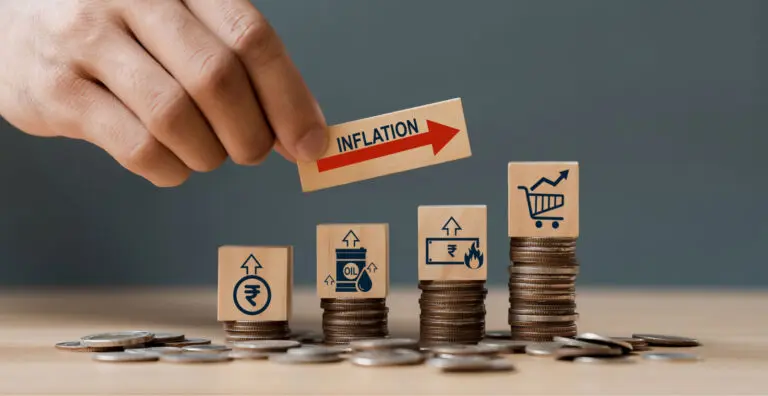
Inflation is one of the most important economic terms that affects everyone’s daily life. Whether you buy rice, vegetables, fuel, clothes, or pay school fees, inflation has an impact. In simple words, inflation means the rise in the prices of goods and services over time.
Thank you for reading this post, don't forget to subscribe!When inflation increases, people need more money to buy the same things. For example, if a packet of milk cost ₹50 last year and now costs ₹55, that increase in price is called inflation.
In a country like India, inflation matters a lot because of the large population and income differences. Poor and middle-class families are affected the most because rising prices reduce their ability to manage daily expenses.
What is Inflation?
According to the International Monetary Fund (IMF), inflation is the rate at which the general level of prices for goods and services rises over a period of time.
Inflation shows how expensive life is becoming. If prices keep rising, the value of money falls. This means ₹100 today may buy fewer goods in the future.
A moderate level of inflation is considered normal in a growing economy. But very high inflation creates problems for people, businesses, and governments.
Why Inflation is Important
1. Price Stability
Stable prices help the economy grow smoothly. If prices rise too fast, people become worried and reduce spending.
2. Helps Economic Activity
A small amount of inflation encourages people to spend and invest instead of keeping money idle.
3. Important for Banking Policies
Central banks use inflation data to decide interest rates. In India, the Reserve Bank of India (RBI) monitors inflation closely.
4. Affects Savings
High inflation reduces the real value of savings. Money kept in savings loses purchasing power if prices rise faster than interest earned.
5. Changes Income Distribution
Inflation affects different people differently:
- Borrowers may benefit because loans are repaid with lower-value money.
- Savers may lose because their money buys less.
Main Causes of Inflation
Inflation does not happen due to a single reason. Many factors can cause it.
1. Demand-Pull Inflation
This happens when demand for goods and services becomes higher than supply.
Example:
Suppose there are only 100 smartphones in the market, but 500 people want to buy them. Sellers may increase prices because demand is high.
This usually happens during:
- Economic growth
- Higher incomes
- Increased consumer spending
When people spend more, prices rise.
2. Cost-Push Inflation
This happens when production costs increase.
If the cost of:
- Raw materials
- Fuel
- Electricity
- Transport
- Labor
goes up, companies increase product prices.
Example:
During the Russia-Ukraine War, edible oil prices increased sharply due to supply disruptions.
3. Wage-Price Inflation
Workers often demand higher salaries when living costs rise.
Businesses then raise product prices to cover higher wages.
This creates a cycle:
Higher wages → Higher production cost → Higher prices → Demand for more wages
This cycle can continue for a long time.
4. Monetary Inflation
This happens when too much money is available in the economy.
If money supply increases rapidly, people spend more, demand rises, and prices go up.
Central banks can influence money supply through monetary policies.
5. Supply Shocks
Unexpected events can reduce supply and increase prices.
Examples:
- Floods
- Droughts
- Wars
- Pandemic
- Natural disasters
Example:
A drought can reduce crop production. Less supply means food prices rise.
6. Inflation Expectations
Sometimes inflation rises because people expect future price increases.
For example:
- Businesses increase prices early
- Workers ask for higher salaries
- Consumers buy goods quickly before prices rise
This behavior itself can push inflation higher.
How Inflation is Measured in India
India mainly uses two important methods to measure inflation.
| Index | Meaning | Purpose |
|---|---|---|
| CPI | Consumer Price Index | Measures retail prices paid by consumers |
| WPI | Wholesale Price Index | Measures wholesale-level prices |
Consumer Price Index (CPI)
CPI measures changes in the average prices of goods and services used by consumers.
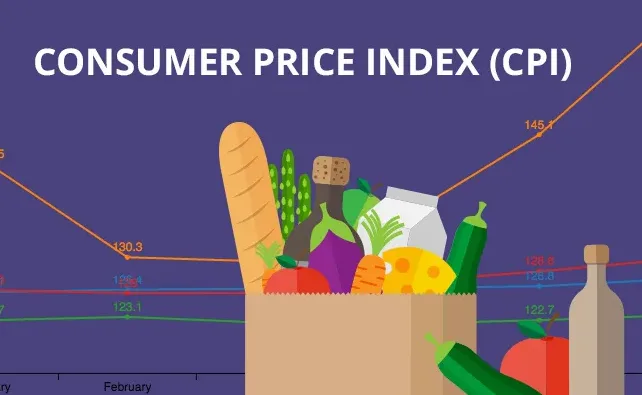
It includes:
- Food
- Housing
- Clothing
- Education
- Healthcare
- Transport
The base year for CPI is 2012.
The Monetary Policy Committee uses CPI data to control inflation.
Different CPI categories in India include:
- CPI for Industrial Workers
- CPI for Agricultural Labourers
- CPI for Rural Labourers
- CPI for Urban Non-Manual Employees
CPI is very important because it directly reflects people’s daily expenses.
Wholesale Price Index (WPI)
WPI measures price changes at the wholesale level.
It focuses on:
- Primary goods
- Fuel and power
- Manufactured products
The base year of WPI is 2011–12.
WPI is useful for understanding price changes before goods reach consumers.
Producer Price Index (Manufacturing)
This measures price changes received by manufacturers for their goods.
It mainly focuses on factory production and industrial output.
Effects of Rising Inflation
Inflation affects every part of the economy.
1. Reduced Purchasing Power
This is the most direct effect.
Example:
- Last year ₹100 bought 2 kg apples
- This year ₹100 buys only 1.5 kg
Same money buys fewer goods.
This hurts families, especially low-income households.
2. Lower Value of Savings
If inflation is higher than bank interest, savings lose value.
Example:
- Bank interest = 4%
- Inflation = 6%
Real return becomes negative.
Savings become less useful over time.
3. Higher Interest Rates
To control inflation, the RBI may increase interest rates.
Higher interest rates make:
- Home loans expensive
- Car loans expensive
- Business loans expensive
Borrowing becomes difficult.
This reduces spending and investment.
4. Business Uncertainty
When prices keep changing, businesses struggle to plan.
They face difficulty in:
- Setting prices
- Managing costs
- Predicting profits
- Planning investments
This slows business growth.
5. Slower Economic Growth
Very high inflation reduces consumption and investment.
As a result:
- Production may fall
- Employment may slow
- Economic growth may weaken
6. Increase in Asset Prices
During inflation, many investors move money into assets like:
- Gold
- Land
- Real estate
This can increase asset prices quickly.
Sometimes it creates price bubbles.
7. Social Problems
High inflation can create public anger.
People may protest due to:
- Expensive food
- Rising fuel prices
- Low wages
Many countries have faced unrest due to inflation.
Examples include Sri Lanka, Venezuela, and Zimbabwe.
How India Controls Inflation
The government and RBI use several methods.
1. Monetary Policy
The RBI controls inflation mainly through interest rates.
One important rate is the Repo Rate.
If inflation rises:
- RBI increases repo rate
- Loans become expensive
- Spending decreases
- Inflation slows
This helps reduce excess demand.
2. Open Market Operations (OMO)
RBI buys or sells government securities.
- Selling securities removes money from the market
- Buying securities adds money
This controls money supply.
3. Fiscal Policy
The government uses:
- Tax changes
- Public spending
- Subsidies
Higher taxes reduce spending.
Lower spending can reduce inflation pressure.
4. Food Price Management
Food prices strongly affect inflation in India.
The government manages food supply using schemes like:
- Minimum Support Price (MSP)
- Public Distribution System (PDS)
These help maintain stable food availability.
5. Buffer Stocks
The government stores essential goods such as:
- Rice
- Wheat
- Pulses
During shortages, these stocks are released into markets.
This prevents sudden price spikes.
6. Trade Policies
Import and export policies also affect inflation.
Example:
- If onion prices rise, imports may increase supply
- More supply can lower prices
Government uses trade rules to stabilize markets.
7. Anti-Hoarding Measures
Sometimes traders store goods to create artificial shortage.
This causes unnecessary price rise.
The government checks:
- Hoarding
- Black marketing
- Illegal stock storage
This ensures fair prices.
8. Exchange Rate Management
A weaker rupee makes imports expensive.
Expensive imports increase prices of:
- Fuel
- Electronics
- Machinery
Managing exchange rates helps control imported inflation.
9. Financial Inclusion
Schemes like Pradhan Mantri Jan Dhan Yojana improve access to banking.
When more people use formal banking:
- Savings increase
- Investment improves
- Economic stability grows
This indirectly supports inflation control.
Inflation in Daily Life
Inflation is not just an economic term. It affects daily life.
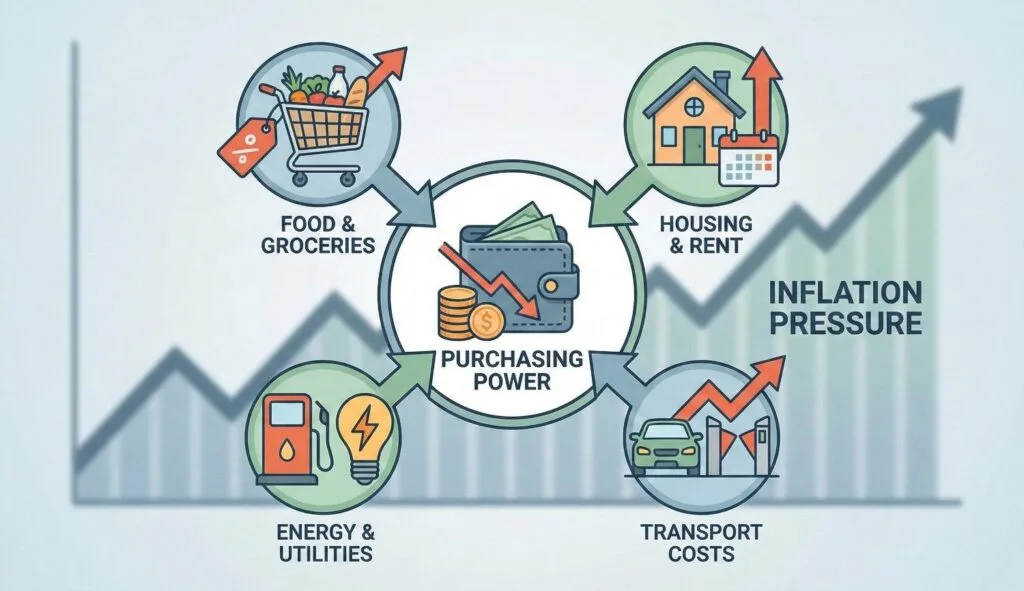
You notice inflation when:
- Petrol becomes expensive
- Vegetable prices rise
- School fees increase
- Rent goes up
- Electricity bills become higher
That is why inflation matters to every citizen.
A controlled level of inflation is healthy for economic growth. But high inflation creates financial stress for families and businesses.
Understanding inflation helps people make better decisions about:
- Saving
- Spending
- Investing
- Budget planning
A strong economy needs balanced inflation so that growth and price stability can go together.
FAQs
1. What is inflation in simple words?
Inflation means the general increase in prices of goods and services over time.
2. Who controls inflation in India?
The Reserve Bank of India and the Indian government work together to control inflation.
3. What is CPI?
CPI stands for Consumer Price Index. It measures changes in retail prices paid by consumers.
4. Is inflation always bad?
No. Moderate inflation is normal and can support economic growth. Very high inflation is harmful.
5. Why does food inflation matter in India?
Because food forms a large part of household spending, especially for low-income families.