

Made in Bharat Space Chips: India to Power Rockets

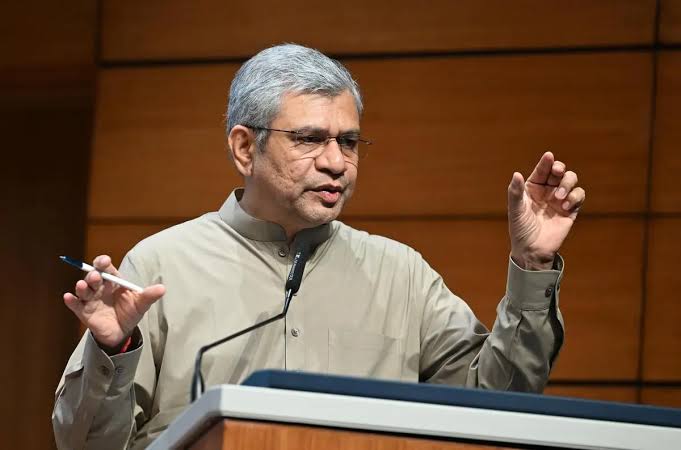
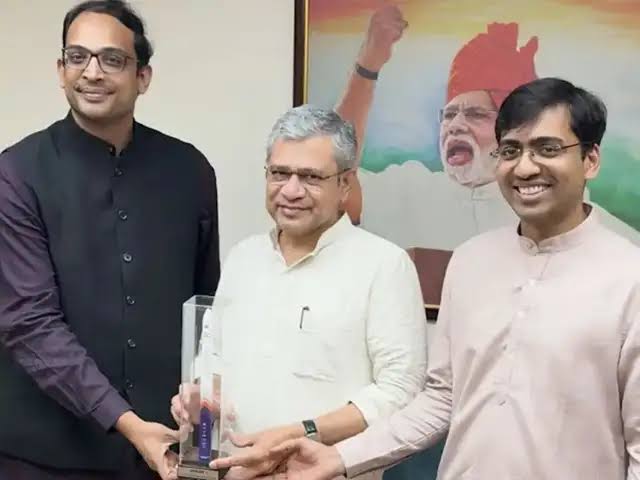
Made in Bharat Space Chips are set to become a major milestone in India’s growing space and semiconductor industries. On 27 July 2026, Union Minister Ashwini Vaishnaw announced that domestically developed semiconductor chips will soon be used in Indian space launch vehicles. The announcement came after a meeting with Skyroot Aerospace, following the successful Vikram-1 Test Flight-1, which became India’s first privately developed orbital-class rocket to successfully reach orbit. This development highlights India’s commitment to building advanced space technology using home-grown innovation while reducing dependence on imported electronic components.
India Moves Towards Indigenous Space Technology Made in Bharat Space Chips
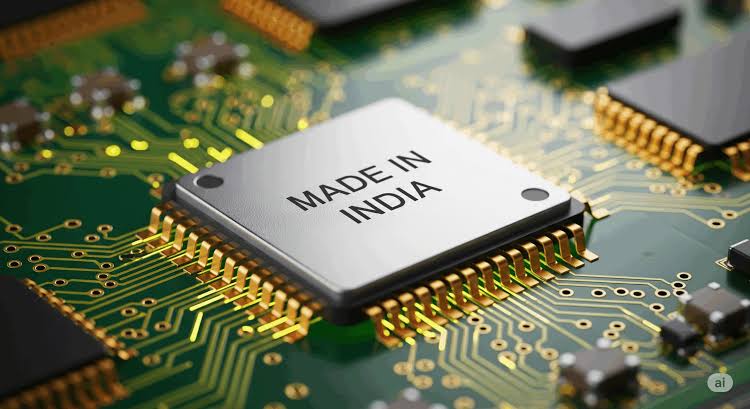
The decision to use Indian-made semiconductor chips in rockets marks another important step in the country’s mission to achieve greater technological self-reliance.

Modern rockets rely on highly advanced electronic systems that control navigation, communication, guidance, and mission operations. Until now, many of these specialised components depended on foreign technology. By introducing indigenous chips into launch vehicles, India aims to strengthen its domestic space ecosystem while improving long-term technological independence.
The announcement also supports the government’s broader vision of promoting innovation and manufacturing under India’s growing semiconductor programme.
Skyroot Aerospace Creates History
The announcement followed the successful mission of Skyroot Aerospace, one of India’s leading private space companies.
Its Vikram-1 Test Flight-1 successfully reached orbit, making it India’s first privately developed orbital-class rocket to achieve this milestone.
The achievement demonstrates the rapid growth of India’s private space sector after recent reforms that encouraged greater participation by private companies in space exploration and launch services.
The success of Skyroot Aerospace also reflects increasing collaboration between government agencies, research institutions, and private industry in developing advanced space technologies.
Why Rockets Need Special Semiconductor Chips
Semiconductors are tiny electronic components that serve as the brains of modern electronic devices.
In rockets and satellites, semiconductor chips control critical systems such as:
- Guidance and navigation
- Flight control
- Onboard computers
- Telemetry systems
- Communication equipment
- Mission monitoring
Unlike ordinary computer chips, space-grade semiconductors must continue working under extremely harsh conditions.
They must withstand:
- Strong vibrations during launch
- Extreme temperatures
- High radiation levels
- Vacuum conditions in space
Because of these demanding conditions, designing reliable space chips requires years of specialised research and testing.
ISRO’s Plan for Indigenous Chip Development
Earlier in March 2026, the Indian Space Research Organisation (ISRO) announced its long-term plan to develop and manufacture indigenous semiconductors within the next four years.
The programme focuses on producing processors, controllers, and specialised electronic systems required for launch vehicles, satellites, and future space missions.
Developing domestic semiconductor technology will reduce dependence on imported components while improving supply chain security for India’s expanding space programme.
The initiative also supports India’s ambition to become a global leader in both semiconductor manufacturing and space technology.
VIKRAM3201: India’s Advanced Space Processor
One of the biggest achievements in India’s semiconductor journey is the development of VIKRAM3201.
This 32-bit indigenous microprocessor was introduced during Semicon India 2025 in September 2025 and presented to Prime Minister Narendra Modi.
The processor was jointly developed by the:
- Semi-conductor Laboratory (SCL)
- Vikram Sarabhai Space Centre (VSSC)
VIKRAM3201 has been specially designed for use in launch vehicles operating under harsh space conditions.
Before being approved for future missions, the processor successfully completed space validation aboard the PSLV Orbital Experimental Module-4 (POEM-4) during the PSLV-C60 mission.
This successful test confirmed that the processor can operate reliably in the challenging environment of space.
Built on a Strong Foundation
VIKRAM3201 builds upon India’s earlier space processor, Vikram1601.
The 16-bit Vikram1601 has been used in ISRO launch vehicles since 2009 and has supported numerous successful space missions.
The newer VIKRAM3201 provides higher processing capability while maintaining the reliability required for space applications.
Its development represents the continuous progress of India’s indigenous electronics programme over the past two decades.
IRIS Expands India’s Space Electronics
Another important achievement came in February 2025, when IIT Madras and ISRO jointly developed the Indigenous RISCV Controller for Space Applications (IRIS).
IRIS is designed for command, control, and other critical spacecraft operations.
The processor is based on the SHAKTI processor architecture, an open-source Indian processor initiative developed for advanced computing applications.
The use of open-source technology gives engineers greater flexibility in designing processors specifically suited to India’s space requirements.
IRIS further strengthens India’s ability to build complete space electronics using domestic technology.
KALPANA3201 Supports Launch Vehicles
India has also developed another advanced 32-bit microprocessor called KALPANA3201.
The processor has been designed specifically for launch vehicle applications and supports modern open-source software development tools.
Having multiple indigenous processors allows engineers to select the most suitable hardware for different missions while increasing reliability across India’s growing fleet of launch vehicles.
Together, VIKRAM3201, IRIS, and KALPANA3201 demonstrate the rapid advancement of India’s semiconductor capabilities.
Strong Partnership Across India’s Space Ecosystem
The success of indigenous semiconductor development has been made possible through cooperation among several leading organisations.
Key contributors include:
- Indian Space Research Organisation (ISRO)
- Semi-conductor Laboratory (SCL)
- Vikram Sarabhai Space Centre (VSSC)
- IIT Madras
- Skyroot Aerospace
This collaboration combines scientific research, engineering expertise, academic innovation, and private sector participation.
Such partnerships are becoming increasingly important as India expands its activities in satellite launches, deep-space missions, communication technology, and commercial space services.
A Major Step Towards Self-Reliant Space Technology
The introduction of Made in Bharat Space Chips represents an important milestone in India’s technological journey. By developing indigenous processors capable of operating in the demanding conditions of space, India is strengthening both its semiconductor industry and its space programme. The successful development of processors such as VIKRAM3201, IRIS, and KALPANA3201, along with the achievement of Skyroot Aerospace’s Vikram-1 mission, reflects the country’s growing ability to design advanced technologies within its own ecosystem. As India’s space missions continue to expand, these home-grown semiconductor innovations are expected to play a key role in powering the next generation of launch vehicles and spacecraft.