



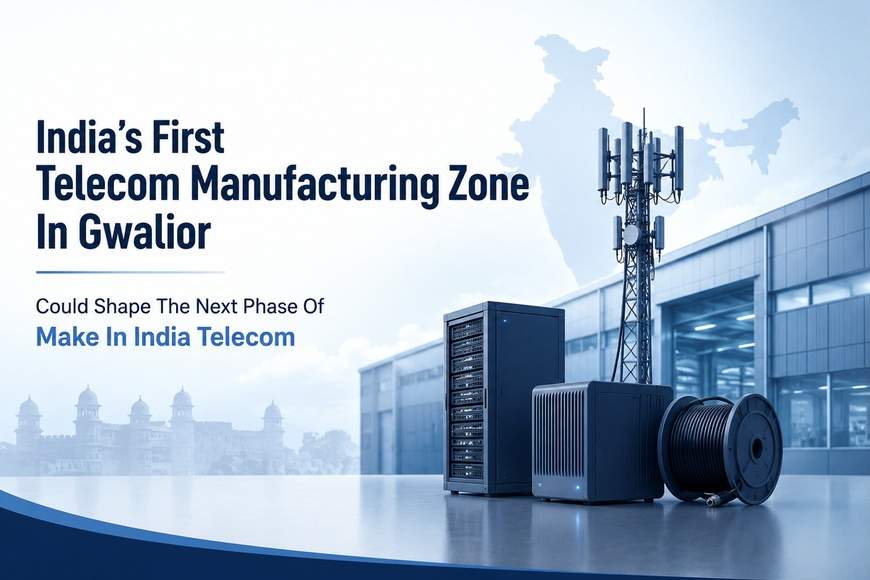
Telecom Manufacturing Zone to Be Set Up in Gwalior

Telecom Manufacturing Zone is set to become a major milestone for India’s technology and manufacturing sector. On 30 July 2026, the Department of Telecommunications (DoT) and the Government of Madhya Pradesh signed a Memorandum of Understanding (MoU) to establish the country’s first dedicated Telecom Manufacturing Zone (TMZ) in Gwalior. The agreement was signed at Vigyan Bhawan, New Delhi, marking an important step toward strengthening domestic telecom manufacturing, attracting investments, and creating employment opportunities.
Thank you for reading this post, don't forget to subscribe!The new Telecom Manufacturing Zone is expected to support India’s vision of becoming a global manufacturing hub while reducing dependence on imported telecom equipment and advanced technology products.
What Is a Telecom Manufacturing Zone?
A Telecom Manufacturing Zone (TMZ) is a specially planned industrial area dedicated to the production of telecom equipment and related technologies.
Unlike general industrial parks, a TMZ focuses only on industries connected to the telecommunications sector.
The proposed Gwalior zone will support businesses involved in:
- Telecom equipment manufacturing
- Data centres
- Semiconductor and chip manufacturing
- Electronic communication devices
- Digital infrastructure technologies
By bringing related industries together in one location, the government aims to create a strong manufacturing ecosystem that encourages innovation and faster production.
Why Gwalior Was Selected
Gwalior, located in Madhya Pradesh, has been selected as the location for India’s first Telecom Manufacturing Zone due to its growing industrial potential and improving infrastructure.
The project is expected to transform the city into a major centre for telecom manufacturing and advanced electronics.
Its central location, improving transport network, and availability of land make Gwalior suitable for attracting both domestic and international investors.
The development is also expected to strengthen Madhya Pradesh’s role in India’s expanding manufacturing sector.
Major Investment and Job Opportunities
The Telecom Manufacturing Zone is expected to attract investments ranging from ₹12,000 crore to ₹15,000 crore.
For the first phase of the project:
- The Central Government has approved ₹493 crore.
- The Madhya Pradesh Government will provide land for development.
Officials estimate that the project could create around 5,000 direct jobs, while many additional indirect employment opportunities may also emerge through supporting industries, logistics, transportation, and local businesses.
The investment is expected to contribute to economic growth while encouraging high-value manufacturing in India.
Plug-and-Play Infrastructure
One of the important features of the project is its plug-and-play model.
Under this system, companies will receive ready-to-use industrial infrastructure instead of building everything from the beginning.
The facilities may include:
- Developed industrial plots
- Roads and utilities
- Power supply
- Water connections
- Communication networks
- Basic manufacturing infrastructure
This approach reduces project setup time and allows industries to begin operations much faster.
Plug-and-play industrial parks are becoming increasingly popular because they improve ease of doing business and attract faster investment.
Supporting India’s Telecom Industry
Telecom manufacturing has become increasingly important as countries expand digital communication networks, 5G services, cloud computing, and data infrastructure.
The Gwalior Telecom Manufacturing Zone is expected to support production of:
- Network equipment
- Communication systems
- Transmission devices
- Electronic components
- Data centre infrastructure
- Semiconductor-related hardware
Developing domestic manufacturing capacity helps strengthen supply chains and reduces dependence on imported telecom products.
The project also supports India’s long-term goal of becoming a global technology manufacturing destination.
Linked to Aatmanirbhar Bharat
The project is closely connected with the Aatmanirbhar Bharat initiative, which encourages self-reliance in manufacturing and technology.
The government aims to promote indigenous design, local production, and advanced research in sectors considered strategically important.
Telecom equipment plays a vital role in modern digital infrastructure, making domestic production increasingly valuable for economic growth and national development.
The new manufacturing zone is expected to encourage Indian companies to develop advanced telecom technologies while attracting global manufacturers to establish operations in the country.
Leadership Behind the Project
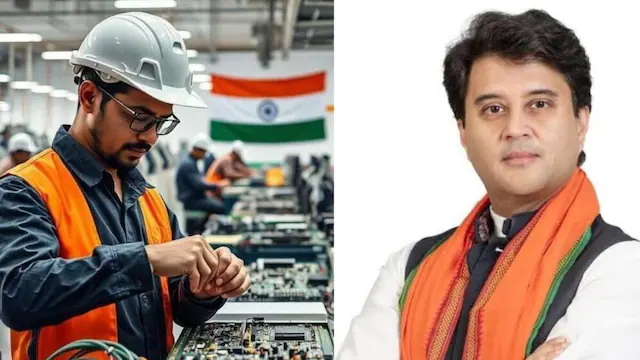
The launch of the Telecom Manufacturing Zone was announced by Union Minister for Communications Jyotiraditya M. Scindia.
The MoU signing ceremony was attended by:
- Madhya Pradesh Chief Minister Mohan Yadav
- Minister of State for Communications and Rural Development Chandra Sekhar Pemmasani
The Department of Telecommunications, which functions under the Ministry of Communications, is responsible for telecom policy, licensing, regulation, and development across the country.
Growing Demand for Telecom Manufacturing
India’s telecom sector has expanded rapidly in recent years with increasing internet usage, smartphone adoption, digital payments, cloud services, artificial intelligence, and nationwide rollout of high-speed communication networks.
This rapid digital transformation has created growing demand for locally manufactured telecom equipment and electronic components.
The Telecom Manufacturing Zone in Gwalior is expected to strengthen India’s manufacturing ecosystem by encouraging investment, supporting innovation, creating employment, and improving domestic production capacity. As the country continues expanding its digital infrastructure and technology industries, dedicated manufacturing zones like this are likely to play an important role in supporting long-term industrial growth and technological advancement.