



Maharashtra Junk Food Ban: Sales Restricted Near Schools

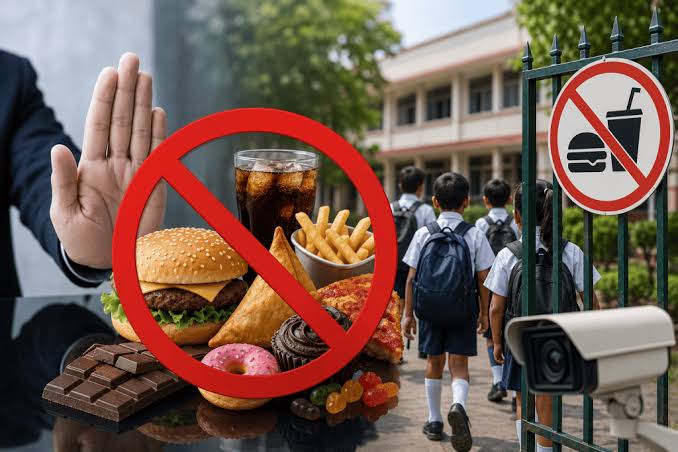
Maharashtra Junk Food Ban has become an important public health initiative after the Maharashtra Food and Drug Administration (FDA) issued a new compliance order on 28 July 2026. The directive restricts the sale, advertisement, and free distribution of High Fat, Sugar, and Salt (HFSS) foods within 50 metres of school premises across the state. The new rules apply to children from 22 months of age up to Class 12 students and are aimed at promoting healthier eating habits among school-going children. The move is expected to affect thousands of food vendors, school canteens, and educational institutions across Maharashtra.
Thank you for reading this post, don't forget to subscribe!Maharashtra Introduces New School Food Rules
The Maharashtra Food and Drug Administration has taken this step to encourage healthier food choices among children and reduce the easy availability of unhealthy snacks near schools.
The order applies to all educational institutions covered under the state’s school system and sets clear guidelines for food sales within a designated area around school campuses.
By limiting access to foods that are high in fat, sugar, and salt, the government aims to create a healthier environment for students during school hours.
The directive also places responsibility on schools to ensure that the rules are properly followed.
Rules Apply to Schools Across the State
The new order covers a large number of educational institutions throughout Maharashtra.
According to the government, the directive applies to nearly 1.08 lakh schools and around 2 crore students.
The institutions covered include:
- Pre-primary schools
- Primary schools
- Elementary schools
- Secondary schools
- Residential schools
- School hostels
- Schools affiliated with different education boards
The wide coverage makes it one of the largest school nutrition initiatives introduced in the state.
What Are HFSS Foods?
HFSS stands for High Fat, Sugar, and Salt.
These foods generally contain large amounts of unhealthy fats, added sugar, or excess salt while offering limited nutritional value.
Regular consumption of HFSS foods has been linked to several long-term health concerns, especially among children and teenagers.
Public health experts often recommend reducing the intake of such foods as part of a balanced diet.
The new Maharashtra order specifically focuses on limiting students’ exposure to these products around schools.
Food Items Included Under the Ban
The directive identifies several commonly sold food items that fall under the HFSS category.
These include:
- Vada pav
- Samosas
- Ice creams
- Potato chips
- Sugary soft drinks
- Chocolates
- Caffeinated beverages
In addition to sales, the order also prohibits the advertisement and free distribution of these products within the notified school zone.
The aim is to reduce both the availability and promotion of unhealthy food near educational institutions.
Restrictions Within 50 Metres of Schools
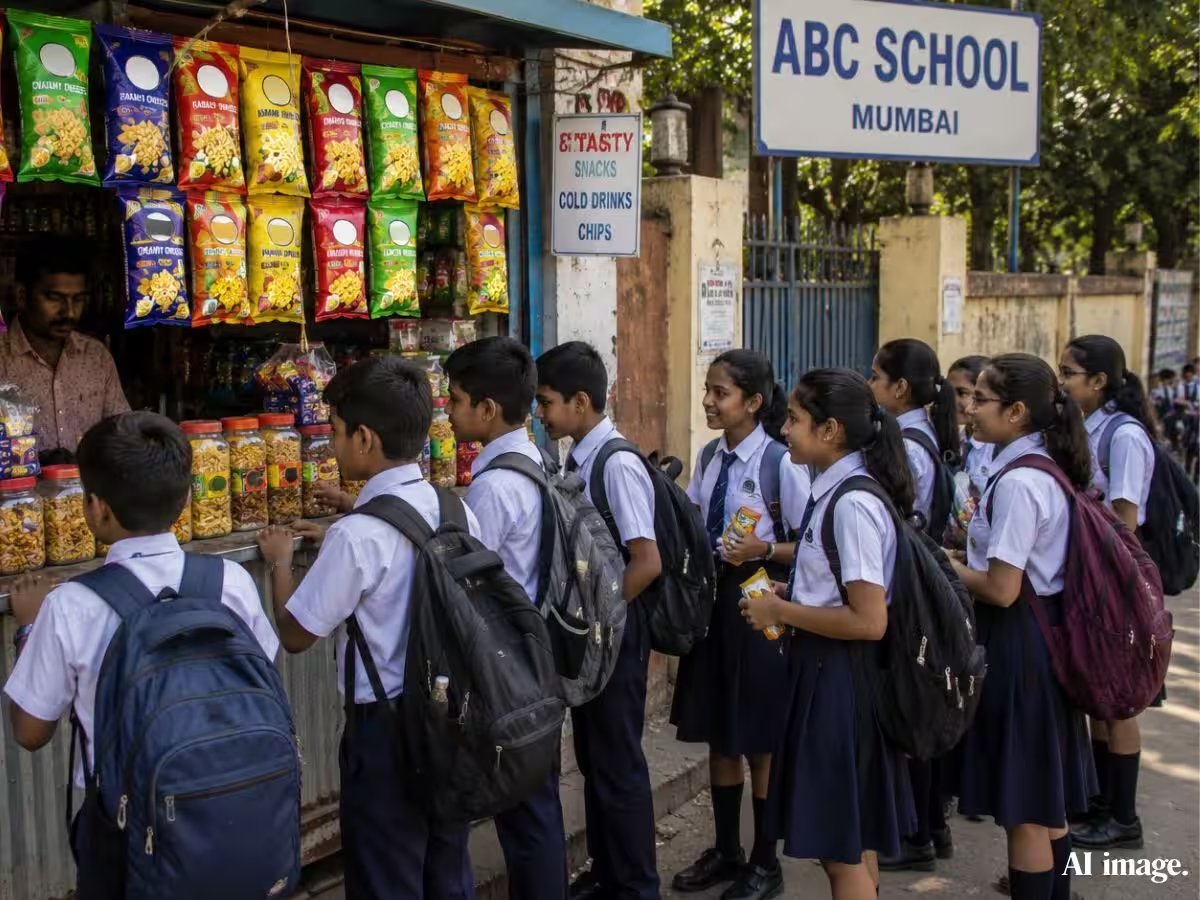
The order creates a regulated area extending 50 metres around school premises.
Within this zone, vendors and businesses cannot sell or promote HFSS food products covered by the new rules.
The restriction applies during school operations and is intended to reduce students’ easy access to unhealthy snacks while attending classes.
By limiting food sales close to schools, authorities hope to encourage healthier eating habits among children.
School Canteens Must Follow New Guidelines
The new regulations also introduce stricter requirements for school canteens.
Every school canteen operating in Maharashtra must now obtain a valid licence or registration from the Maharashtra Food and Drug Administration.
Schools are responsible for ensuring that food served on their campuses complies with the new guidelines.
School managements have also been asked to monitor food quality and ensure that only approved food items are sold to students.
Healthier Food Options Encouraged
Instead of HFSS foods, the government has recommended healthier alternatives for school canteens.
Suggested food items include:
- Fresh fruits
- Milk
- Buttermilk
- Sprouts
- Traditional Indian snacks
- Balanced meals
These foods provide better nutritional value and support the healthy growth and development of children.
The recommendations are intended to help schools create healthier eating environments without limiting food availability.
Statewide Inspections to Begin
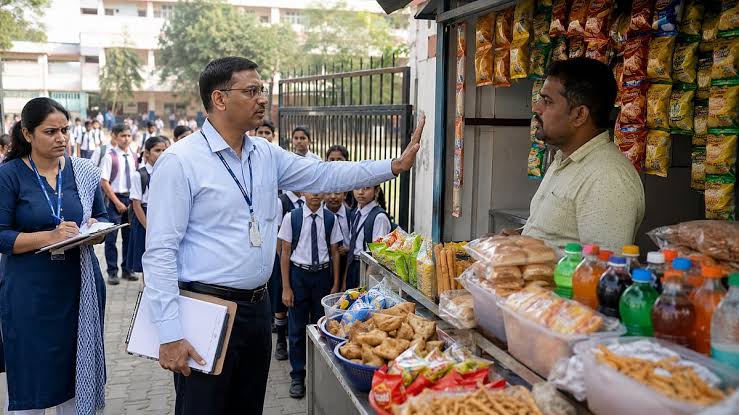
To ensure that the new rules are followed, the Maharashtra Food and Drug Administration plans to conduct compliance inspections across the state.
Officials will visit schools and surrounding areas to check whether vendors and canteens are following the new regulations.
Schools that fail to meet licensing or food safety requirements may be asked to take corrective measures according to applicable laws.
The inspections are expected to begin soon after the implementation of the compliance order.
Why Healthy School Food Matters
Health experts have increasingly highlighted the importance of healthy eating among children because dietary habits developed during childhood often continue into adulthood.
Frequent consumption of foods high in fat, sugar, and salt has been associated with a higher risk of:
- Childhood obesity
- Type 2 diabetes
- High blood pressure
- Heart-related health problems
- Other non-communicable diseases
Many schools across India have already introduced measures to promote healthier food choices as awareness about nutrition continues to grow.
The Maharashtra directive follows this broader effort to improve child health through better food policies.
Food Safety Framework in India
Food safety standards in India are regulated by the Food Safety and Standards Authority of India (FSSAI) under the Food Safety and Standards Act, 2006.
The FSSAI regularly issues guidelines related to food quality, nutrition, food labelling, and public health.
Several states have introduced school food policies based on these national recommendations to reduce children’s exposure to unhealthy packaged foods and sugary drinks.
The Maharashtra Food and Drug Administration’s latest order aligns with these wider public health efforts.
A Major Step Towards Healthier School Environments
The Maharashtra Junk Food Ban represents a significant effort to improve nutrition among school-going children by limiting the sale and promotion of HFSS foods near educational institutions. Covering nearly 1.08 lakh schools and around 2 crore students, the new rules introduce stricter controls on food vendors, school canteens, and advertisements within a 50-metre radius of schools. By encouraging healthier alternatives such as fruits, milk, sprouts, and balanced meals, the initiative aims to create a safer and more nutritious food environment for children across Maharashtra while supporting long-term public health goals.