




Article 371(K) Proposed for Ladakh

Article 371(K) has been proposed as a new constitutional provision for Ladakh by the Union Ministry of Home Affairs. The proposal was discussed on 9 September 2026 during a sub-committee meeting in New Delhi and focuses on creating a directly elected Union Territory-level governing body for Ladakh.
The proposed arrangement would cover important local matters such as land, culture, language, forests and the environment. It is also linked with subjects and powers connected to Article 240 of the Constitution. The proposal comes amid long-running demands from Ladakh representatives for stronger constitutional safeguards and greater political powers for the Union Territory.

Article 371(K) Proposal for Ladakh
The proposed Article 371(K) is being discussed as a special constitutional arrangement for Ladakh. The idea is to provide a framework for a directly elected governing body at the Union Territory level.
The proposed body could have a role in dealing with matters that are particularly important to the people of Ladakh. These include protection of land, local culture, languages, forests and the fragile Himalayan environment.
However, several important details are still under discussion. The Ministry of Home Affairs has not yet finalised the executive, financial, planning and law-and-order powers that would be given to the proposed body.
This means the proposal is still part of an ongoing negotiation rather than a completed constitutional change.
Why Special Safeguards Are Being Discussed
Ladakh has a unique geographical and cultural character. The Union Territory covers a large Himalayan region with a relatively small population and includes areas with distinct cultural and linguistic traditions.
Land and environmental protection are especially important because of the region’s difficult terrain and sensitive ecosystem. Any major changes in land use, development or administration can have a direct impact on local communities.
The proposed Article 371(K) framework is therefore being discussed in the context of providing greater protection for local interests while also creating an elected administrative structure.
Article 371 and Special Constitutional Provisions
Article 371 of the Indian Constitution contains a number of special provisions for particular States and regions.
Different clauses of Article 371 provide special arrangements for areas with distinct historical, cultural, social or administrative circumstances. For example, Article 371A provides special protections for Nagaland, while Article 371B deals with Assam and Article 371C relates to Manipur.
Other provisions include Article 371D for Andhra Pradesh and Telangana and Article 371G for Mizoram.
The proposed Article 371(K) would represent a new addition to this broader constitutional framework if it is eventually approved through the required process.
Link With Article 240
The Ladakh proposal is also connected with Article 240, which deals with the President’s power to make regulations for certain Union Territories.
The discussions around the proposed governing body include subjects that currently have links with the Union Territory’s administrative structure.
The exact division of responsibilities between the proposed elected body and the Union administration remains one of the important issues in the negotiations.
Deciding these powers will be important because they would determine how much authority the proposed institution would have over local development, finances, planning and other areas.
Ladakh Representatives Take Part in Talks
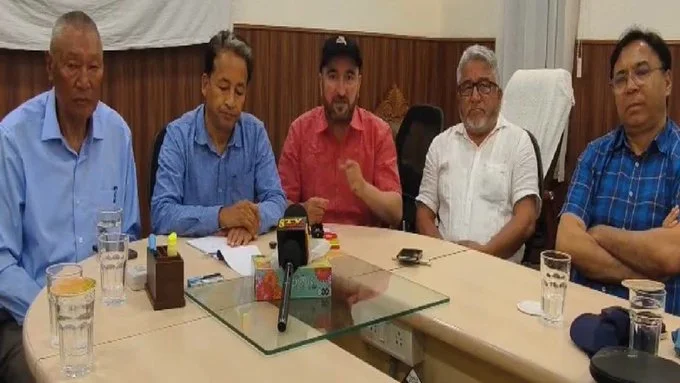
Representatives from the Leh Apex Body and the Kargil Democratic Alliance, along with other Ladakh representatives, attended the meeting with officials from the Ministry of Home Affairs.
The two groups have been involved in discussions over Ladakh’s political and constitutional demands.
During the latest discussions, the Ladakhi delegation sought safeguards before any major administrative changes or transfer of land. Representatives also continued to press for full Statehood for Ladakh and Sixth Schedule protection for tribal areas.
These demands show that the proposed Article 371(K) arrangement is only one part of a much wider discussion about Ladakh’s future political and administrative structure.
Statehood and Sixth Schedule Demands Continue
Ladakh representatives have been demanding stronger constitutional protection for the region for several years.
One major demand is Statehood, which would give Ladakh a different administrative status from its present Union Territory arrangement.
Another important demand is the extension of Sixth Schedule protections to tribal areas. The Sixth Schedule provides for autonomous district councils in tribal areas of Assam, Meghalaya, Tripura and Mizoram.
The Ladakh groups have argued that stronger constitutional safeguards could help protect local land, culture and traditional practices.
The government, however, is continuing discussions on the proposed administrative framework and has not finalised all the demands.
Important Powers Still Under Discussion
The Ministry of Home Affairs has deferred decisions on several major areas of authority for the proposed governing body.
These include executive powers, financial powers, planning powers and law-and-order responsibilities.
These subjects are important because they determine how an elected institution would function in practice. Financial and planning powers, for example, would affect how local development projects are planned and implemented.
Similarly, decisions about executive and law-and-order powers would determine the relationship between the proposed body, the Union Territory administration and other government institutions.
Further discussions are expected to address these unresolved issues.
Next Round of Talks in Kargil
The next round of discussions between the Ministry of Home Affairs and the Ladakh sub-committee is scheduled to take place in Kargil in the first week of October 2026.
The upcoming meeting is expected to provide another opportunity to discuss the powers and structure of the proposed governing body.
The location of the next meeting is also significant because Kargil is one of the two major districts of Ladakh and has been an important part of the region’s political discussions.
Mixed Reactions to the Latest Meeting
The latest meeting received different reactions from the participants.
UT Chief Secretary Ashish Kundra described the discussions as positive. However, leaders of the Leh Apex Body and Kargil Democratic Alliance described the meeting as very disappointing.
The different reactions reflect the gap that still exists between the government’s proposal and the expectations of some Ladakh representatives.
While the government has proposed a constitutional framework and an elected governing body, representatives continue to seek wider powers and stronger safeguards.

Compensation and Criminal Cases
Alongside the constitutional discussions, the Ministry of Home Affairs also agreed to prepare a compensation package for people who were killed or injured during the 24 September 2025 violence in Leh.
The Ministry also agreed to review the withdrawal of criminal cases against 80 protesters.
These issues have become part of the broader dialogue between the Union government and Ladakh representatives. Addressing them is expected to remain important as talks continue.
What Comes Next for Ladakh
The proposed Article 371(K) arrangement is now part of an ongoing process of negotiations between the Union government and representatives of Ladakh.
The key issues include the powers of the proposed elected body, protection of land and culture, environmental safeguards, financial authority, planning, law and order, and the wider demands for Statehood and Sixth Schedule protection.
The next talks in Kargil in October 2026 are expected to provide further clarity on the structure and powers of the proposed Ladakh governing body.