

AfD Ukraine Aid: Party Calls for End to Support

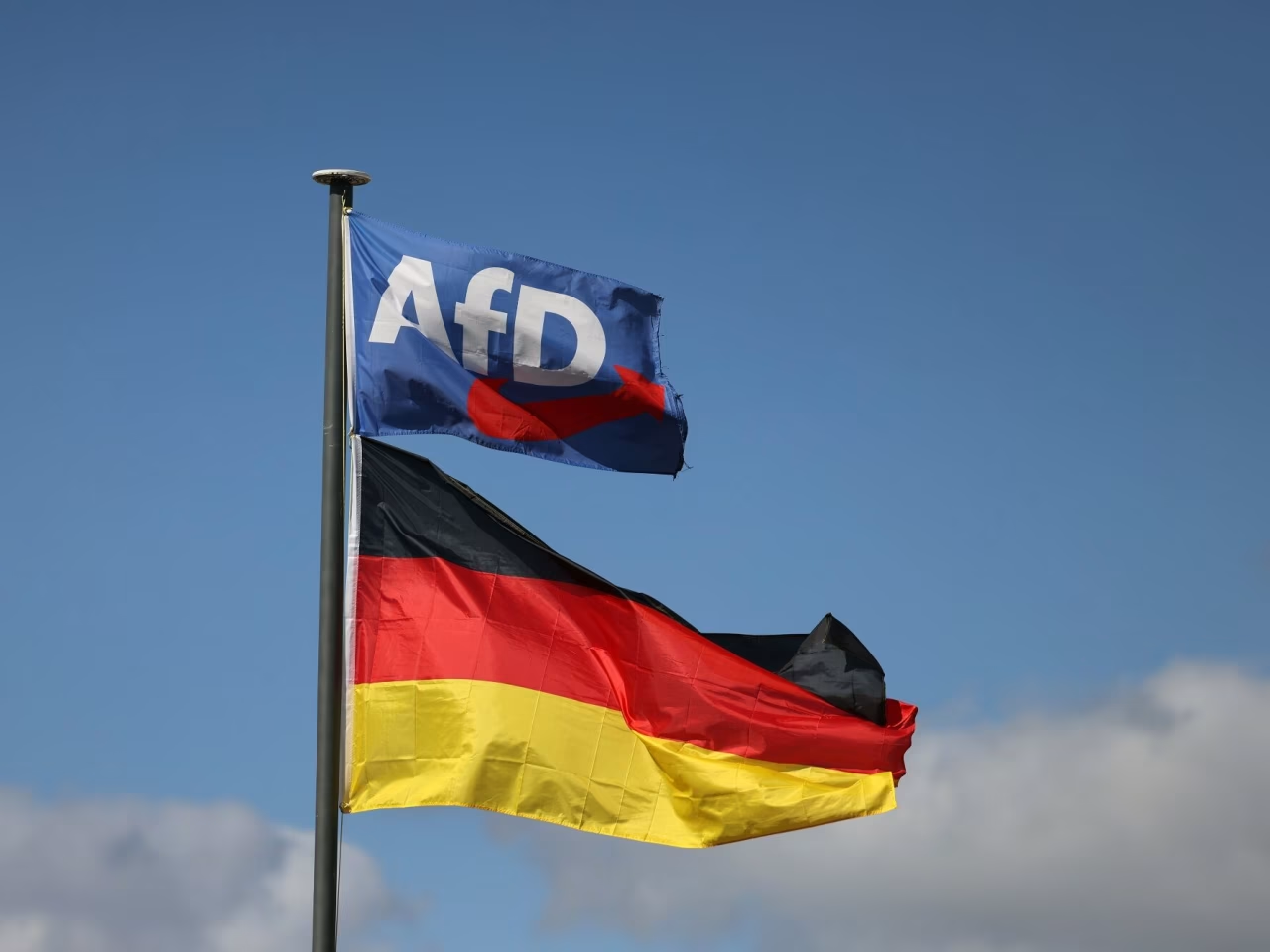
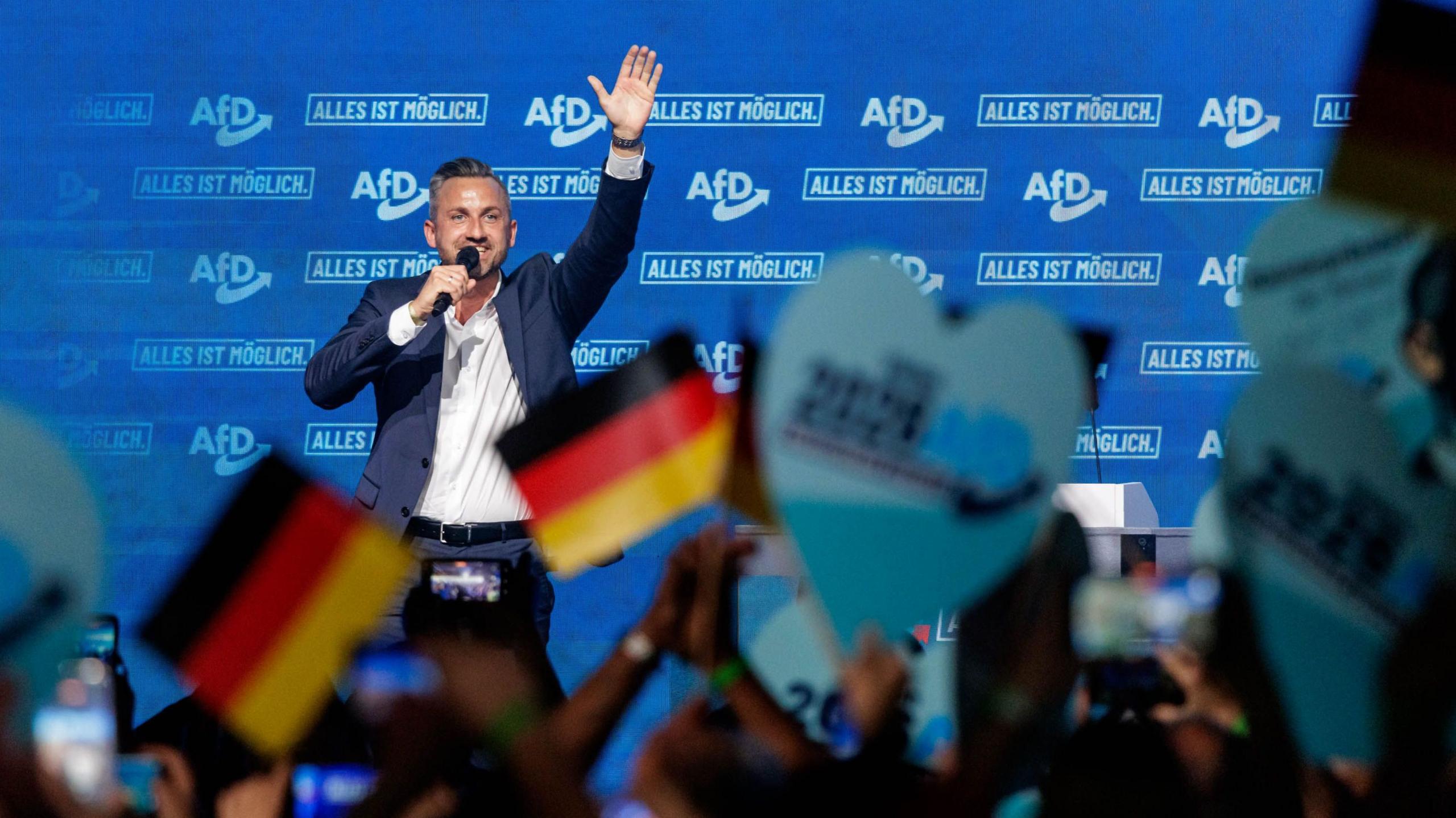
AfD Ukraine Aid has become a major point of debate in Germany after Alternative for Germany (AfD) leaders renewed their call to end German military and financial support for Ukraine. AfD co-leader Alice Weidel said on September 11 that an AfD-led federal government would stop German assistance to Ukraine. The demand comes shortly after the AfD secured 43.8% of the vote in the September 6 Saxony-Anhalt state election, according to preliminary official results.
Thank you for reading this post, don't forget to subscribe!AfD Calls for End to Ukraine Support
Alice Weidel has called for a change in Germany’s policy towards the Russia-Ukraine war. According to Deutsche Welle, she urged Chancellor Friedrich Merz to end support for Ukraine after the AfD’s strong result in Saxony-Anhalt.
AfD co-leader Tino Chrupalla had already called for military aid to Ukraine to be stopped in July. In an official party statement, Chrupalla linked his demand to the investigation into the 2022 Nord Stream pipeline explosions and said German military assistance should end.
The AfD’s position includes more than weapons deliveries. Party leaders have also criticised financial assistance to Ukraine and called for changes to Germany’s wider Russia policy.
Germany Maintains Its Ukraine Policy
The position of the AfD differs from that of the German federal government. Chancellor Friedrich Merz has continued to support Ukraine and has said Germany will maintain assistance to the country.
During a Bundestag debate on September 9, Merz defended the government’s policies while AfD parliamentary leader Alice Weidel criticised the government’s approach to budget, migration and energy policy. The debate took place just days after the AfD’s strong performance in Saxony-Anhalt.
Germany has remained one of Ukraine’s major European supporters since Russia launched its full-scale invasion in February 2022. Its assistance has included military equipment, financial support and humanitarian measures.
Saxony-Anhalt Election Changes Political Debate
The discussion over AfD Ukraine Aid comes at a time of significant political change in Germany. In the September 6 election in Saxony-Anhalt, the AfD received 43.8% of the vote according to preliminary official results. The Christian Democratic Union (CDU), the party led nationally by Chancellor Merz, received 17.2%.
The result gave the AfD its strongest state-election performance to date. However, winning the largest share of votes does not automatically mean that a party can form a state government. Other parties’ positions on cooperation also matter.
The result has increased attention on the AfD’s policies concerning Ukraine, Russia, migration, energy and Germany’s economy.
Debate Over Russia Sanctions and Energy
The AfD’s Ukraine policy is also connected to its position on sanctions against Russia and energy costs in Germany. Party leaders have argued for ending sanctions and restoring access to cheaper Russian energy.
The party has connected energy policy with the cost pressures facing German households and industries. Its position contrasts with the federal government’s approach towards Russia following the invasion of Ukraine.
The issue remains closely linked to Germany’s energy security, industrial competitiveness and relations with the European Union.
Bürgergeld for Ukrainians
Another part of the AfD’s position concerns social welfare payments to Ukrainians living in Germany. The party has called for ending access to Bürgergeld for Ukrainians, including people of military-service age.
Bürgergeld is Germany’s basic income support system for people who are unemployed or have limited income and meet the eligibility requirements. The debate over welfare for Ukrainian refugees has become part of Germany’s wider discussion about migration, public spending and integration.
The issue is politically sensitive because Germany hosts a large Ukrainian population that arrived after Russia’s full-scale invasion.
Nord Stream Debate Returns
The Nord Stream pipeline explosions have also featured in the AfD’s arguments over Ukraine policy. In July, Chrupalla called for an end to military aid after prosecutors brought charges against a Ukrainian national in connection with the investigation into the pipeline explosions.
The Nord Stream pipelines run under the Baltic Sea and were designed to transport natural gas from Russia to Germany. The explosions in September 2022 damaged the pipeline system and led to a major international investigation.
The investigation and the question of responsibility remain separate from Germany’s broader decisions on military and financial assistance to Ukraine.
Germany Faces More Political Debate
The discussion over AfD Ukraine Aid is taking place alongside wider political pressure on the German government. Following the AfD’s result in Saxony-Anhalt, Chancellor Merz has faced renewed political challenges ahead of further state elections.
Reuters reported on September 15 that Merz cancelled a planned trip to New York for the United Nations General Assembly because his presence was considered necessary in Berlin amid domestic political pressure.
At the same time, Merz has continued to defend Germany’s support for Ukraine. The difference between the government’s policy and the AfD’s position has made Ukraine assistance an important part of Germany’s current political debate.