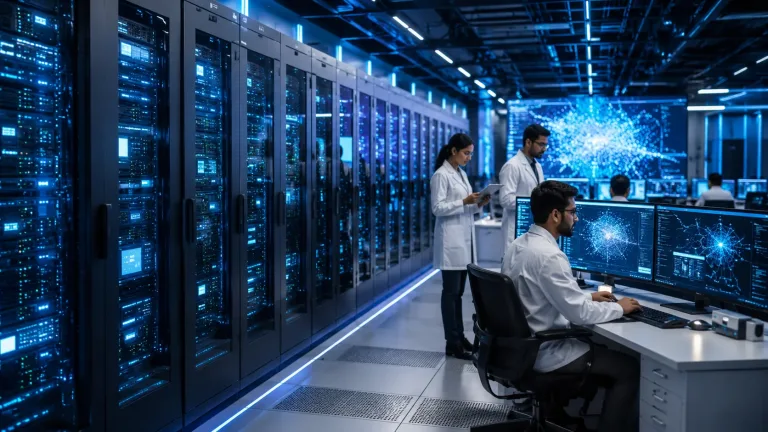




AI Attendance System: Uttar Pradesh Brings Smart Technology to Examination Management

AI Attendance System is becoming an important part of education management in India. Uttar Pradesh has taken a major step by introducing artificial intelligence and digital technologies to improve examination management across the state. The new system aims to increase transparency, improve security, and reduce errors during examinations.
The state government and educational institutions have started using advanced technologies such as barcode-based attendance, biometric verification, AI-powered CCTV monitoring, and digital evaluation systems. These changes are part of a larger effort to modernize educational processes and ensure fair conduct of examinations.

AI Attendance System Introduced by AKTU
On 30 May 2026, Dr. APJ Abdul Kalam Technical University (AKTU) announced the launch of an AI-based attendance and seating management system. The project was initially introduced for MTech examinations at the Centre for Advanced Studies in Lucknow.
The university is one of the largest technical education institutions in the state and is connected with more than 750 affiliated colleges. Through this new system, examination management has become faster and more accurate.
The AI Attendance System works through several digital tools:
| Feature | Purpose |
|---|---|
| Barcode Admit Cards | Quick identification of students |
| Barcode Scanning | Digital attendance marking |
| Student Photograph Verification | Identity confirmation |
| Digital Signatures | Verification by invigilators |
| Answer Booklet Scanning | Record management |
| Central Monitoring Room | Real-time supervision |
Invigilators use tablets to scan barcodes and record attendance instantly. The information is sent directly to a central control room where officials can monitor activities in real time.

Growing Use of Artificial Intelligence in Education
Artificial Intelligence is rapidly changing the education sector across India. Educational institutions are now using AI for attendance management, student verification, examination monitoring, and result processing.
The use of AI helps reduce manual work and minimizes the chances of human error. It also improves the speed of administrative tasks and increases accountability.
Experts believe that digital technologies can strengthen trust in educational systems by creating transparent and secure processes.
AI Monitoring During Recruitment Tests
Uttar Pradesh has also expanded the use of AI technology in recruitment-related examinations.
The Uttar Pradesh Education Service Selection Commission (UPESSC) conducted lecturer recruitment examinations in May 2026 using AI-powered surveillance systems. Examination centres across the state were connected to a centralized monitoring network.
A special Control Command Room in Lucknow monitored examination activities through advanced digital systems. Officials were able to observe examination centres in real time and quickly identify suspicious activities if they occurred.
The move reflects the state’s commitment to preventing unfair practices and improving examination security.
Biometric Verification Strengthens Security
Another important feature of the AI Attendance System is biometric verification.
Biometric technology uses unique physical characteristics such as fingerprints or facial recognition to verify an individual’s identity. This helps ensure that only registered candidates participate in examinations.
Benefits of biometric verification include:
- Accurate identity confirmation
- Prevention of impersonation
- Faster attendance recording
- Improved examination security
- Reliable digital records
As technology becomes more accessible, biometric systems are expected to become common in educational institutions across the country.
Digital Evaluation System for Faster Results
Apart from attendance and monitoring, Uttar Pradesh is also promoting digital evaluation of answer sheets.
Under the new model, evaluators enter marks through a secure online portal instead of relying entirely on traditional paper-based processes.
Advantages of Digital Evaluation
| Benefit | Description |
| Faster Processing | Results can be prepared more quickly |
| Better Accuracy | Reduced calculation errors |
| Secure Data Storage | Digital records remain protected |
| Easy Monitoring | Authorities can track evaluation progress |
| Transparency | Improved accountability in marking |
Digital evaluation supports the broader goal of creating a technology-driven educational environment.
AI-Enabled CCTV Surveillance
The Uttar Pradesh Madhyamik Shiksha Parishad (UP Board) has also expanded the use of AI-enabled CCTV cameras at examination centres.
More than 8,000 centres have been equipped with advanced surveillance systems. These cameras monitor important locations and help authorities maintain examination security.

AI-powered cameras can identify unusual activities and send alerts when necessary. This technology supports human monitoring teams and improves overall supervision.
With increasing concerns about examination integrity, AI surveillance has become an important tool for educational administrators.
Why This Development Matters
The introduction of the AI Attendance System shows how technology is transforming public services in India. Educational institutions are moving away from purely manual systems and adopting digital solutions that improve efficiency and transparency.
Key outcomes of the initiative include:
- Better attendance management
- Stronger identity verification
- Improved examination security
- Faster processing of records
- Real-time monitoring capabilities
- Reduced chances of malpractice
As digital infrastructure continues to improve, similar systems may be adopted by more universities and educational boards across the country.
Technology and the Future of Education
The use of artificial intelligence in education is expected to grow significantly in the coming years. Governments and educational institutions are investing in smart technologies to improve administration and student services.
AI-based attendance systems, biometric verification, digital evaluation, and intelligent surveillance are becoming part of a modern educational ecosystem. These innovations not only improve efficiency but also help build trust in examination processes.
Uttar Pradesh’s latest initiative demonstrates how technology can support large-scale educational management and create a more transparent and secure environment for students and institutions alike.