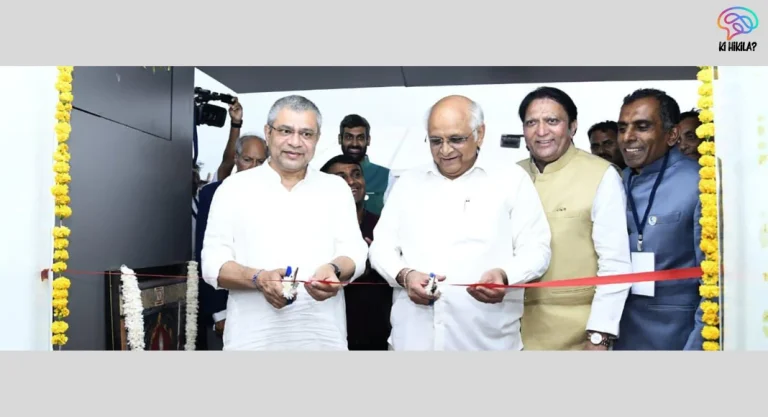
India Export Mission to Boost Trade Amid Global Challenges

India Export Mission is set to become one of the most ambitious trade initiatives undertaken by the Indian government. With a financial outlay of Rs 25,000 crore, the Export Promotion Mission (EPM) will run from 2025 to 2031 and aims to empower Indian exporters to withstand global uncertainties. The program comes at a crucial time when rising protectionism and the doubling of US tariffs on Indian goods are posing significant challenges to exporters.
Thank you for reading this post, don't forget to subscribe!The mission focuses on enhancing competitiveness, easing access to credit, and diversifying trade destinations, particularly for micro, small, and medium enterprises (MSMEs) that are often the hardest hit during global trade disruptions.
Context and Objectives
The India Export Mission was officially announced in the Union Budget 2025–26 with the vision of creating broad-based, inclusive, and sustainable export growth. One of its core objectives is to cushion Indian exporters against the shock of recent trade measures, such as the United States raising tariffs on several Indian products from 25% to 50% effective August 2025.
These tariff hikes are expected to impact sectors including textiles, chemicals, leather, and footwear—industries that employ millions and significantly contribute to India’s foreign exchange earnings. By directly addressing such bottlenecks, the government seeks to ensure India’s trade resilience in a rapidly changing global landscape.
Structure and Implementation
The India Export Mission will be implemented through two major sub-schemes:
- Niryat Protsahan (Export Incentives):
- Allocated over Rs 10,000 crore.
- Focuses on financial support measures, including interest equalisation and alternative trade financing options.
- Plans to introduce a dedicated credit card for e-commerce exporters, enabling small traders and online businesses to access working capital with greater ease.
- Niryat Disha (Export Development):
- Allocated over Rs 14,500 crore.
- Emphasises non-financial support such as export quality compliance, international branding, logistics infrastructure, overseas warehousing, and capacity building.
- Designed to ensure Indian goods meet global standards and find better access to premium markets.
Together, these schemes form the backbone of the India Export Mission, offering a comprehensive mix of financial and institutional support to exporters.
Collaborative Framework
The success of the mission depends on effective collaboration across multiple stakeholders. The India Export Mission involves the participation of:
- Department of Commerce
- Ministry of MSME
- Ministry of Finance
- Exim Bank
- Export Credit Guarantee Corporation (ECGC)
- Credit Guarantee Fund Trust for Micro and Small Enterprises (CGTMSE)
- National Credit Guarantee Trustee Company (NCGTC)
- Export Promotion Councils
- Commodity Boards
- Industry Associations
- State Governments
This integrated framework ensures that exporters benefit from financial backing, institutional support, and policy facilitation simultaneously.
Government Response to US Tariffs
The doubling of tariffs by the US has added urgency to the rollout of the India Export Mission. The government has accelerated its implementation to ease liquidity stress for exporters facing steep cost increases.
Finance Minister Nirmala Sitharaman recently convened an inter-ministerial meeting with senior officials and trade representatives. Discussions focused on short-term relief measures and long-term strategies to safeguard exporters. Key priorities include strengthening supply chains, promoting digital trade infrastructure, and diversifying away from over-dependence on the US market.
Export Diversification Strategy
A major component of the India Export Mission is diversifying markets. India plans targeted outreach to at least 40 countries, including Australia, Canada, Germany, Japan, the UK, and the UAE.
The goal is to position India as a trusted supplier of high-quality, sustainable products, reducing vulnerability to tariff wars and geopolitical shocks. Export Promotion Councils are expected to lead this drive by facilitating business-to-business linkages and creating global branding campaigns for Indian goods.
Recent Export Trends
India’s export performance reflects both resilience and challenges. In July 2025, exports rebounded by 7.29% to USD 37.24 billion after two consecutive months of decline. However, the trade deficit widened to an eight-month high of USD 27.35 billion, reflecting strong import demand.
Between April and July 2025–26:
- Exports rose by 3.07% to USD 149.2 billion.
- Imports increased by 5.36% to USD 244.01 billion.
This widening gap highlights the need for sustained government support. The India Export Mission is expected to provide exactly that, helping exporters maintain momentum in the face of external shocks.
Long-Term Vision
Beyond addressing immediate trade barriers, the India Export Mission carries a long-term vision. By investing in branding, compliance, and logistics, the mission seeks to elevate India’s position in global value chains.
For MSMEs in particular, access to credit and international platforms will open doors to previously untapped markets. This aligns with India’s broader ambition of becoming a global manufacturing and export hub under the “Make in India” and “Atmanirbhar Bharat” initiatives.
Future Prospects
The India Export Mission is more than just a response to the US tariff hikes—it is a comprehensive roadmap for building export resilience over the next six years. With a balanced mix of financial incentives, infrastructure development, and international outreach, the mission is poised to transform India’s trade ecosystem.
If implemented effectively, the mission will not only protect Indian exporters from current uncertainties but also lay the foundation for sustainable, inclusive, and globally competitive trade growth. In an era of shifting trade dynamics, India is positioning itself as a strong and reliable player in the global market.