



AmazonFACE Climate Adaptation Project Simulates Future Atmosphere

In the heart of Brazil’s Amazon rainforest, scientists are conducting one of the most ambitious ecological experiments of the century the AmazonFACE Climate Adaptation Project. This pioneering research initiative aims to understand how the world’s largest tropical forest will respond to rising carbon dioxide levels and shifting climatic conditions. As the planet approaches COP30, which Brazil is set to host next month, the project stands as a symbol of global scientific collaboration and environmental urgency.
Creating the Atmosphere of the Future
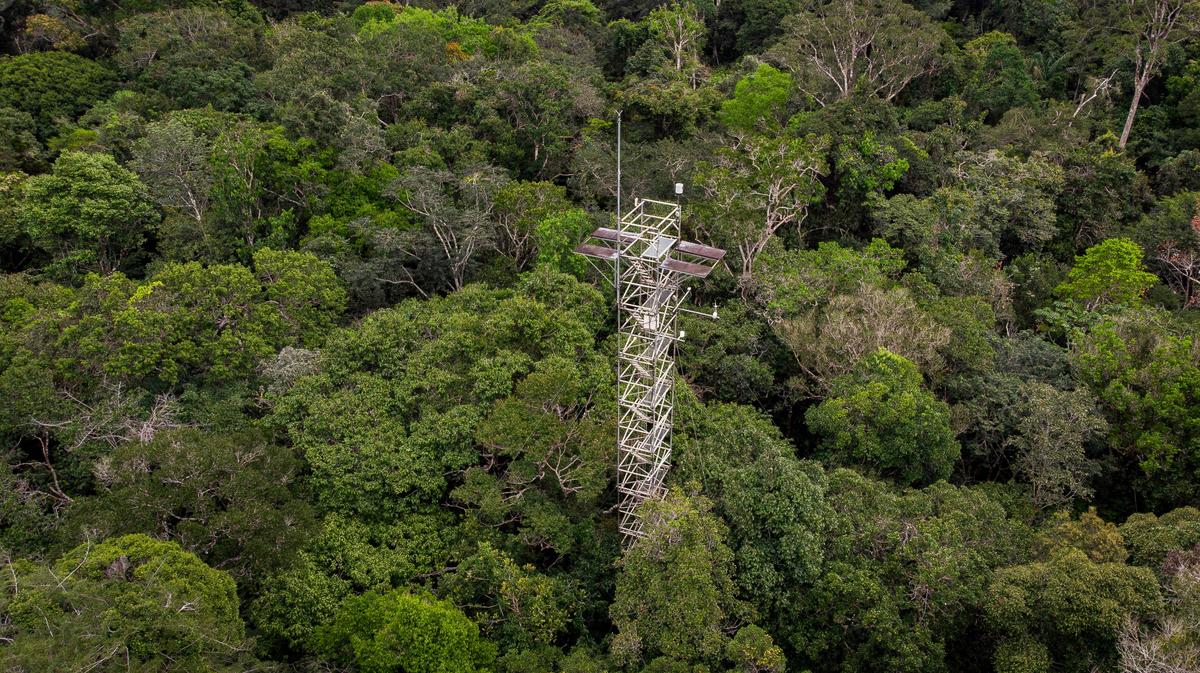
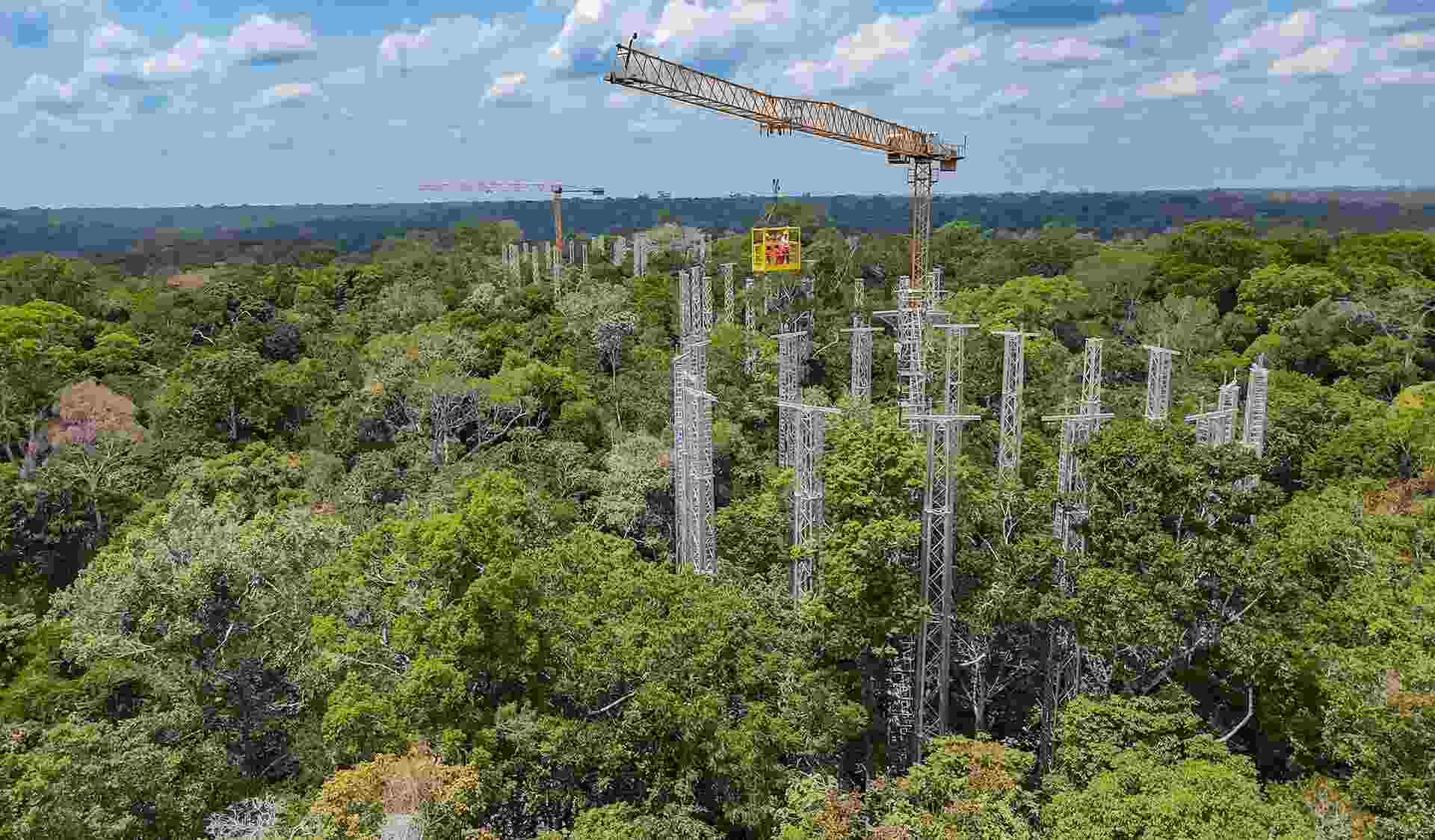
Located near Manaus, deep within the Amazon Basin, the AmazonFACE (Free-Air CO₂ Enrichment) site features six towering steel rings rising above the dense forest canopy. Each ring spans between 50 to 70 mature trees, forming open-air laboratories that simulate the atmospheric conditions expected in the coming decades.

Three of these rings are infused with elevated carbon dioxide (CO₂) levels mirroring concentrations projected for the year 2050 and beyond while the remaining three serve as control groups under current atmospheric conditions.
“We’re trying to create the atmosphere of the future,” said Carlos Quesada, a leading researcher from the National Institute for Amazon Research (INPA). Working in collaboration with Universidade Estadual de Campinas (UNICAMP), the project seeks to explore how Amazonian trees the lungs of the Earth might adapt to or struggle under the pressures of a warming, carbon-rich planet.
A Critical Experiment for Climate Science
Funded by Brazil’s federal government and supported by the United Kingdom, the AmazonFACE Climate Adaptation Project is the first-ever FACE experiment conducted in a tropical forest of this scale. Similar studies in the United States, Europe, and Australia have provided insights into how temperate forests react to higher CO₂ levels, but the Amazon with its immense biodiversity and role in global climate regulation presents an entirely new frontier for climate science.
According to forestry engineer Gustavo Carvalho, the project represents “a vital step in understanding how tropical forests will respond to future carbon-rich atmospheres.” The implications extend far beyond the Amazon: tropical forests worldwide are estimated to absorb nearly a quarter of global carbon emissions, acting as a buffer against climate change. Yet, their resilience remains uncertain as rising temperatures, changing rainfall patterns, and deforestation alter their delicate balance.
Real-Time Monitoring and Environmental Data
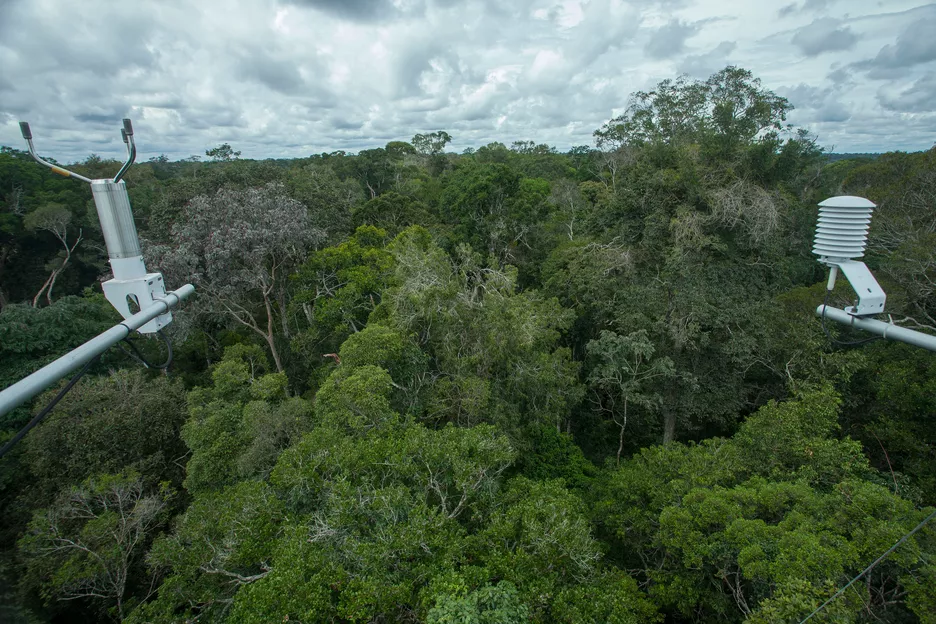
The AmazonFACE project is a marvel of both engineering and ecological precision. Sensors embedded across the six experimental rings record environmental data every ten minutes, capturing fluctuations in temperature, humidity, carbon absorption, oxygen release, and photosynthetic activity.
These readings allow scientists to track how trees metabolize carbon dioxide, how much carbon they store, and how their physiological processes shift in response to heightened CO₂ exposure. Researchers also study associated changes in soil composition, microbial activity, and nutrient cycling, which are critical to sustaining the forest’s health and regenerative capacity.
Over time, scientists plan to introduce artificial microclimates within the rings, simulating conditions of increased CO₂, reduced rainfall, and higher average temperatures effectively creating a living model of the Amazon’s potential future.
Implications for Climate Policy and Global Action
As the world prepares for the COP30 United Nations Climate Summit in Belém, Brazil (10–21 November 2025), findings from the AmazonFACE Climate Adaptation Project are expected to play a pivotal role in shaping global environmental policy.
Preliminary data from the project could help answer one of the most pressing questions in climate science: Can the Amazon continue to act as a major carbon sink under future climate conditions, or will it reach a tipping point that transforms it into a carbon source?
If the Amazon’s ability to absorb carbon weakens, the resulting feedback loop could accelerate global warming, with cascading impacts on biodiversity, weather systems, and food security. Insights from AmazonFACE will thus guide policymakers, conservationists, and climate negotiators in drafting more informed and science-based strategies for forest conservation and emission reduction.
“The Amazon is the planet’s most vital carbon bank,” said a spokesperson from INPA. “Understanding how it behaves under stress will determine not just regional, but global climate outcomes.”
Exam-Oriented Facts
- AmazonFACE stands for Amazon Free-Air CO₂ Enrichment Project.
- The site is located near Manaus, Brazil, in the central Amazon rainforest.
- It is the first FACE experiment of its kind conducted in a tropical forest ecosystem.
- The COP30 UN Climate Summit will take place in Belém, Brazil, from 10–21 November 2025.
- The project involves six steel rings, each containing 50–70 mature trees.
- Supported by Brazil’s federal government and the UK, it aims to simulate future CO₂ concentrations expected by 2050 and beyond.
- Data is collected every ten minutes via advanced sensor networks.
Challenges and Future Prospects
While the AmazonFACE Climate Adaptation Project is groundbreaking, it is not without challenges. Maintaining such large-scale infrastructure in a humid, remote rainforest environment poses logistical hurdles from equipment corrosion to unpredictable weather disruptions. Additionally, translating raw environmental data into actionable policy recommendations will require collaboration between scientists, data analysts, and government bodies.
Yet, despite these obstacles, the project stands as a global model for climate resilience research. By blending cutting-edge technology with ecological expertise, it offers humanity a rare glimpse into how nature might respond and perhaps adapt to a rapidly changing planet.
A Glimpse into the Future
The results of the AmazonFACE Climate Adaptation Project could redefine how the world perceives forest resilience in the face of climate change. As the countdown to COP30 begins, the project symbolizes hope a scientific effort to bridge the gap between environmental uncertainty and informed global action.
Its message is clear: protecting the Amazon is not just about conserving trees, but about safeguarding the Earth’s capacity to breathe, regulate, and survive. Through initiatives like AmazonFACE, the world moves one step closer to understanding and perhaps mitigating the profound effects of human-driven climate change.