


Arabian Sea Drug Seizure

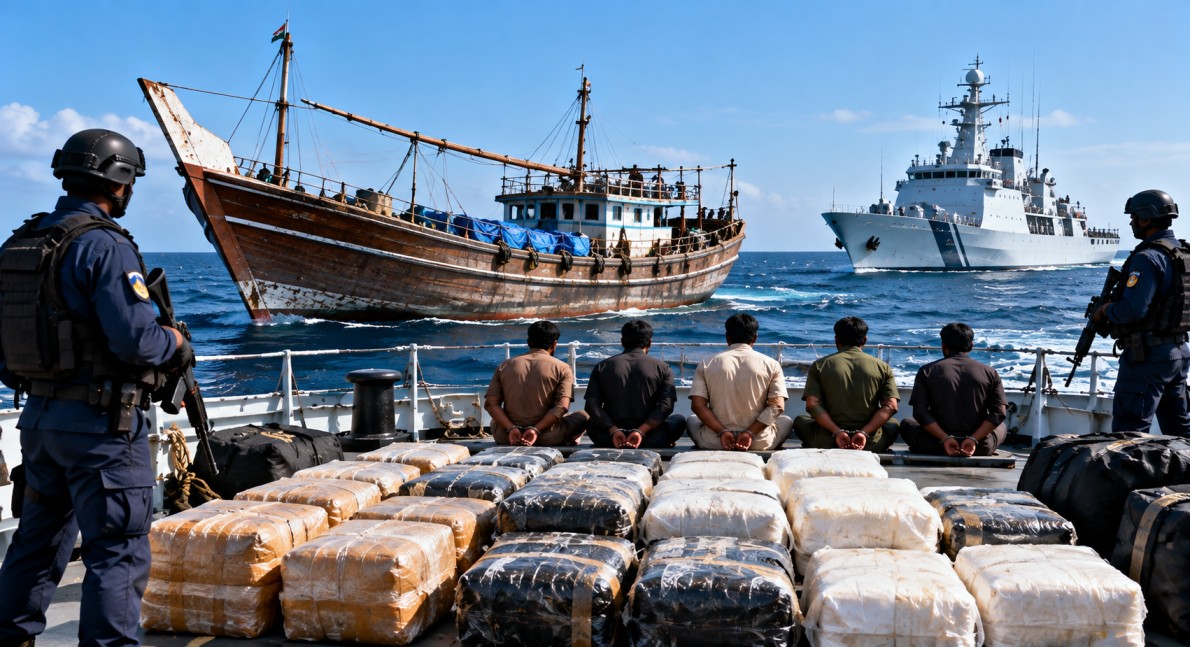
Arabian Sea Drug Seizure has led to the recovery of around 526 kg of heroin and methamphetamine from an Iranian dhow west of Lakshadweep. The Indian Coast Guard (ICG), working with the Gujarat Anti-Terrorism Squad (ATS) and central intelligence agencies, intercepted the vessel on September 25, 2026, following intelligence-led sea and air surveillance. Five Pakistani nationals aboard the vessel were apprehended. The drugs were estimated to be worth more than ₹3,000 crore in international markets.
Thank you for reading this post, don't forget to subscribe!Indian Coast Guard Intercepts Iranian Dhow
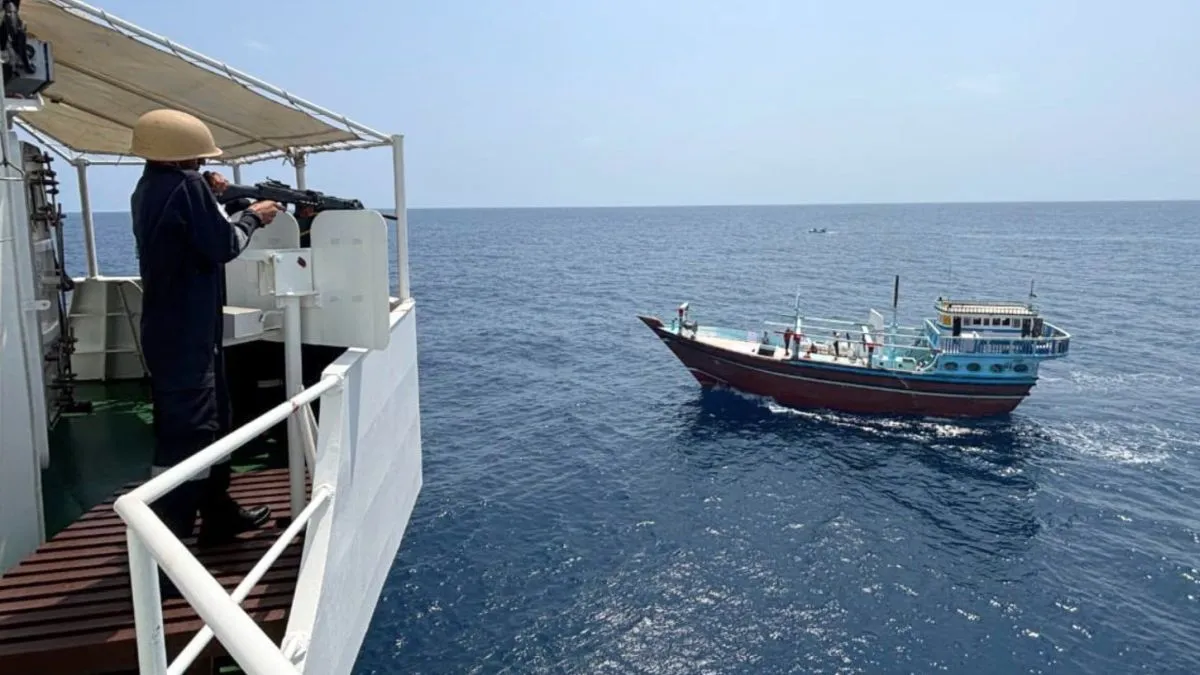
The Arabian Sea Drug Seizure followed a sustained surveillance operation. According to the Ministry of Defence, Coast Guard assets tracked the suspected vessel before beginning a hot pursuit and boarding the dhow in the high seas west of Lakshadweep.
The intercepted vessel, identified in reports as the Iranian dhow Azad, was brought to Mumbai under armed escort along with the seized narcotics and the five crew members. The material and the people detained are being subjected to joint interrogation and further legal proceedings.
The operation involved coordination between the Coast Guard, Gujarat ATS and central intelligence agencies. The Union Home Ministry said the wider investigation will seek to identify the network behind the shipment and its intended receivers.
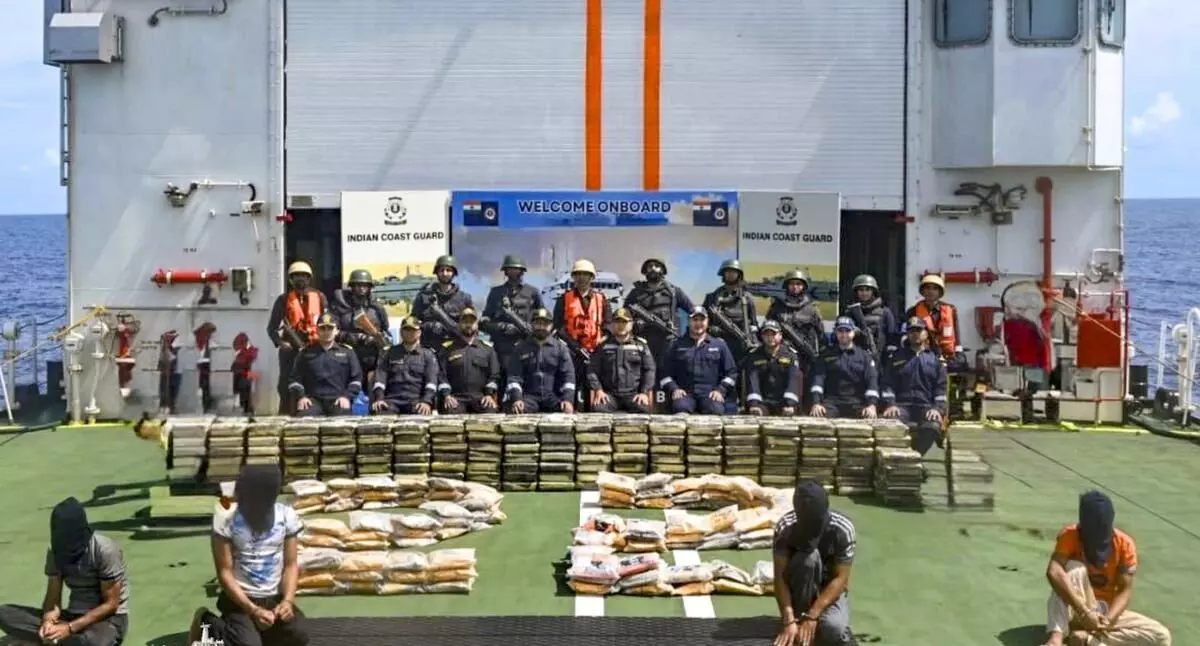
526 Kg of Heroin and Methamphetamine Seized
The seizure included approximately 400 kg of methamphetamine and 126 kg of heroin, according to information released by Gujarat ATS and reported by the Indian Express. Together, the quantity was around 526 kg. The estimated international-market value was more than ₹3,000 crore.
Heroin is an opioid narcotic, while methamphetamine is a synthetic stimulant. Both are controlled substances under India’s narcotics laws. Large maritime shipments of such drugs can involve several stages, including transportation by sea, transfer between vessels and movement toward coastal areas.
Investigators are now examining how the shipment was organised and where it was intended to go. According to the Gujarat ATS account reported by the Indian Express, the dhow had departed from Iran and the consignment had been transferred from another vessel that had arrived from Gwadar, Pakistan.
Five Pakistani Nationals Apprehended
Five Pakistani nationals were found aboard the Iranian dhow during the interception. They were taken into custody and brought to Mumbai with the vessel and the seized material.
The authorities are investigating the role of the crew and their possible links with a larger maritime trafficking network. The Home Ministry has said that further investigation is underway to identify the wider network and the intended recipients of the narcotics.
The investigation is therefore not limited to the seized vessel. Agencies are also looking at the source of the shipment, its planned route and possible connections with people involved in organising the transportation.
Intelligence-Led Maritime Operation
The operation shows how maritime surveillance is being used to detect suspicious vessels before they can move narcotics closer to India’s coastline.
The Coast Guard used sea-air surveillance and continuous tracking after receiving actionable intelligence. Once the suspected dhow was located, Coast Guard personnel pursued and boarded it. The vessel was then escorted to Mumbai for investigation and legal action.
Such operations require coordination between agencies because maritime drug trafficking can cross several jurisdictions. Intelligence agencies can provide information about suspected movements, while maritime forces can track and intercept vessels at sea.
Arabian Sea Becomes a Focus for Anti-Drug Operations
The Arabian Sea Drug Seizure comes amid continued efforts by Indian agencies to disrupt maritime narcotics trafficking. The Arabian Sea connects the western coast of India with important shipping routes and ports across the Middle East and western Indian Ocean.
The Coast Guard has carried out several narcotics interdiction operations in recent years. According to data cited by Hindustan Times from official records, the force has foiled 26 attempts to smuggle drugs into India over the past five years, with more than 8,500 kg of narcotics seized in those operations.
The latest operation also highlights the importance of India’s maritime surveillance network around Lakshadweep and other areas of the Arabian Sea.
Operation Linked to Wider Drug Control Efforts
The seizure has also been highlighted by the Union Home Ministry as part of India’s broader efforts to disrupt organised narcotics networks. The ministry said the operation, which involved coordination over a 16-day period, demonstrated the role of intelligence-sharing and cooperation between different agencies.
The government has also outlined a Vision Document on Drug Control for 2026–2029, which focuses on strengthening enforcement, disrupting drug networks and improving measures against narcotics trafficking.
For maritime agencies, preventing drugs from reaching the mainland requires surveillance well beyond ports and coastal areas. Intercepting shipments in the Arabian Sea can stop large consignments before they are transferred to smaller vessels or moved toward land.
Investigation Continues in Mumbai
Following the Arabian Sea Drug Seizure, the intercepted dhow, its crew and the seized narcotics were taken to Mumbai under armed security. Joint questioning and multi-agency legal proceedings are continuing.
Investigators are expected to examine the vessel’s movements, communications, financial links and contacts connected with the shipment. Authorities are also seeking information about the intended recipients and other people who may have been involved in the trafficking network.
The seizure of 526 kg of narcotics makes the September 25 operation a major maritime drug interdiction, while the continuing investigation will focus on tracing the wider network behind the shipment.