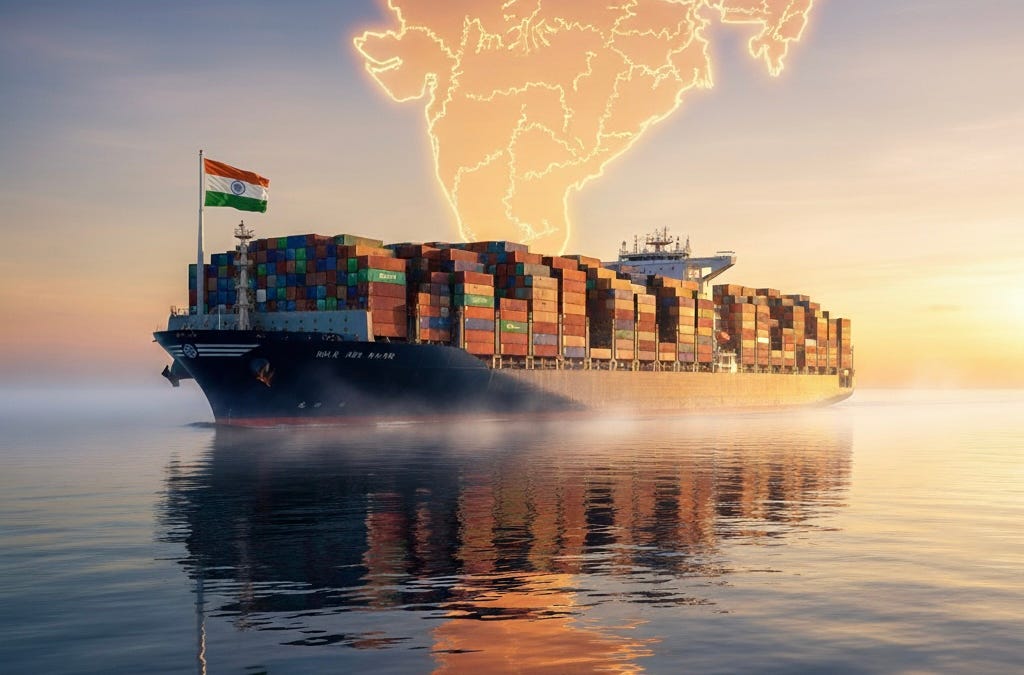
Bharat Container Shipping Deal: India Moves Toward a Self-Reliant Maritime Future

India has taken a major step to strengthen its maritime and logistics sector with the Bharat Container Shipping Deal, which marks the formal agreement to establish the Bharat Container Shipping Line (BCSL). This initiative reflects India’s growing focus on building domestic capacity in shipping, container manufacturing, and port infrastructure at a time when global trade volumes are rising and supply chains are becoming more complex.
Thank you for reading this post, don't forget to subscribe!The move is closely linked to the vision of self-reliance and integrated logistics, ensuring that a larger share of India’s container trade is handled by Indian entities rather than foreign operators. With containerised cargo forming the backbone of modern trade, the Bharat Container Shipping Deal is being seen as a strategic milestone for the country’s long-term economic growth.
Why the Bharat Container Shipping Deal Matters
Container shipping plays a critical role in international commerce. Nearly two-thirds of the value of India’s international trade moves through containers, making this segment vital for exports, imports, and overall trade efficiency. Until now, India has depended heavily on foreign container shipping lines, which often leads to higher freight costs and limited control during global disruptions.
The Bharat Container Shipping Deal aims to change this situation by anchoring container shipping within the country. By creating a national container shipping line, India hopes to improve reliability, reduce dependence on overseas operators, and gain stronger control over trade routes. This step is also expected to support Indian exporters and importers by providing more stable and predictable shipping services.
Alignment With Union Budget 2026–27
A key strength of the Bharat Container Shipping Deal is its close alignment with the Union Budget 2026–27. The budget announced a ₹10,000-crore Container Manufacturing Assistance Scheme, designed to build a globally competitive container manufacturing base in India over the next five years.
This scheme supports the broader goal of developing a complete container ecosystem, covering manufacturing, shipping, ports, and logistics. By encouraging domestic production of containers, India can reduce import costs and ensure availability during times of global shortages. The Bharat Container Shipping Deal complements this approach by ensuring that Indian-made containers are carried by an Indian shipping line, creating a seamless value chain.
Institutions Behind the Agreement
The Bharat Container Shipping Deal brings together several major institutions from across the maritime and logistics sectors. The memorandum of understanding was signed among the Shipping Corporation of India, Container Corporation of India, Jawaharlal Nehru Port Authority, VO Chidambaranar Port Authority, Chennai Port Authority, and Sagarmala Finance Corporation Limited.
The agreement was signed in the presence of Union Minister Sarbananda Sonowal and Union Minister Ashwini Vaishnaw, highlighting strong coordination between ministries responsible for shipping, ports, railways, and infrastructure. This collective approach shows that the initiative is not limited to shipping alone but is part of a larger national logistics strategy.
Boost to Domestic Capacity and Manufacturing
One of the long-term goals linked to the Bharat Container Shipping Deal is to develop an annual domestic container manufacturing capacity of around one million TEUs over the next decade. This target reflects India’s ambition to become a global hub for container production, similar to its growing role in shipbuilding and port services.
Domestic container manufacturing will not only support the shipping line but also create jobs, encourage private investment, and strengthen related industries such as steel, engineering, and transport equipment. Over time, this could help Indian manufacturers compete in global markets and reduce the trade deficit associated with container imports.
Port Expansion and Financing Support
Alongside the Bharat Container Shipping Deal, India is also strengthening its port infrastructure. A separate tripartite agreement was signed between VO Chidambaranar Port Authority, Indian Railway Finance Corporation, and Sagarmala Finance Corporation for financing the Outer Harbour Project.
This framework allows for joint funding of up to ₹15,000 crore for port capacity expansion under the Sagarmala Programme and the PM Gati Shakti National Master Plan. The projects will mainly use the Hybrid Annuity Model, which balances public and private investment while ensuring timely development.
Improved port capacity is essential for the success of the Bharat Container Shipping Deal, as efficient ports reduce turnaround time, lower logistics costs, and improve India’s attractiveness as a trading partner.
Strategic Impact on India’s Maritime Trade
The Bharat Container Shipping Deal is expected to have a wide-ranging impact on India’s maritime trade. According to government leaders, the initiative will strengthen India’s strategic and commercial presence in global shipping. A national container line can provide better service during international crises, when foreign operators may reduce capacity or increase prices.
The deal also supports India’s broader vision of becoming a logistics and manufacturing powerhouse. By integrating shipping, container production, ports, and rail-linked logistics, the country can build a resilient supply chain that supports long-term trade competitiveness.
Union Minister Ashwini Vaishnaw has highlighted that the container line, developed with CONCOR, could help create a world-class container ecosystem with investments of around ₹15,000 crore. This investment is expected to improve efficiency, reduce costs, and support exporters and importers across sectors.

A Step Toward a Stronger Trade Ecosystem
The Bharat Container Shipping Deal represents more than just a new shipping line. It signals India’s intent to take control of critical trade infrastructure and reduce vulnerabilities exposed by global disruptions. By combining policy support, institutional collaboration, and infrastructure investment, the initiative lays the foundation for a stronger and more self-reliant maritime ecosystem.
As global trade continues to evolve, the success of the Bharat Container Shipping Deal could position India as a more confident and competitive player in international shipping, supporting economic growth and trade stability in the years ahead.