



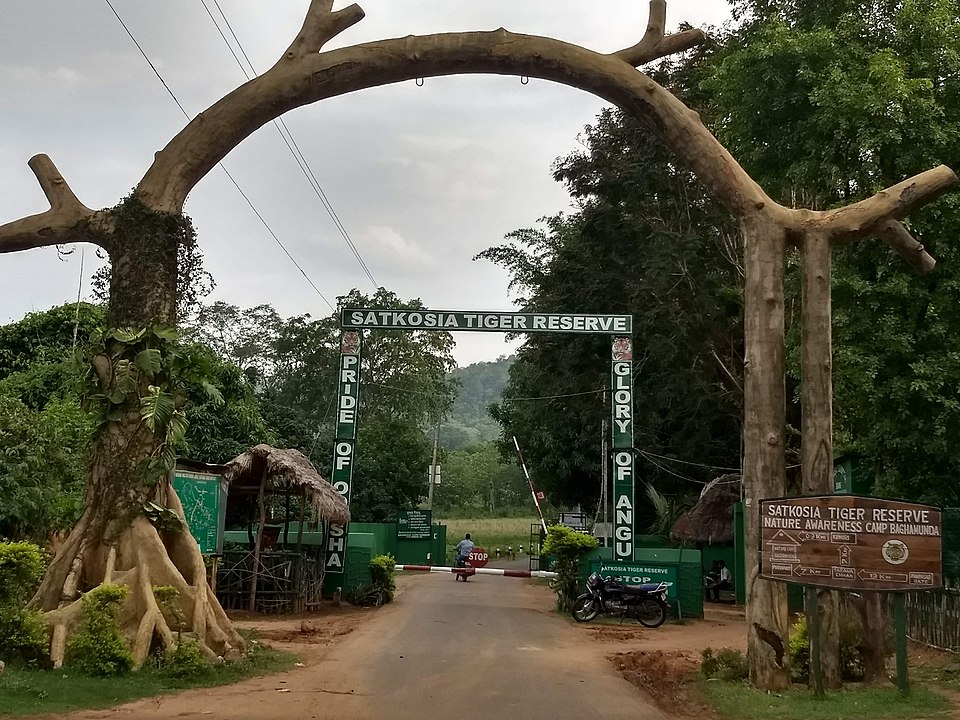
OHRC Probes Satkosia Tiger Reserve Village Relocation Irregularities Over Rights Violation Claims

The Satkosia Tiger Reserve Village Relocation Irregularities have come under scrutiny after the Odisha Human Rights Commission (OHRC) directed the Forest and Revenue departments, along with the Angul Collector, to submit complete records of the relocation process. The move follows serious allegations of procedural lapses, forged documents, and violations of National Tiger Conservation Authority (NTCA) and Relief and Rehabilitation (R&R) guidelines. The OHRC’s intervention aims to ensure transparency, accountability, and protection of forest dwellers’ rights during the relocation from the Satkosia Tiger Reserve.
Thank you for reading this post, don't forget to subscribe!OHRC Directive on Satkosia Tiger Reserve Village Relocation Irregularities
The Satkosia Tiger Reserve, which spans the districts of Angul, Cuttack, Nayagarh, and Boudh, was established with the objective of conserving biodiversity and reviving tiger populations in central Odisha. However, the human settlements inside the core area have long posed challenges to wildlife management, prompting relocation initiatives supported by the National Tiger Conservation Authority (NTCA) and guided by Odisha’s Relief and Rehabilitation (R&R) Policy.
The latest OHRC directive came in response to a petition alleging large-scale violations of these frameworks. The petitioner accused officials of bypassing mandatory procedures such as holding gram sabhas, settling forest rights, and ensuring informed consent from villagers prior to relocation. It was further claimed that some signatures were forged, compensation was mismanaged, and families unwilling to move were coerced into leaving their homes.
In light of these allegations, the Commission directed the Forest and Revenue departments, along with the Angul Collector, to submit comprehensive documentation of all relocation activities including compensation records, consent papers, and verification reports for scrutiny.
Allegations of Violation in Satkosia Tiger Reserve Village Relocation Irregularities
Under the NTCA guidelines, village relocation from tiger reserves must adhere to specific norms ensuring that relocation is voluntary, transparent, and legally compliant. Prior consent from the gram sabha (village assembly) is mandatory, and all forest rights under the Forest Rights Act, 2006, must be settled before displacement.
The petition alleged that none of these prerequisites were fully met in Satkosia’s case. Instead, villagers were reportedly relocated hastily without meaningful consultation. The compensation process, too, is under question with some families alleging underpayment, delayed disbursal, and non-provision of promised amenities at the resettlement sites.
These accusations, if substantiated, could signify serious violations of both human rights and statutory conservation norms, undermining the ethical foundation of India’s wildlife protection policies.

Officials’ Response to Satkosia Tiger Reserve Village Relocation Irregularities Allegations
In response to the OHRC’s summons, several senior forest officers appeared before the Commission, including Principal Chief Conservator of Forests (Wildlife) Prem Kumar Jha, Chief Conservator of Forests Bikash Ranjan Dash, and Angul Regional Chief Conservator of Forests (RCCF) Sanjay Swain. The then Divisional Forest Officer (DFO) of Satkosia, Saroj Kumar Panda, and Angul Tehsildar Alok Kumar Dehury also attended the hearing.
Defending the administration’s actions, the PCCF stated that the entire relocation process was “purely voluntary”, claiming that the allegations were “false and baseless.” He maintained that all villagers who moved from the reserve did so willingly and received due compensation as per official guidelines.
Echoing this, the RCCF affirmed that no illegality or irregularity had occurred and that all relocation activities were conducted transparently under supervision. However, given the seriousness of the charges, the OHRC has not dismissed the claims outright and has called for detailed verification.
Commission’s Queries on Compensation and Procedures
The OHRC’s directive goes beyond general clarifications it has sought specific answers to several key questions central to the integrity of the relocation process:
- Were gram sabhas convened in each affected village prior to relocation?
- Were forest rights of dwellers settled as per the Forest Rights Act, 2006?
- Was there an officially notified cut-off date for determining compensation eligibility?
- Is there a state policy or guideline ensuring compensation parity with the Land Acquisition Act?
- Were any inquiries conducted into the alleged forgery of villagers’ signatures?
- Can the departments furnish a complete list of relocated families and corresponding compensation records?
These questions aim to establish whether the relocation process met the standards of legality, fairness, and human dignity mandated by law.
Strict Warning and Upcoming Hearing on Satkosia Tiger Reserve Village Relocation Irregularities
The OHRC has issued a strict warning to all concerned officials, cautioning that failure to produce the requested documents will be viewed seriously. The next hearing has been scheduled for October 30, during which the Commission is expected to assess compliance with NTCA and R&R norms and determine whether the rights of displaced villagers were adequately protected.
This hearing is anticipated to set a precedent for accountability in conservation-linked displacement, not only in Odisha but across India’s tiger reserves.
Balancing Conservation and Human Rights
The case reflects a broader tension between wildlife conservation and social justice. While relocation is often justified to minimize human-wildlife conflict and ensure ecological recovery, it must not come at the cost of violating human rights or bypassing legal safeguards.
The Forest Rights Act, 2006, was enacted precisely to prevent such outcomes by recognizing the traditional rights of forest-dwelling communities. Similarly, the NTCA relocation guidelines emphasize consent, compensation, and rehabilitation as non-negotiable principles.
If the allegations in Satkosia are proven, it would signal a serious governance lapse that could undermine public trust in conservation programs. Conversely, a transparent inquiry and corrective measures could reinforce the model of ethical conservation, where both people and wildlife coexist with dignity.
Exam-Oriented Facts
- Satkosia Tiger Reserve: Spans Angul, Cuttack, Nayagarh, and Boudh districts in Odisha.
- NTCA Guidelines: Mandate gram sabha consent and settlement of forest rights before relocation.
- Forest Rights Act, 2006: Protects forest dwellers’ rights before any displacement.
- OHRC Authority: Can summon records and witnesses in rights violation cases.
- Next Hearing: Scheduled for October 30, focusing on compliance and documentation.

Conclusion
The unfolding case of Satkosia Tiger Reserve Village Relocation Irregularities underscores the importance of transparency, legality, and compassion in environmental governance. Conservation cannot succeed by marginalizing the very communities that have lived in and protected these forests for generations.
As the OHRC scrutinizes the records, the spotlight now falls on the Odisha administration’s ability to uphold both human rights and ecological integrity. The outcome will not only determine justice for the displaced villagers of Satkosia but will also shape the future of ethical wildlife conservation in India.