



Moon Base Plan: NASA’s New Mission for a Permanent Lunar Colony

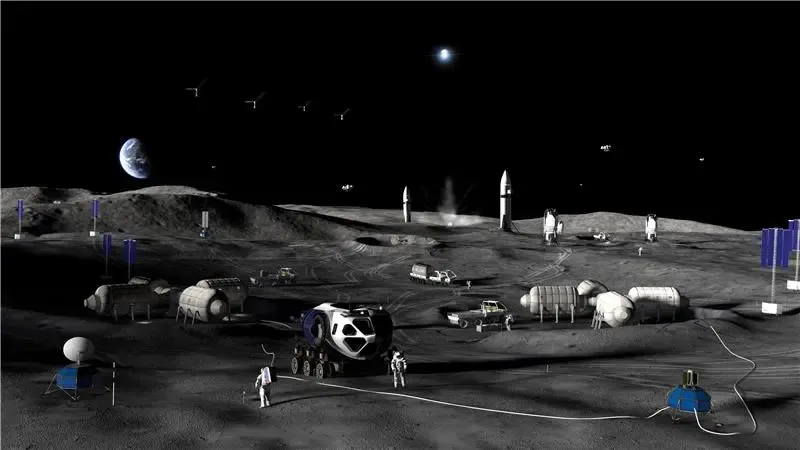
Moon Base Plan has become one of the biggest space exploration announcements of 2026. NASA has officially revealed a three-phase strategy to establish a permanent human base on the Moon. The announcement was first made on 24 March 2026 and was reaffirmed on 27 May 2026 as part of NASA’s long-term Artemis Programme.
The ambitious project is expected to cost around 20 billion dollars over seven years and aims to create a lasting human presence on the Moon. The proposed lunar base will be located near the Moon’s South Pole, a region considered highly valuable for future exploration and scientific research.

NASA’s Vision for the Moon
NASA’s Artemis Programme is the agency’s major human spaceflight initiative focused on returning astronauts to the Moon and preparing for future missions to Mars. Unlike earlier Moon missions that involved short visits, Artemis aims to support long-term exploration and eventually establish permanent facilities on the lunar surface.
The Moon’s South Pole has become a key destination because scientists believe it contains frozen water deposits inside permanently shadowed craters. Water is considered one of the most important resources for future space missions because it can provide drinking water, oxygen, and even rocket fuel.
With the new Moon Base Plan, NASA hopes to transform the Moon from a destination for short missions into a place where humans can live and work for extended periods.
Phase One: Robotic Missions and Cargo Delivery
The first phase of the Moon Base Plan will continue until 2029. During this stage, NASA will focus on robotic exploration, cargo transportation, and testing important technologies needed for future human settlements.
NASA plans to conduct as many as 25 missions, including 21 lunar landings, during this period. These missions will deliver scientific instruments, construction equipment, and technology demonstrations to the lunar surface.
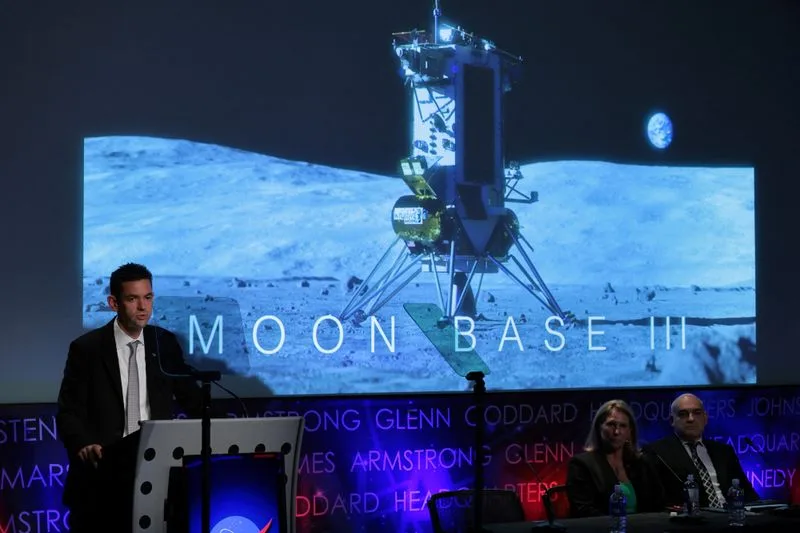
One of the key projects during this phase is Moon Base-I, which is expected to begin no earlier than autumn 2026. The mission will use Blue Origin’s Blue Moon Mark 1 Endurance lander to transport equipment to the Shackleton Connecting Ridge region near the lunar South Pole.
The collected data will help scientists understand the local environment and reduce risks before astronauts arrive for future Artemis missions.
NASA will also continue expanding its Commercial Lunar Payload Services (CLPS) programme, which allows private companies to deliver equipment and research tools to the Moon.
Phase Two: Building Essential Infrastructure
The second phase is planned from 2029 to 2032. During this period, NASA will begin building the essential systems needed to support astronauts on the Moon.
Several important facilities are expected to be developed, including:
| Infrastructure | Purpose |
|---|---|
| Power Systems | Provide reliable energy for operations |
| Communication Networks | Maintain contact with Earth and lunar missions |
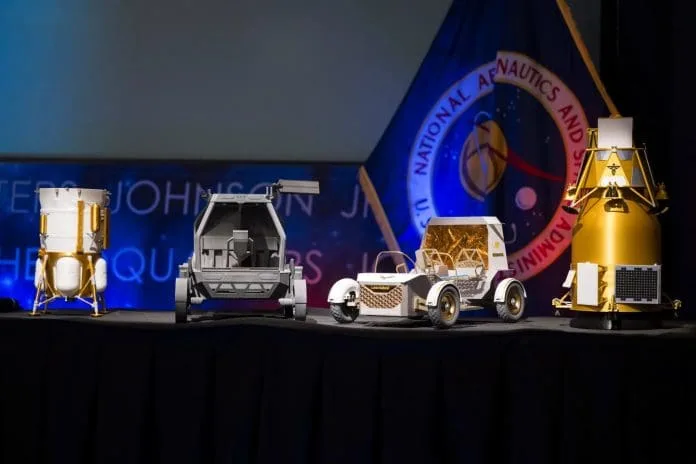
| Surface Mobility Vehicles | Help astronauts travel across the Moon |
| Research Facilities | Support scientific studies and experiments |
These systems will allow astronauts to stay on the Moon for weeks or even months at a time. NASA believes this stage will be critical for testing how humans can work and live in a harsh lunar environment.
The agency is also developing the Lunar Terrain Vehicle, which will help astronauts travel longer distances across the Moon’s surface.
Phase Three: Permanent Human Presence
The final phase of the Moon Base Plan is scheduled to continue until 2036. This stage aims to create a fully operational lunar base capable of supporting long-duration human missions.
NASA has stated that its long-term goal is to maintain a continuous human presence on the Moon. Under the plan, astronauts could arrive on the lunar surface every six months.
The permanent base is expected to include living quarters, scientific laboratories, communication systems, energy facilities, and resource management technologies.
This development would represent one of the most significant achievements in modern space exploration and could serve as a stepping stone for future Mars missions.
Why the Moon’s South Pole Matters
The Moon’s South Pole is attracting global attention because of its unique conditions.
Scientists believe that permanently shadowed craters in this region may contain large amounts of water ice that have remained frozen for billions of years. This resource could reduce the need to transport water from Earth, making future missions more affordable and sustainable.
The region also experiences periods of near-continuous sunlight on elevated ridges, making it ideal for solar power generation.
Because of these advantages, several countries and private companies are focusing their lunar exploration efforts on the South Pole.
Role of Private Companies
Private space companies are playing a major role in NASA’s lunar plans.
Companies such as Blue Origin and Astrobotic are helping develop landers, transportation systems, and mobility solutions for lunar missions.
This partnership model allows NASA to use commercial innovation while reducing development costs and accelerating mission timelines.
The growing involvement of private industry reflects a broader trend in modern space exploration, where government agencies and commercial companies work together on ambitious projects.
Cost and Future Outlook
NASA estimates that the Moon Base Plan will require around 20 billion dollars over seven years. Meanwhile, NASA’s Office of Inspector General has reported that the overall Artemis Programme cost reached approximately 93 billion dollars between 2012 and 2025.
Despite the large investment, experts believe the programme could lead to major advances in science, technology, and international cooperation.
As countries around the world increase their interest in lunar exploration, NASA’s Moon Base Plan represents an important step toward a future where humans live and work beyond Earth. The coming decade may witness the transformation of the Moon into a permanent hub for scientific discovery and deep-space exploration.