Bihar AI Remote E-Voting System Brings Digital Shift in Indian Elections

India has taken a major step toward digital democracy with the launch of the Bihar AI Remote E-Voting System, a mobile-based voting platform powered by artificial intelligence. The system was officially presented at the India AI Impact Summit 2026 and showcased as a governance innovation designed to make voting easier, safer, and more inclusive. Developed and implemented by the Bihar State Election Commission, the platform reflects Bihar’s growing role in adopting technology-driven public services.
Thank you for reading this post, don't forget to subscribe!The new system has already been tested during the 2025 urban local body elections and is being considered for wider use in future Assembly elections. With this move, Bihar has positioned itself at the forefront of election technology in India.
India’s First Mobile-Based Remote Voting Initiative
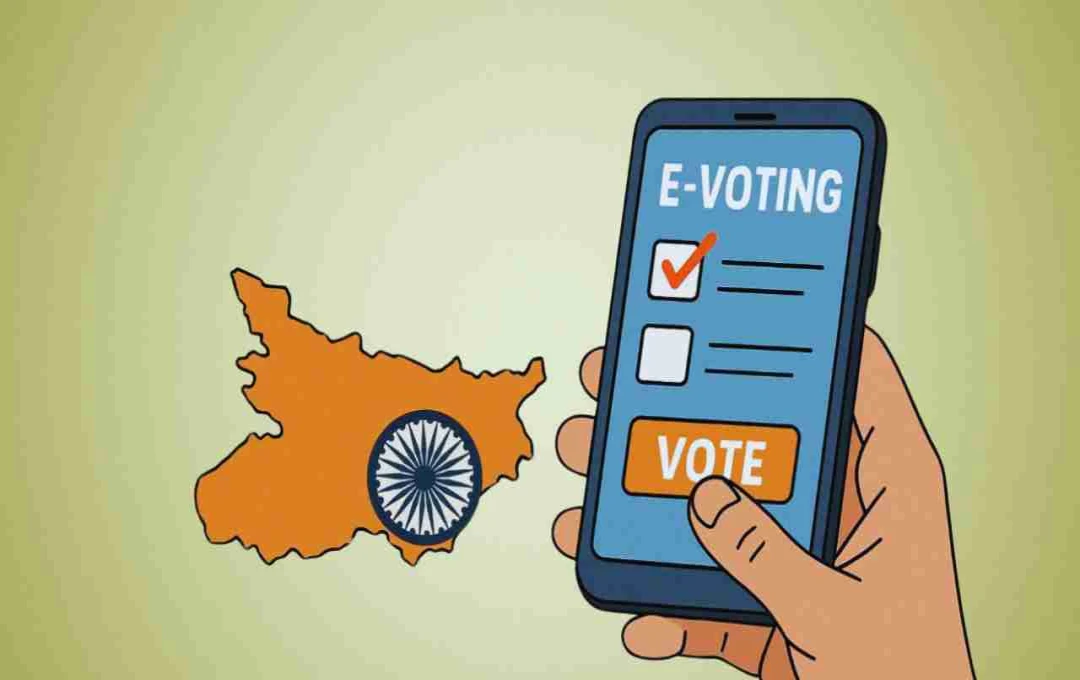
The Bihar AI Remote E-Voting System is being described as India’s first mobile-enabled remote voting platform. It allows eligible voters to cast their votes using a smartphone without visiting a physical polling booth. This marks a significant change from traditional voting methods that rely on electronic voting machines placed at polling stations.
The system operates through a dedicated Android application called e-Voting SECBHR. The app has been developed by the Centre for Development of Advanced Computing in collaboration with the state election authorities. C-DAC works under the Ministry of Electronics and Information Technology, ensuring that the platform follows national digital standards.
Who Benefits from the New Voting System
The primary aim of the Bihar AI Remote E-Voting System is to increase voter participation. Many citizens are unable to reach polling booths due to personal, physical, or professional reasons. The new platform focuses on groups such as migrant workers, students living away from home, senior citizens, pregnant women, persons with disabilities, and voters who are ill on polling day.
By enabling voting from a personal smartphone, the system reduces travel, waiting time, and physical barriers. Election officials believe this approach can help address low turnout in urban and migrant-heavy areas.
Step-by-Step Voting and Identity Verification
To use the system, voters must download the official e-Voting SECBHR application on an Android device. The process begins with registration using a mobile number and OTP verification. Once the OTP is confirmed, the voter undergoes AI-based facial recognition.
The app asks users to take a live selfie, which is then matched with the photograph stored in the EPIC database. Liveness detection technology ensures that a real person is present and prevents the use of photos or recorded videos. Only after successful verification can the voter access the digital ballot and cast a vote.
This layered verification system is designed to ensure that only eligible voters participate and that each person votes only once.
Security Design and Use of Advanced Technology
Security is a core feature of the Bihar AI Remote E-Voting System. Each vote is protected using dual encryption and is anonymised before being stored. The system uses blockchain-backed storage, which means votes are recorded on a decentralised digital ledger.
Once a vote is cast, it cannot be altered without changing the entire ledger, making tampering extremely difficult. Votes remain encrypted throughout the polling process. Decryption is allowed only after voting ends and requires digital signatures and multi-factor authentication from authorised officials.
An audit trail similar to the VVPAT system used with electronic voting machines has also been integrated. This helps ensure transparency and allows verification if required.
Privacy Measures and Transparency Claims
Election officials have stated that voter privacy has been given high priority. Personal identity details are separated from the actual vote before storage. This means that while the system can verify who voted, it cannot link a voter’s identity to their choice.
For vote counting, Returning Officers must use secure digital certificates, and post-poll hash verification is carried out to confirm that data has not been changed. These steps are meant to balance transparency with the secrecy of the ballot.
Concerns and Areas Needing Improvement
Despite strong security claims, experts and civil society groups have raised concerns. One major issue is the risk of impersonation, especially in cases where smartphones are shared among family members. Facial recognition systems may also face challenges due to lighting conditions, camera quality, or changes in appearance.
The platform currently works only on Android devices, which limits access for users with other operating systems. Privacy advocates have also questioned how biometric data and device-related information are stored and protected over time.
During the pilot phase, around 3,830 mock registrations were completed successfully out of more than 14,000 attempts. This shows that while the system is functional, technical improvements are still needed to ensure smooth operation at scale.
What This Means for the Future of Elections
The Bihar AI Remote E-Voting System represents a bold experiment in combining technology with democratic processes. If refined and expanded carefully, it could reshape how elections are conducted in India, especially for citizens who face barriers to traditional voting.
As discussions continue on security, privacy, and accessibility, the Bihar model is likely to influence future debates on digital voting at both state and national levels.